Why Is My Pool Water Cloudy?

Why Auckland trusts our pool service expertise
Cloudy pool water is a common problem, but it's usually fixable once you know what's causing it. The steps below cover the most important things to check and act on.
Whether you're dealing with a chemical imbalance, a filtration issue, or the aftermath of a busy weekend, working through these points in order will help you get your pool back to clear.
What you'll learn
Why Is My Pool Water Cloudy?
Cloudy pool water is frustrating, especially when you've been keeping up with your regular maintenance routine. The good news is that murky water usually has a straightforward cause, and once you identify it, clearing it up is manageable.
This guide covers the most common reasons pool water goes cloudy and what you can do about each one.
---
What Causes Cloudy Pool Water?
Cloudy water is almost always a sign that something is out of balance. The cause could be chemical, mechanical, or environmental, and sometimes a combination of all three.
1. Poor Water Chemistry
Unbalanced water chemistry is the most common culprit. When pH, alkalinity, or calcium hardness levels drift outside the recommended range, the water can turn dull or milky.
- High pH reduces the effectiveness of chlorine and can cause cloudiness
- Low chlorine allows bacteria and organic matter to build up
- High calcium hardness can cause calcium particles to precipitate out of solution, making the water appear hazy
Regular water testing is the first step. If you haven't tested your water recently, that's where to start.
2. Filtration Problems
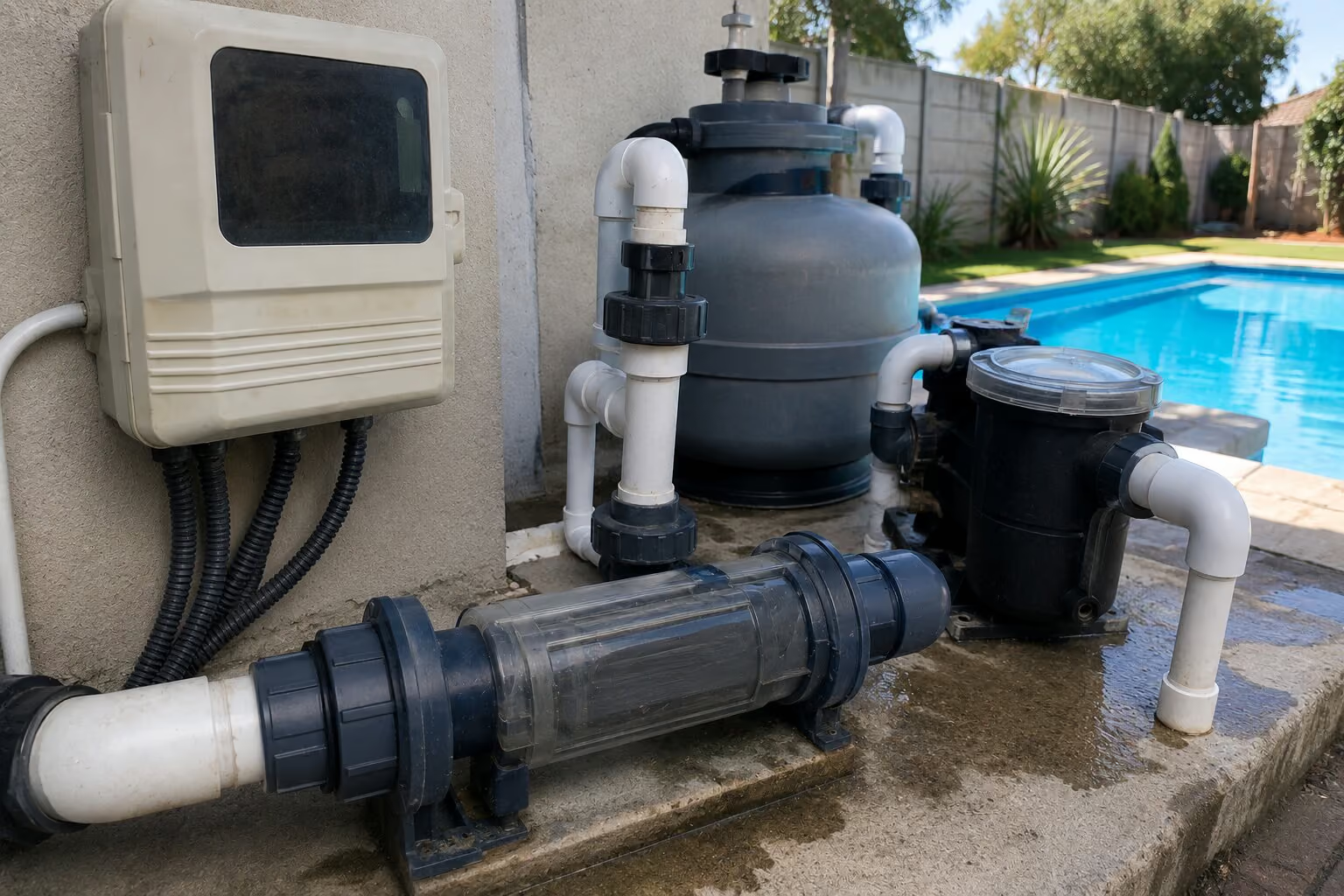
Your filter is responsible for removing fine particles from the water. If it's not running long enough, or if the filter media is worn out or clogged, those particles stay suspended in the water and cause cloudiness.
- Run your filter for at least 8-12 hours per day during warmer months
- Backwash sand filters regularly to clear built-up debris
- Check that your filter media hasn't reached the end of its service life
3. High Bather Load or Environmental Debris
After a busy weekend of swimming, or following heavy rain and wind, your pool can pick up a significant load of contaminants, sunscreen, body oils, leaves, dust, and organic matter. These can overwhelm your sanitiser and cloud the water quickly.
- Shock your pool after heavy use or a storm
- Skim and vacuum regularly to reduce the organic load
- Consider a clarifier to help fine particles clump together so your filter can catch them
4. Algae in the Early Stages
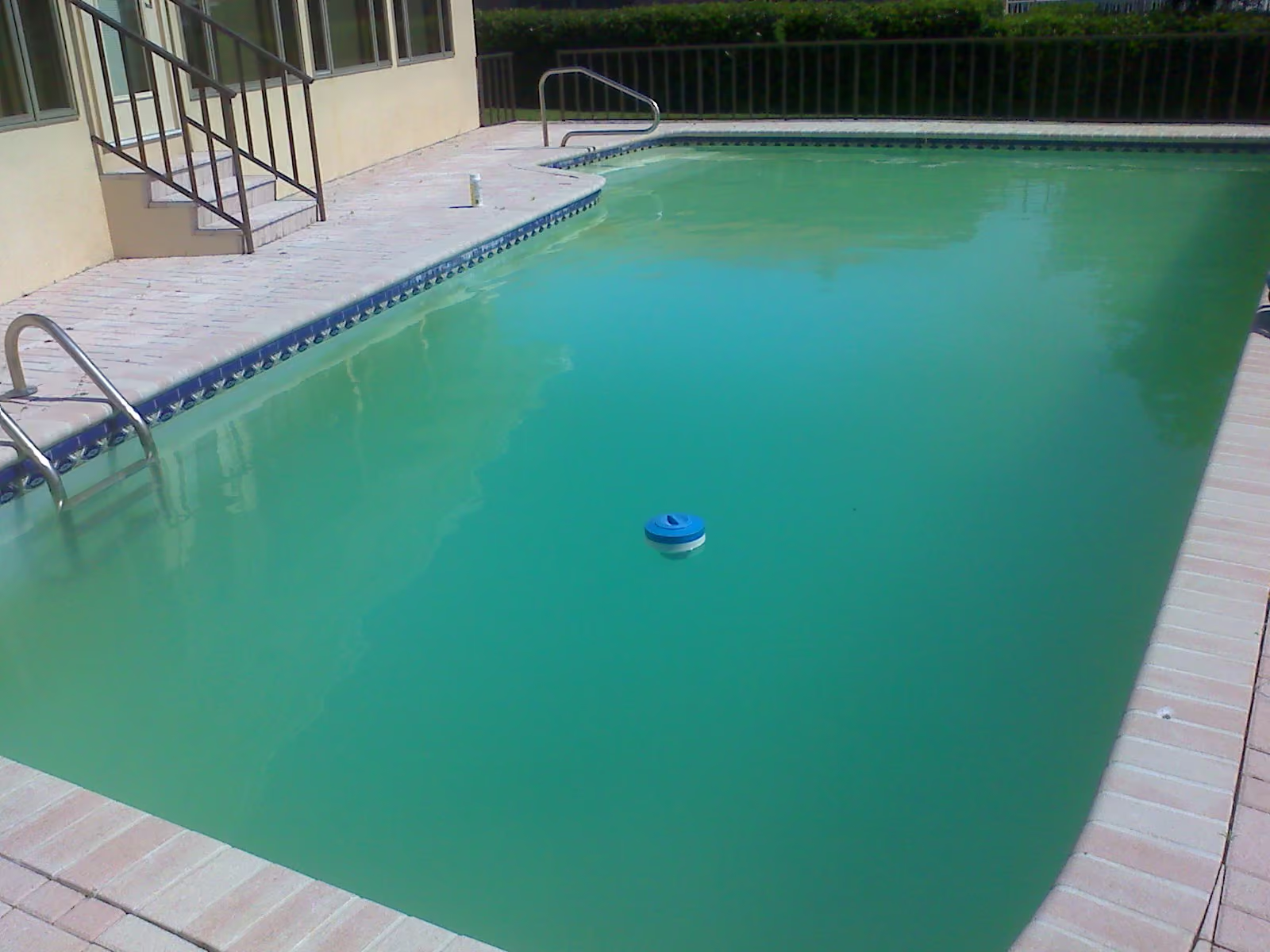
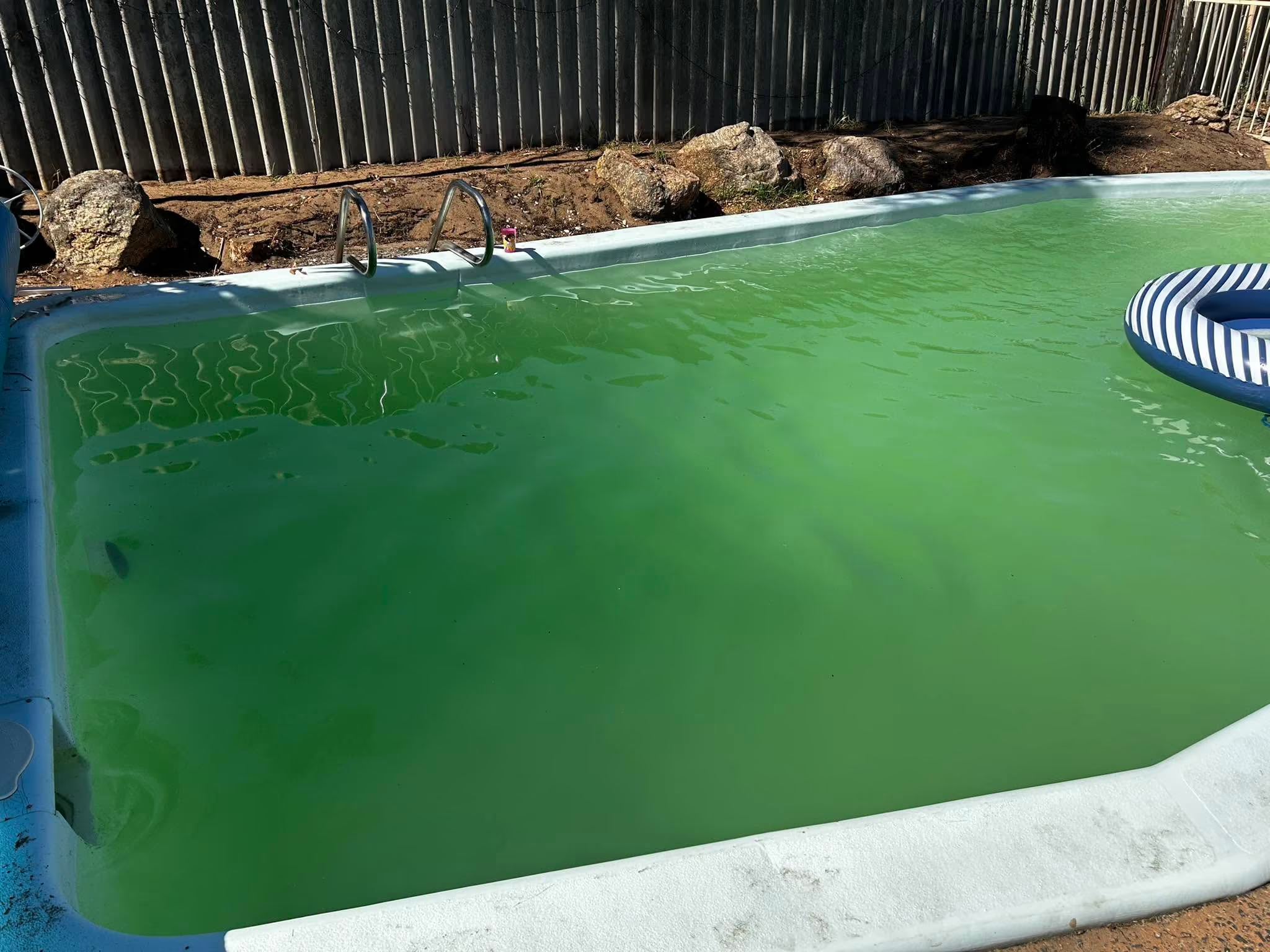
Cloudy green-tinted water is often an early sign of algae growth. If left untreated, it can progress to a full green pool. Catching it early makes treatment much simpler.
- Check for a green or yellow tint in the cloudiness
- Test your chlorine levels, algae thrives when sanitiser is low
- Brush the pool walls and floor to disturb any early algae growth
---
How to Clear Cloudy Pool Water
Step 1: Test Your Water
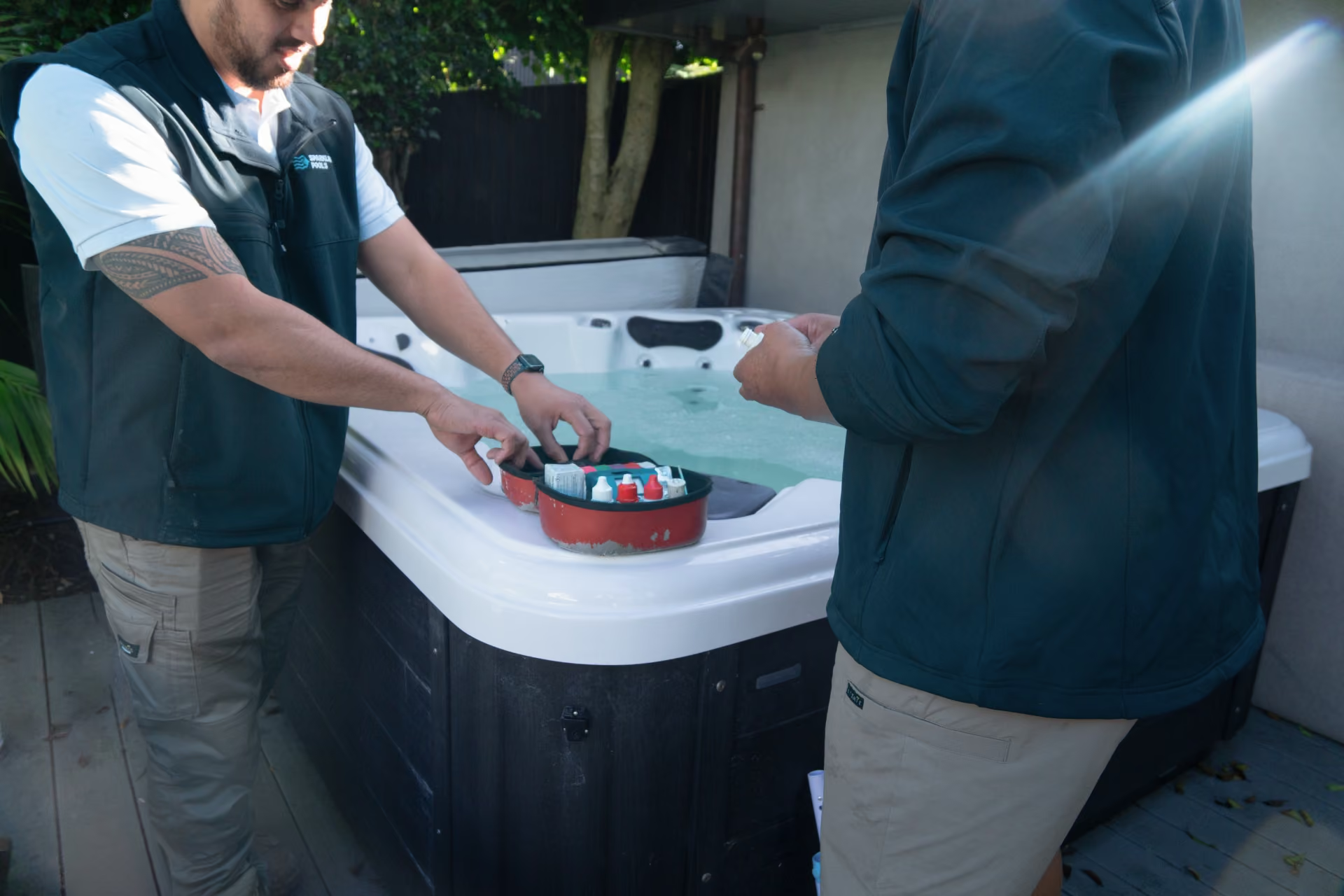
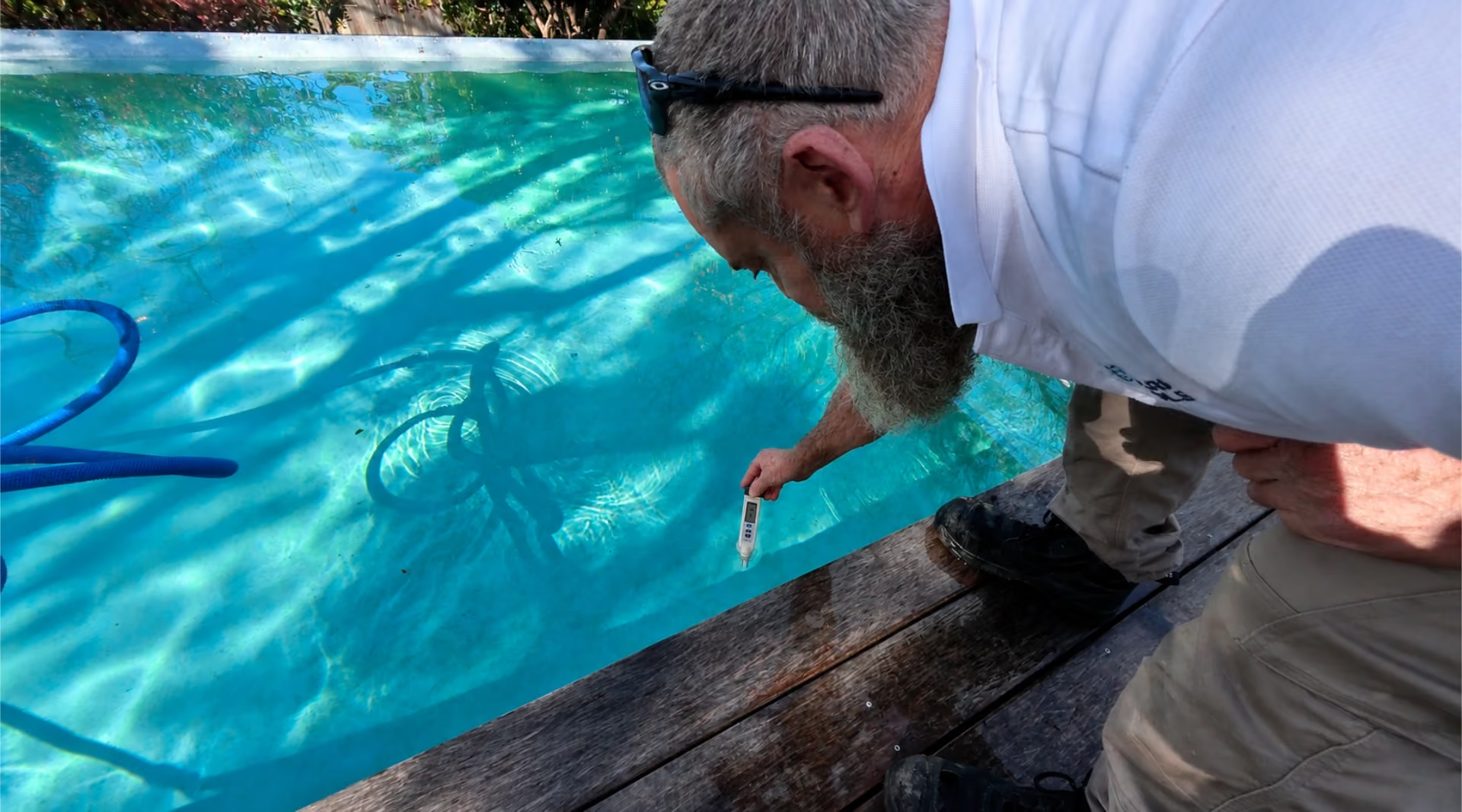
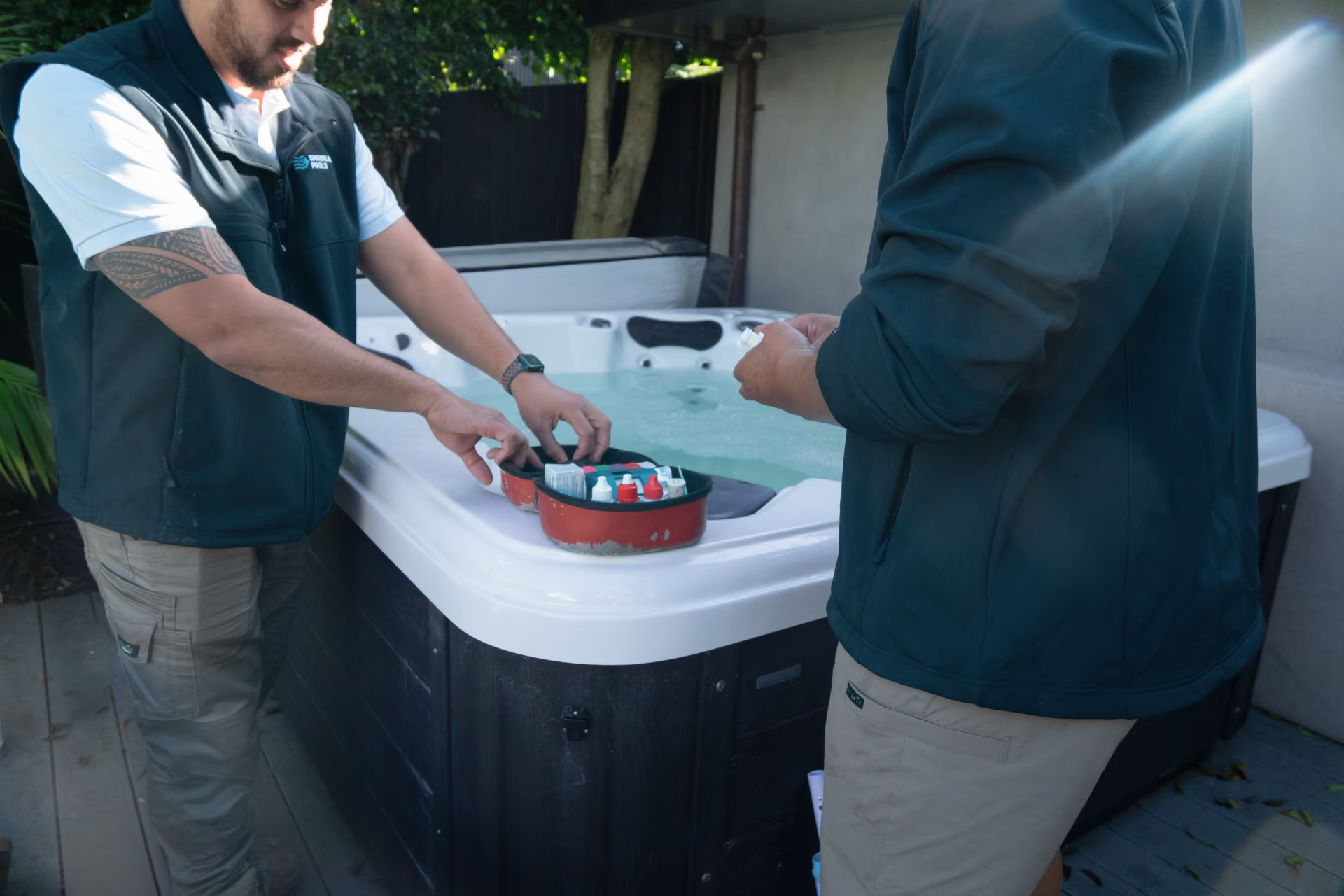
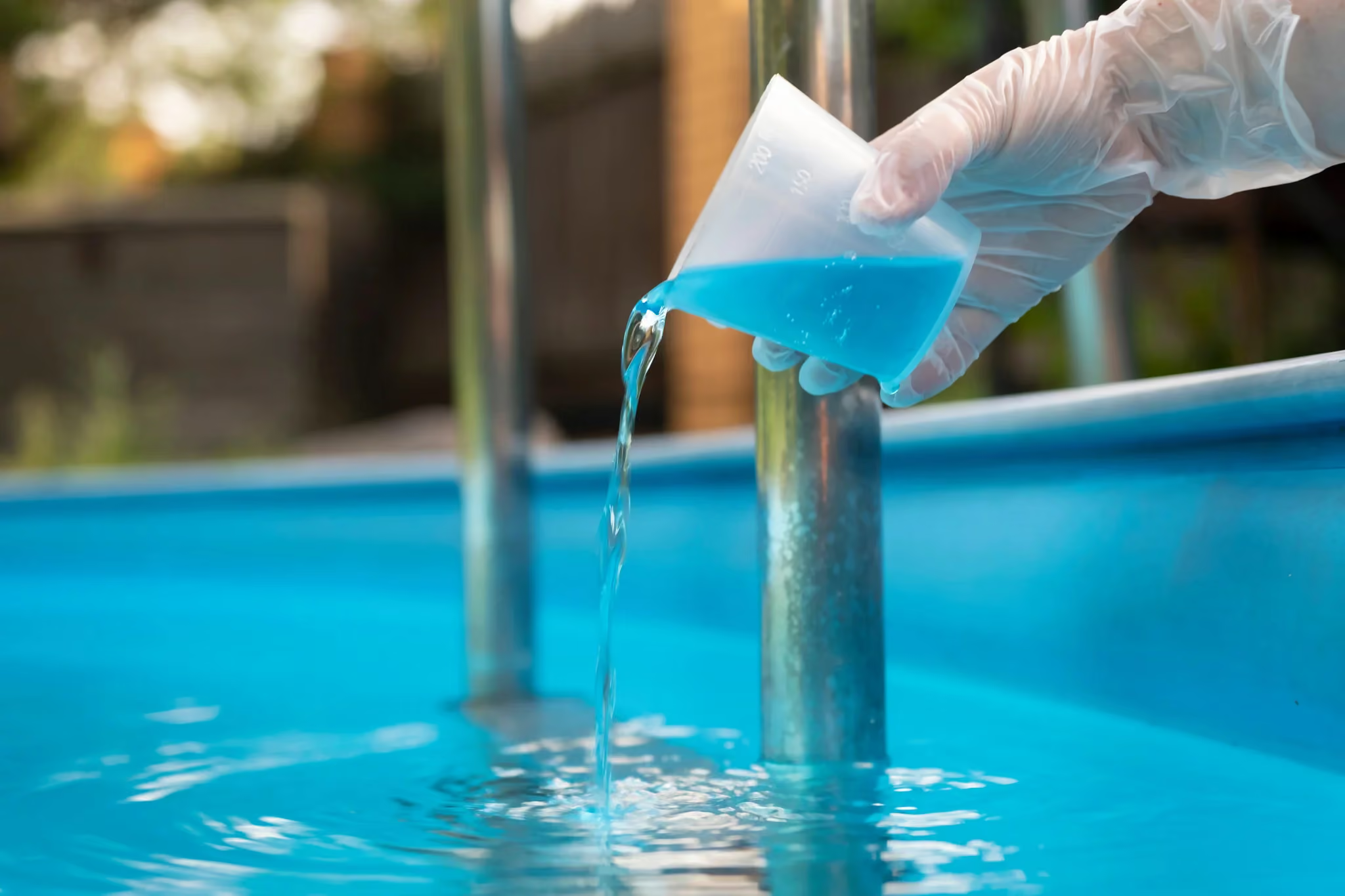
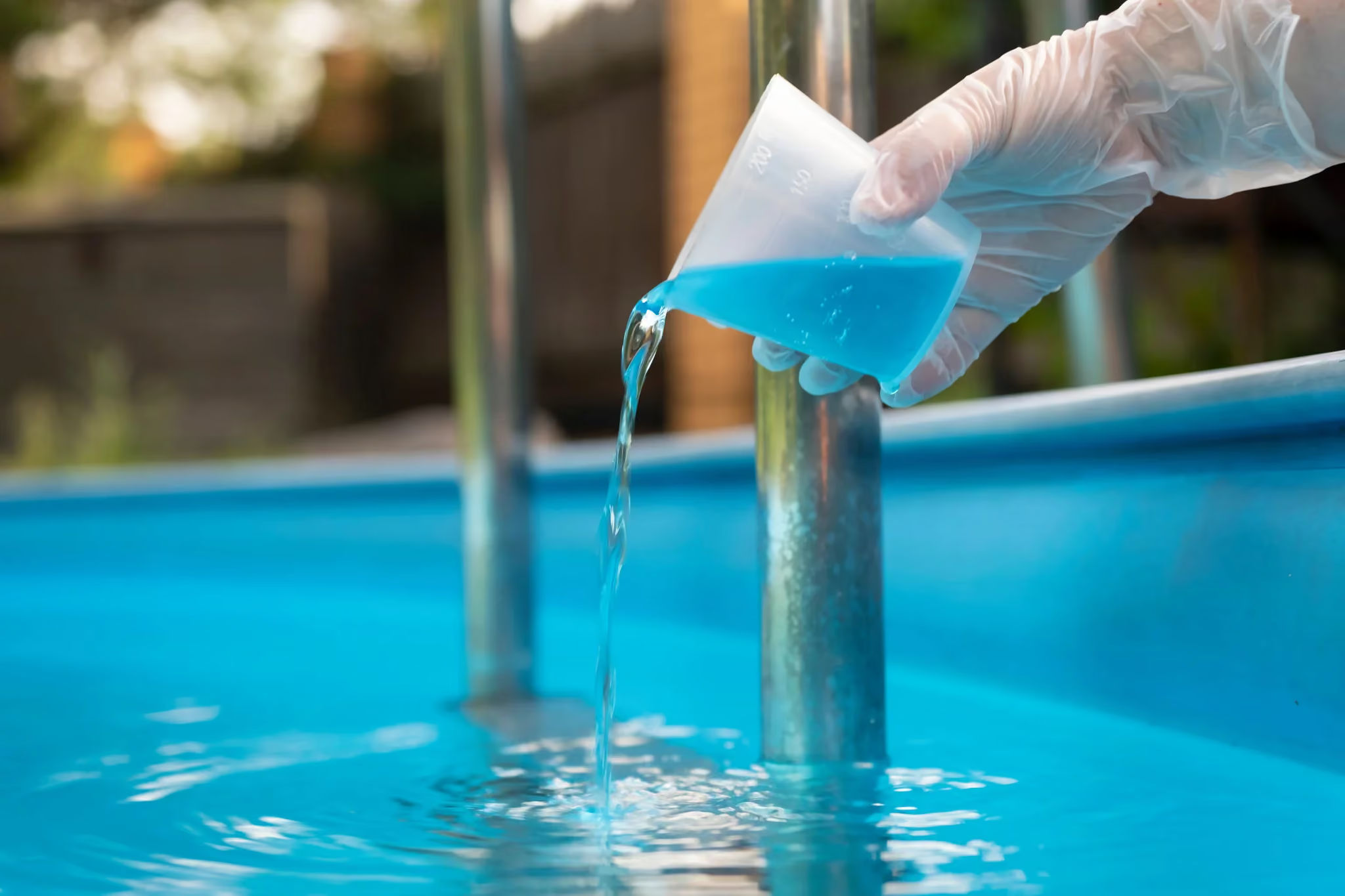
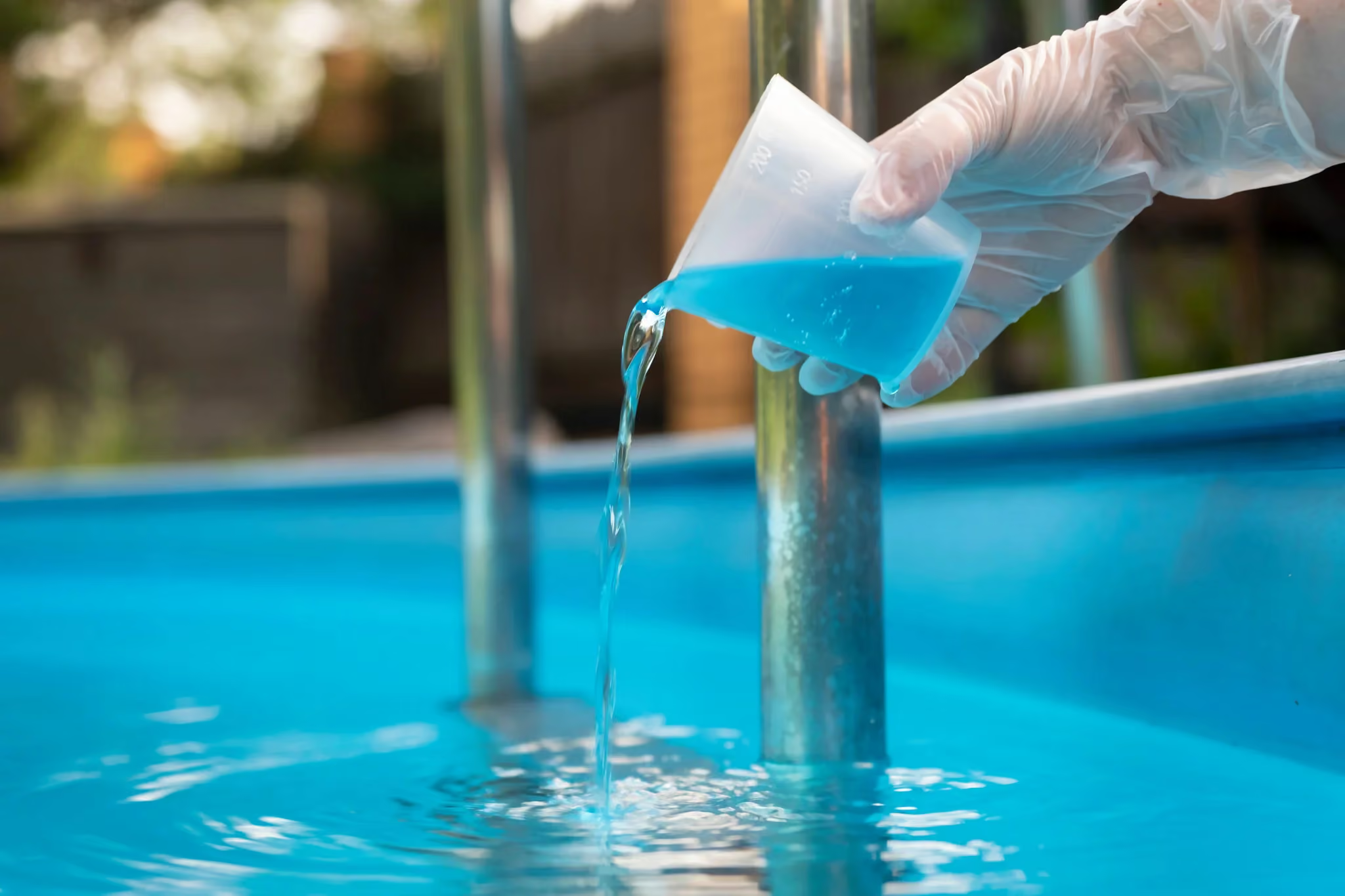
Before adding any chemicals, get an accurate picture of where your water chemistry sits. Use a reliable test kit or take a water sample to a pool specialist for analysis.
Step 2: Balance Your Chemistry
Adjust pH, alkalinity, and chlorine levels back into the recommended ranges. Work on alkalinity first, then pH, then chlorine, adjusting in that order gives the most stable results.
Step 3: Shock the Pool
A chlorine shock treatment helps break down organic contaminants and gives your sanitiser a reset. This is particularly useful after heavy rain, a pool party, or if your chlorine has dropped very low.
Step 4: Run Your Filter
After shocking, run your filter continuously until the water clears. This may take 24-48 hours depending on how cloudy the water is and the capacity of your filtration system.
Step 5: Use a Clarifier if Needed
If the water is still hazy after balancing and filtering, a pool clarifier can help. It works by binding fine particles together into larger clumps that your filter can capture more easily.
---
When to Call a Pool Professional
Most cases of cloudy water can be resolved with the steps above. But if your water stays cloudy despite correct chemistry and a functioning filter, it's worth getting a professional assessment.
Persistent cloudiness can sometimes point to deeper issues, a failing filter, a circulation problem, or a water chemistry imbalance that's harder to diagnose without proper testing equipment.
Sparkling Pools provides water testing and pool maintenance services across Auckland for residential and managed properties. If your pool isn't clearing up, get in touch and we can take a look.
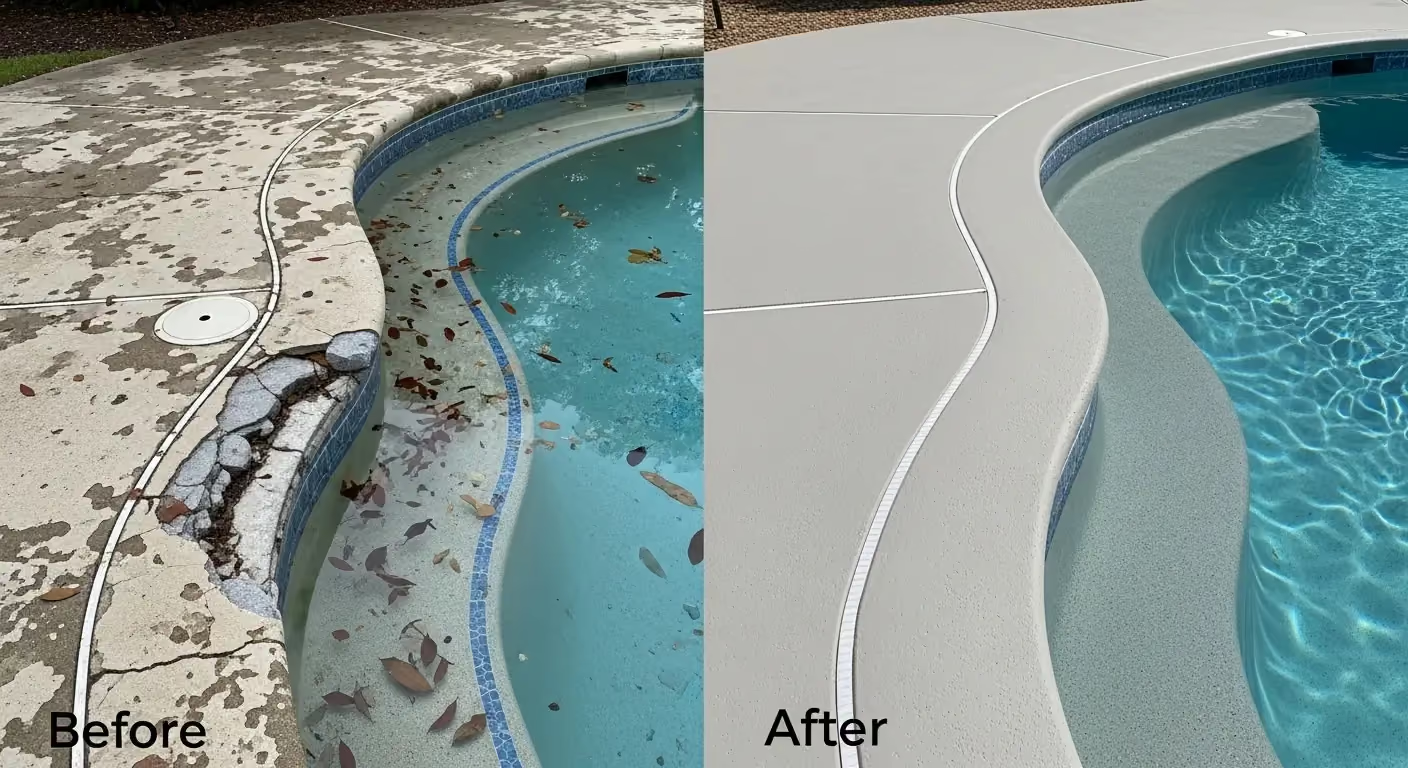
Pool resurfacing solutions
Restore your pool with durable plaster finishes


Work completed
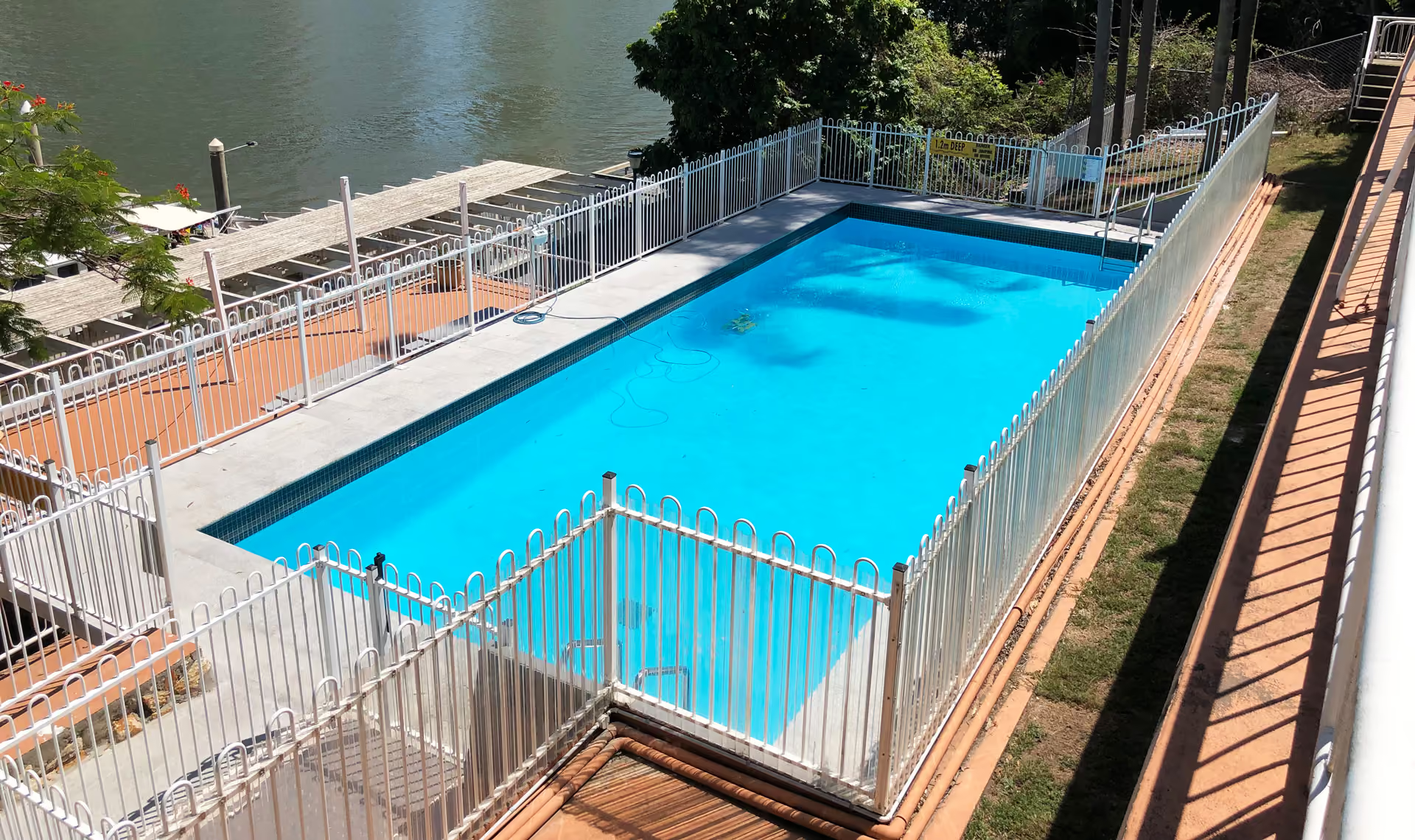
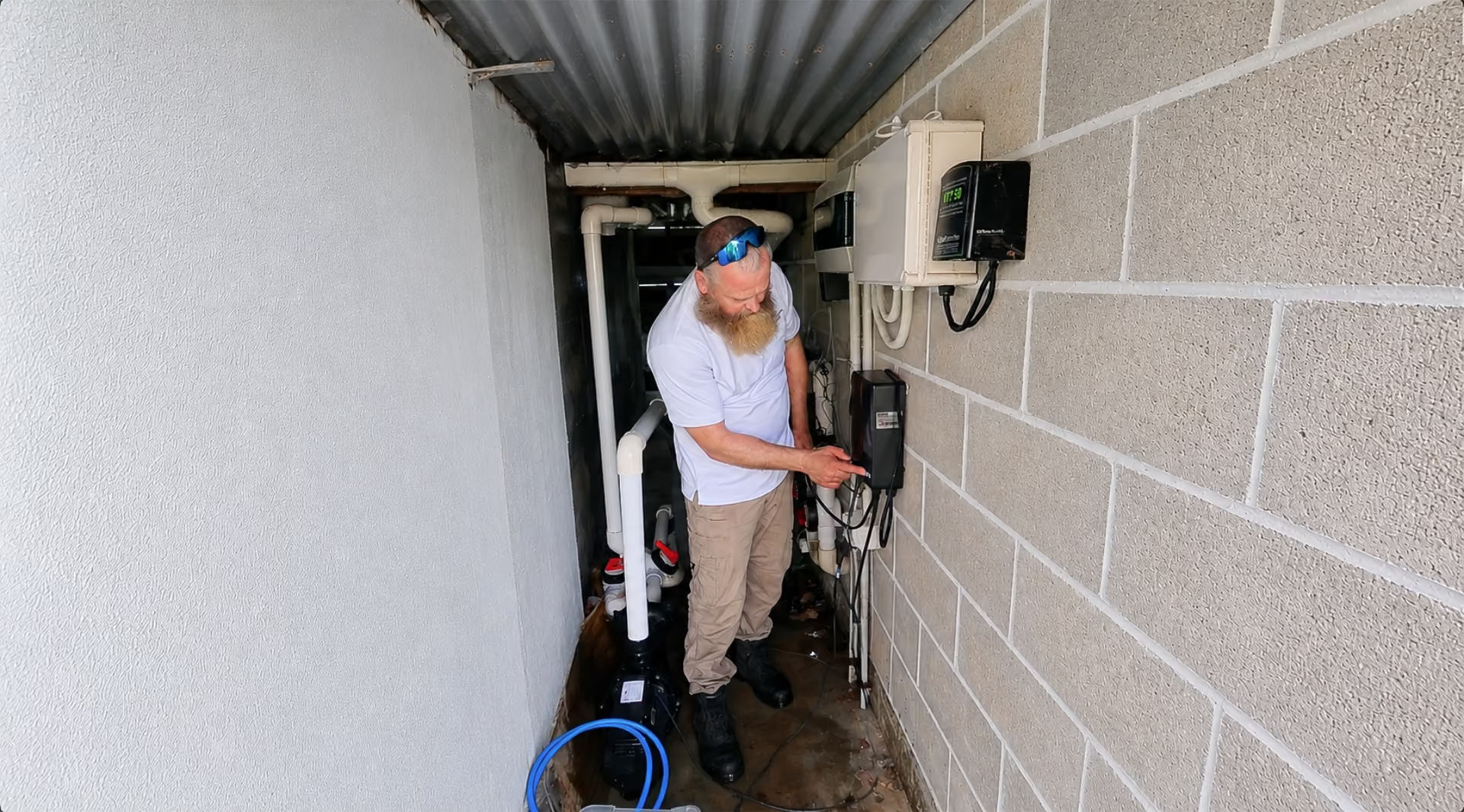
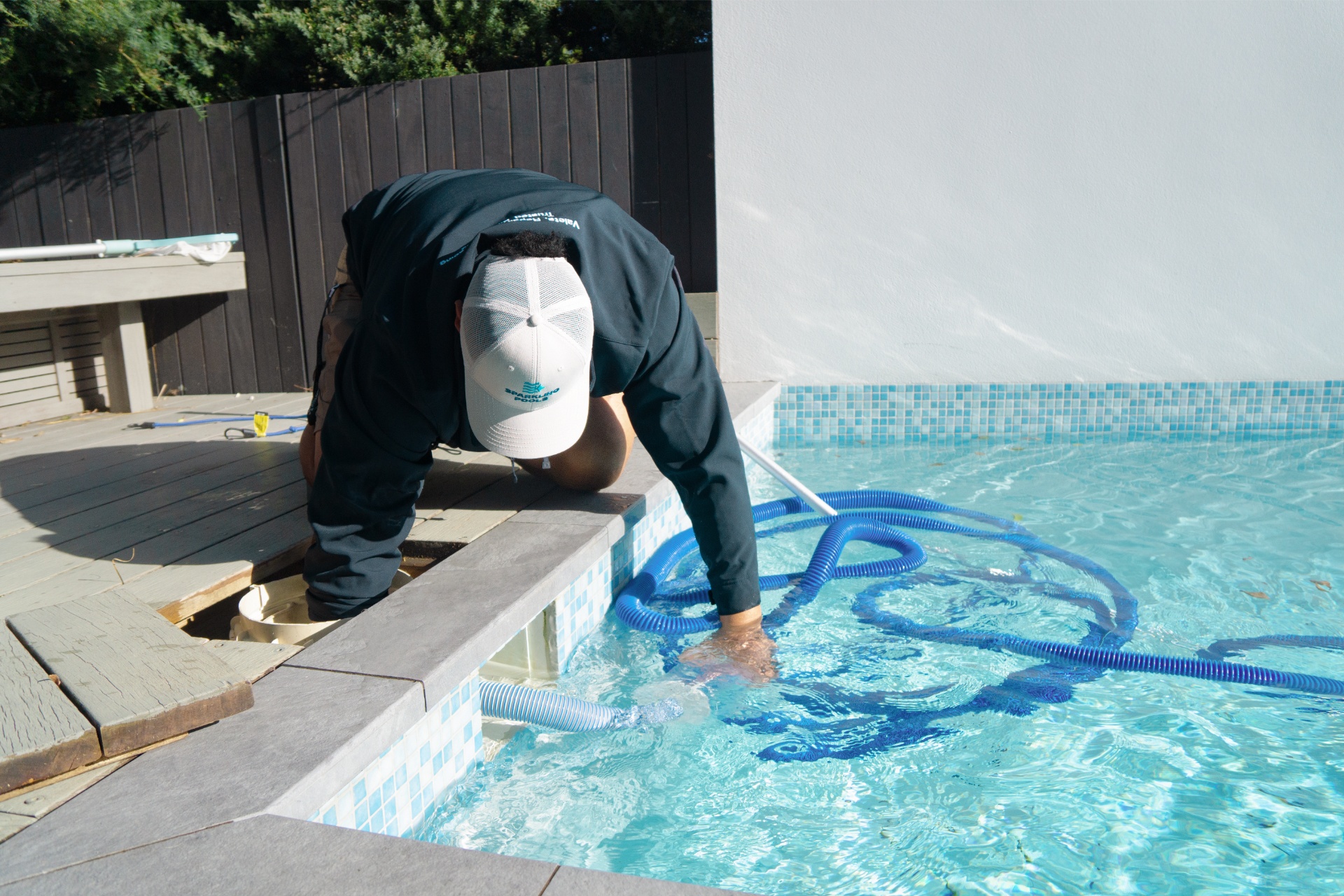
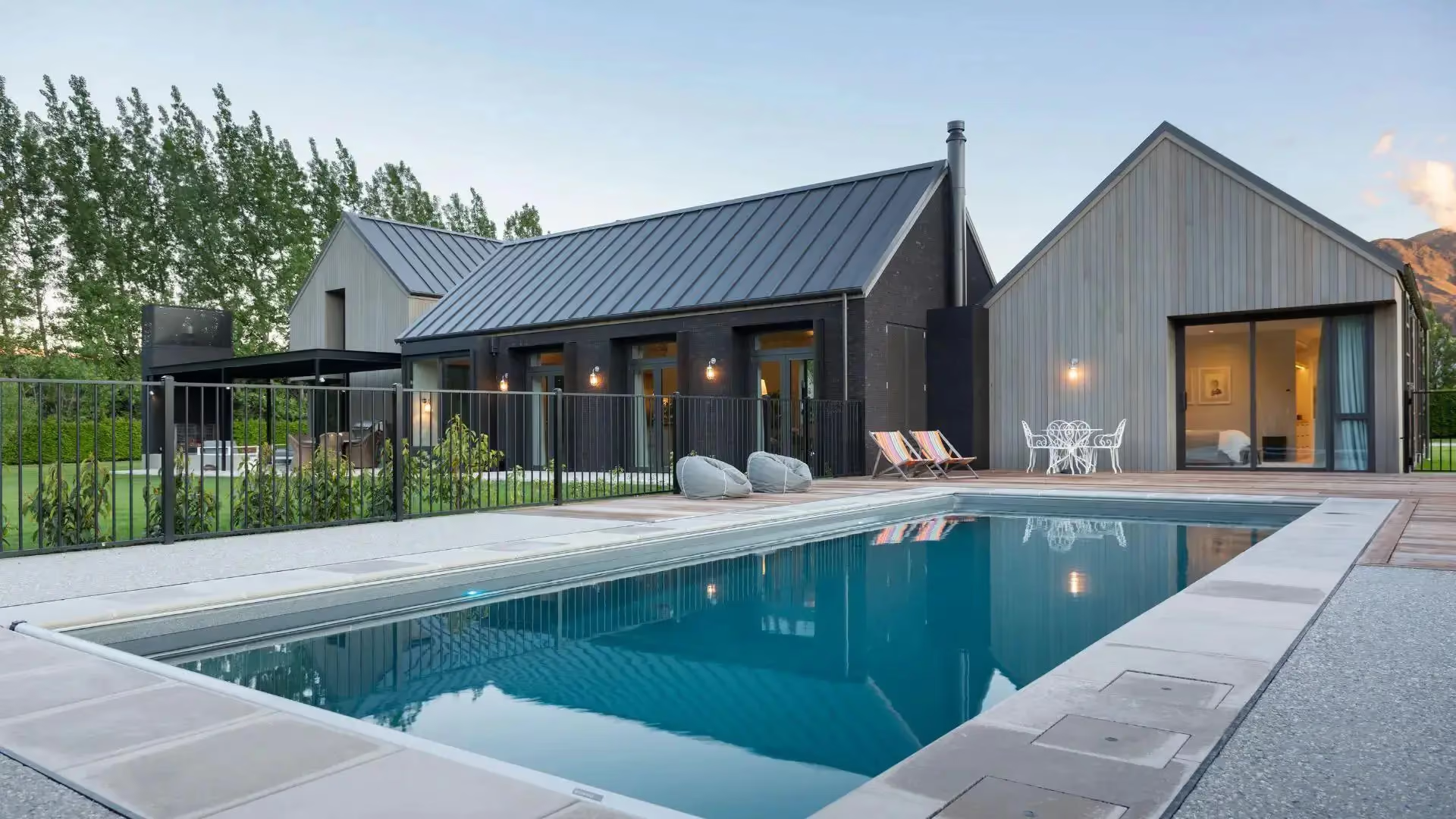
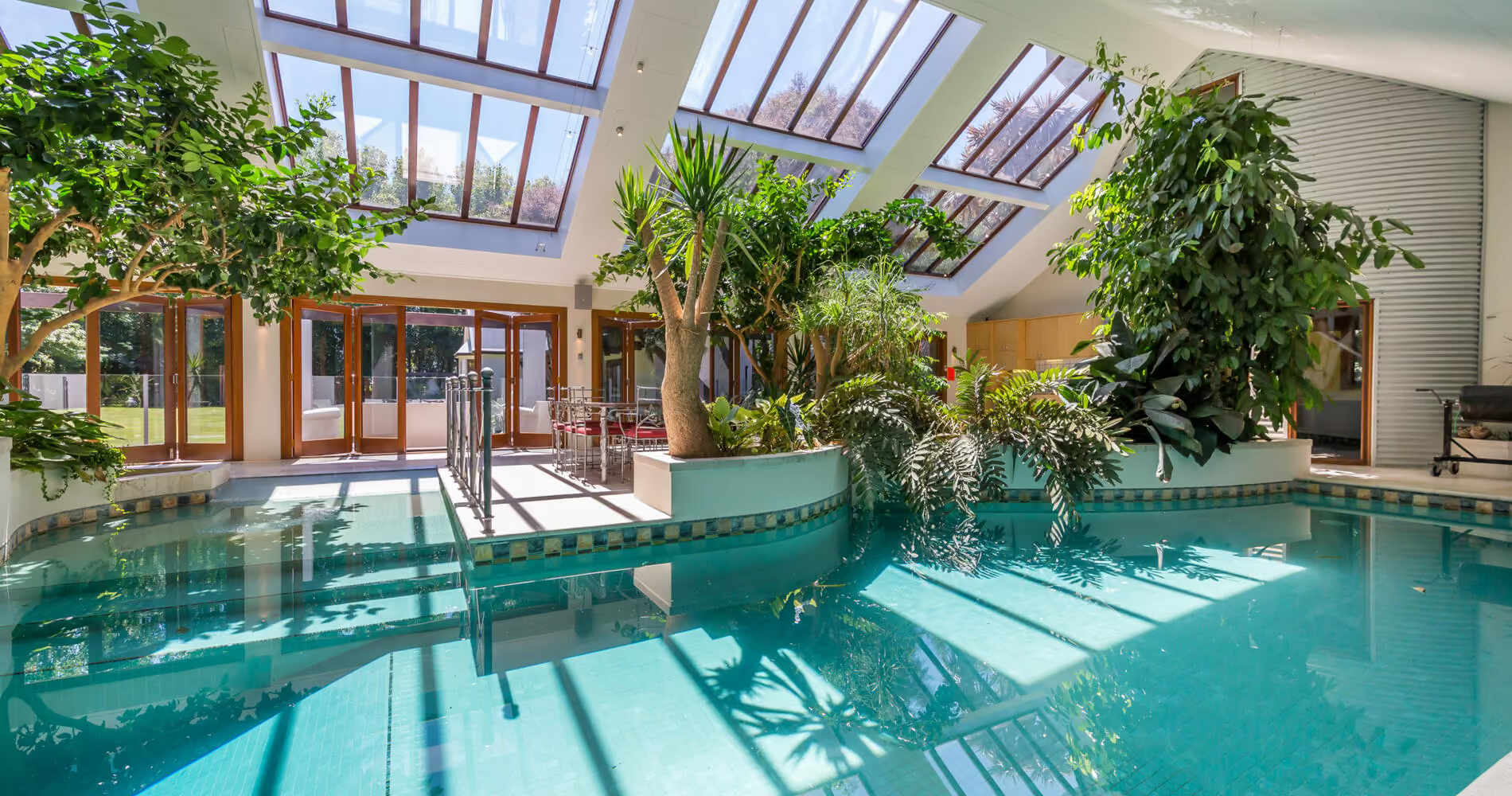
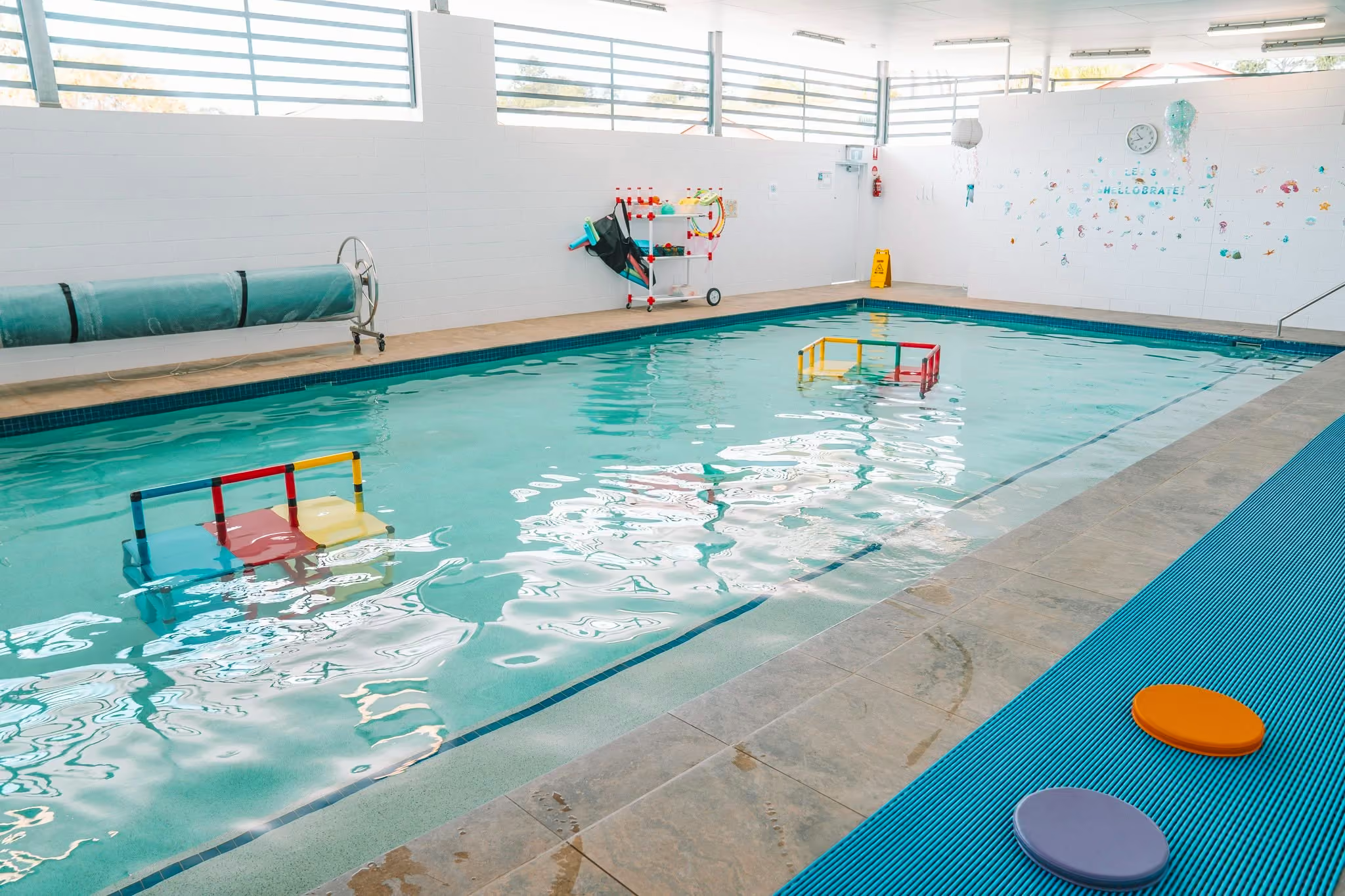
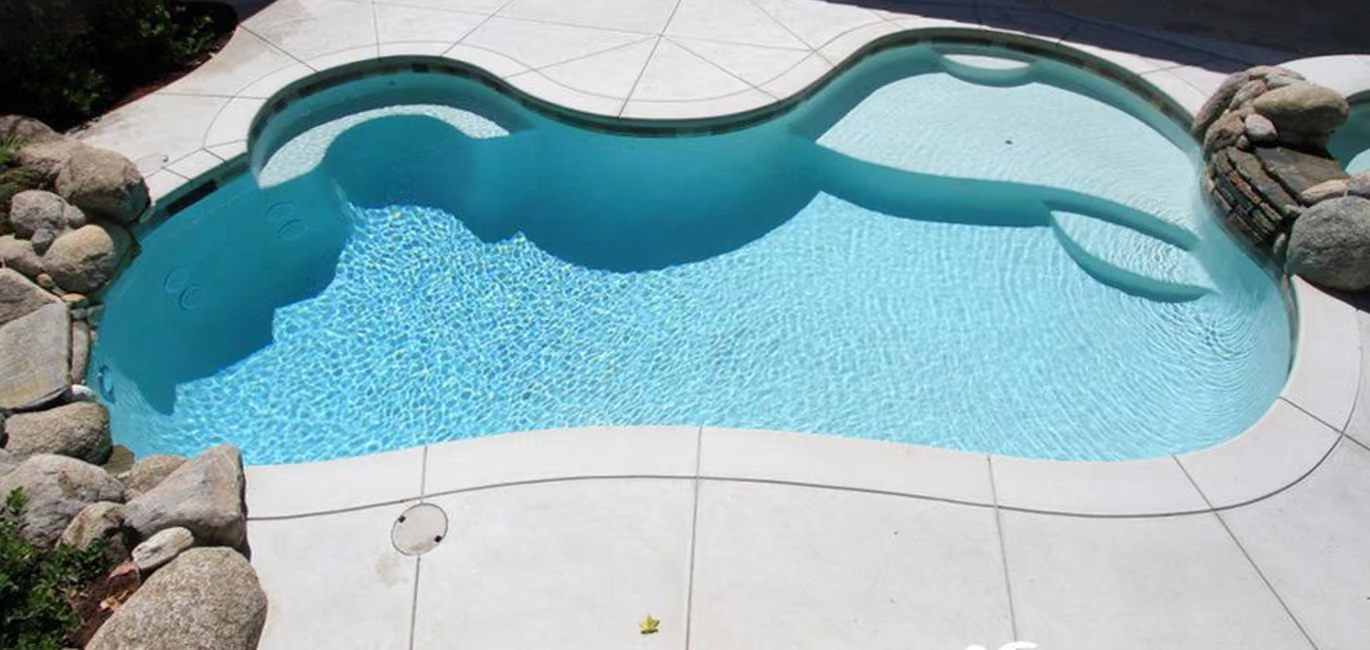
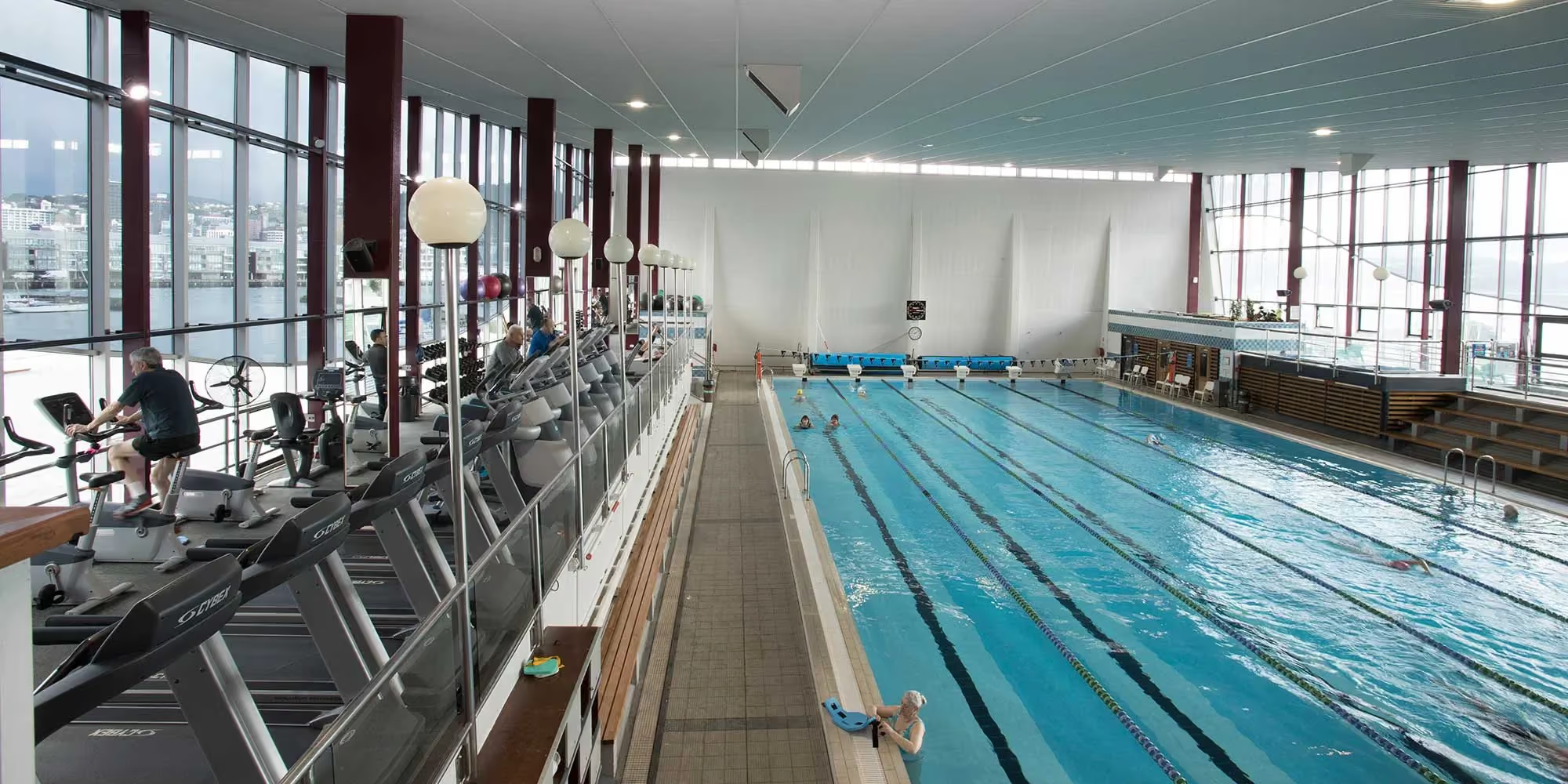
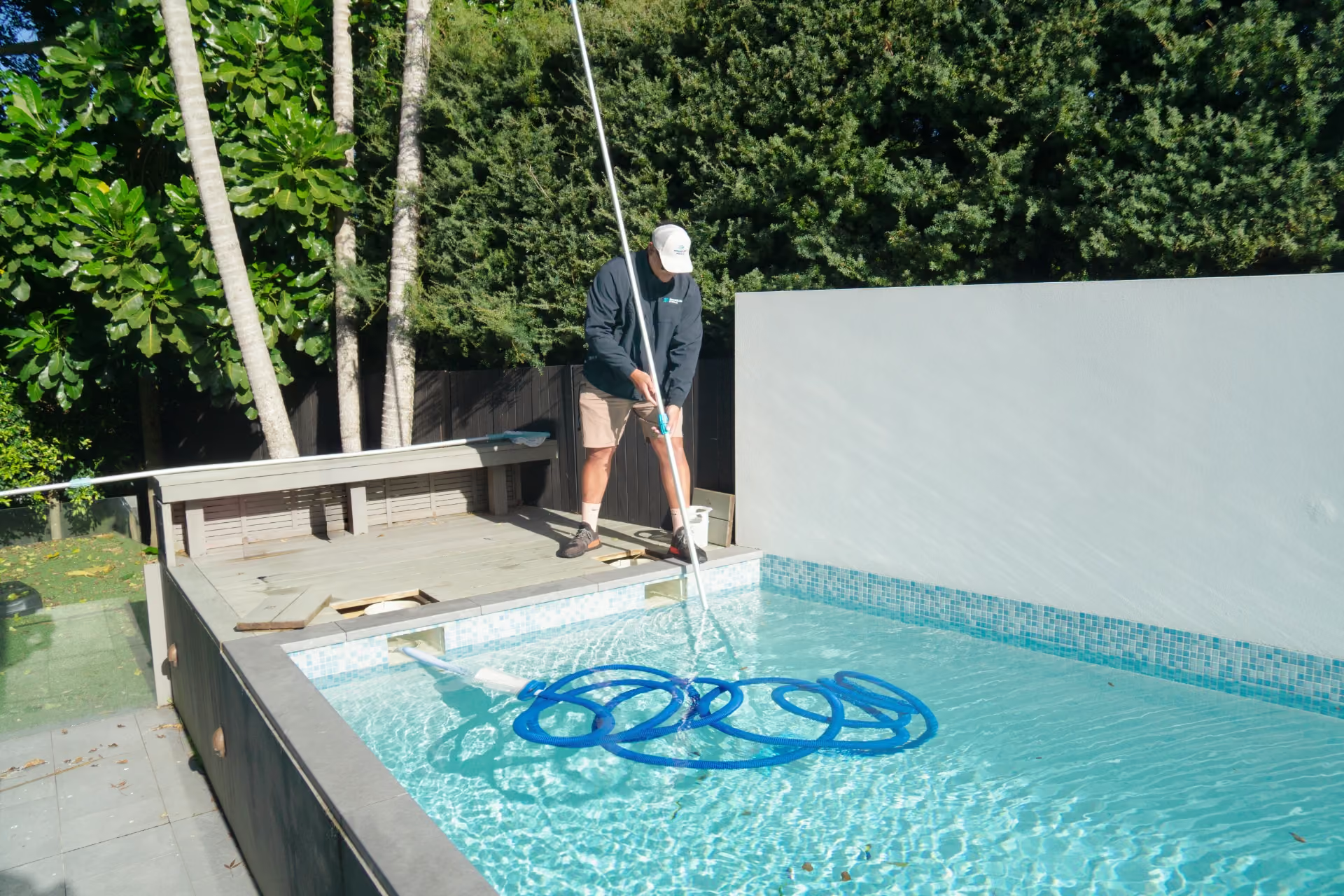
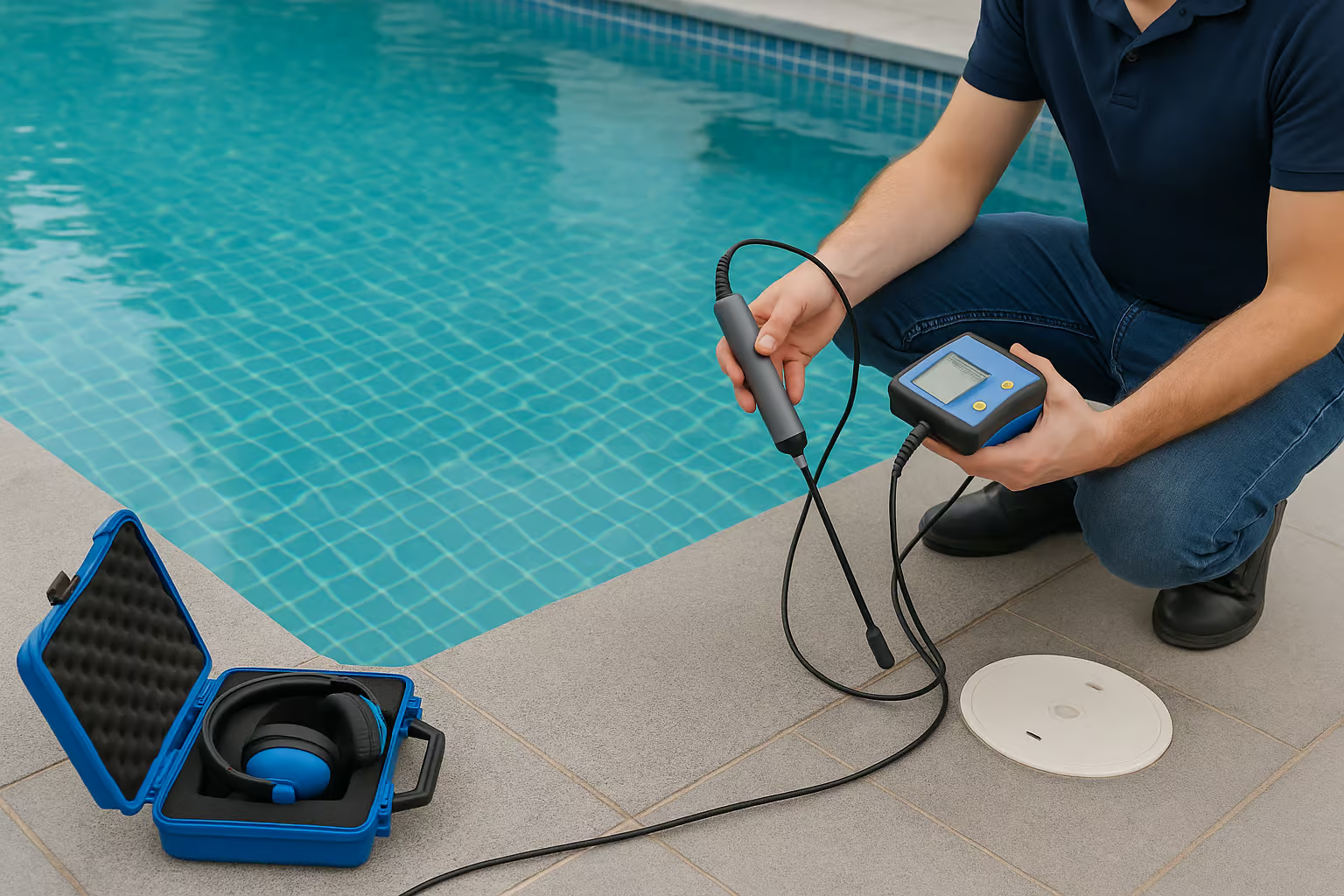
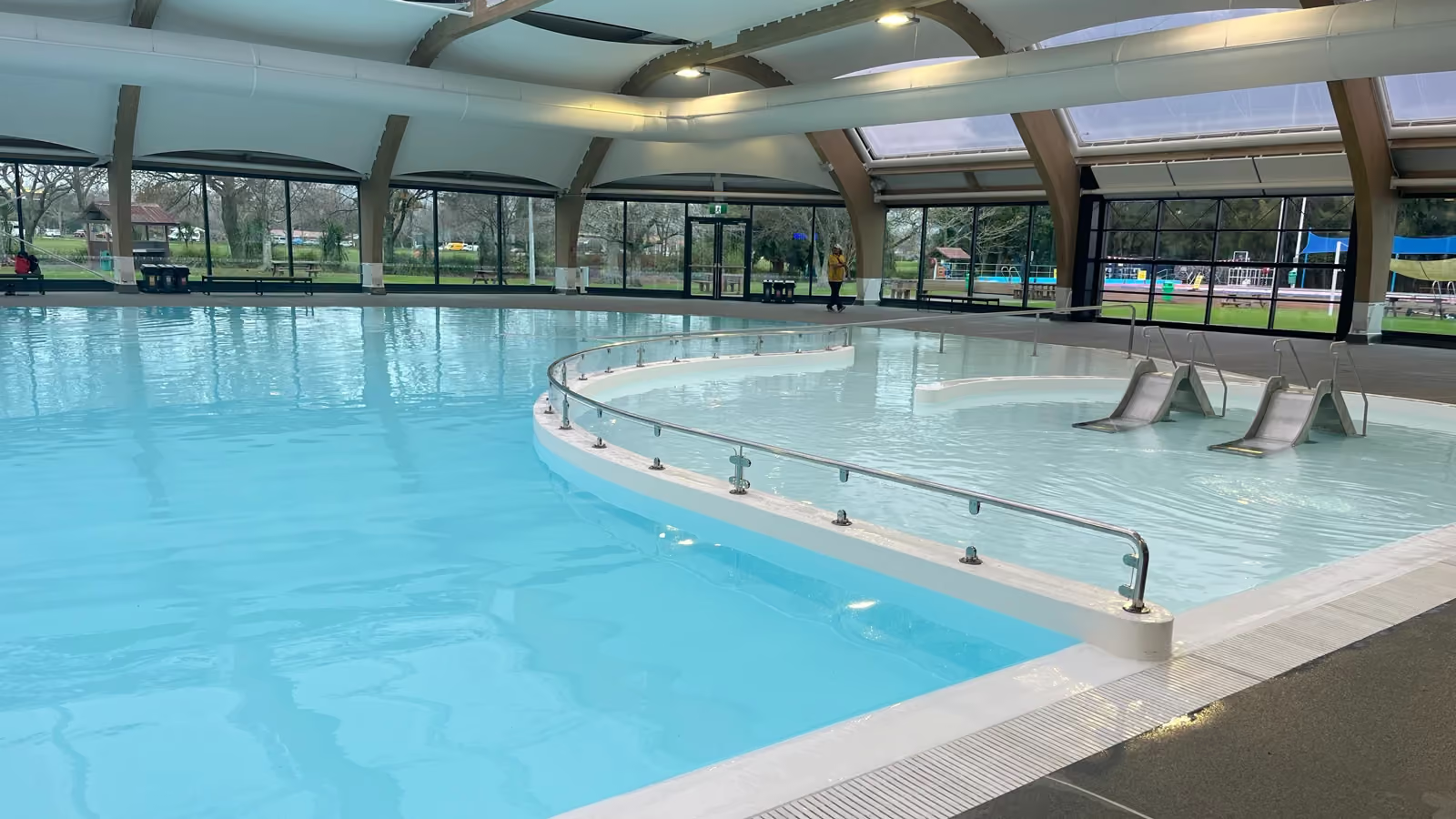
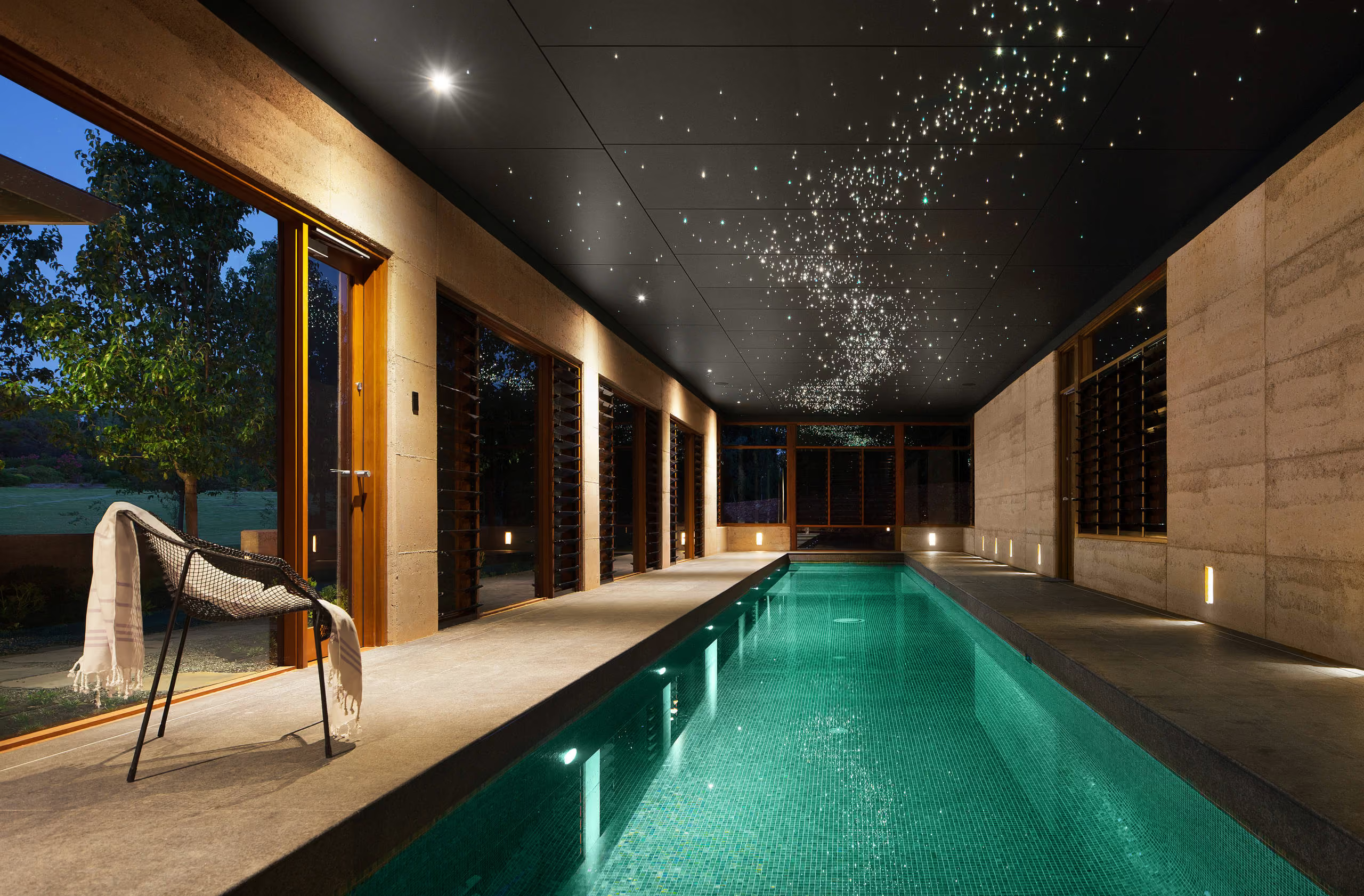
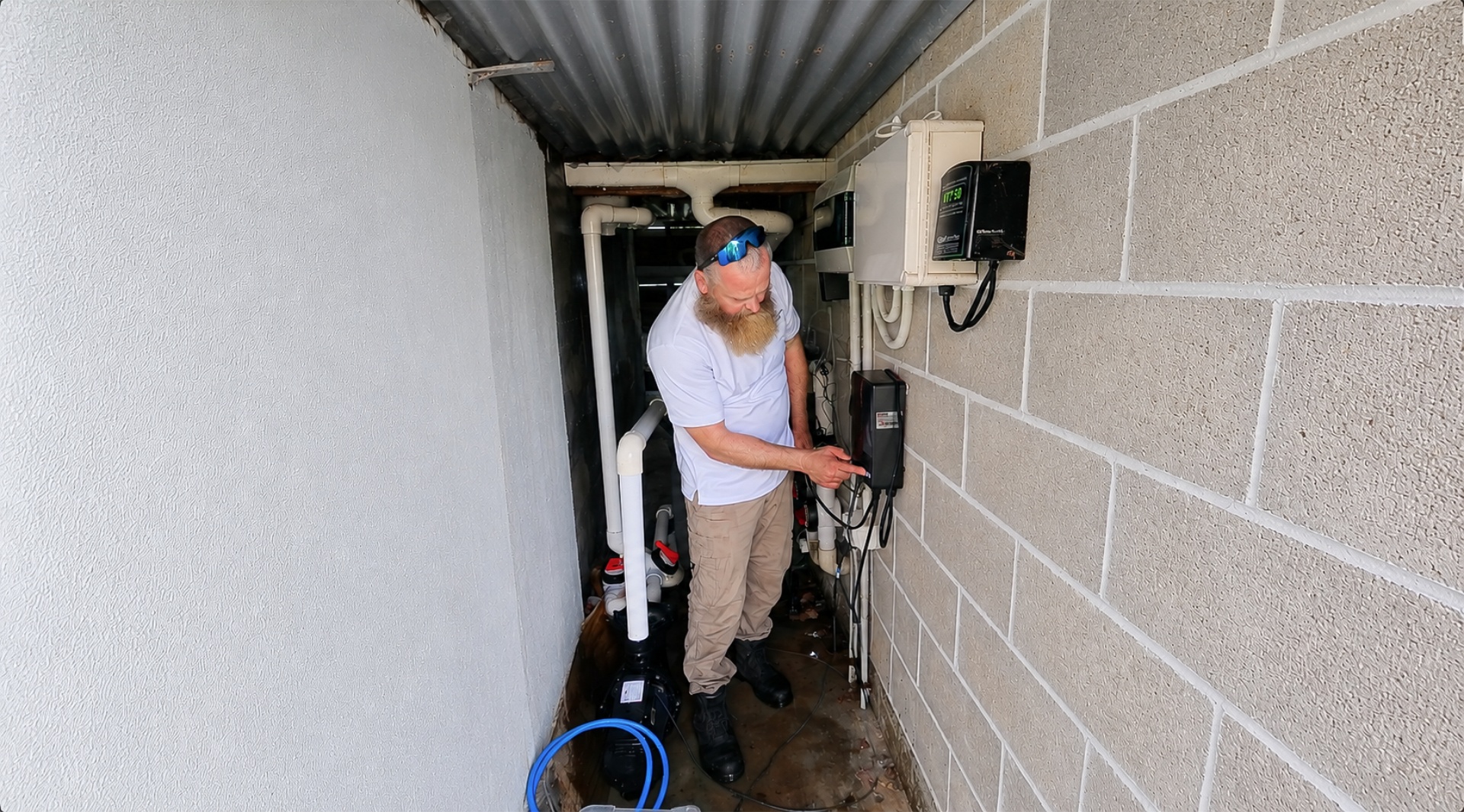
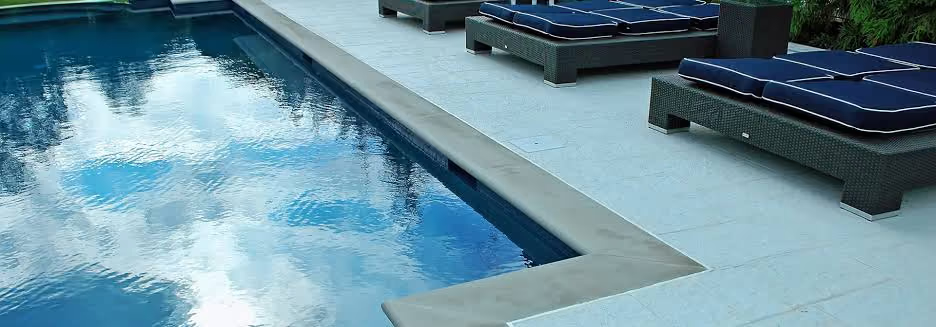
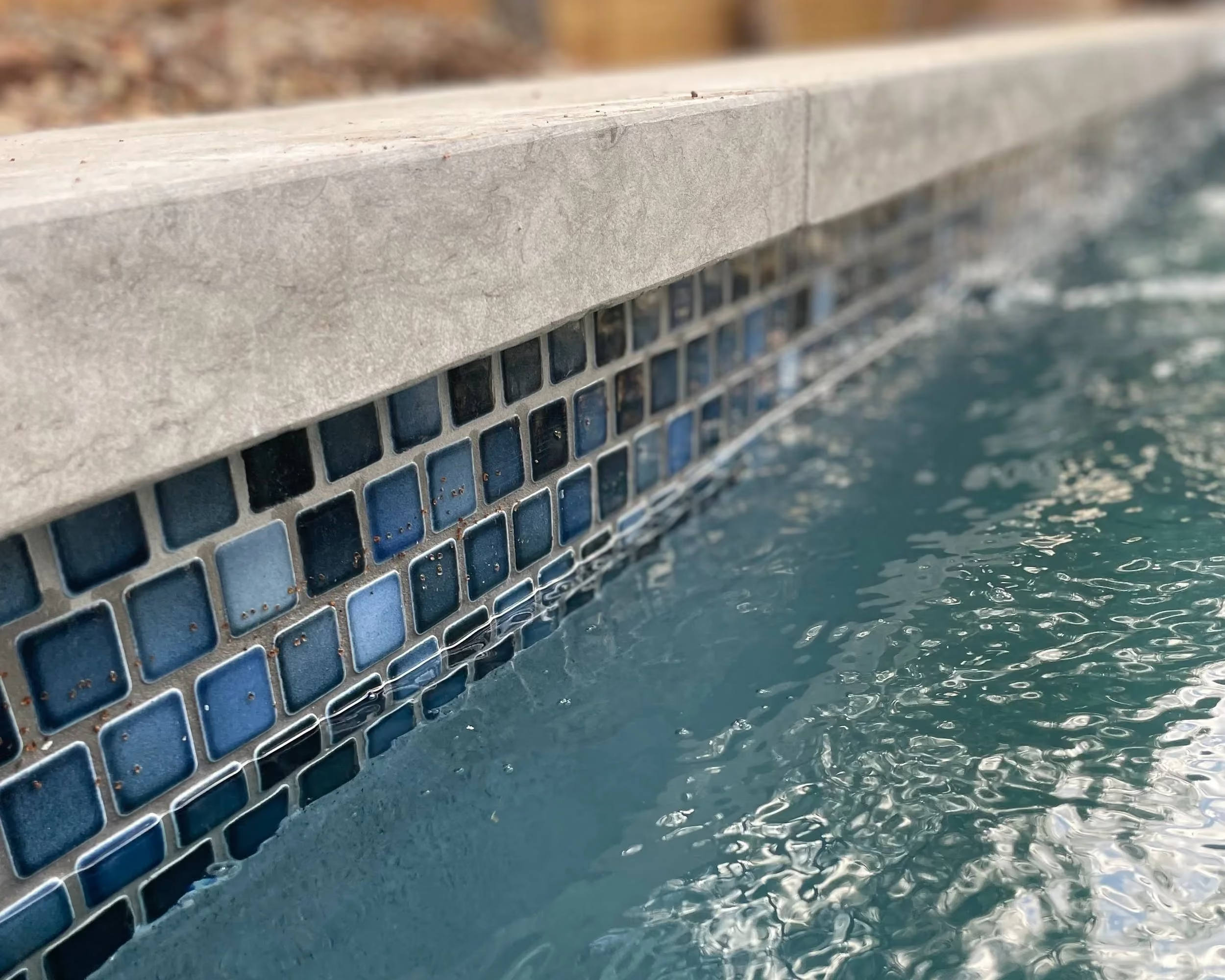
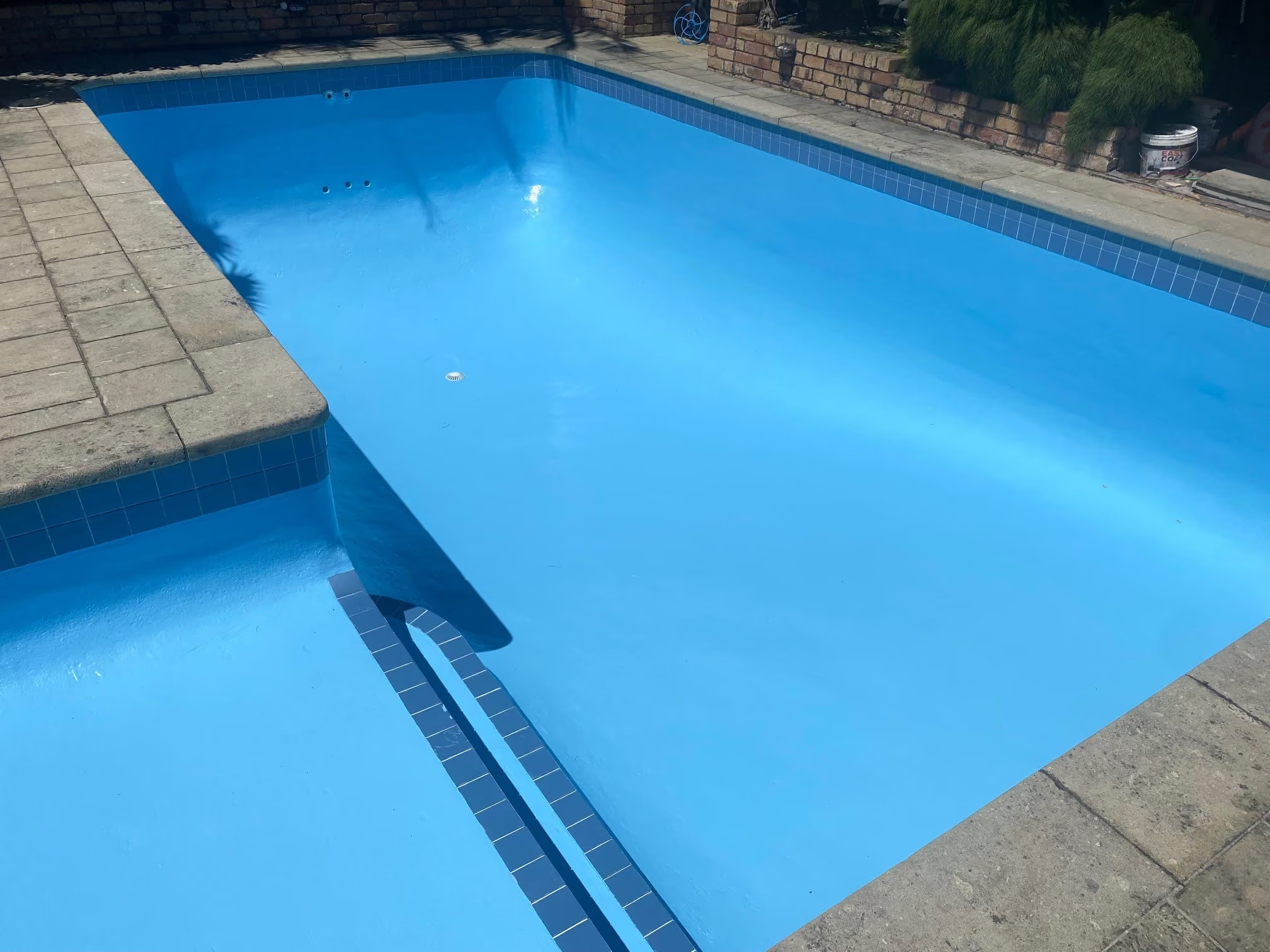
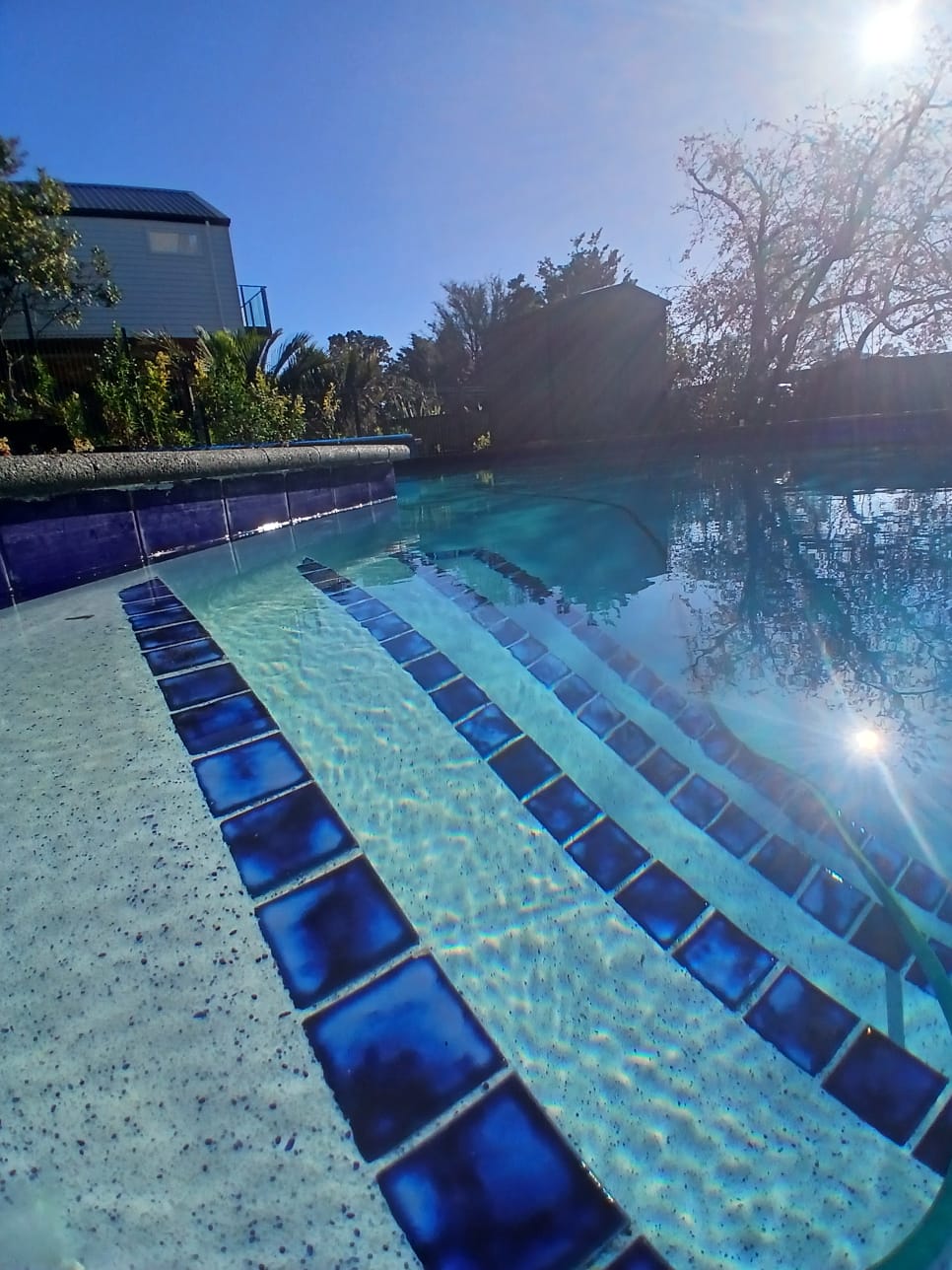
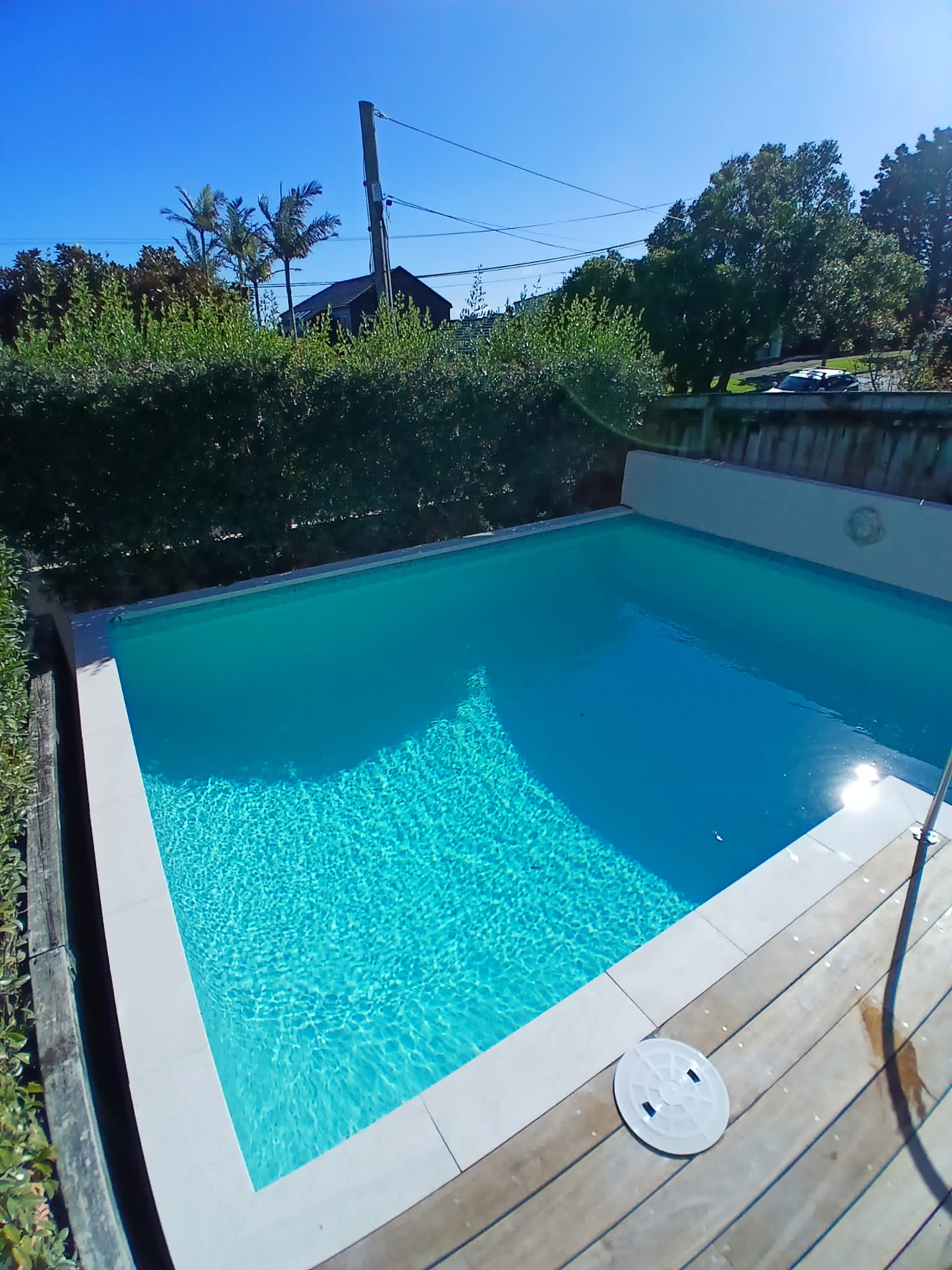
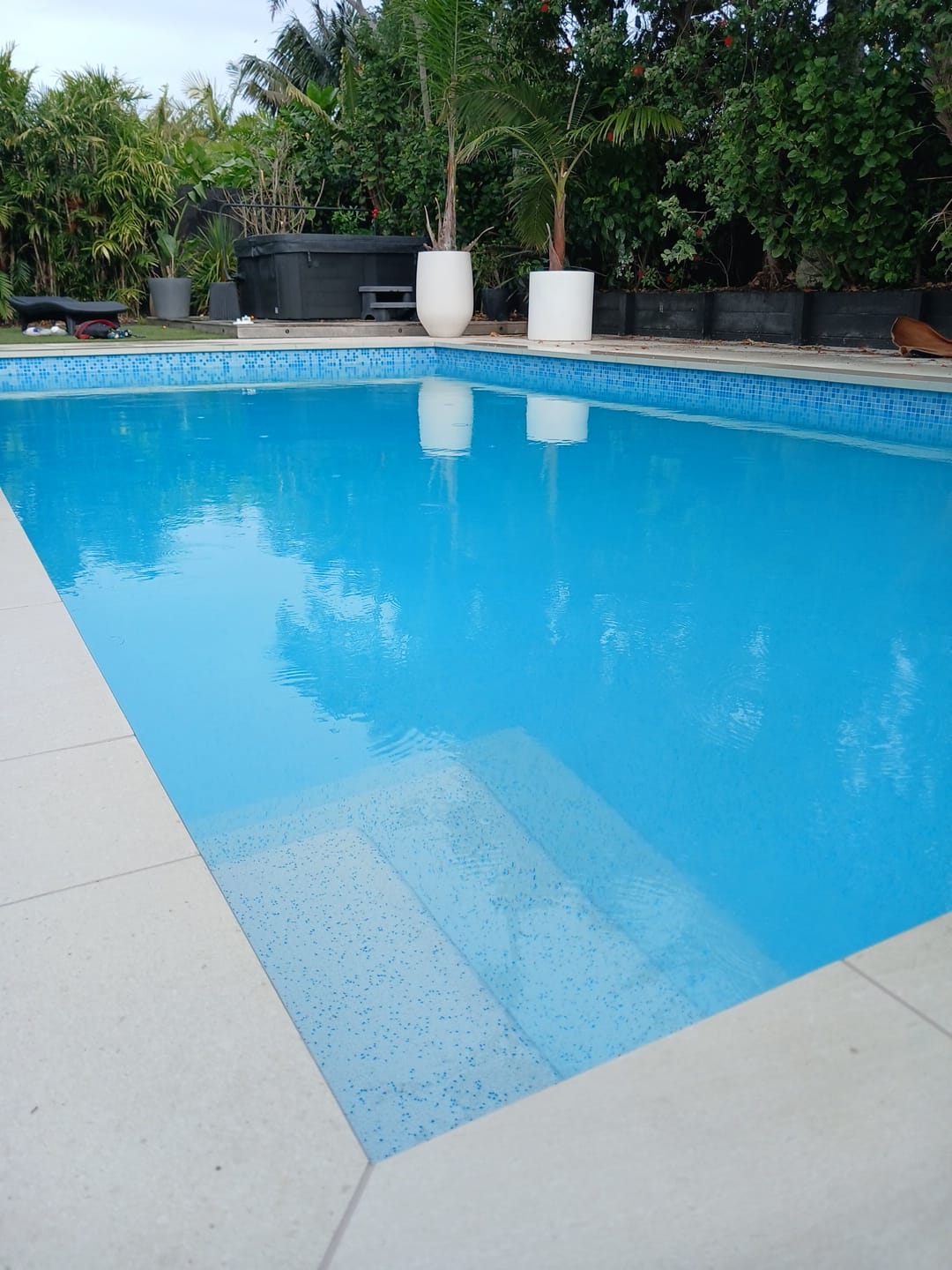
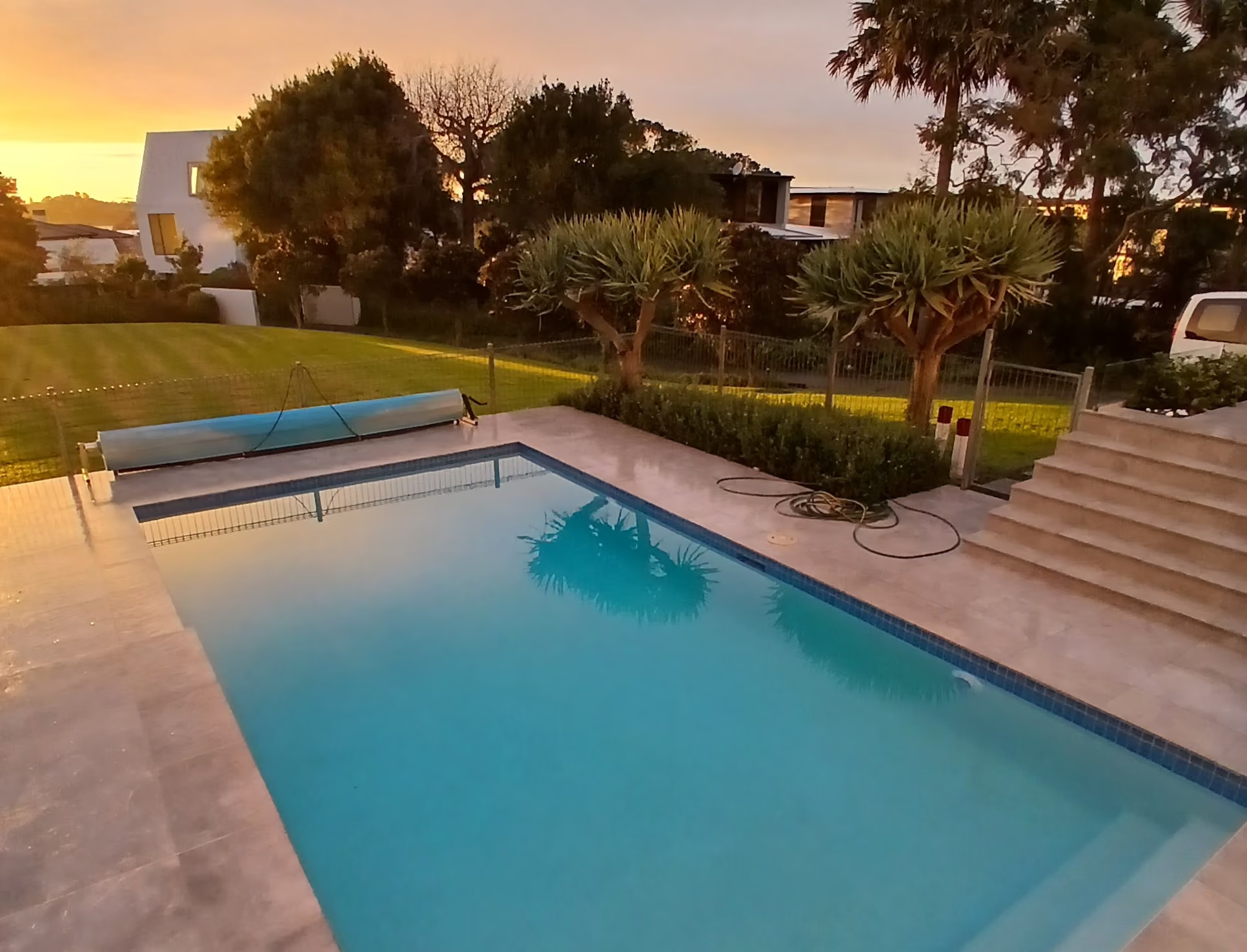
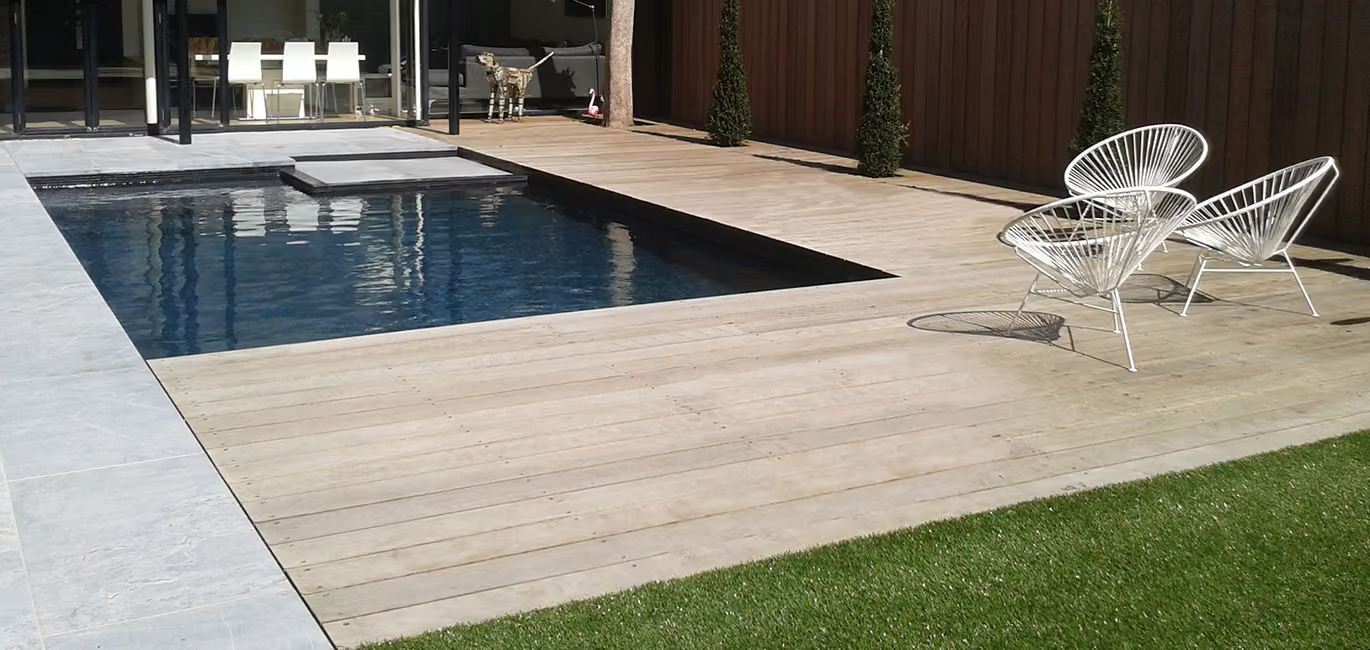
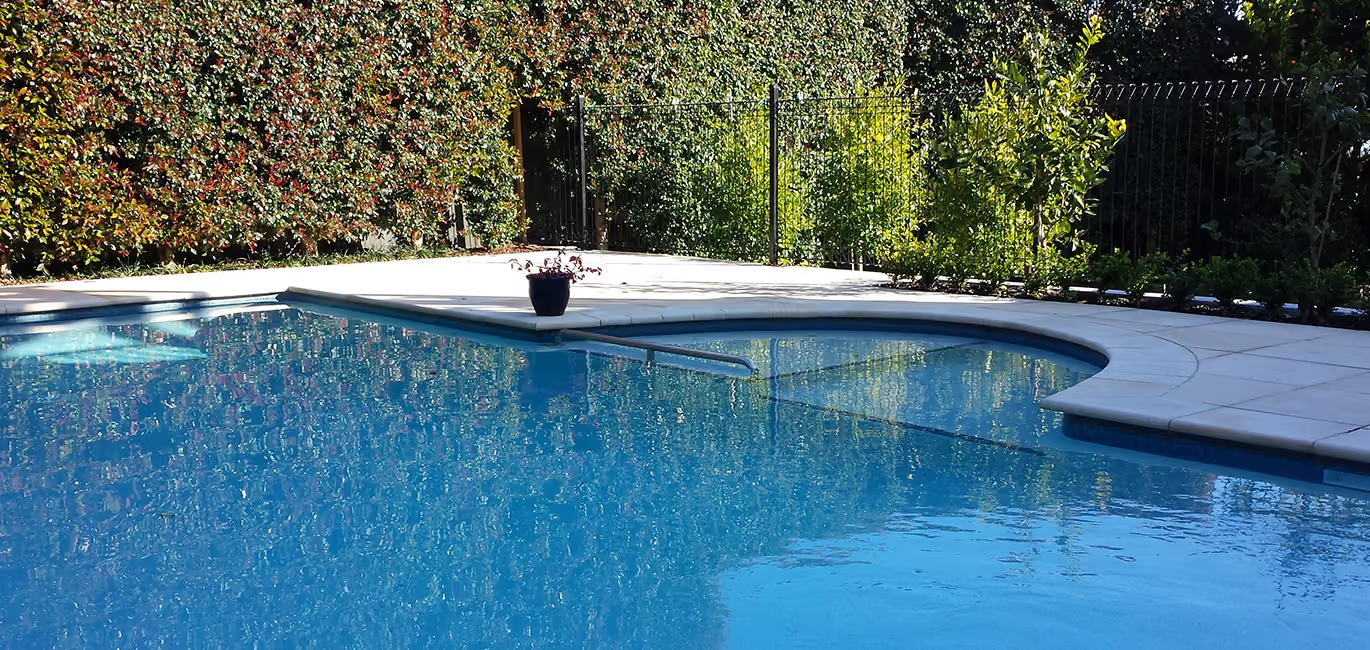
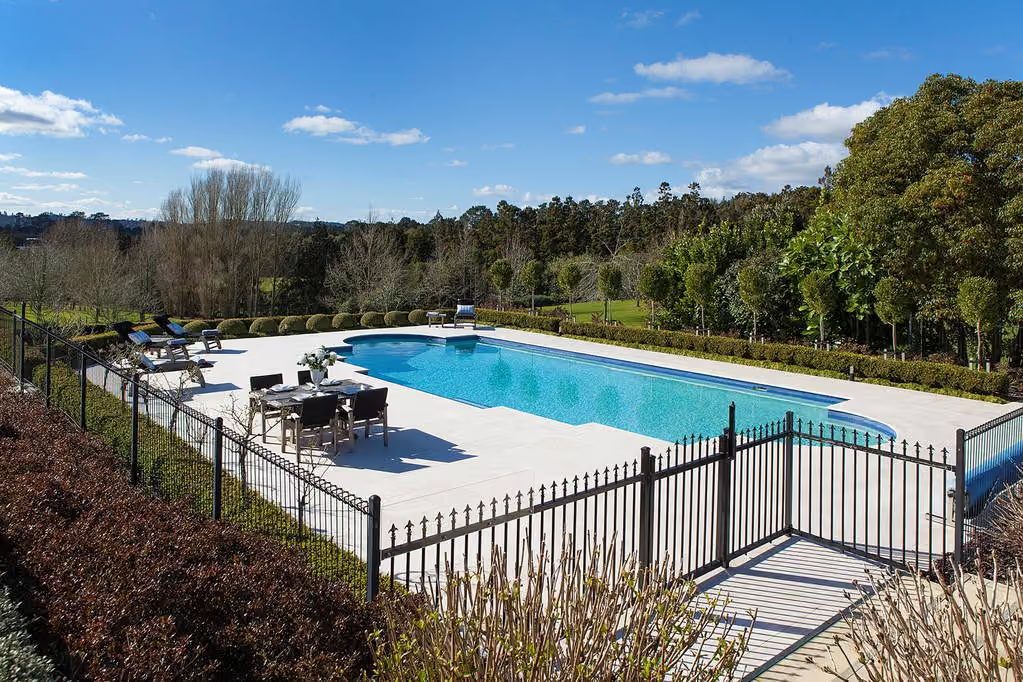
Sparkling Pools has worked on pools across Auckland, including residential renovation projects, equipment upgrades, ongoing maintenance and pool care for managed properties. Past projects show how the right approach can improve presentation, water quality and day-to-day usability. A well-maintained pool is easier to manage, more pleasant to use and better prepared for seasonal changes.
Trusted by Homeowners Across Auckland
Don't just take our word for it. Read what our clients have to say about our transparent communication, reliable service, and stunning pool transformations.
Related Blog Posts
Stay informed on pool care and renovations
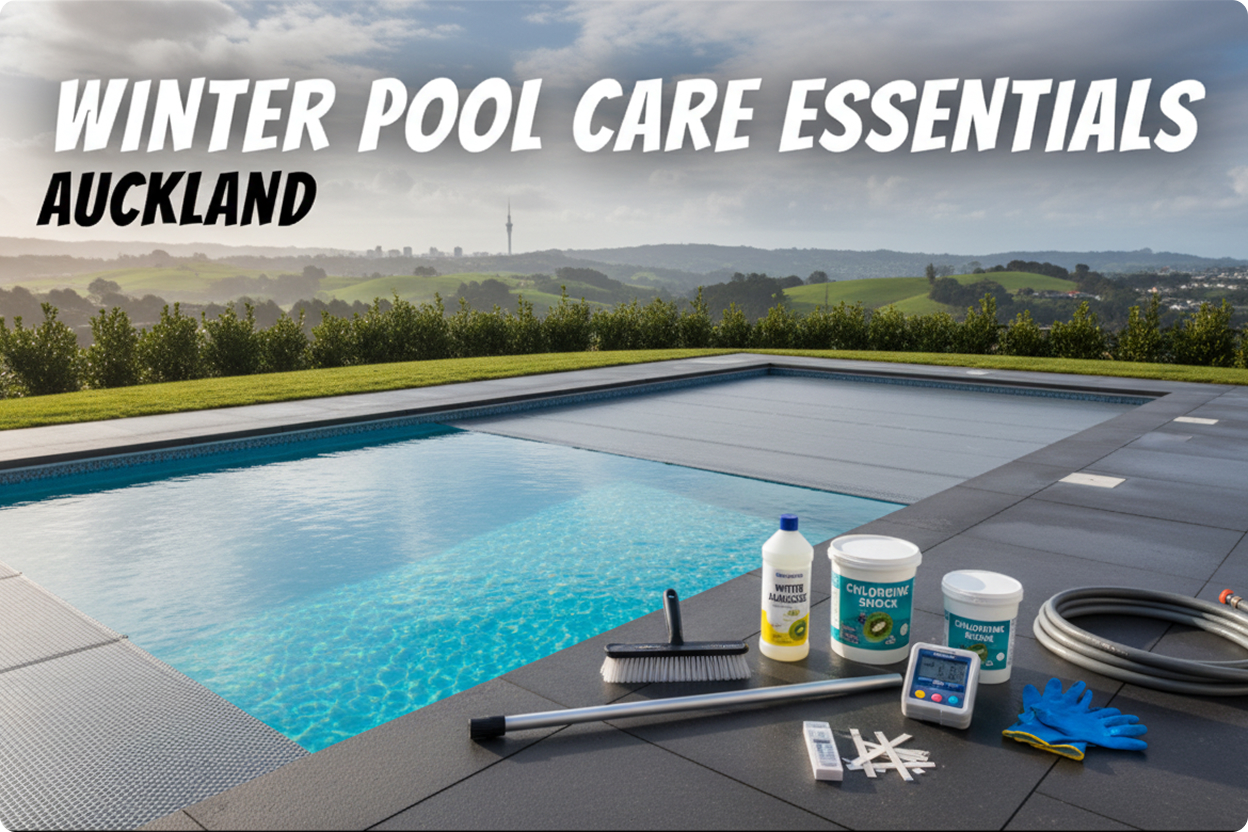
Winter pool care essentials for Auckland
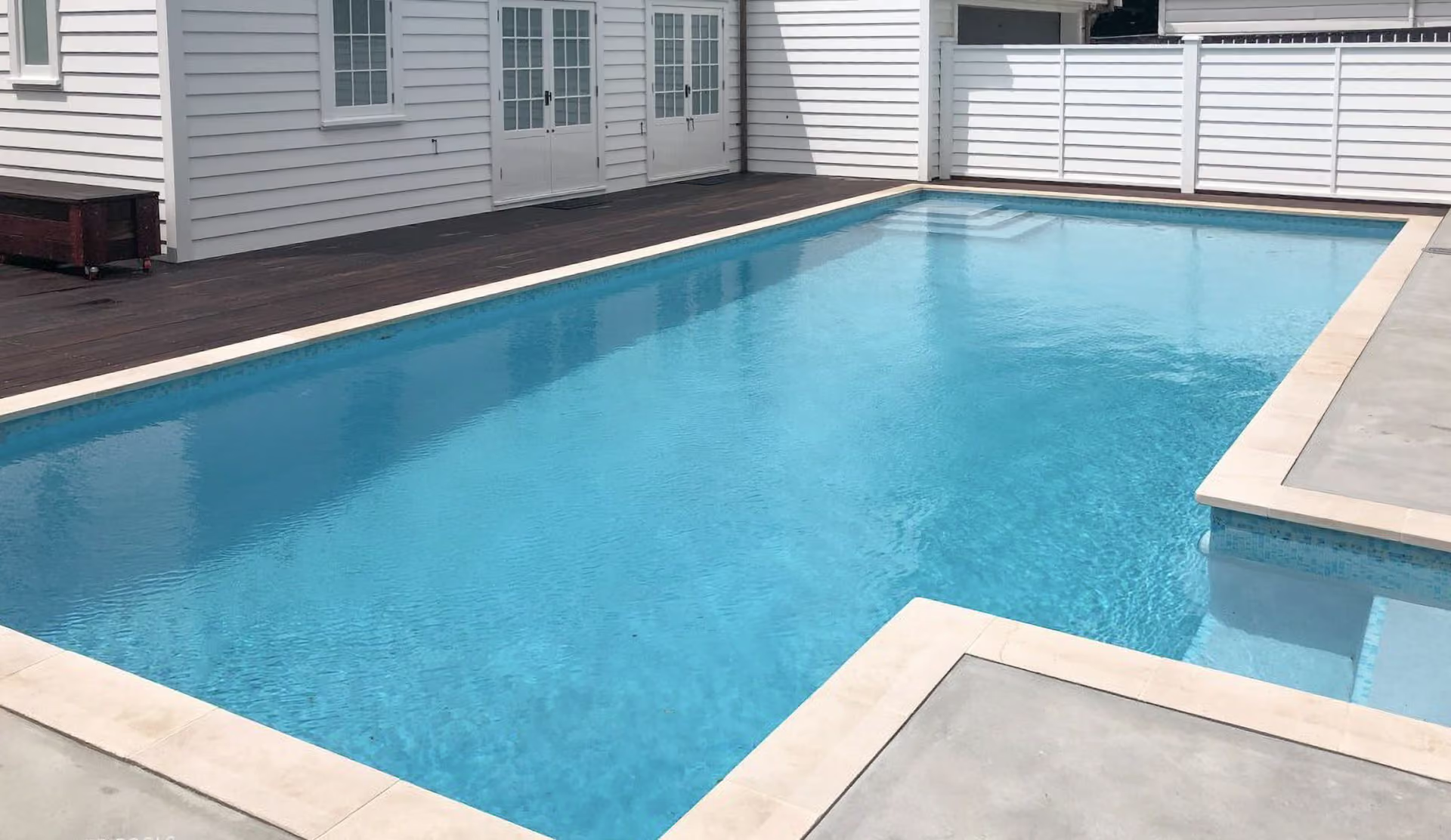
Pool Renovation Mistakes

Auckland Climate Pool Maintenance
Choosing Renovation Contractor
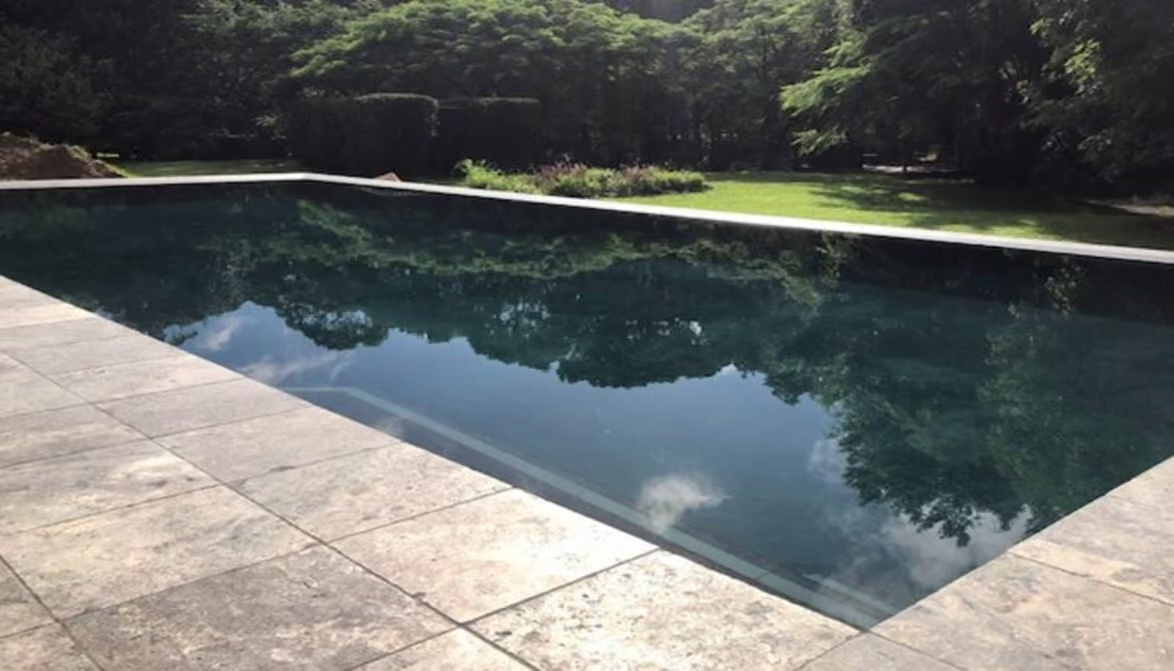
Pool Care Auckland Summer
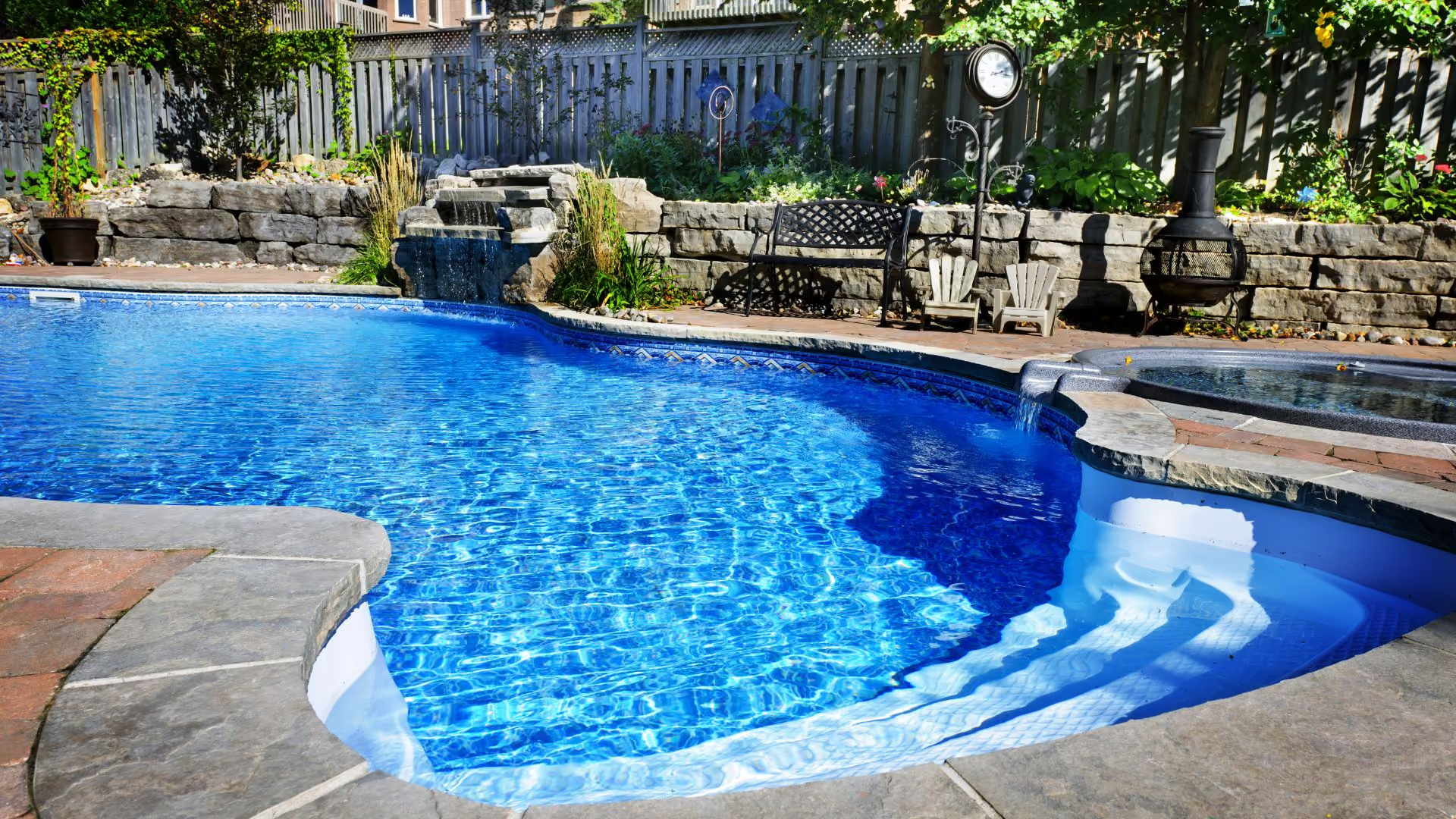
Permits & Consents

Pool Renovation ROI
How Often to Test Pool Water
Pool Renovation Costs
Cost of Pool Service Auckland
Pool Renovation Planning Guide
Pool Lighting Buying Guide
Pool Cleaner Buying Guide
Pool Automation Buying Guide
Pool Heater Buying Guide
Pool Filter Buying Guide
Pool Pump Buying Guide
Best Equipment Auckland Climate
Auckland Water Quality
Auckland Pool Season
Pool Ownership Costs
Common Pool Mistakes
Pool Safety Laws
Pool Inspection Requirements
Pool Fence Compliance
.avif)
Auckland Pool Industry Trends
Auckland Pool Regulations
Pool Equipment Suppliers
Best Pool Service Areas
Pool Service Pricing Analysis
Company vs Independent
Best Pool Surface Materials
Pool Resurfacing Options
Pebble vs Plaster Surfaces
One-Time vs Ongoing Service
Full Service vs Chemicals Only
Pool Cover Types
Robotic vs Suction Cleaners
Mineral vs Saltwater
Gas vs Heat Pump
Pool Heater Types
Pool Winterizing Guide Auckland
Pool Opening Guide Summer
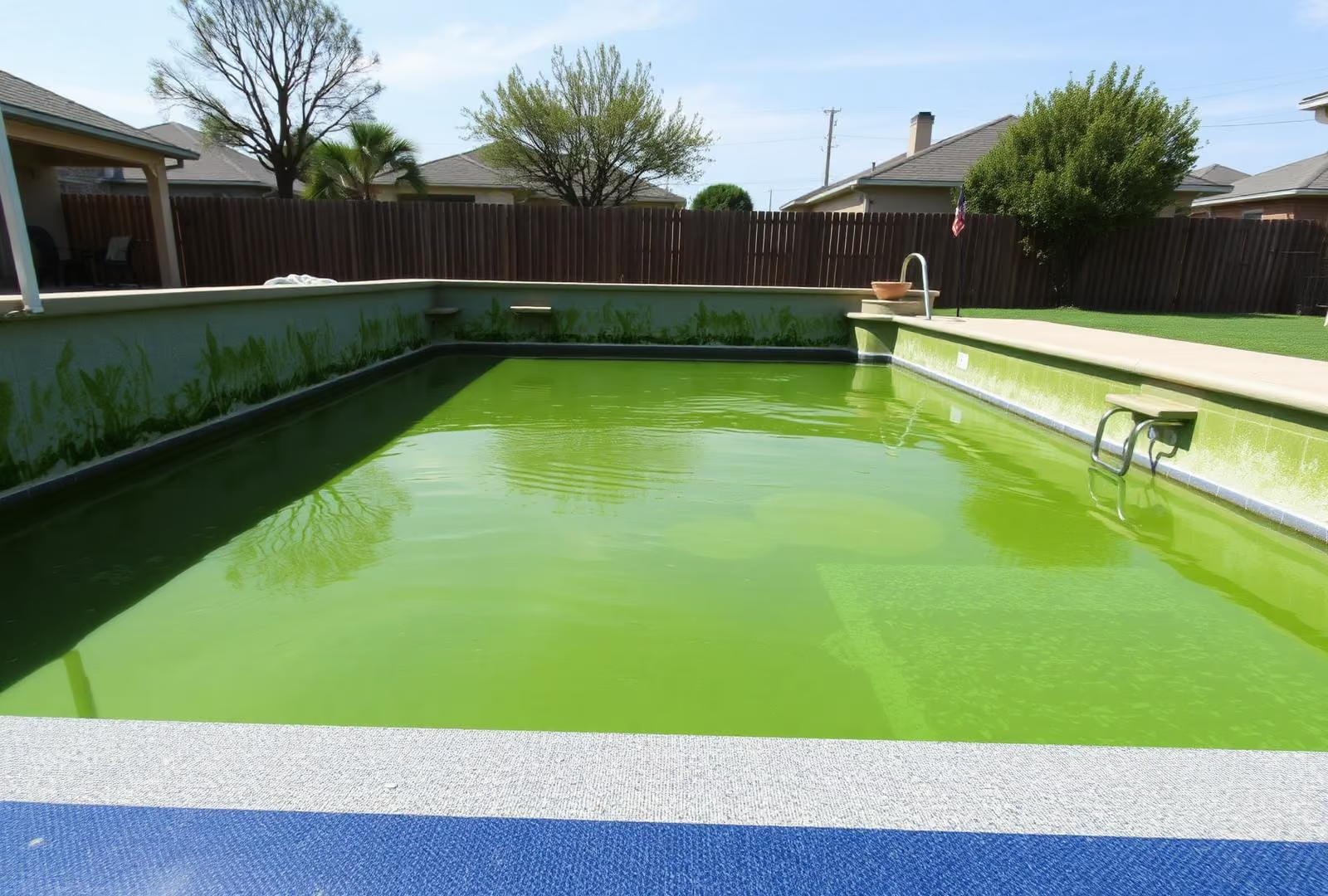
Pool Maintenance After Heavy Rain
Pool Maintenance Schedule
How Often to Run Pool Filter
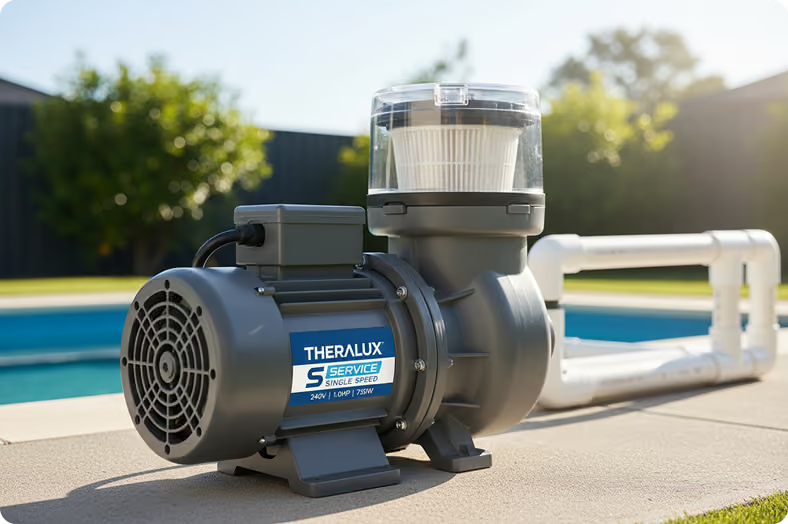
Pool Pump Maintenance Schedule
Pool Filter Cartridge Cleaning
Pool Equipment Maintenance Checklist
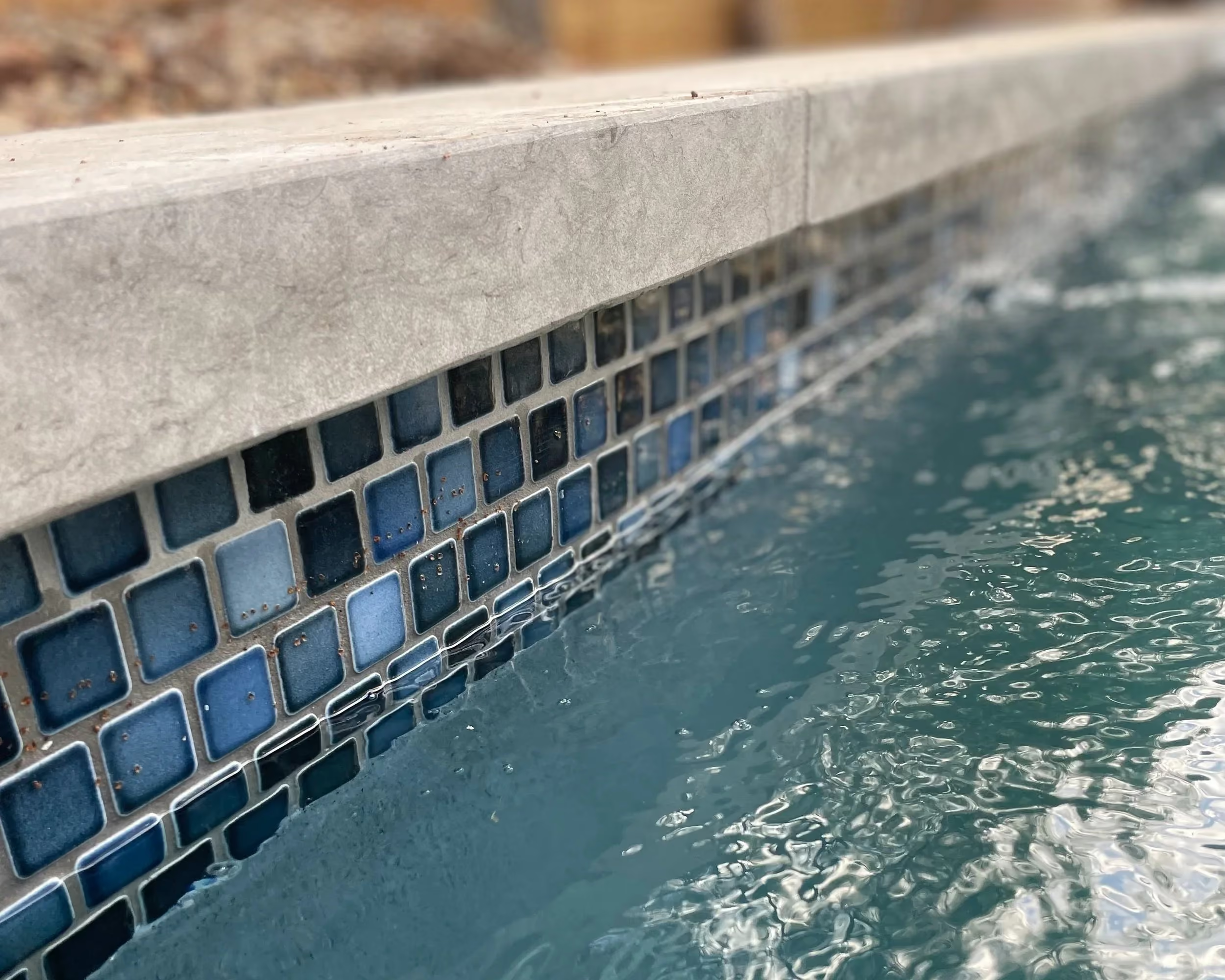
Pool Waterline Cleaning
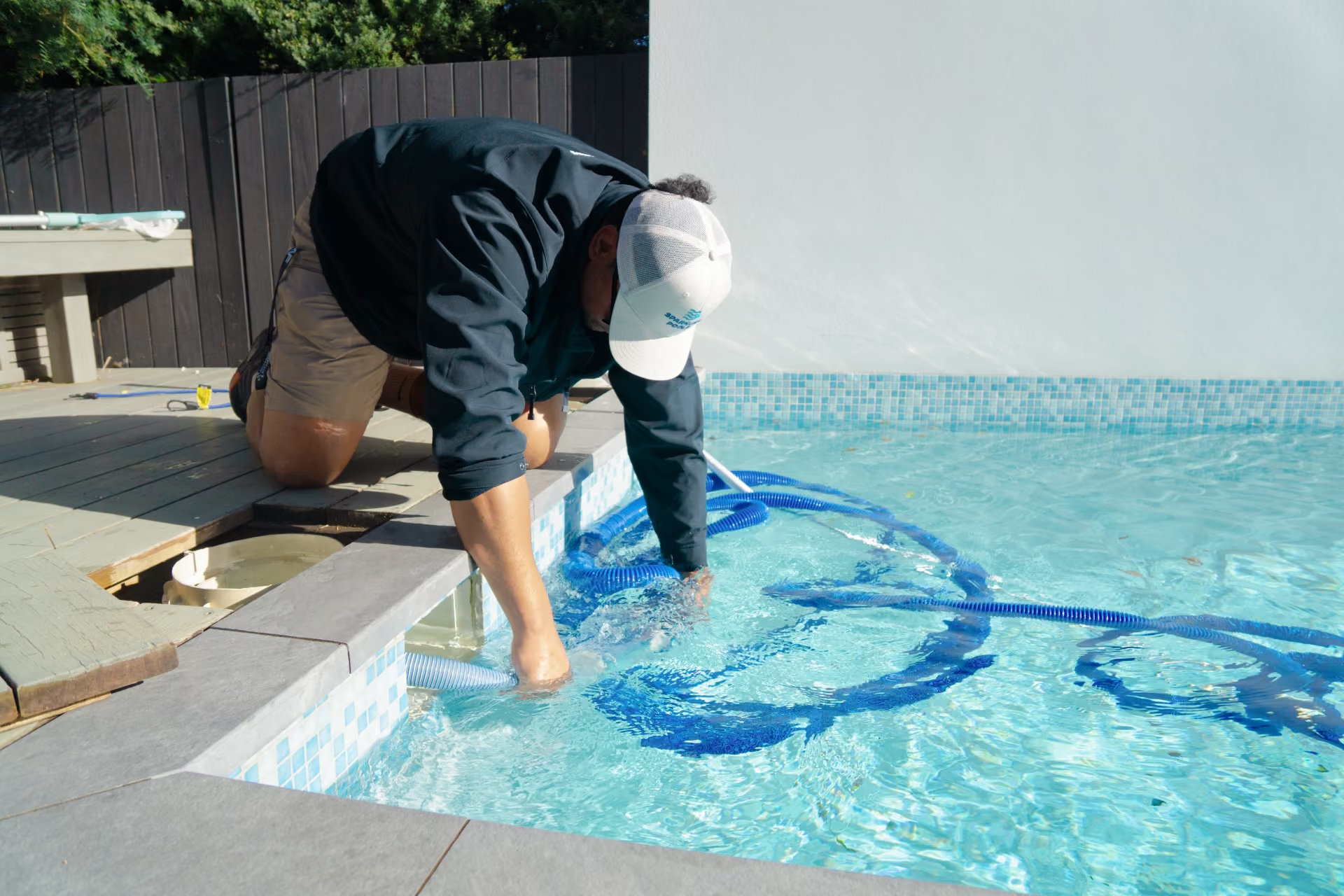
Pool Skimmer Basket Cleaning
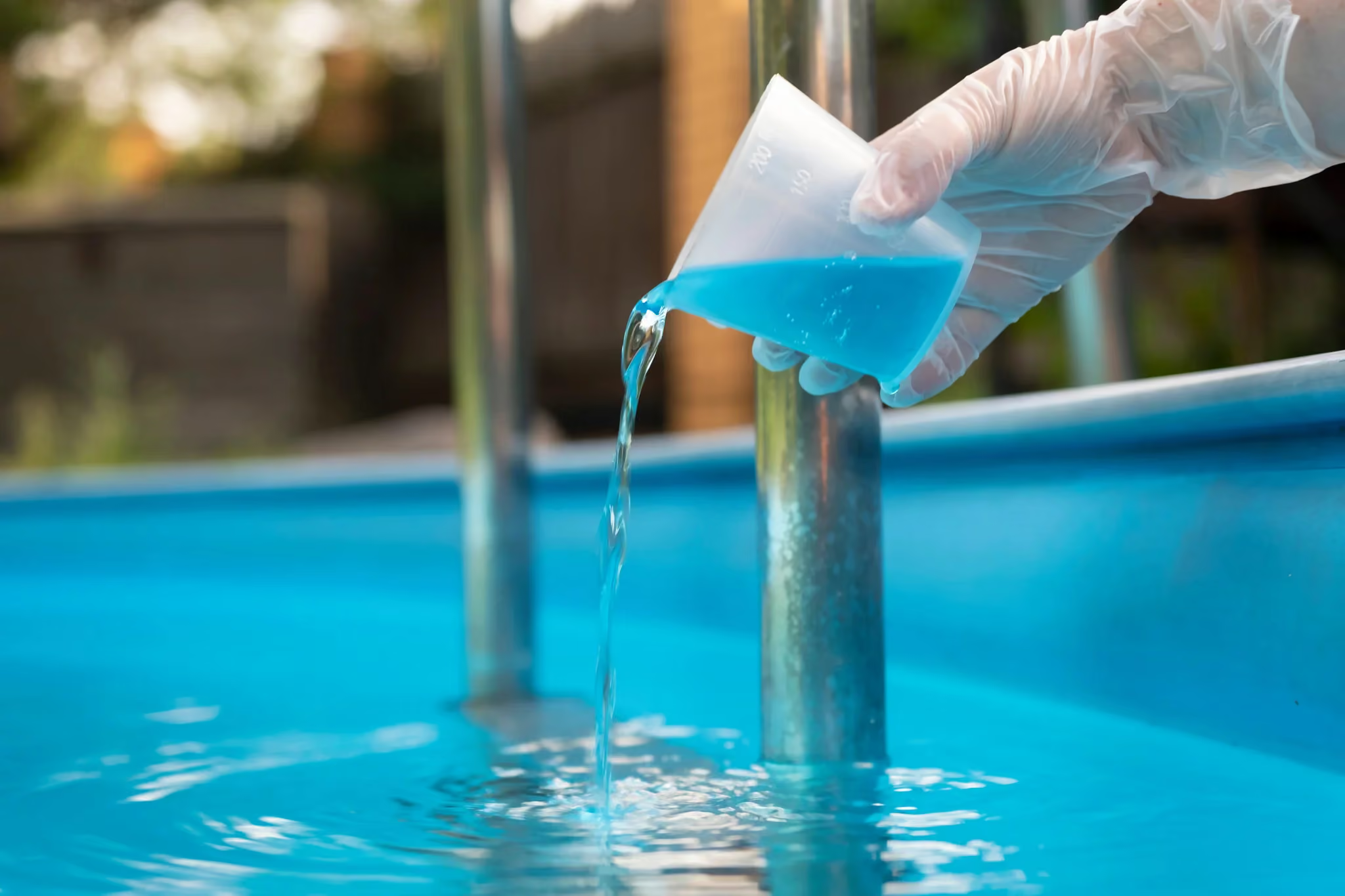
Pool Chlorine Levels
How Often Clean Pool Filter
How to Vacuum Pool
Pool Brushing Technique
Pool Chemical Dosing Chart
Pool Water Chemistry Basics
How to Balance Pool Chemistry
How to Test Pool Water
Pool Maintenance Tips
Complete Pool Maintenance Guide
Pool Service ROI
Pool Equipment Buy or Service
Pool Maintenance Time Requirements
DIY vs Professional
Pool Service Contract
Pool Service vs Pool Valet
Is Pool Service Worth It
Pool Service Guarantees
Pool Service Reviews
Pool Service Red Flags
Questions to Ask Pool Companies
How to Choose Pool Service Company
Hidden Costs DIY Maintenance
Pool Cleaning Prices Auckland
Cost of Pool Resurfacing
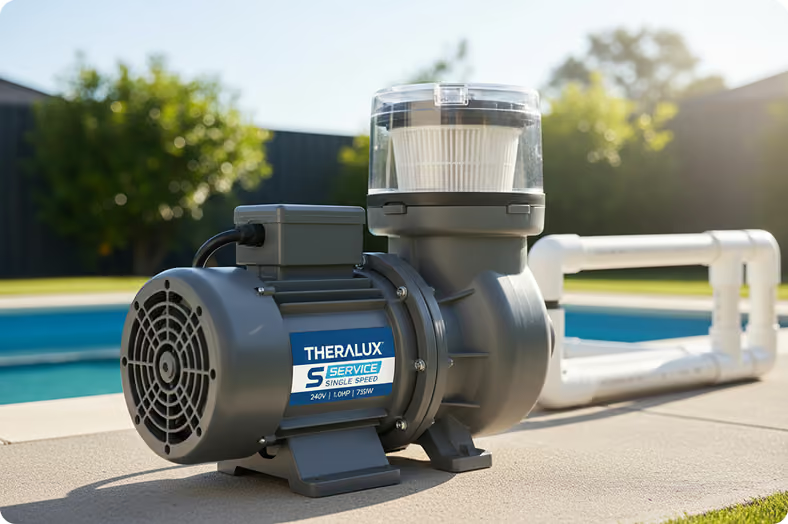
Cost of Pool Pump Replacement
Cost to Fix Green Pool
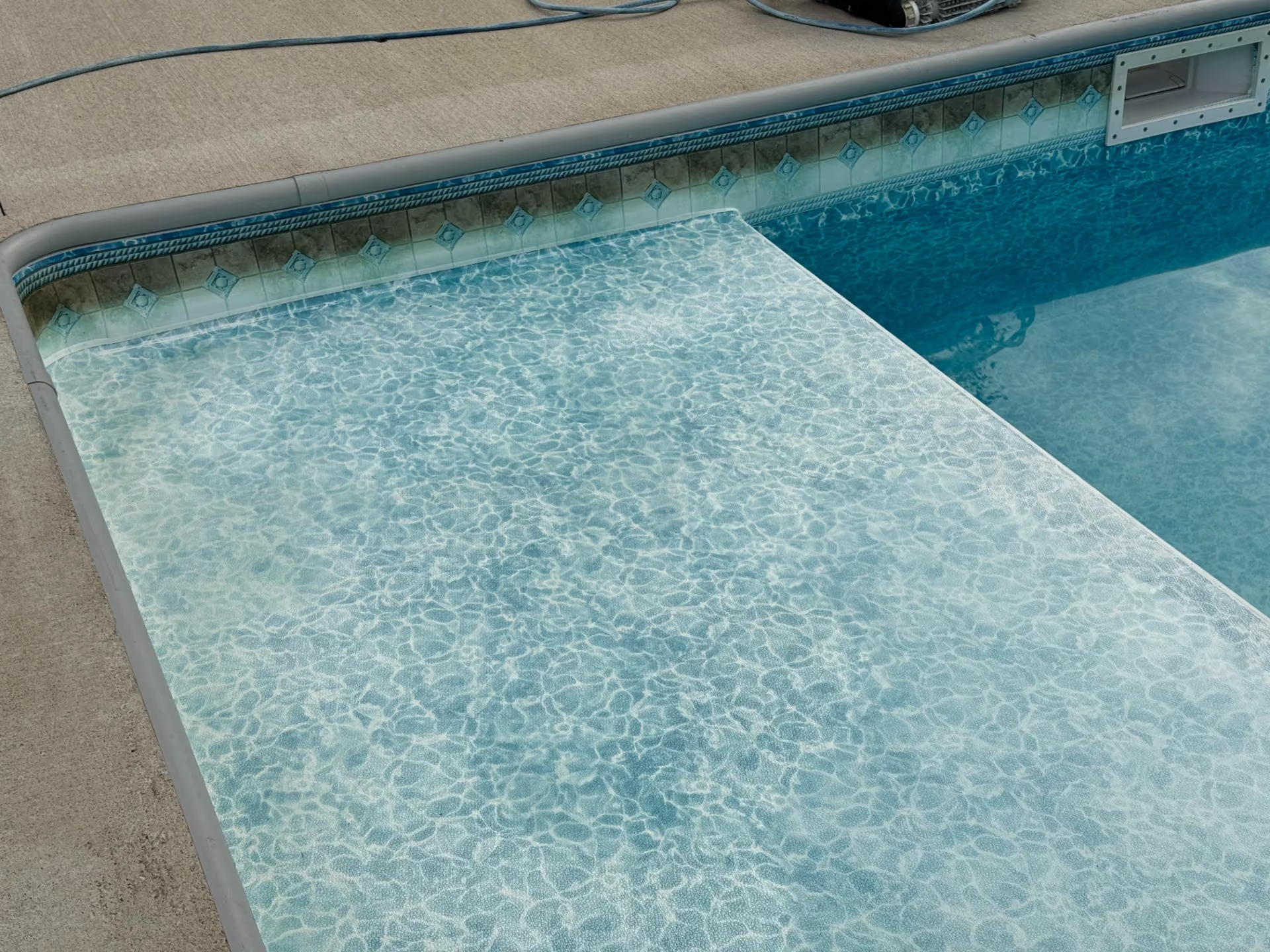
Pool Liner Wrinkles
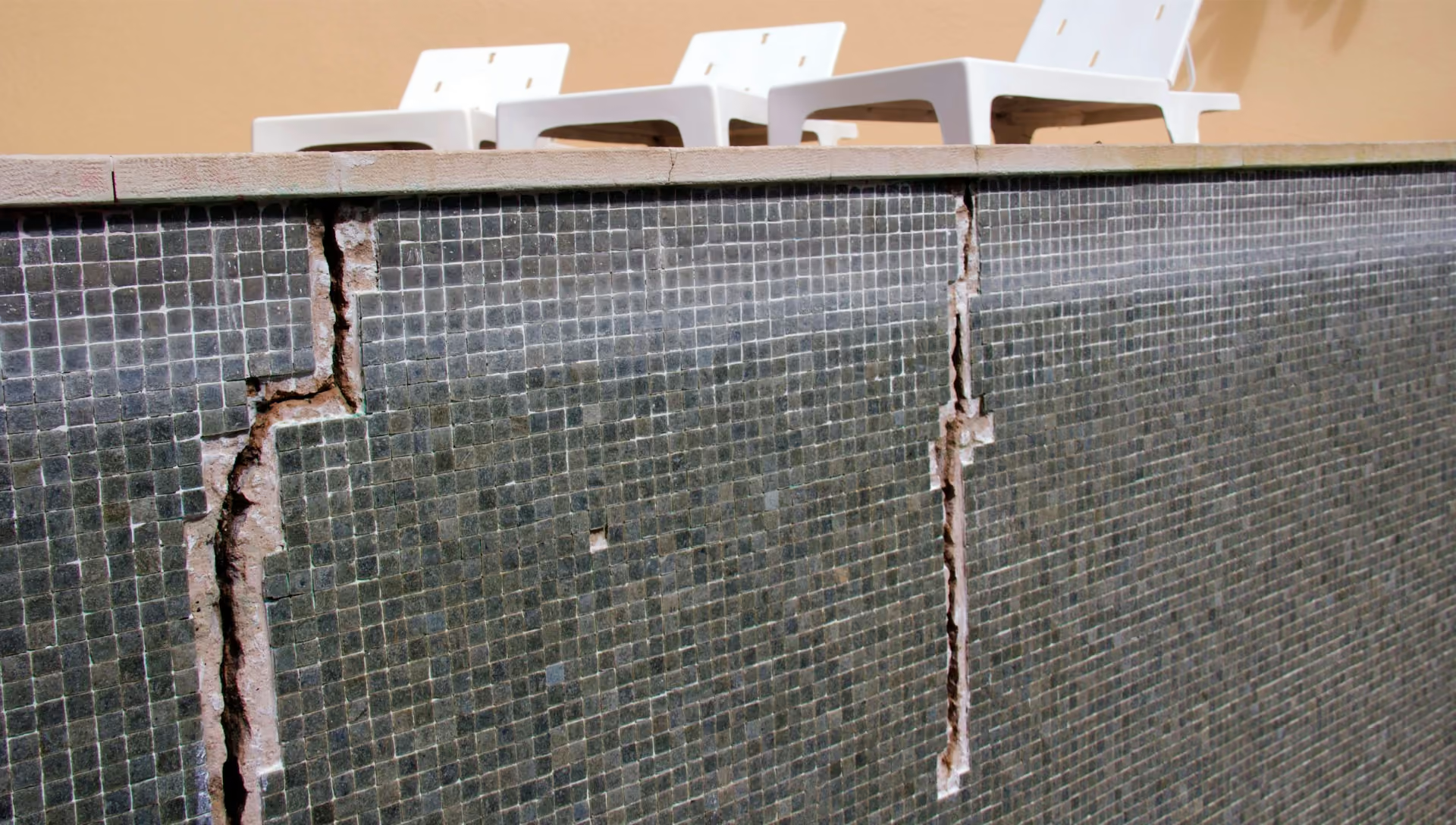
Pool Cracks When to Worry
Pool Surface Stains
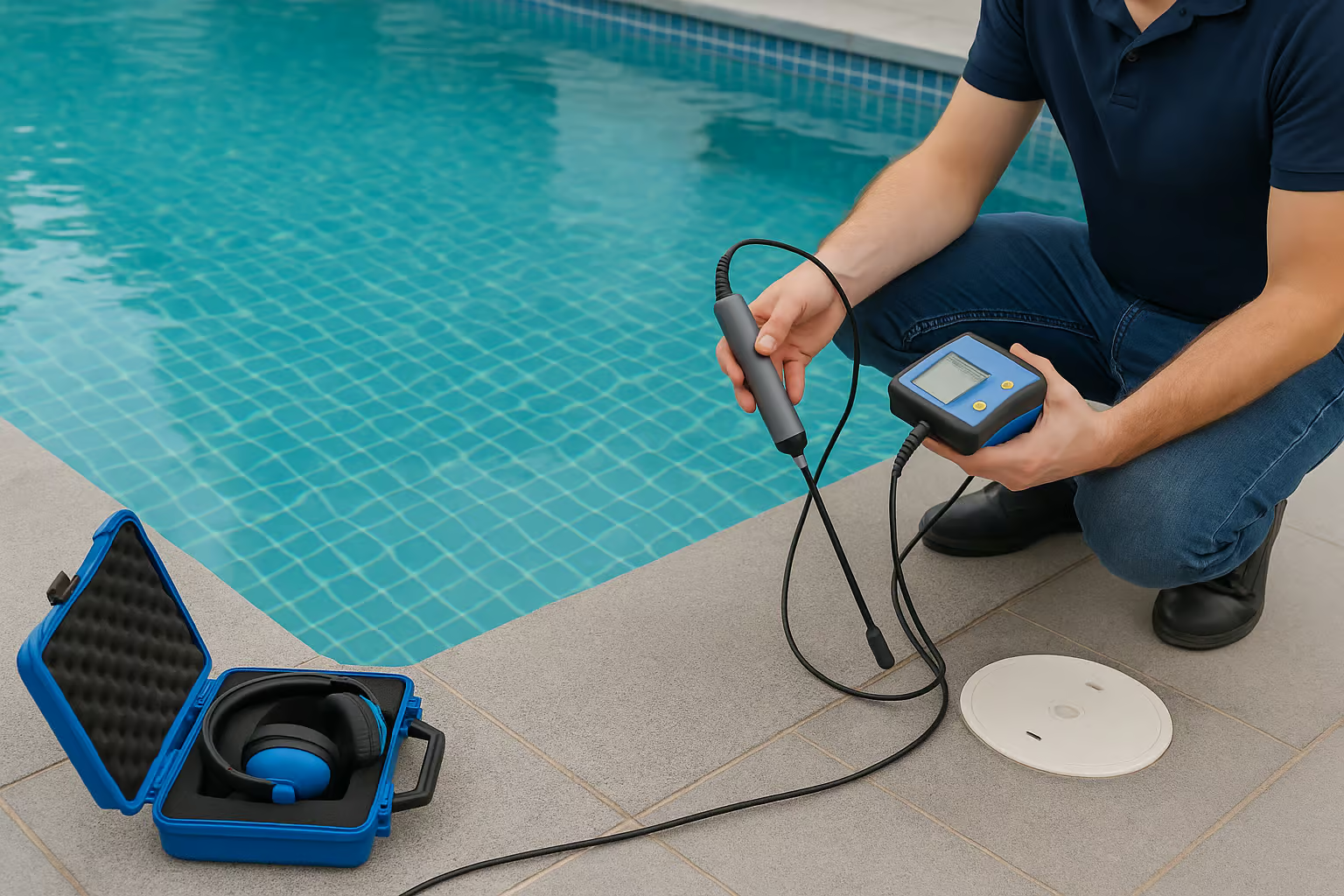
Pool Valve Leaking
Pool Automation Not Working
Pool Light Not Working
Pool Heater Not Heating
Pool Skimmer Not Working
High Pool Filter Pressure
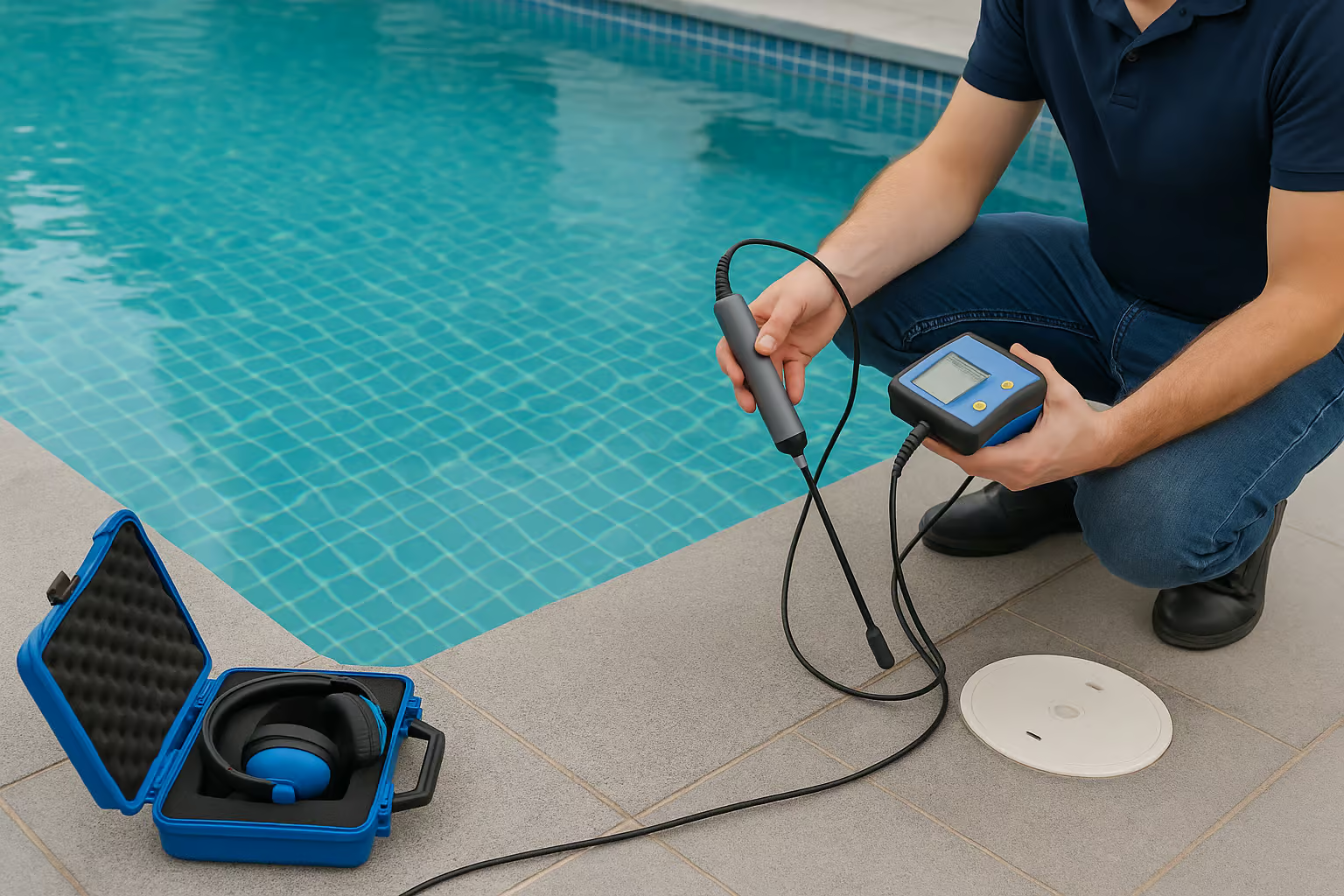
Pool Losing Water
Pool Filter Not Clearing Water
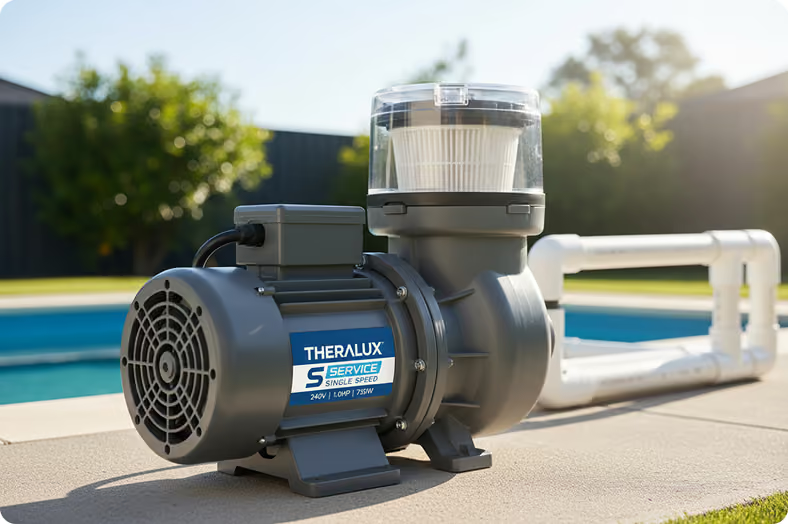
Pool Pump Leaking
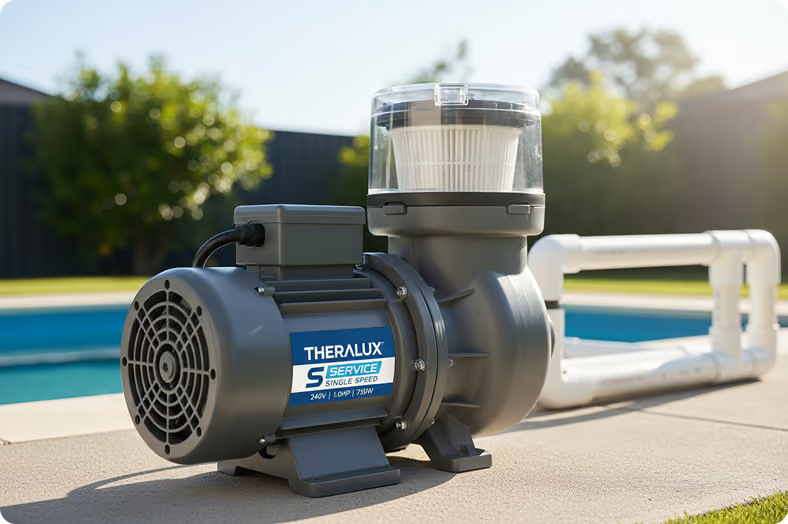
Pool Pump Not Pumping
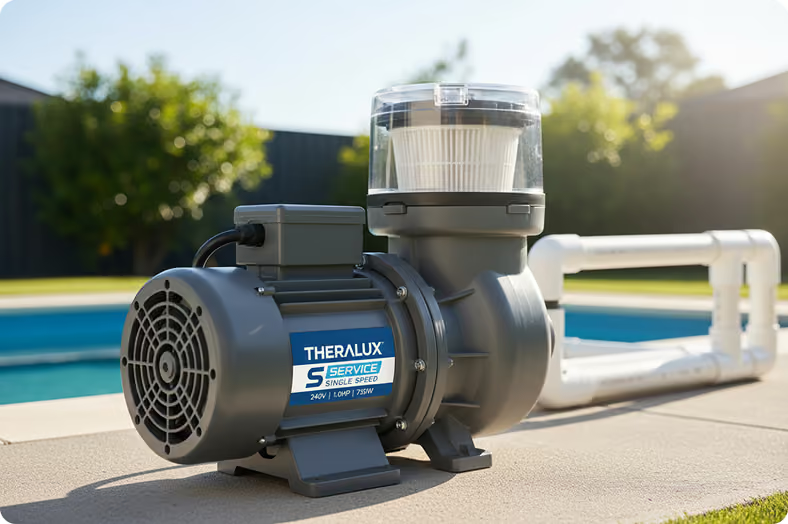
Pool Pump Losing Prime
Pool Pump Noisy
Pool Pump Not Working
Pool Water Foaming
Pool pH Too Low
Pool pH Too High
Green Pool After Rain
Pool Still Green After Shock
Pool Water Cloudy
How to Clear a Green Pool
Pool Care That Protects Your Investment
Good pool care protects more than appearance. Our pool specialists support the long-term condition of your swimming pool while keeping it ready for everyday use.