Pool Surface Stains

Why Auckland trusts our pool service expertise
Pool surface stains fall into two main categories, organic and metallic, and the right treatment depends on correctly identifying which type you have. A simple test using ascorbic acid or a chlorine tablet can help point you in the right direction before you start treating.
Most organic stains respond to chlorine shock and brushing, while metallic stains need a sequestrant-based approach. Persistent or widespread staining may indicate a deeper surface problem that requires professional assessment.
What you'll learn
Why Pool Surface Stains Happen
Stains on a pool surface are one of the more common complaints pool owners deal with. They can appear gradually over weeks or show up seemingly overnight after a storm or a chemical imbalance. The frustrating part is that not all stains are the same, and treating the wrong type can make things worse.
The two broad categories are organic stains and metallic stains. Each has its own causes, its own appearance, and its own treatment approach. Getting the diagnosis right before reaching for a product is the most important step.
---
Types of Pool Surface Stains
Organic Stains
Organic stains come from plant matter, leaves, algae, berries, bark, grass, and other debris that sits on the pool surface long enough to leave a mark. Auckland's leafy suburban gardens mean organic staining is particularly common here, especially after autumn leaf falls or following storms.
What they look like:
- Green, brown, or yellowish patches
- Often follow the shape of a leaf or piece of debris
- Tend to appear on the floor or steps where debris settles
- May fade or shift colour over time
Organic stains are generally easier to treat than metallic ones. They respond well to chlorine-based treatments and physical brushing.
Metallic Stains
Metallic stains are caused by dissolved metals in the pool water, most commonly iron, copper, or manganese. These metals can come from several sources: the fill water itself (particularly bore water or older plumbing), corroding equipment, or certain algaecides that contain copper.
What they look like:
- Iron: Reddish-brown or rust-coloured marks, often appearing after the pool is shocked or chlorinated heavily
- Copper: Blue-green or teal staining, sometimes appearing after new equipment is installed or copper-based algaecide is used
- Manganese: Dark brown to black or purple staining, less common but can be mistaken for algae
Metallic stains are trickier to treat. Raising chlorine levels can actually make them worse by oxidising the metals and fixing them more firmly to the surface.
---
How to Tell the Difference
Before treating, it helps to do a simple test.
The ascorbic acid test: Take a small amount of ascorbic acid (vitamin C) powder and rub it directly onto the stain. If the stain lightens or disappears within a minute or two, it is almost certainly a metallic stain. If there is no change, it is more likely organic.
The chlorine test: If rubbing a chlorine tablet directly on the stain causes it to fade, it is likely organic.
These quick tests are not definitive, but they give you a strong indication of which direction to go.
---
How to Fix Organic Stains
1. Remove the source. Brush and vacuum out any debris that is still present. Leaving organic matter in the pool will cause the staining to continue.
2. Check and balance your water chemistry. Low chlorine levels allow organic matter to stain more easily. Ensure your pH, alkalinity, and sanitiser levels are within range before treating.
3. Shock the pool. A chlorine shock treatment will break down organic compounds. Brush the stained areas thoroughly during and after the shock.
4. Brush persistently. Some organic stains need repeated brushing over several days to fully lift.
5. Use an enzyme-based clarifier if staining persists. These products help break down organic residue in the water and on surfaces.
For most organic stains, consistent water chemistry and regular brushing will resolve the issue within a week or two.
---
How to Fix Metallic Stains
Metallic stains require a different approach. Avoid shocking the pool until the metals are addressed, high chlorine will oxidise the metals and can make staining worse.
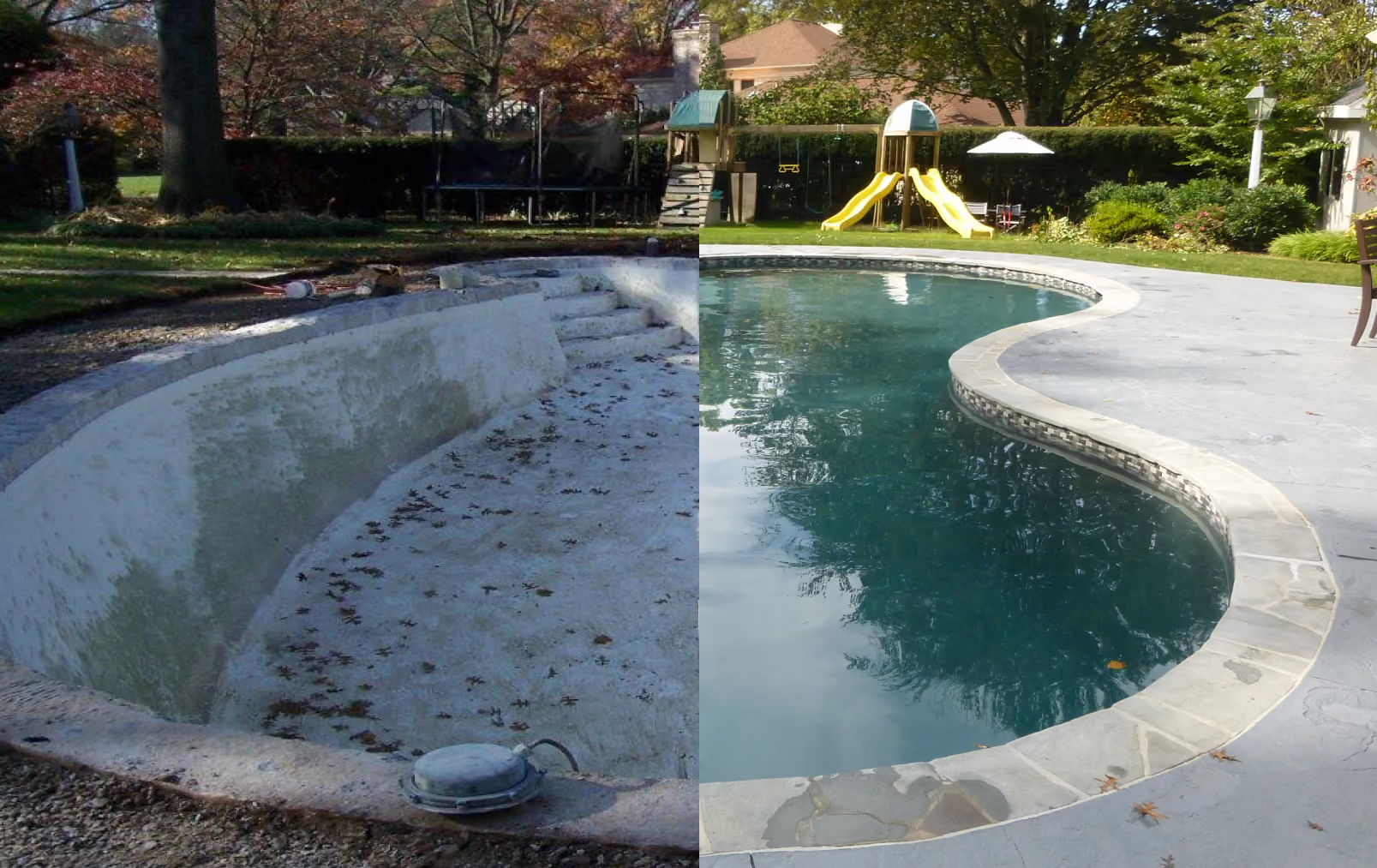
1. Test your water for metals. A full water test will confirm whether iron, copper, or manganese is present and at what level. Sparkling Pools can carry out on-site water testing at your home, anywhere in Auckland.
2. Lower your chlorine level before treatment if it is currently high. Allow it to drop naturally or use a neutraliser.
3. Apply an ascorbic acid treatment. This is the standard first step for metallic stains. It works by temporarily reducing the metals and lifting them off the surface. Follow the product instructions carefully.
4. Add a metal sequestrant. After the ascorbic acid treatment, a sequestrant binds to the dissolved metals in the water and prevents them from re-staining the surface. This step is important, without it, the stains are likely to return.
5. Identify and address the source. If your fill water contains high metal levels, a metal filter on the fill hose can help. If corroding equipment is the cause, that equipment may need attention.
6. Rebalance your water chemistry gradually. Bring chlorine and other parameters back to normal levels slowly to avoid re-oxidising any remaining metals.
---
Stains That Won't Budge
Some stains are deeply embedded in the pool surface, particularly in older plaster or fibreglass that has become porous over time. If a stain has been present for a long time, or if the surface itself is deteriorating, surface treatments alone may not be enough.
In these cases, the options are:
- Acid washing, a more aggressive treatment that removes a thin layer of the pool surface to expose fresh material underneath. This should only be carried out by a professional, as it involves draining the pool and working with hazardous chemicals.
- Resurfacing, if the pool surface is worn, stained throughout, or structurally compromised, replastering or resurfacing may be the most practical long-term solution.
If you are unsure whether your staining is a surface issue or a deeper one, it is worth getting a professional assessment before spending money on treatments that may not work.
---
Preventing Pool Surface Stains
Keep on top of debris
The longer organic matter sits on the pool surface, the more likely it is to stain. Regular skimming and vacuuming, particularly after wind or rain, makes a real difference. Auckland's climate means pools can accumulate debris quickly, especially in autumn.
Maintain consistent water chemistry
Proper pH, alkalinity, and sanitiser levels reduce the conditions that allow staining to take hold. Water that is too acidic or too alkaline can accelerate both organic and metallic staining.
Test for metals when filling
If you use bore water or top up frequently, it is worth testing for metals periodically. Catching elevated metal levels early, before they stain, is far easier than treating stains after the fact.
Use a metal sequestrant regularly
For pools in areas with harder or more mineral-rich water, adding a sequestrant as part of a regular maintenance routine can help keep metals in suspension and prevent them from depositing on the surface.
---
When to Call a Professional
Contact a pool professional if:
- You have treated the stains and they have returned within a short period
- The staining is widespread across the pool surface
- The surface itself appears rough, pitted, or flaking
- You are unsure what type of stain you are dealing with
- The staining appeared after a significant chemical event (such as an accidental overdose)
Sparkling Pools provides on-site water testing across Auckland and can help identify whether a staining problem is water chemistry-related or a surface issue that needs further attention.
Pool resurfacing solutions
Restore your pool with durable plaster finishes


Work completed
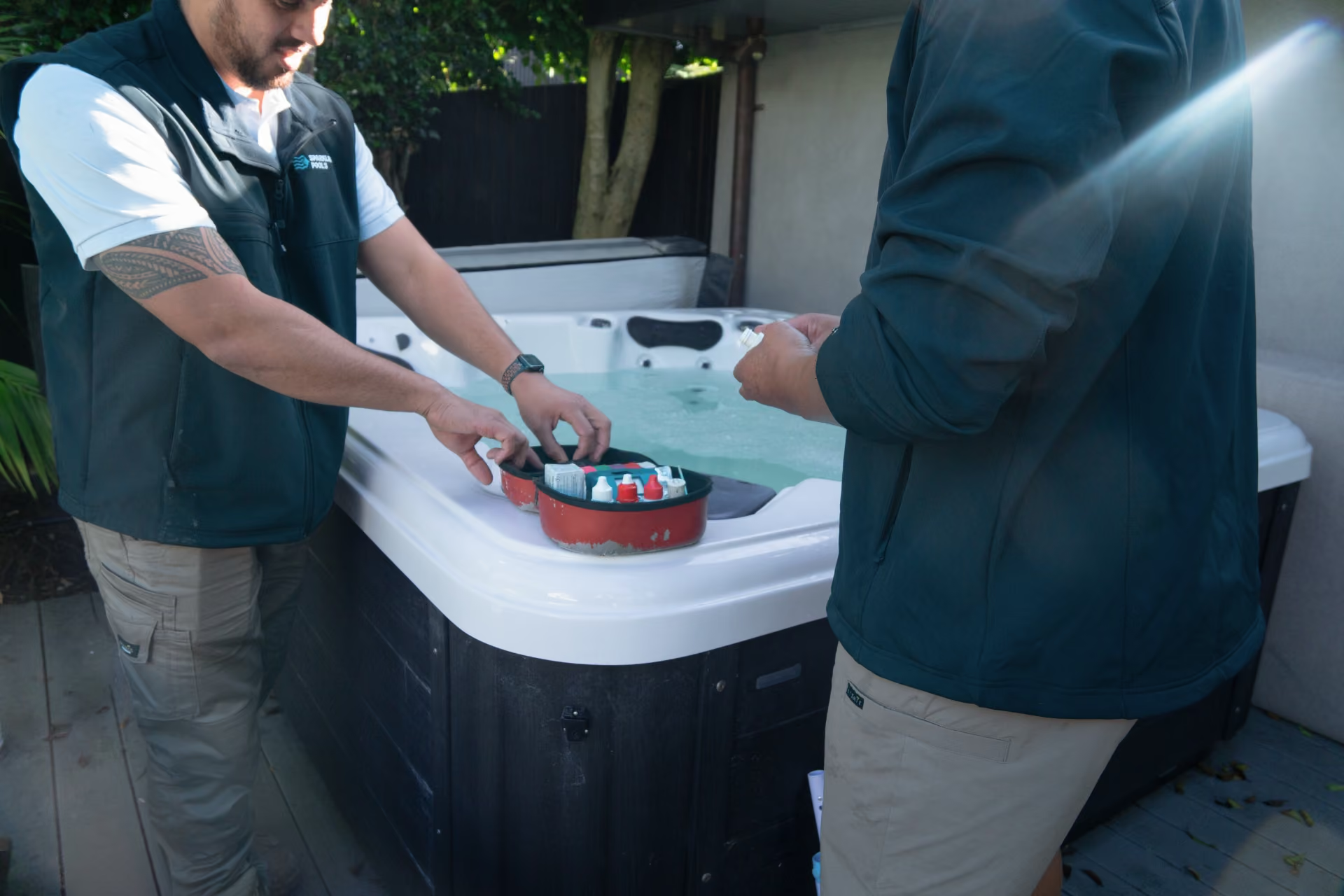
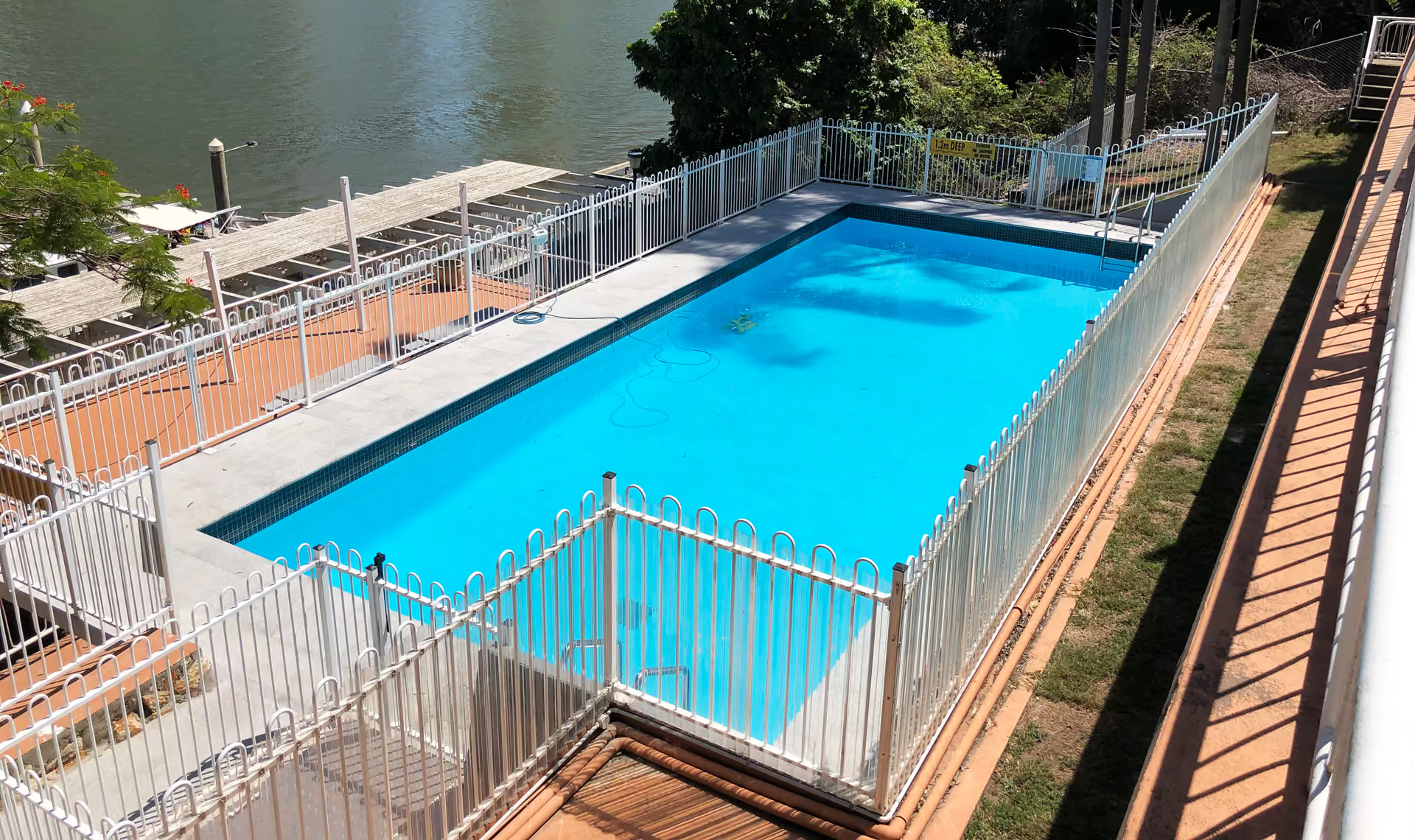
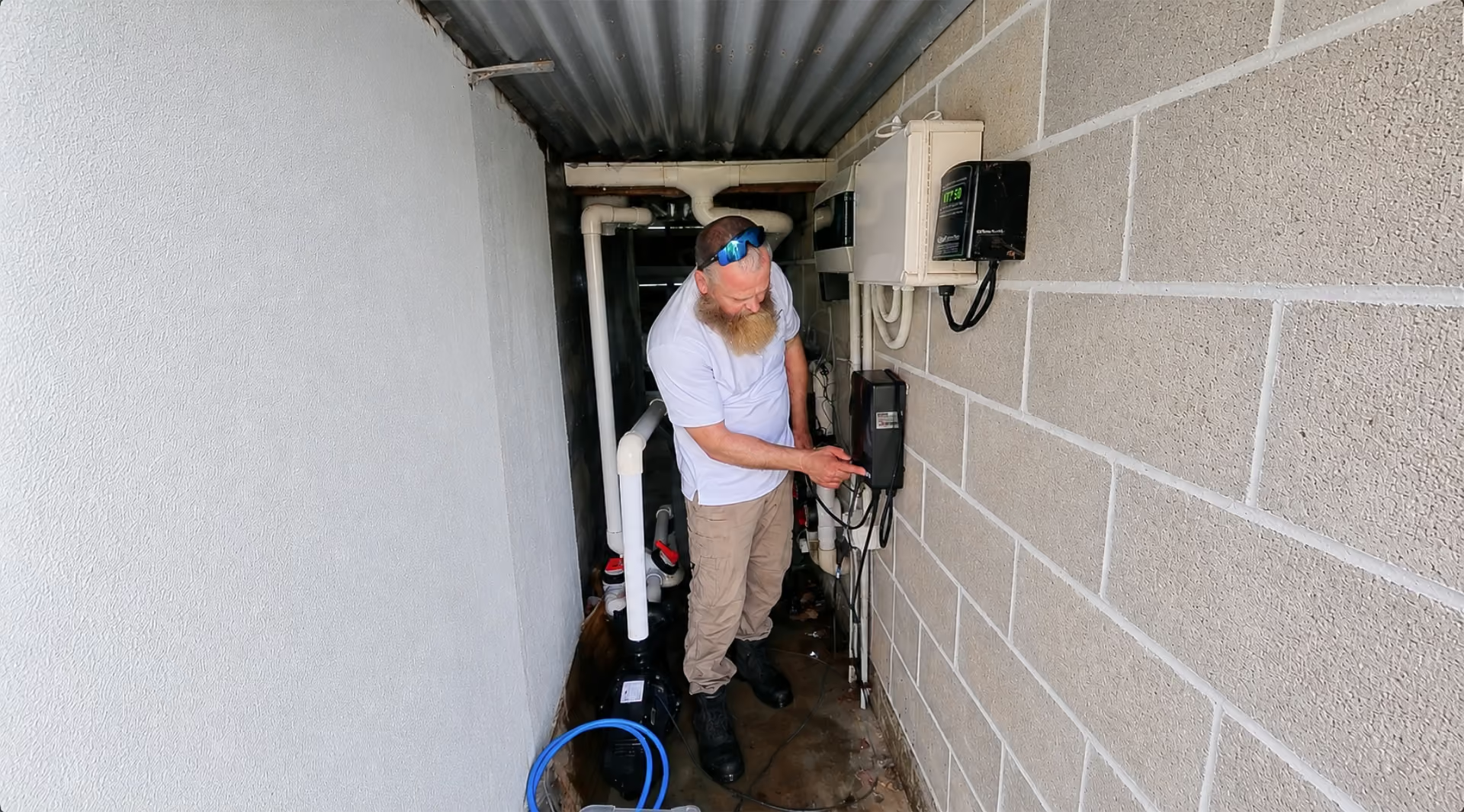
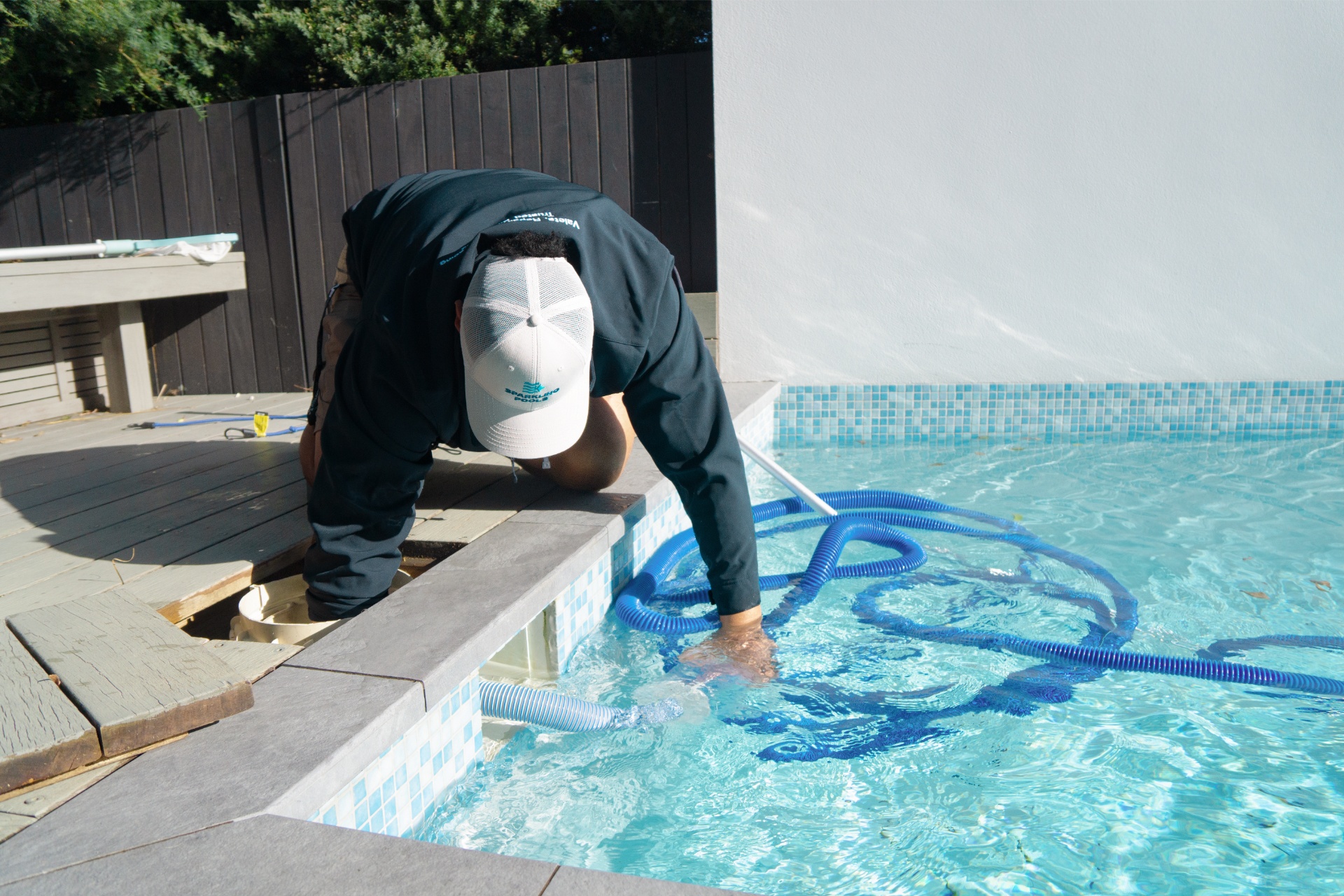
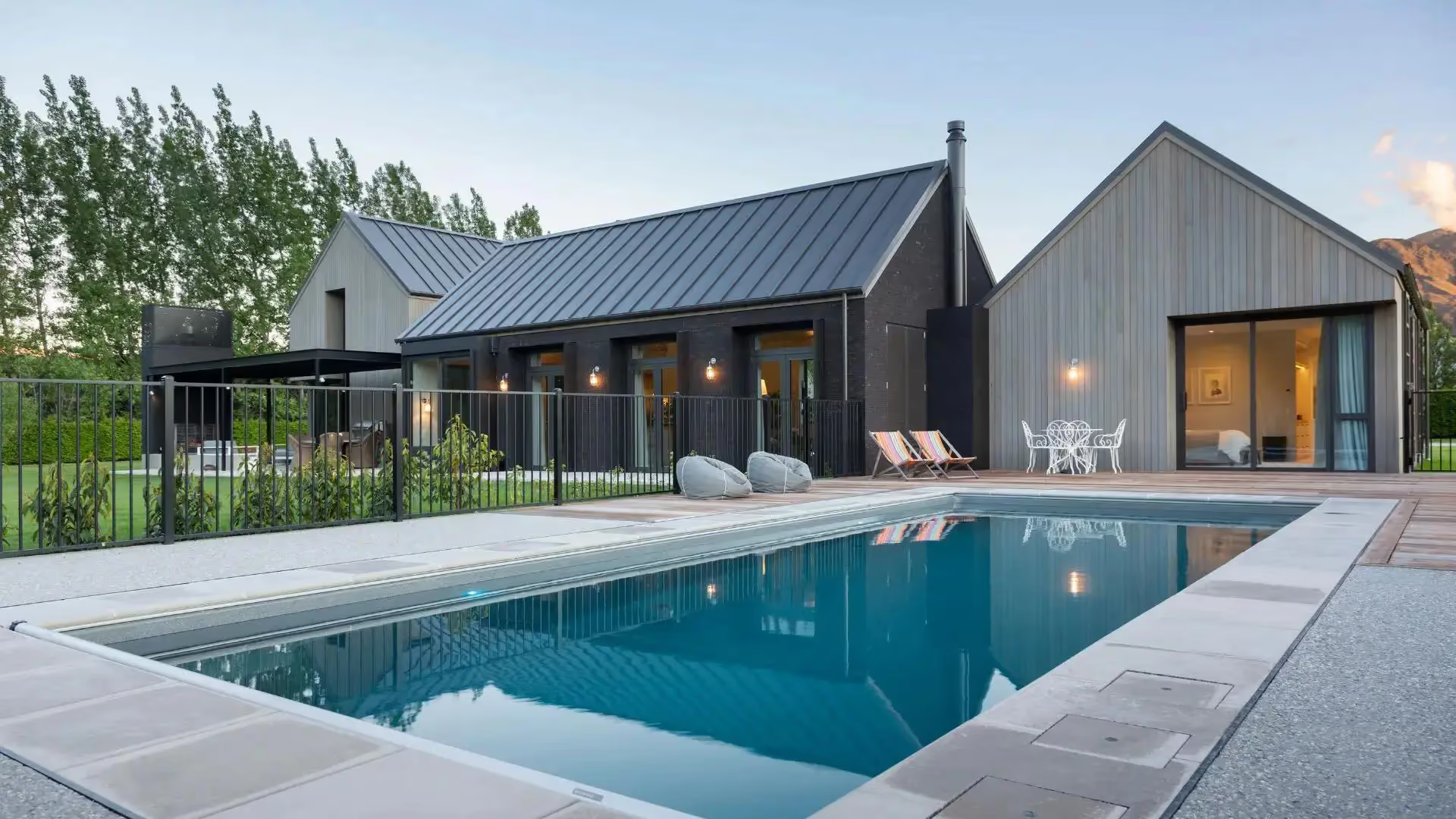
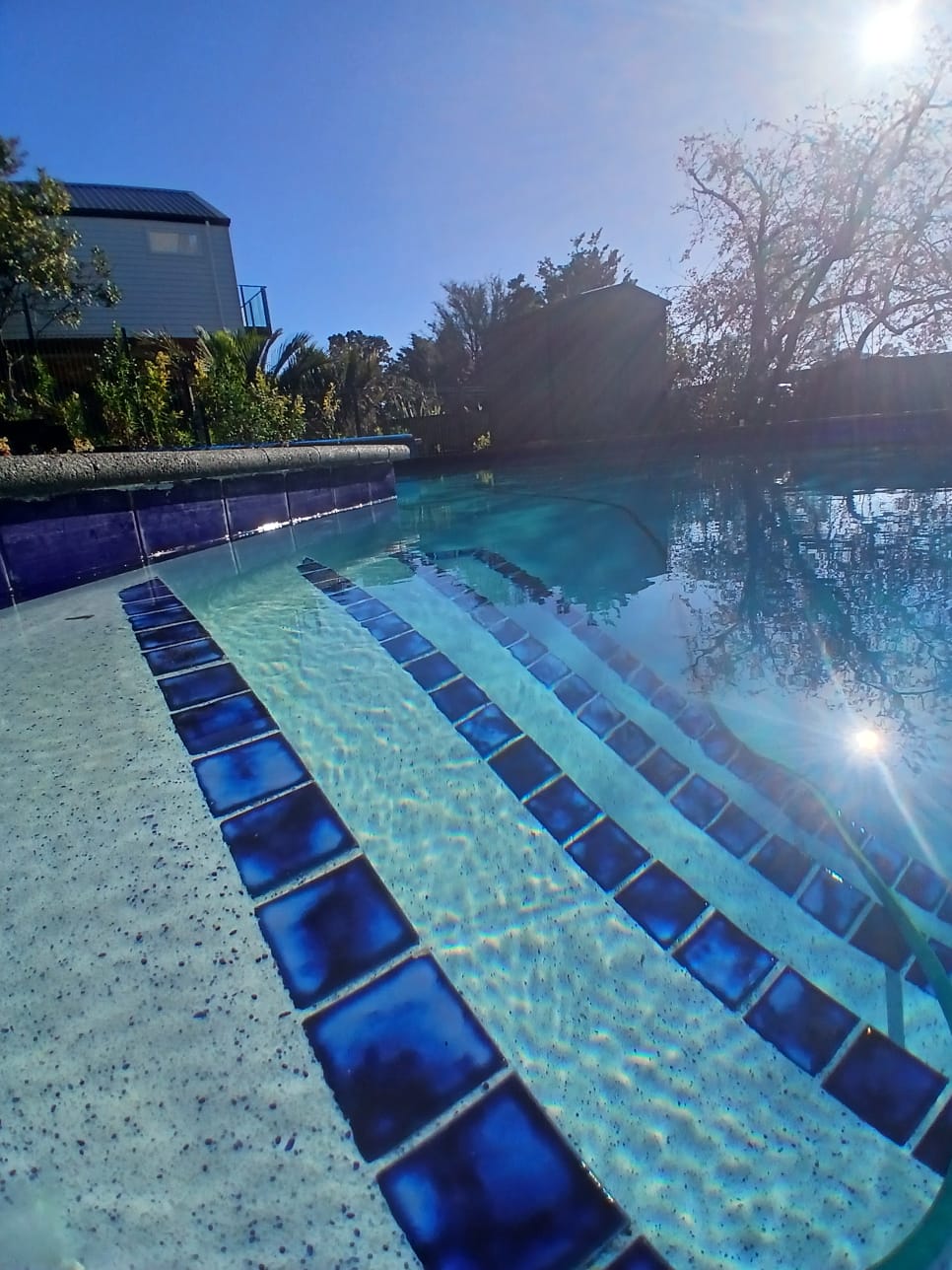
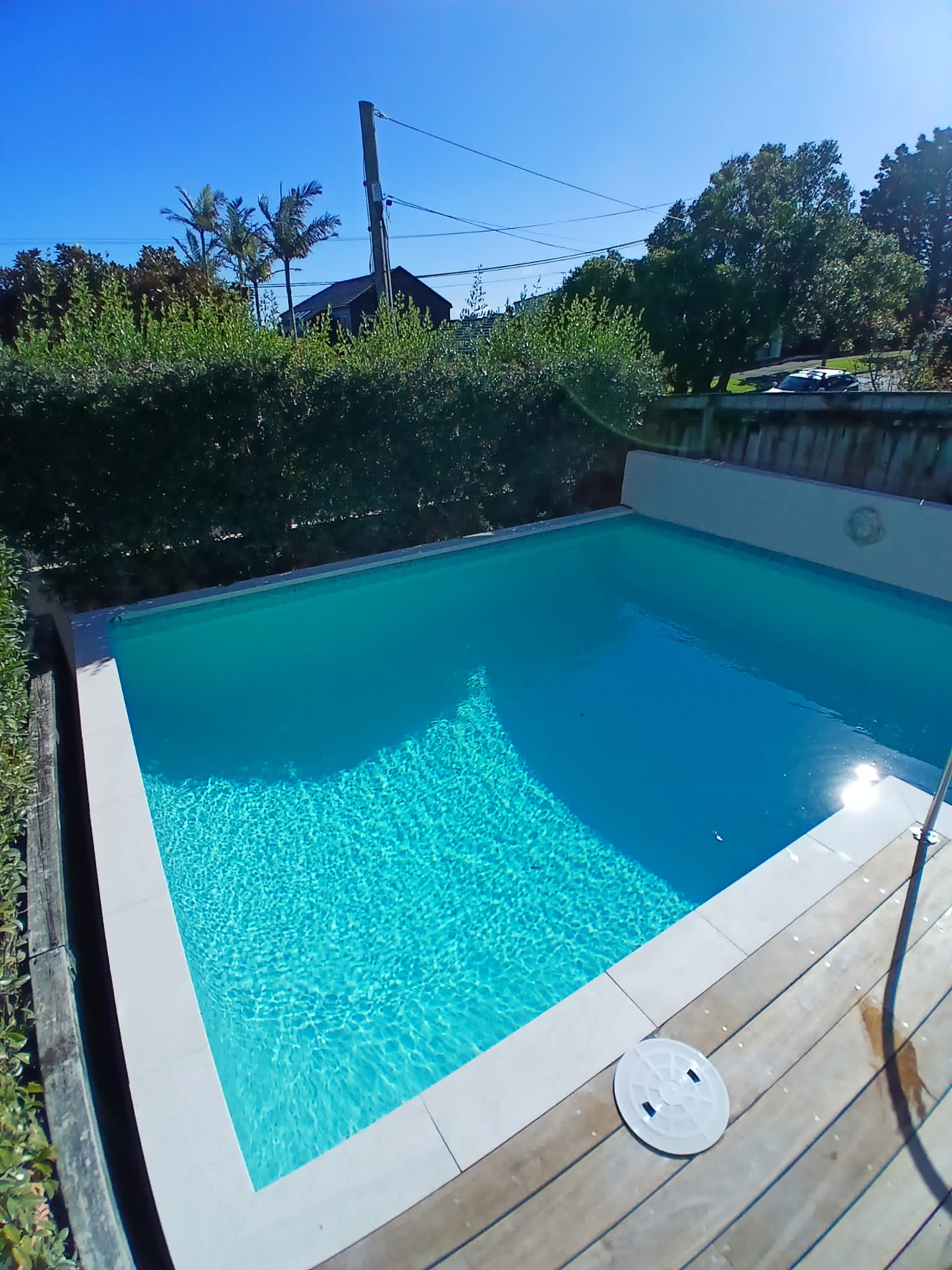
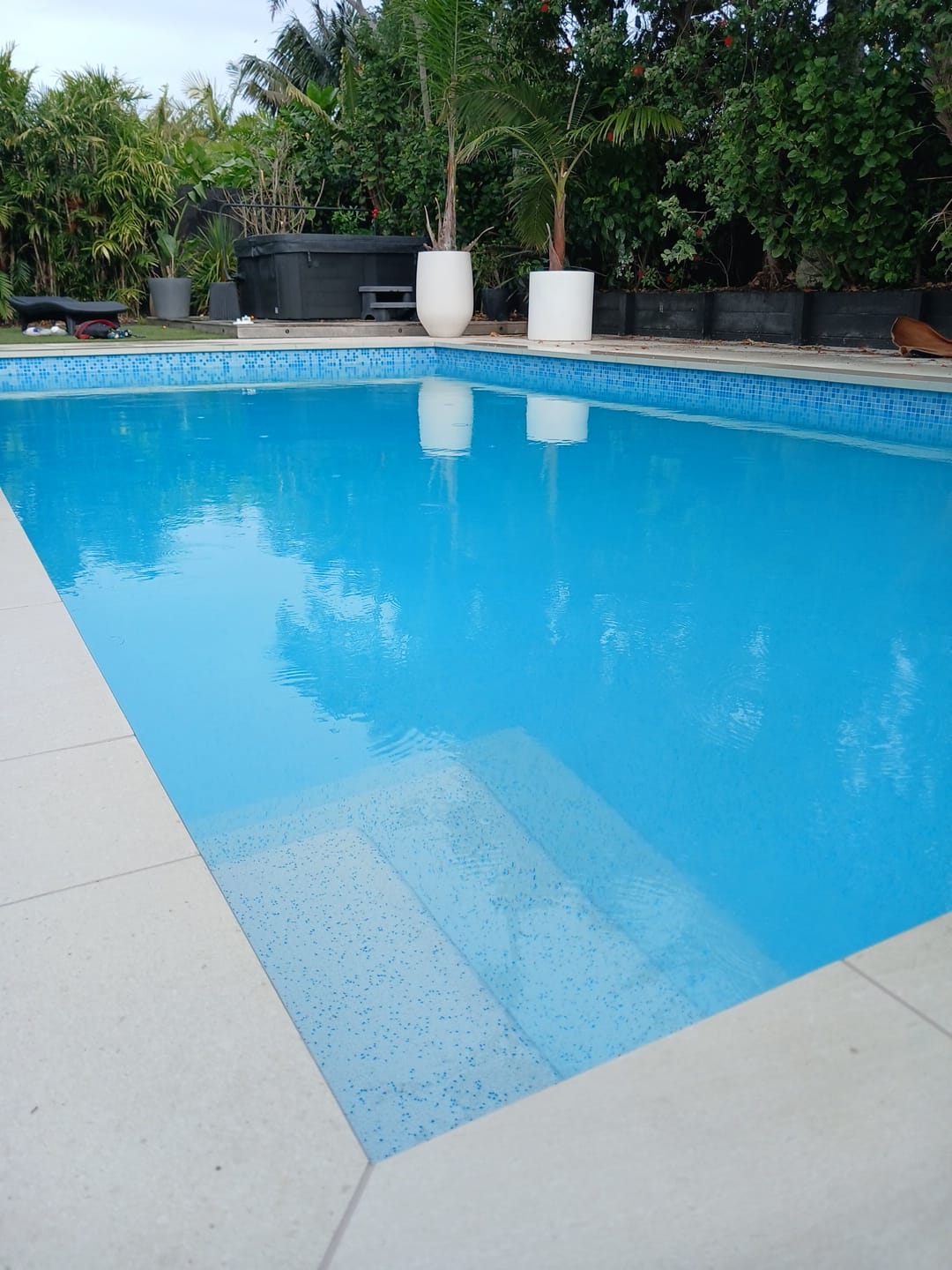
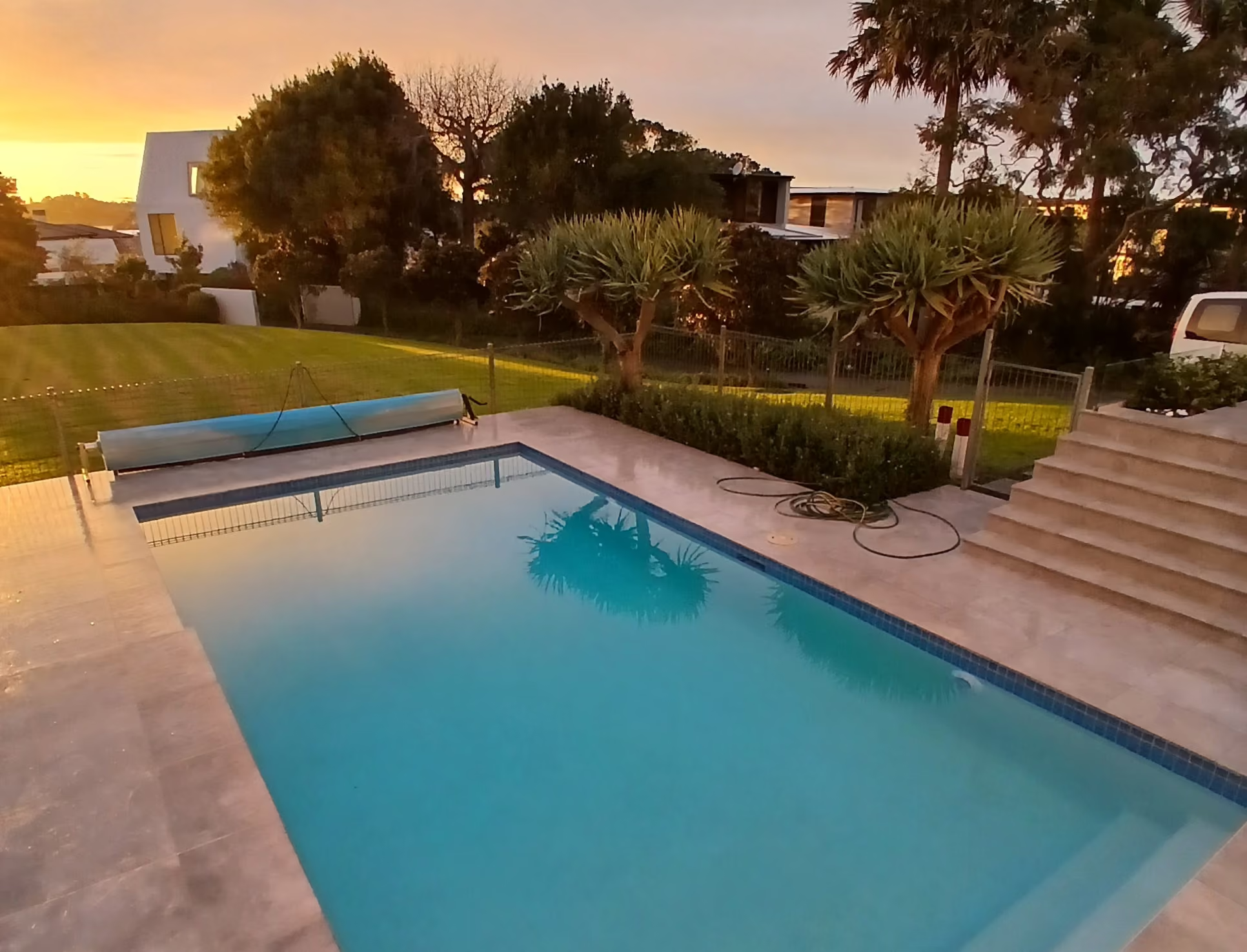
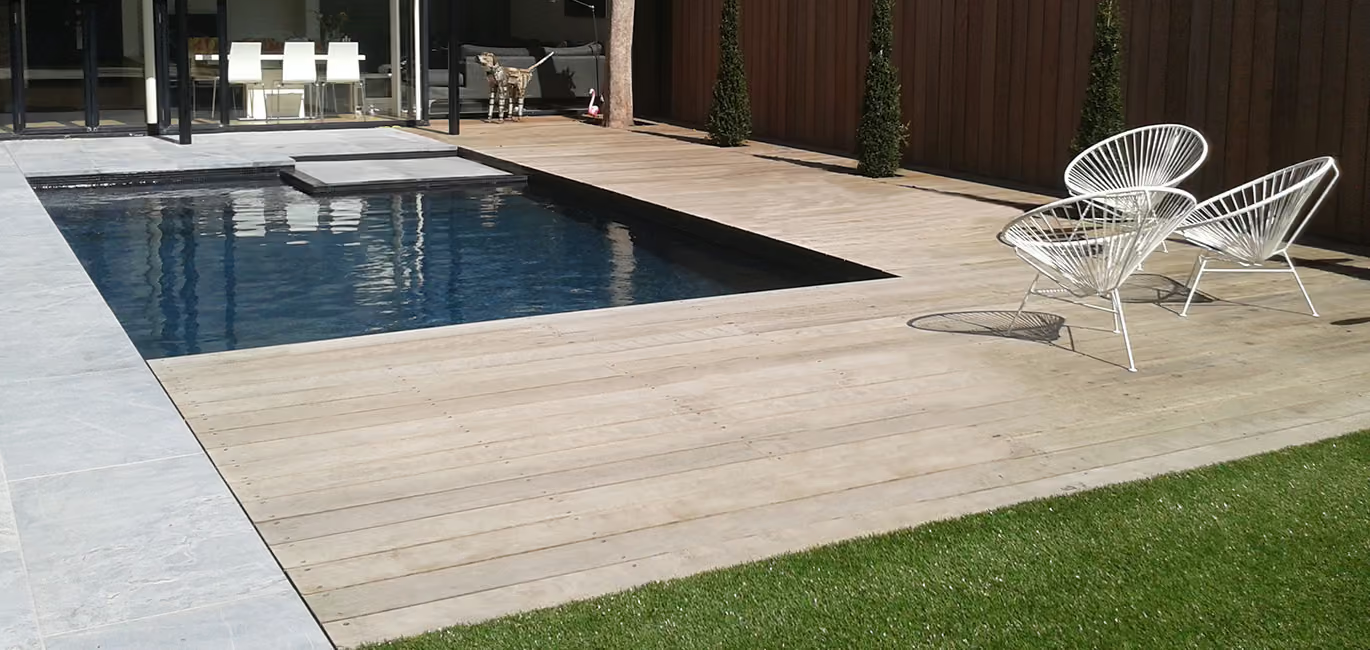
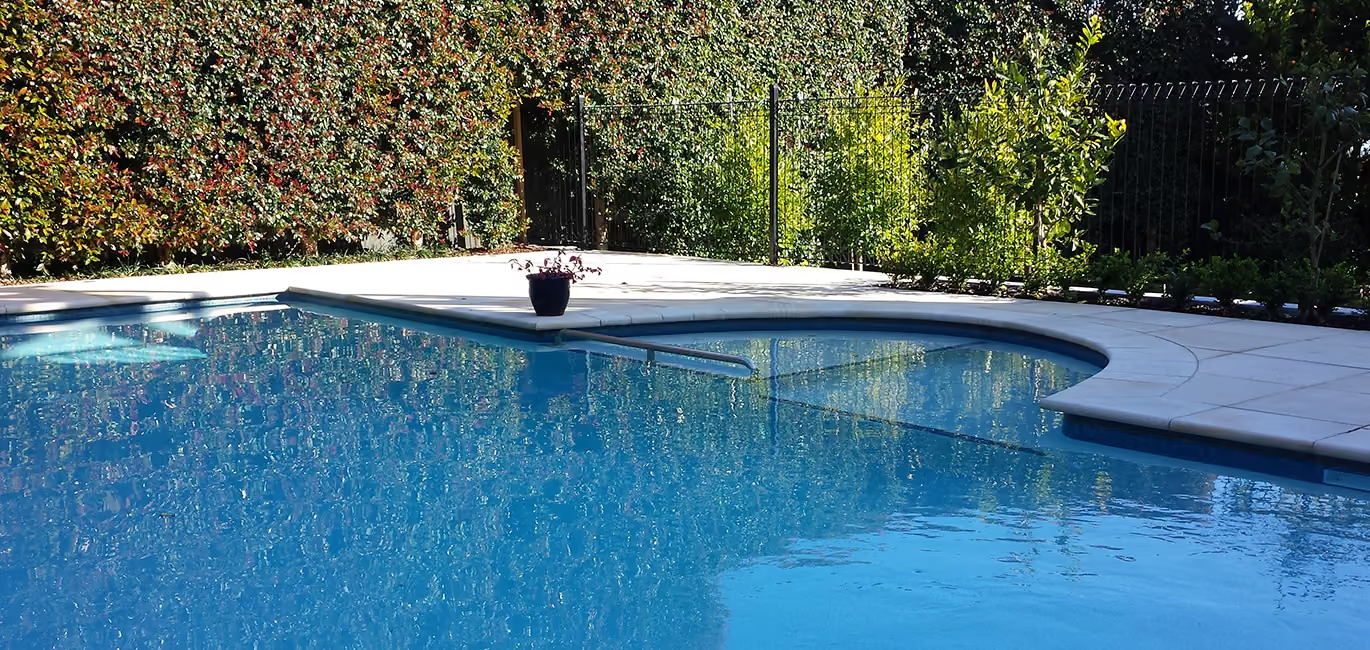
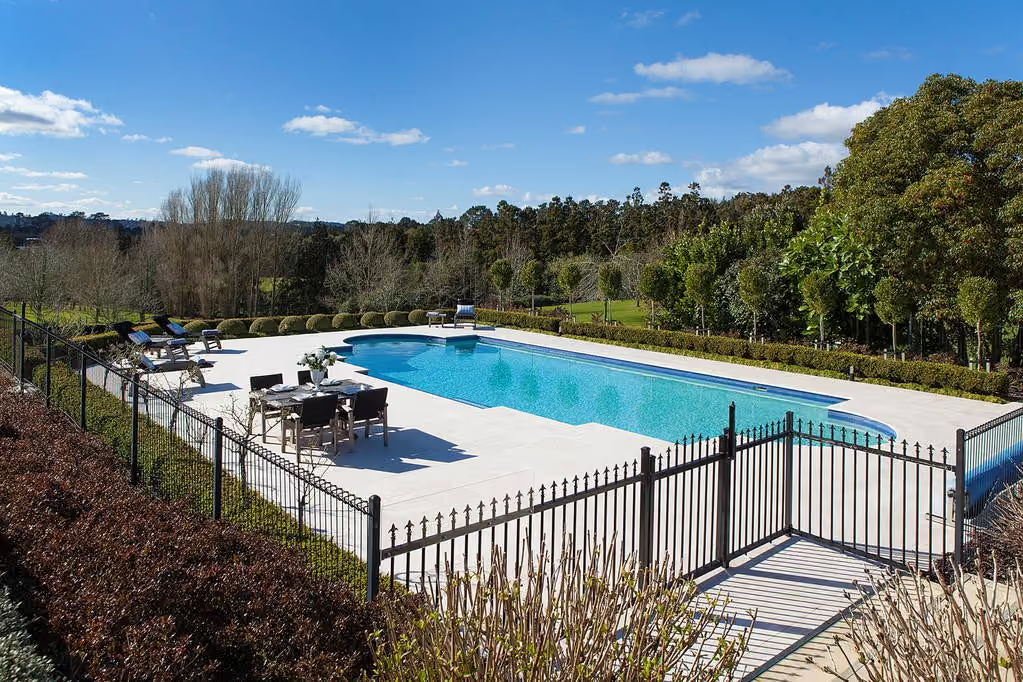
Sparkling Pools has worked on pools across Auckland, including residential renovation projects, equipment upgrades, ongoing maintenance and pool care for managed properties. Past projects show how the right approach can improve presentation, water quality and day-to-day usability. A well-maintained pool is easier to manage, more pleasant to use and better prepared for seasonal changes.
Trusted by Homeowners Across Auckland
Don't just take our word for it. Read what our clients have to say about our transparent communication, reliable service, and stunning pool transformations.
Related Blog Posts
Stay informed on pool care and renovations
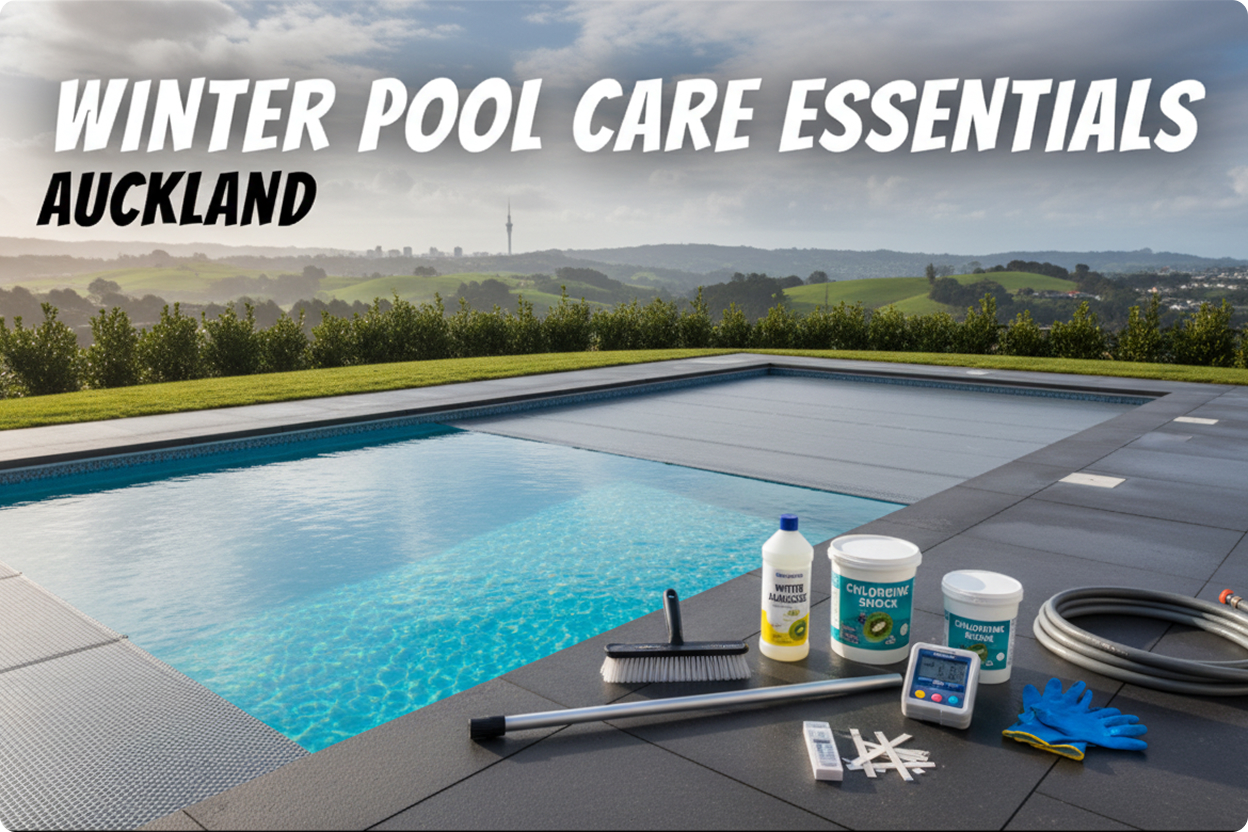
Winter pool care essentials for Auckland
Pool Renovation Mistakes

Auckland Climate Pool Maintenance

Choosing Renovation Contractor
Pool Care Auckland Summer
Permits & Consents

Pool Renovation ROI
How Often to Test Pool Water
Pool Renovation Costs
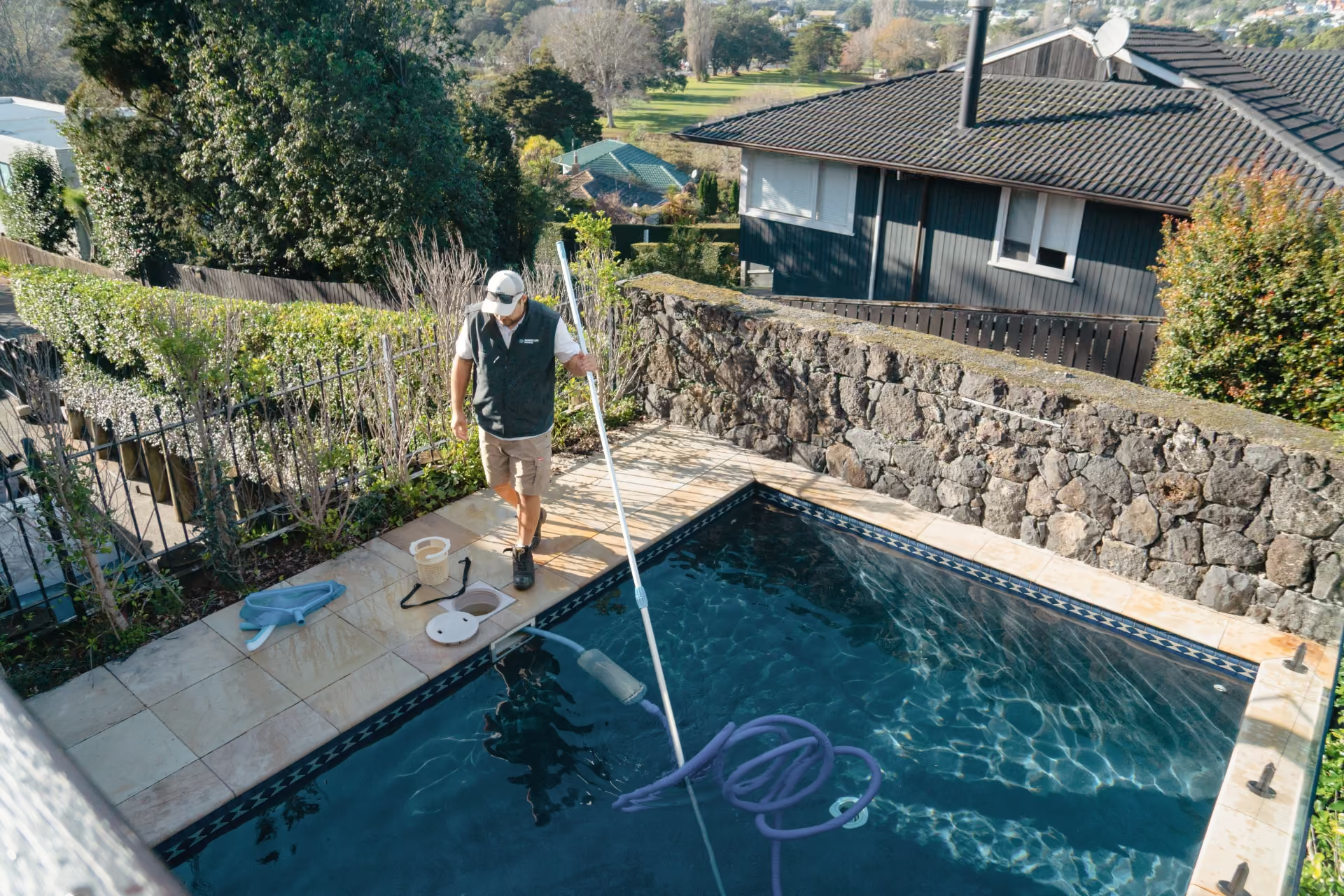
Cost of Pool Service Auckland
Pool Renovation Planning Guide
Pool Lighting Buying Guide
Pool Cleaner Buying Guide
Pool Automation Buying Guide
Pool Heater Buying Guide
Pool Filter Buying Guide
Pool Pump Buying Guide
Best Equipment Auckland Climate
Auckland Water Quality
Auckland Pool Season
Pool Ownership Costs
Common Pool Mistakes
Pool Safety Laws
Pool Inspection Requirements
Pool Fence Compliance
.avif)
Auckland Pool Industry Trends
Auckland Pool Regulations
Pool Equipment Suppliers
Best Pool Service Areas
Pool Service Pricing Analysis
Company vs Independent
Best Pool Surface Materials
Pool Resurfacing Options
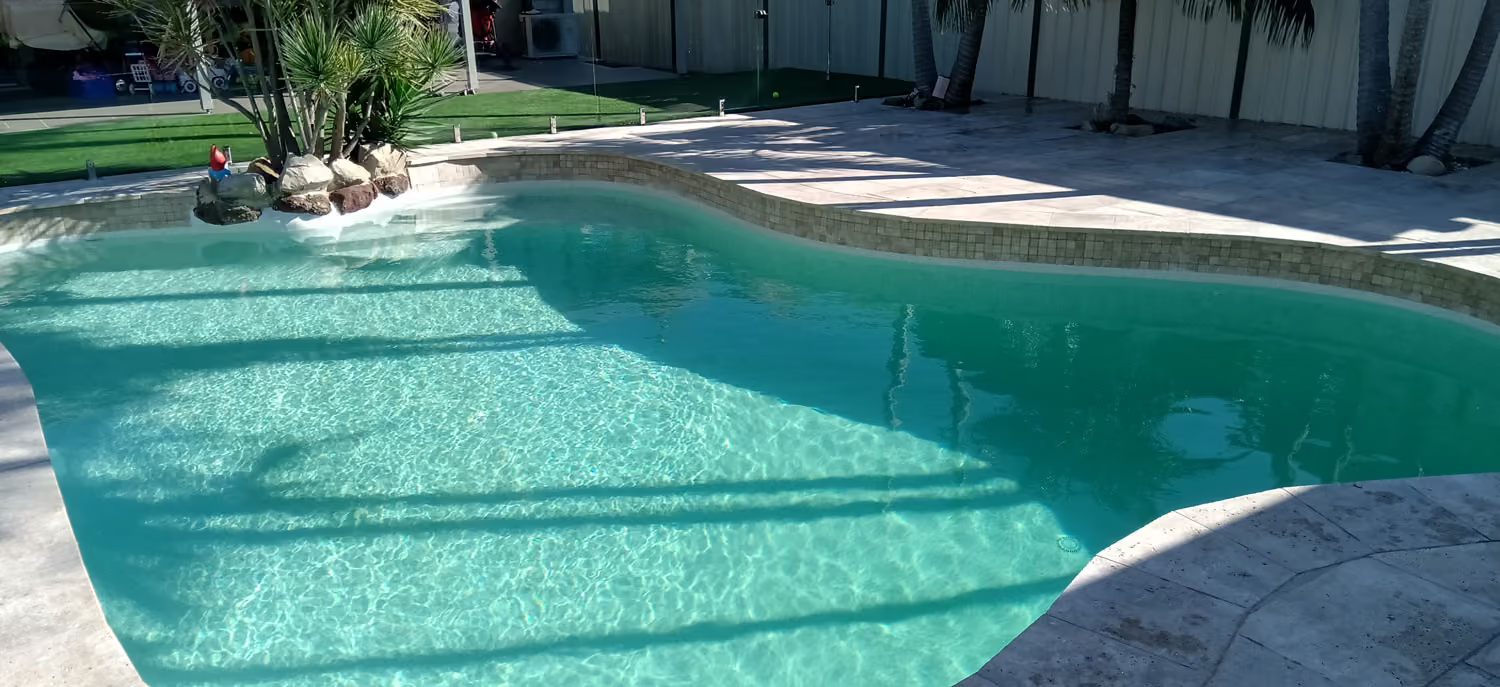
Pebble vs Plaster Surfaces
One-Time vs Ongoing Service
Full Service vs Chemicals Only
Pool Cover Types
Robotic vs Suction Cleaners
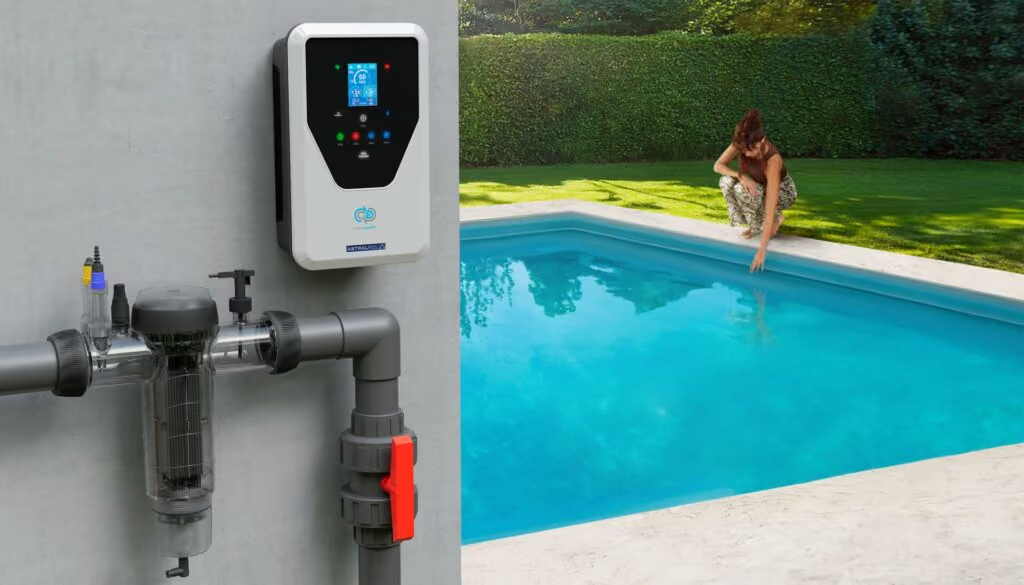
Mineral vs Saltwater
Gas vs Heat Pump
Pool Heater Types
Pool Winterizing Guide Auckland
Pool Opening Guide Summer
Pool Maintenance After Heavy Rain
Pool Maintenance Schedule
How Often to Run Pool Filter
Pool Pump Maintenance Schedule
Pool Filter Cartridge Cleaning
Pool Equipment Maintenance Checklist
Pool Waterline Cleaning
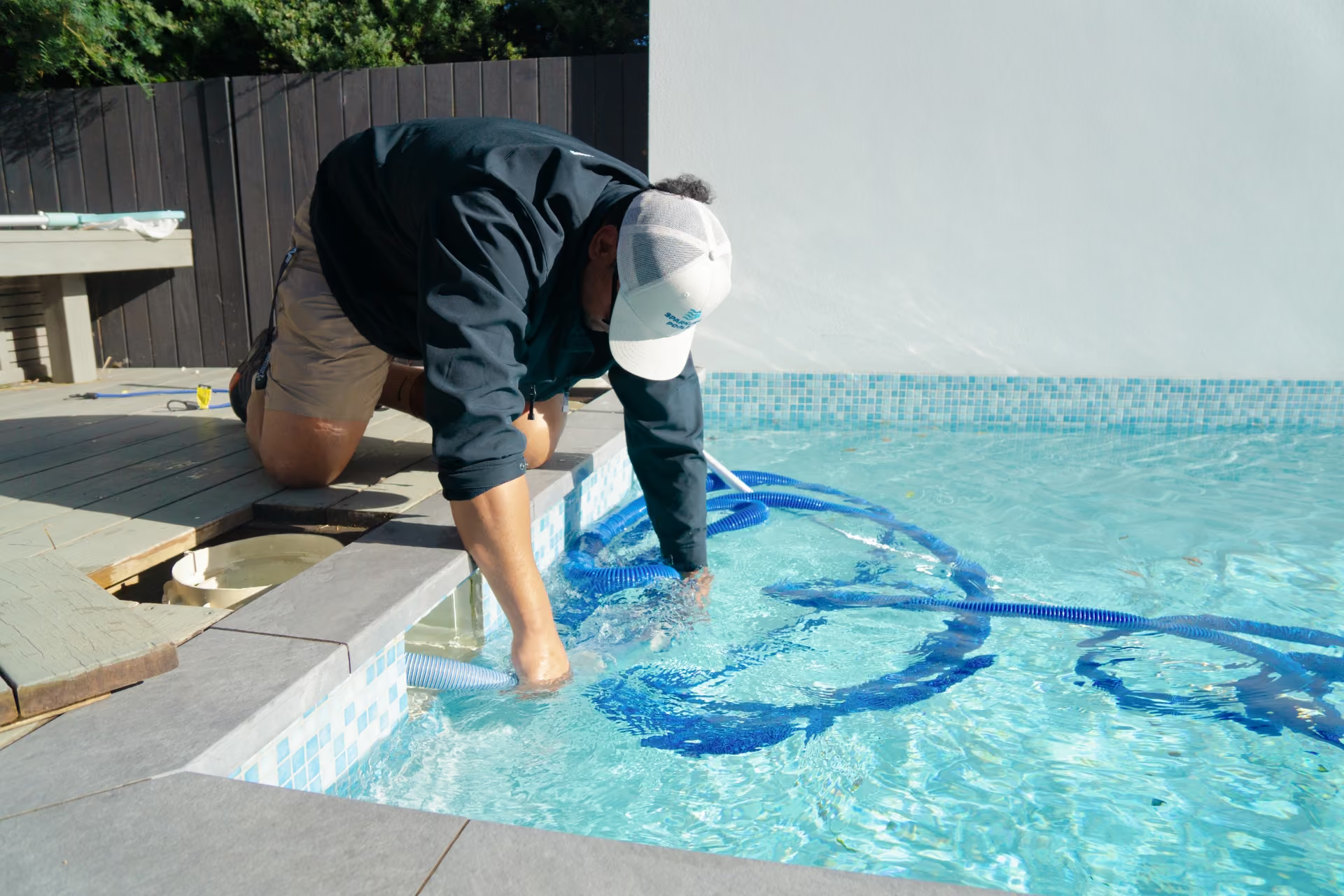
Pool Skimmer Basket Cleaning
Pool Chlorine Levels
How Often Clean Pool Filter
How to Vacuum Pool
Pool Brushing Technique
Pool Chemical Dosing Chart
Pool Water Chemistry Basics
How to Balance Pool Chemistry
How to Test Pool Water
Pool Maintenance Tips
Complete Pool Maintenance Guide
Pool Service ROI
Pool Equipment Buy or Service
Pool Maintenance Time Requirements
DIY vs Professional
Pool Service Contract
Pool Service vs Pool Valet
Is Pool Service Worth It
Pool Service Guarantees
Pool Service Reviews
Pool Service Red Flags
Questions to Ask Pool Companies
How to Choose Pool Service Company
Hidden Costs DIY Maintenance
Pool Cleaning Prices Auckland
Cost of Pool Resurfacing
Cost of Pool Pump Replacement
Cost to Fix Green Pool
Pool Liner Wrinkles
Pool Cracks When to Worry
Pool Surface Stains
Pool Valve Leaking
Pool Automation Not Working
Pool Light Not Working
Pool Heater Not Heating
Pool Skimmer Not Working
High Pool Filter Pressure
Pool Losing Water
Pool Filter Not Clearing Water
Pool Pump Leaking
Pool Pump Not Pumping
Pool Pump Losing Prime
Pool Pump Noisy
Pool Pump Not Working
Pool Water Foaming
Pool pH Too Low
Pool pH Too High
Green Pool After Rain
Pool Still Green After Shock
Pool Water Cloudy
How to Clear a Green Pool
Pool Care That Protects Your Investment
Good pool care protects more than appearance. Our pool specialists support the long-term condition of your swimming pool while keeping it ready for everyday use.