Cost to Fix Green Pool
Why Auckland trusts our pool service expertise
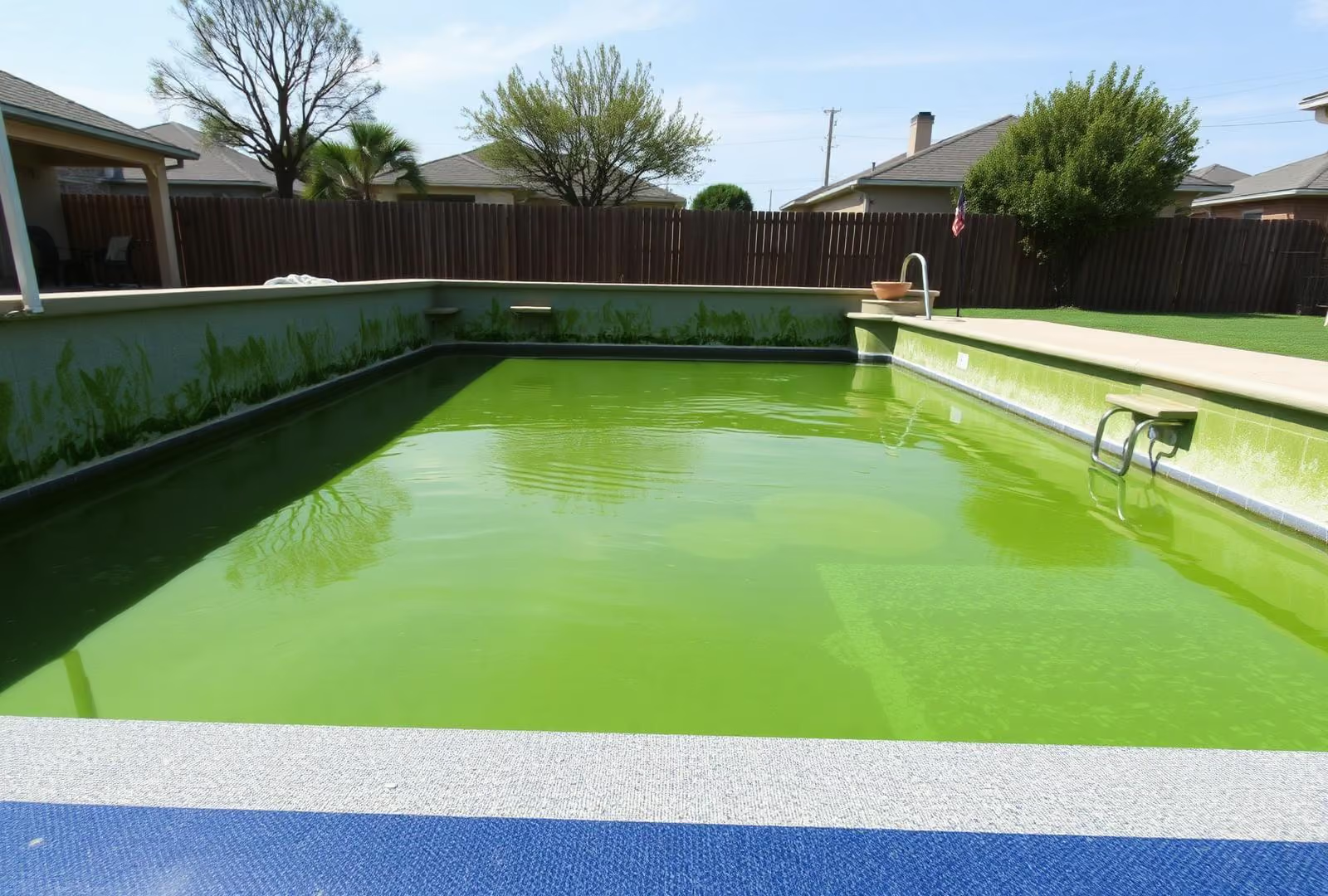
The cost to fix a green pool in Auckland depends on how severe the algae is, what chemicals are needed, and whether any equipment has failed. Getting the diagnosis right before spending on chemicals is the most important step.
The guide below covers the key things to know, from what causes green water to when it makes sense to call a professional rather than tackle it yourself.
What you'll learn
Why Green Pool Costs Vary So Much
A pool that's turned green overnight after a storm is a very different problem from one that's been neglected for months. The cost to fix a green pool depends on three things: how severe the algae or contamination is, what chemicals are needed to clear it, and whether any equipment has failed along the way.
Understanding what you're dealing with before you spend money on chemicals is the most important step. Treating the wrong problem, or under-dosing, means you'll spend more in the long run.
---
What Makes a Pool Turn Green
Green water is almost always caused by algae. Algae takes hold when the pool's sanitiser level drops too low to keep it in check. This can happen quickly in Auckland's warm, humid summers.
Common causes include:
- Low or zero free chlorine, the most common trigger
- High phosphate levels, phosphates feed algae growth
- Poor circulation, dead spots in the pool allow algae to establish
- Equipment failure, a pump or chlorinator that's not running properly means the water isn't being sanitised
- Missed maintenance, even a week or two without attention can be enough in summer
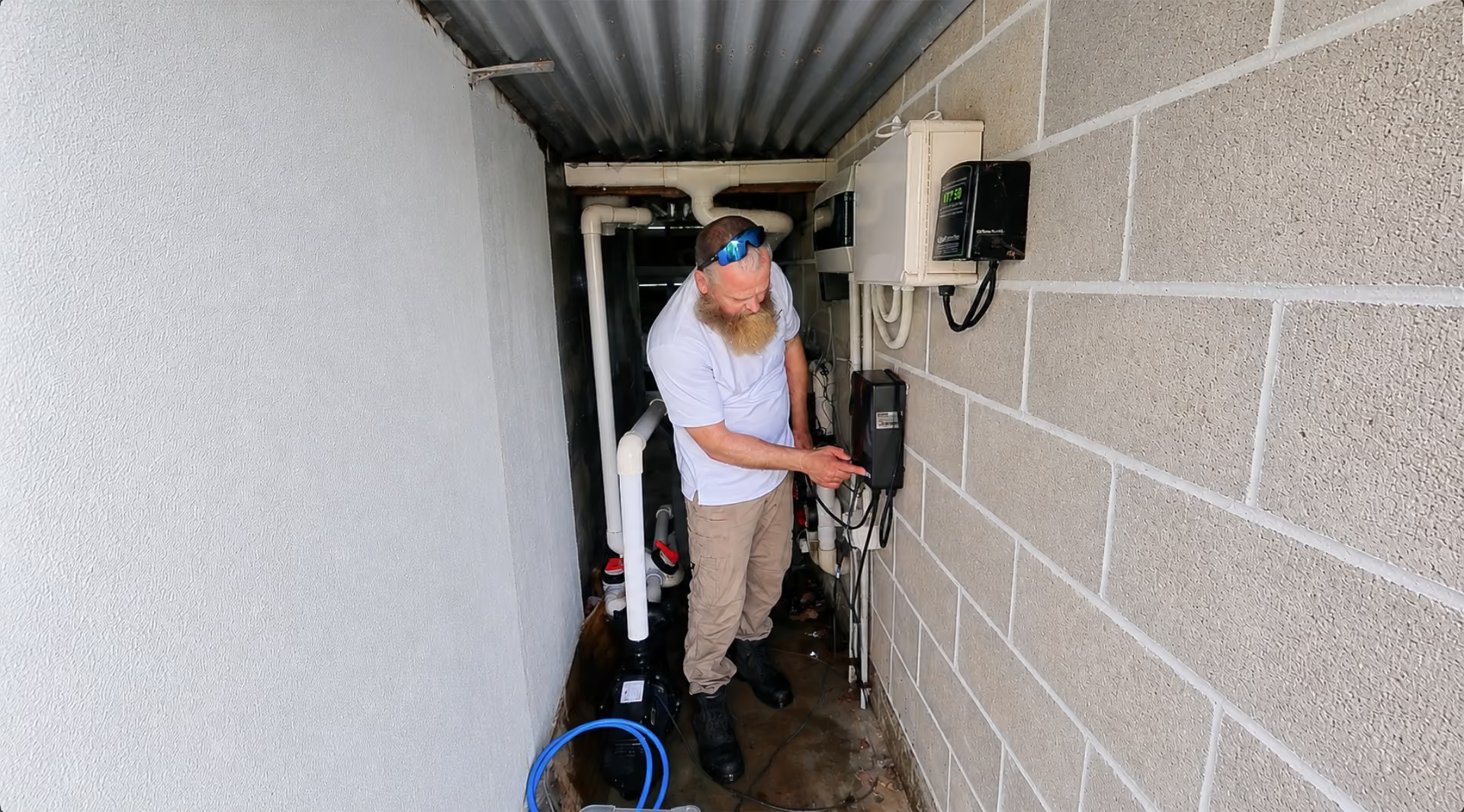
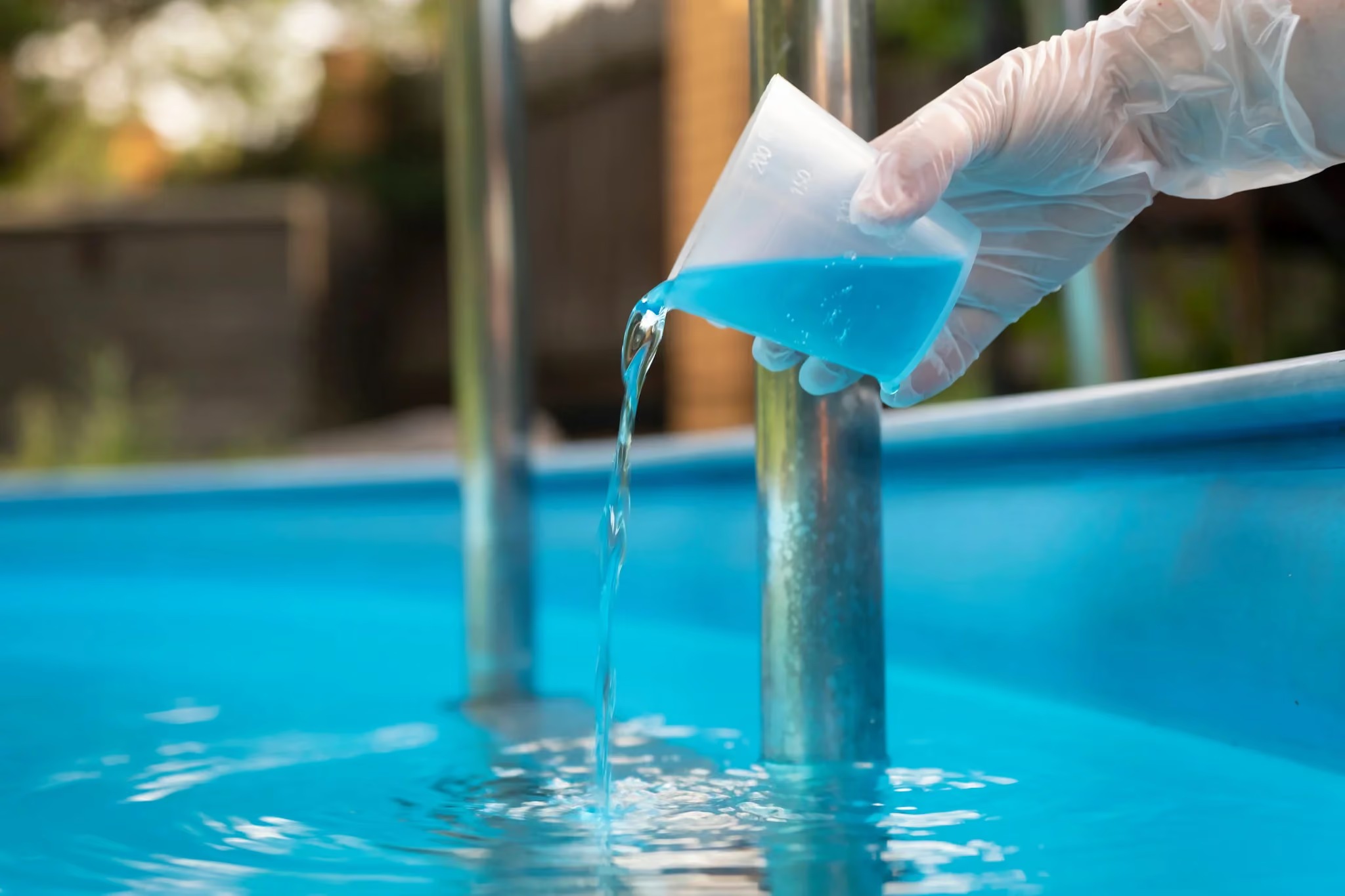
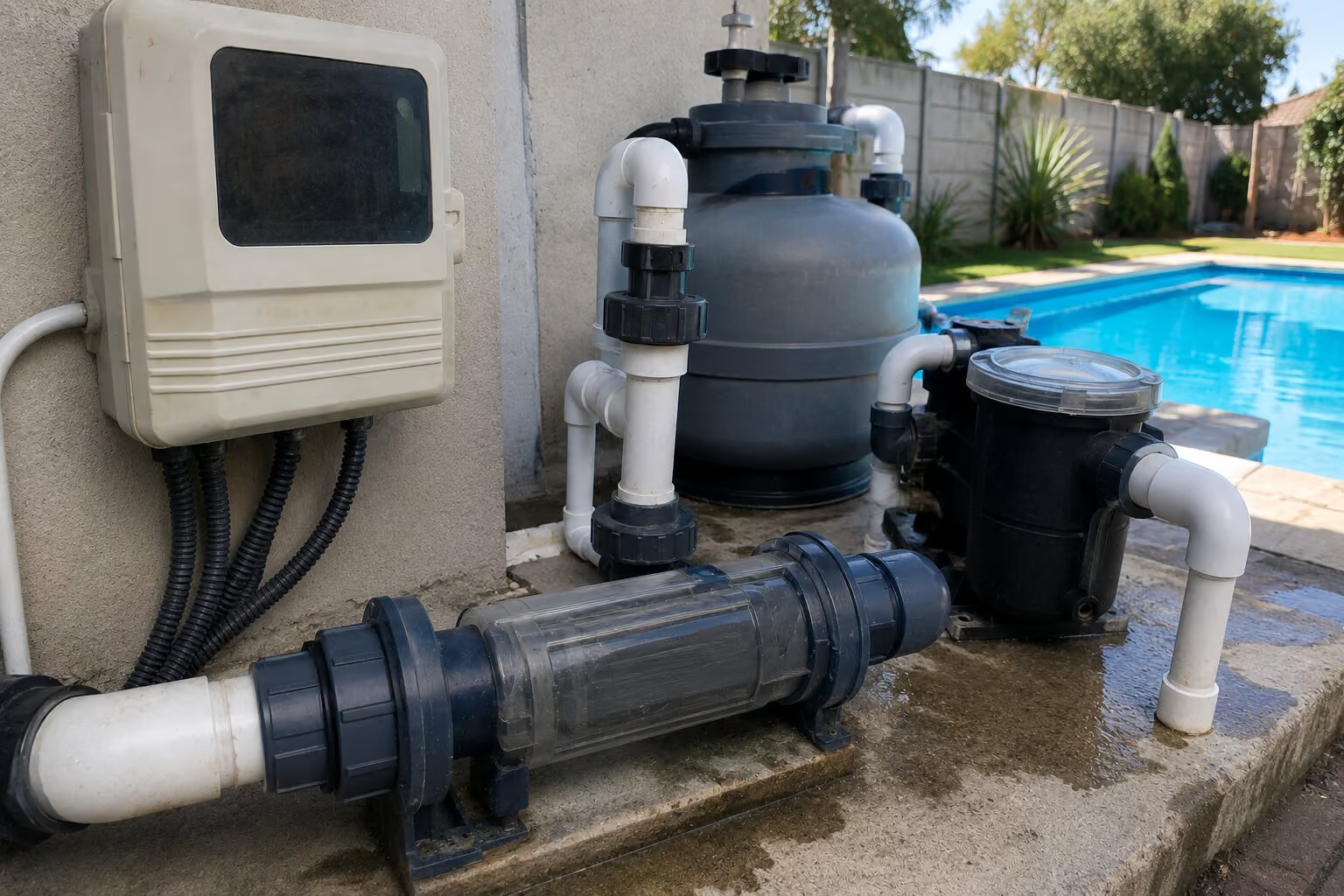
Before spending anything on chemicals, it's worth checking whether your equipment is actually running correctly. A chlorinator that's stopped producing, or a pump that's not circulating properly, means chemicals alone won't solve the problem.
---
The Three Levels of Green, and What Each Costs
Not all green pools are equal. A light green tint is a very different job from a pool that looks like pea soup. Here's a practical way to think about severity.
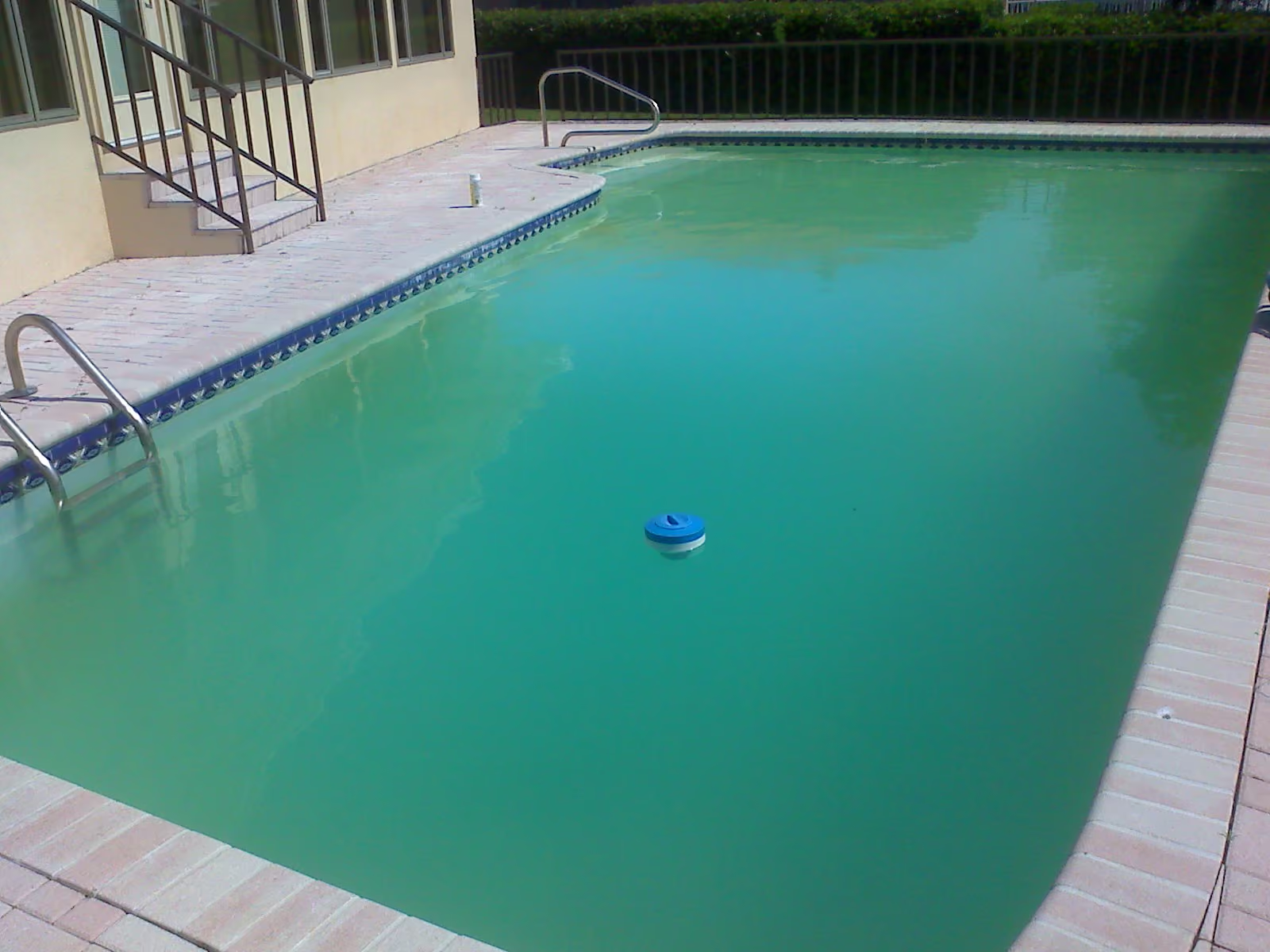
Level 1, Light Green (Early Algae)
The water has a slight green tint but you can still see the bottom of the pool. This is the easiest and cheapest situation to fix.
At this stage, the pool typically needs:
- A shock dose of chlorine to kill the algae
- An algaecide to prevent regrowth
- A clarifier or flocculant to help the dead algae settle or be filtered out
- A thorough vacuum and backwash once the algae has died
Chemical costs at this level are relatively modest. If you already have a working test kit and basic chemicals on hand, you may be able to manage this yourself.
Level 2, Medium Green (Established Algae)
The water is clearly green and visibility to the bottom is limited or gone. The walls and floor may have algae growth you can feel.
This requires:
- A heavier shock treatment, likely multiple doses
- Brushing the walls and floor before and after treatment
- Algaecide
- Flocculant or clarifier
- Multiple filter runs and backwashes over several days
- Water testing at each stage to track progress
This level takes more time and more product. It's manageable as a DIY job if you're comfortable with pool chemistry, but it's easy to under-dose and end up going around in circles.
Level 3, Dark Green or Black (Severe Algae / Long-Term Neglect)
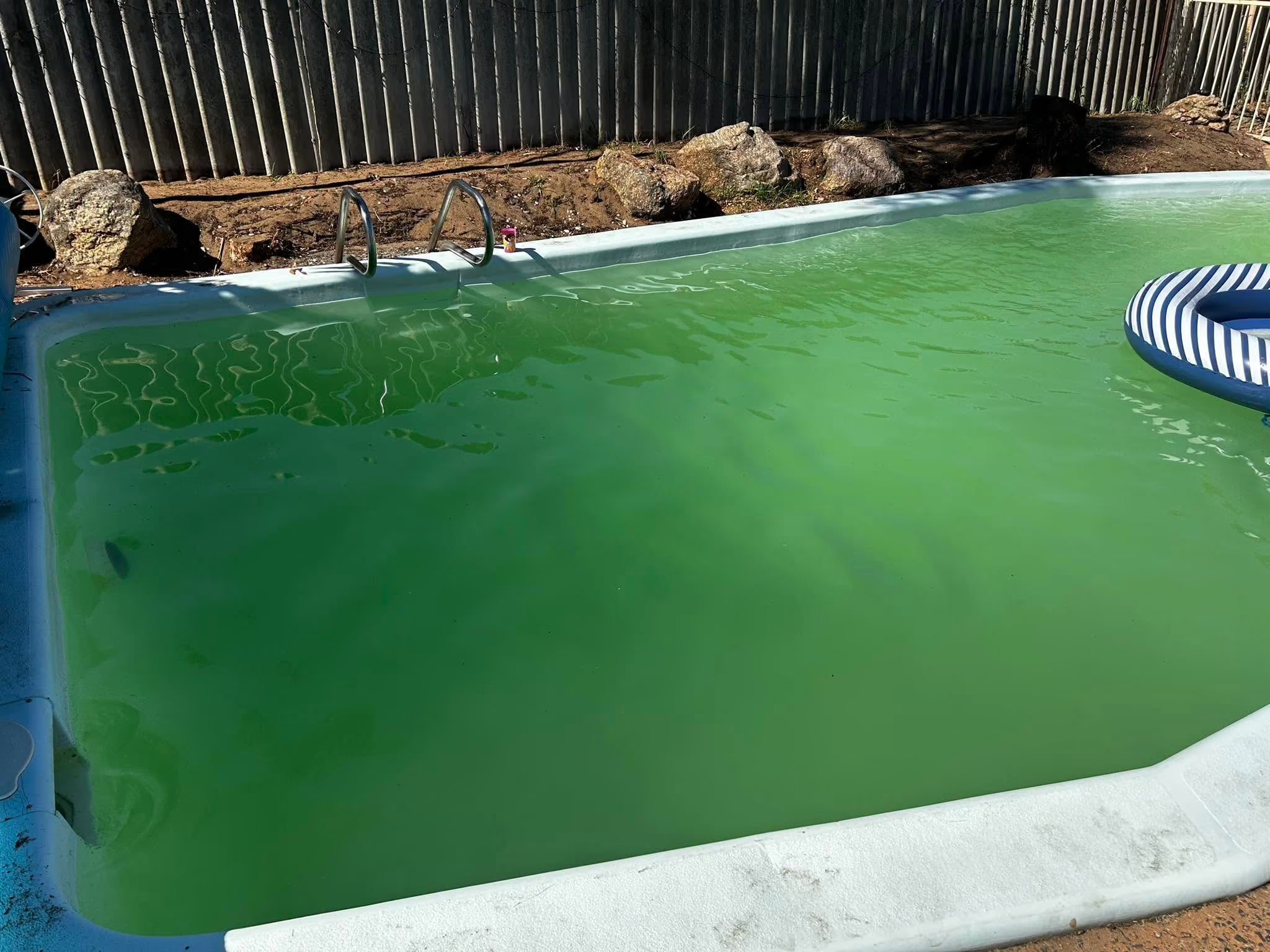
The water is opaque, you cannot see the bottom at all. There may be black algae present, which is significantly harder to kill than green algae. The pool may also have debris, dead organic matter, and potentially unsafe water chemistry.
At this level:
- Chemical costs are substantially higher, large volumes of shock, algaecide, and balancing chemicals are needed
- The process takes longer, often a week or more of repeated treatment
- There's a real risk of staining the pool surface if the chemistry isn't managed carefully
- Professional assessment is strongly recommended before you start spending on chemicals
In some cases, a partial drain and refill is more cost-effective than treating severely contaminated water. A pool professional can advise whether that's the right call for your situation.
---
What Drives the Cost Up
Beyond the chemicals themselves, a few factors can significantly increase what you'll spend to fix a green pool.
Equipment problems
If your pump, filter, or chlorinator has failed, or is running poorly, fixing the water without fixing the equipment is a short-term solution. The pool will turn green again. Equipment repairs or replacements add to the overall cost but are often unavoidable.
Water balance issues
A pool that's badly out of balance (very high or very low pH, high cyanuric acid, high calcium hardness) may need significant balancing before shock treatment will even work. Chemicals to correct water balance add to the bill.
Pool size
Chemical doses are calculated by volume. A larger pool costs more to treat than a smaller one, straightforwardly.
Repeated failed attempts
Many pool owners spend more than they need to by under-dosing, treating in the wrong order, or not addressing the root cause. Getting the diagnosis right first saves money overall.
---
DIY vs Professional Green Pool Treatment
For a Level 1 or mild Level 2 situation, a confident DIYer with the right products and a reliable test kit can usually clear the pool themselves. The key is accurate water testing at the start, not guessing at what the water needs.
For Level 2 or 3, or any situation where:
- You've already tried treating it and it hasn't worked
- You suspect an equipment fault is involved
- The pool has black algae
- You can't see the bottom at all
…it's worth getting a professional assessment before spending more on chemicals. A technician can test the water properly, identify whether equipment is contributing to the problem, and recommend the most direct path to a clear pool.
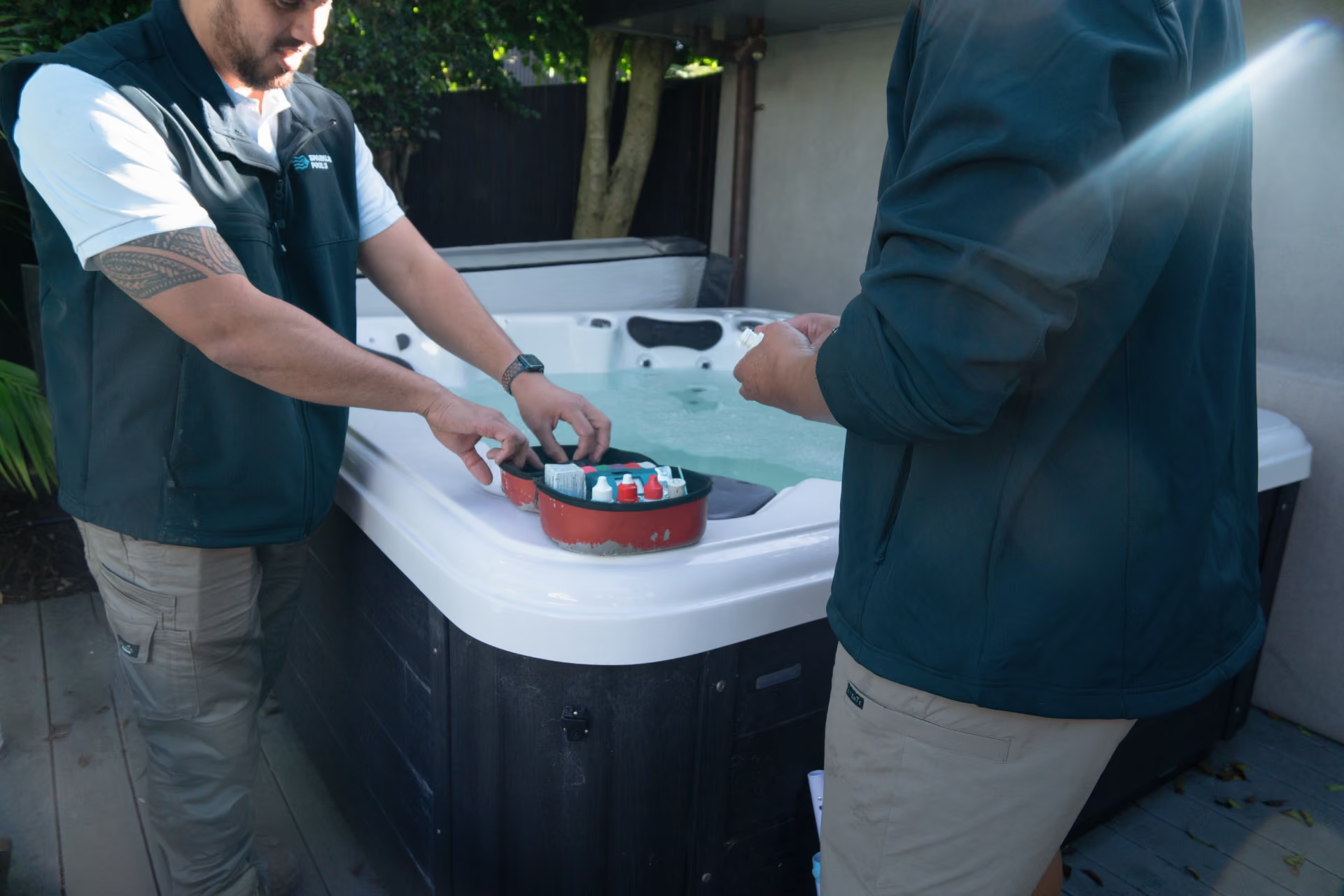
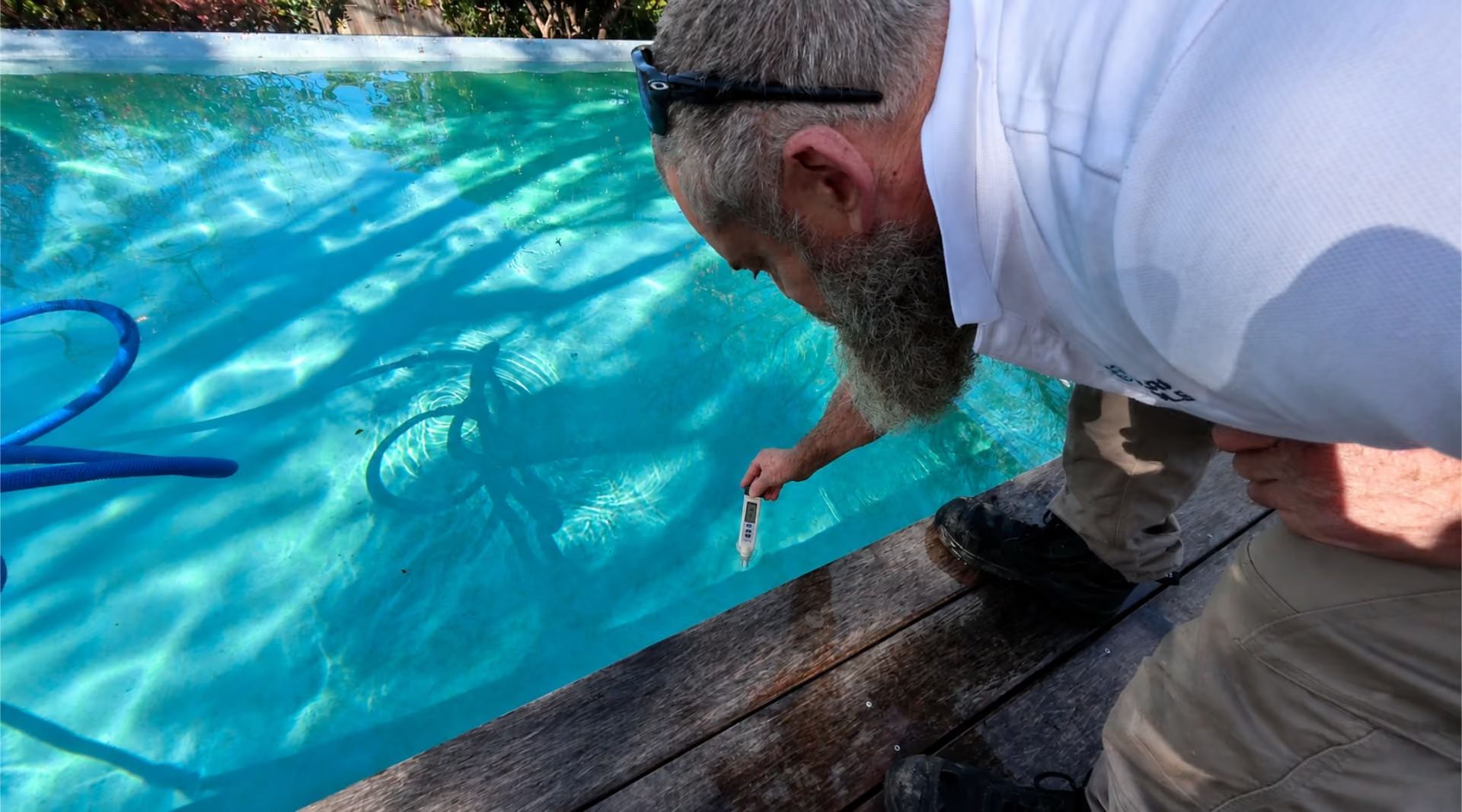
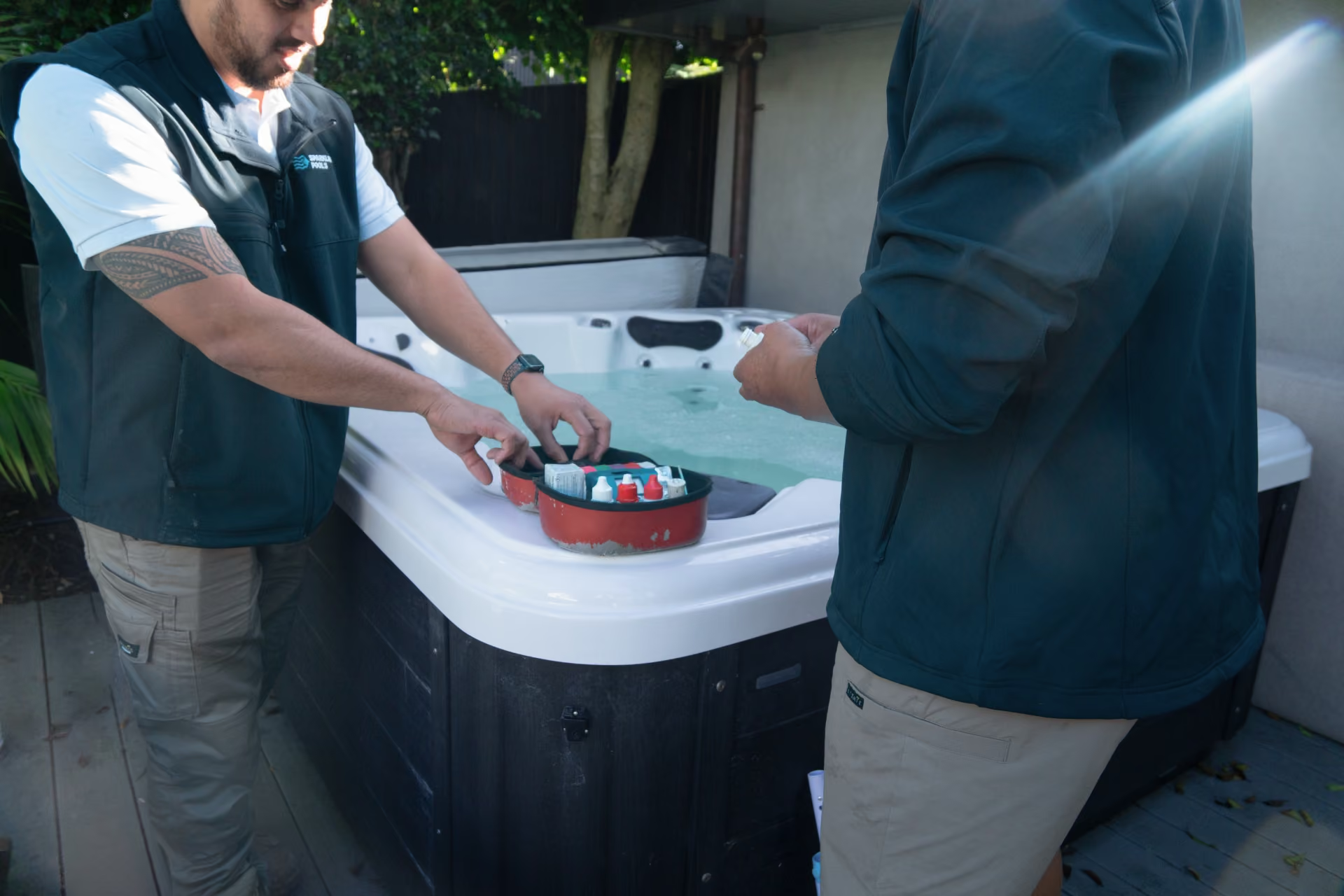
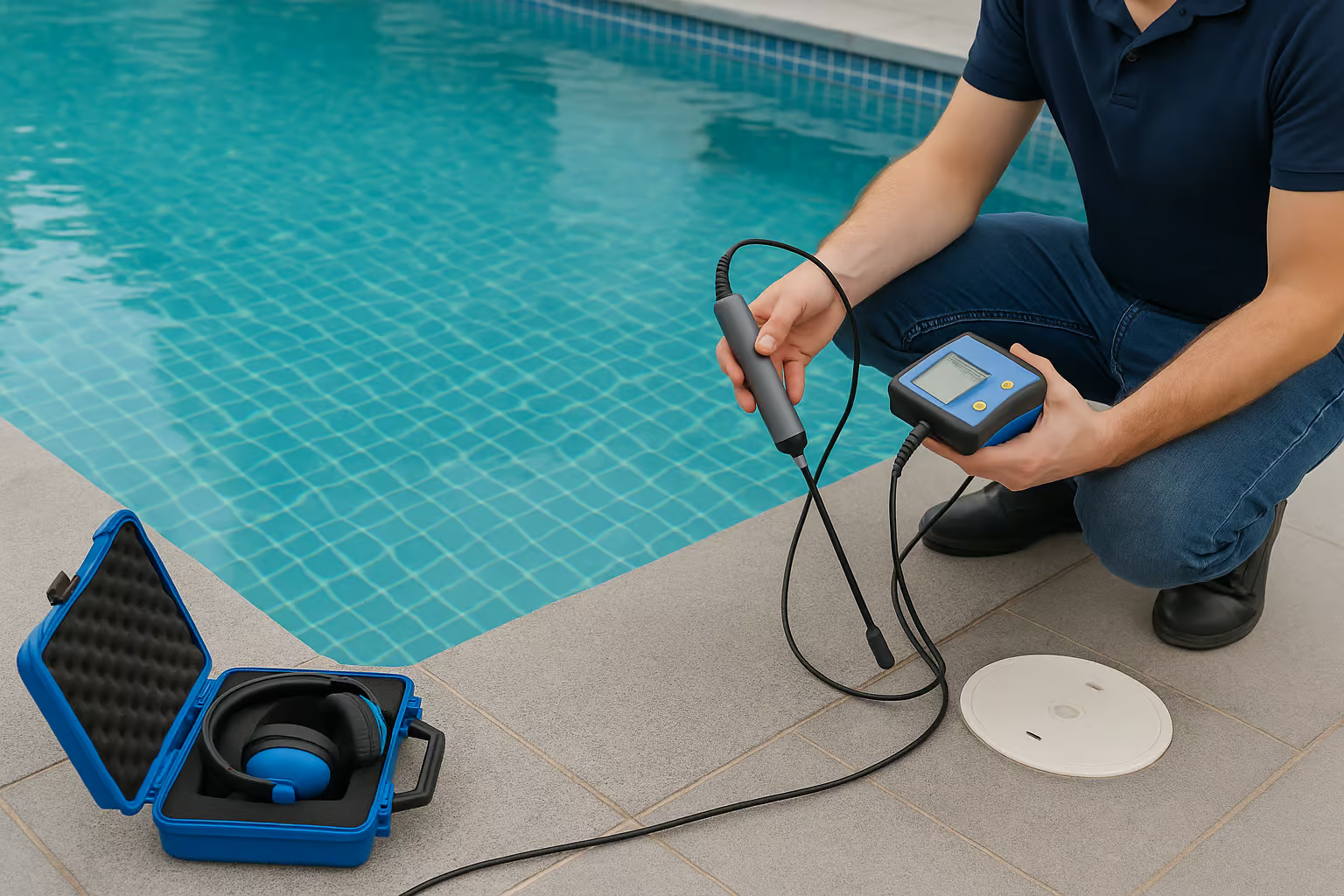
Sparkling Pools offers on-site water testing across Auckland, a technician comes to your home and tests everything on site. This takes the guesswork out of the diagnosis and helps you avoid spending money on the wrong treatment.
---
How to Avoid Paying to Fix a Green Pool Again
The best way to keep costs down is to stop the pool turning green in the first place. In Auckland's climate, that means:
- Testing the water regularly, at least weekly in summer
- Maintaining free chlorine at the correct level, don't let it drop to zero
- Running the pump and filter for enough hours each day, especially in warm weather
- Keeping phosphate levels in check, particularly after heavy rain or leaf fall
- Servicing equipment regularly, a chlorinator or pump that's not working properly is a common cause of recurring algae
- Checking the pool after storms, heavy rain dilutes chemicals and introduces organic matter
A regular maintenance schedule, whether you manage it yourself or use a pool service, is almost always cheaper than fixing a green pool after the fact.
---
When to Call Sparkling Pools
If your pool has turned green and you're not sure where to start, or you've already tried treating it without success, Sparkling Pools can help. The team has been servicing Auckland pools since 1992 and can test your water on site, identify what's causing the problem, and advise on the most practical fix.
Call 09 570 4797 or freephone 0800 794 673 (0800 SWIM READY), Monday to Friday, 8:00am, 4:30pm. You can also email info@sparklingpools.co.nz.
Pool resurfacing solutions
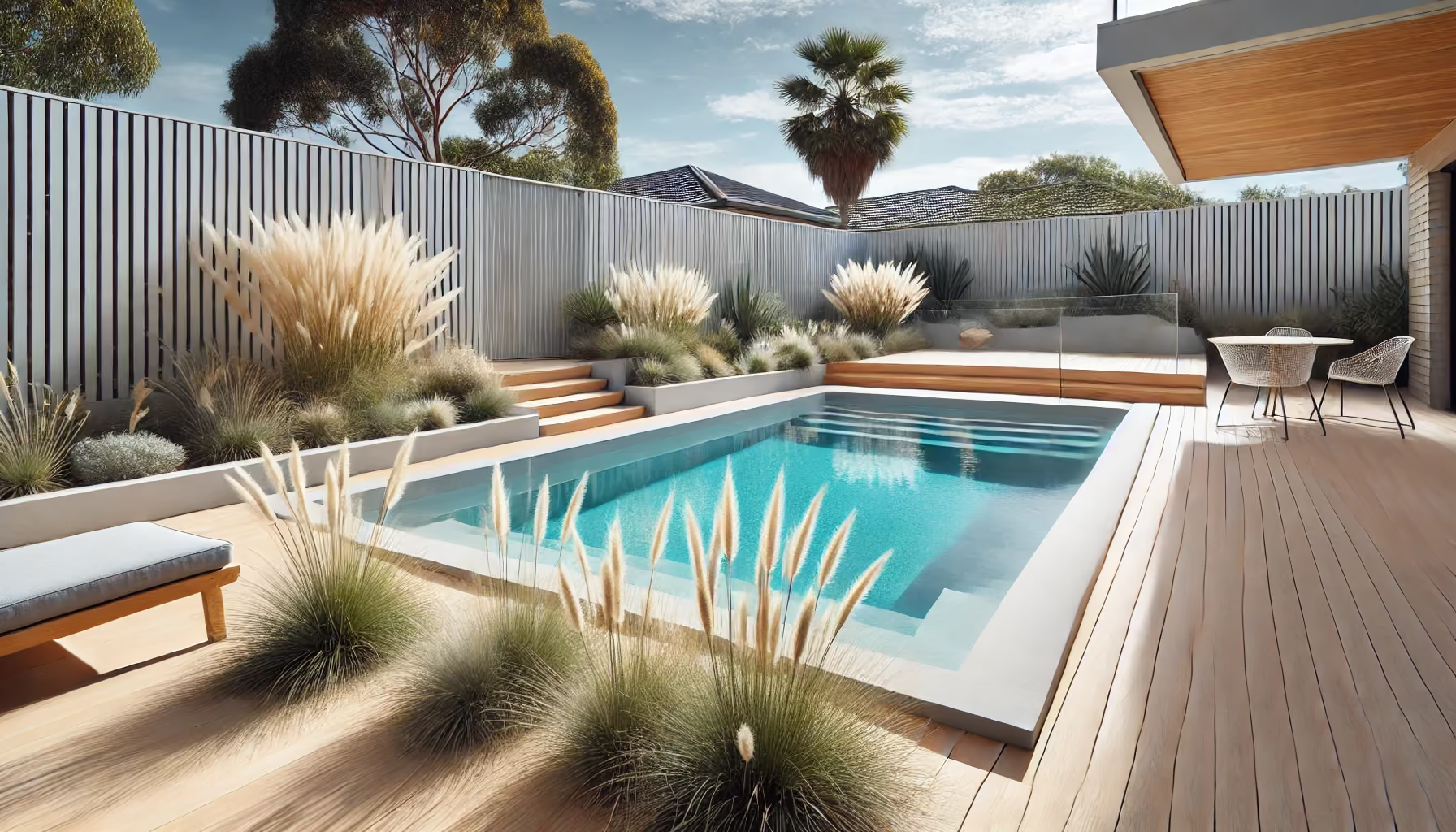
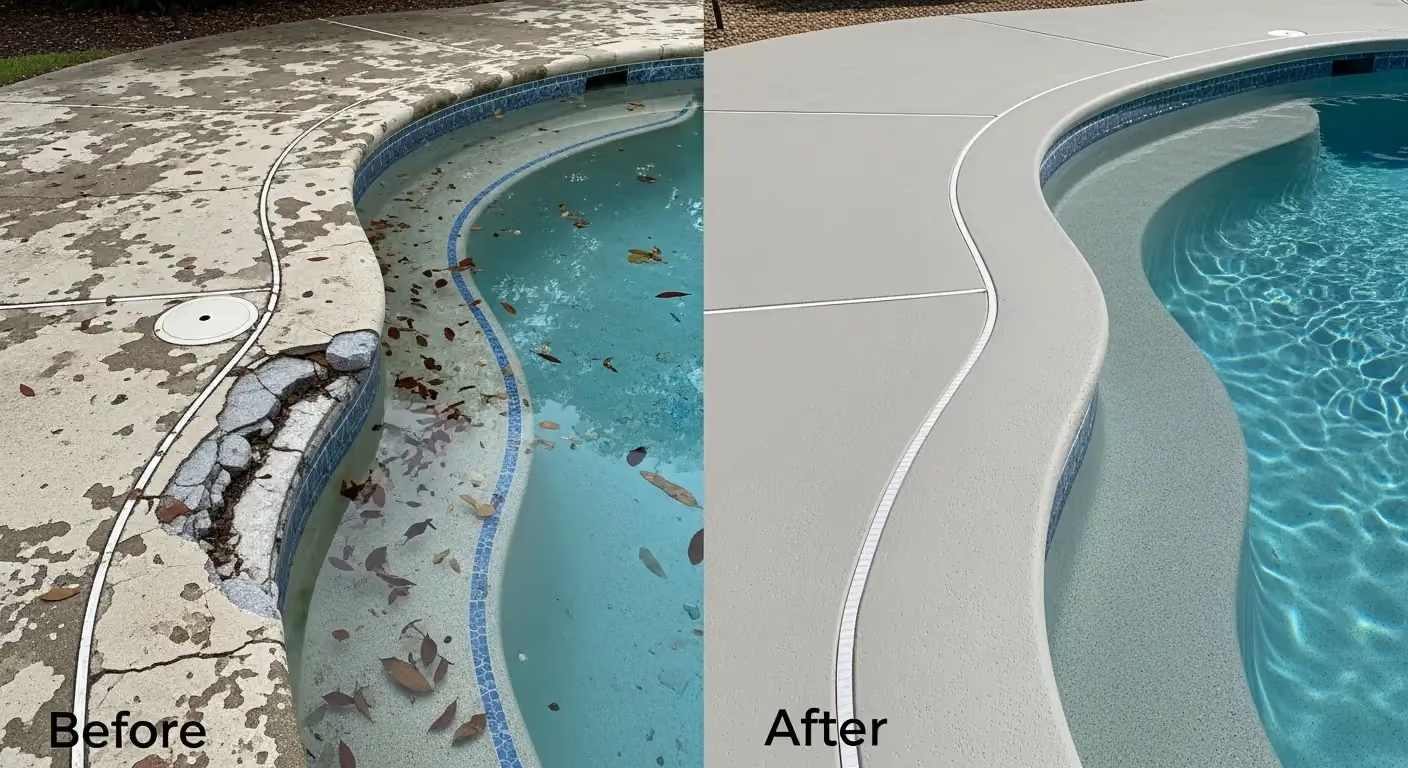
Restore your pool with durable plaster finishes

Work completed
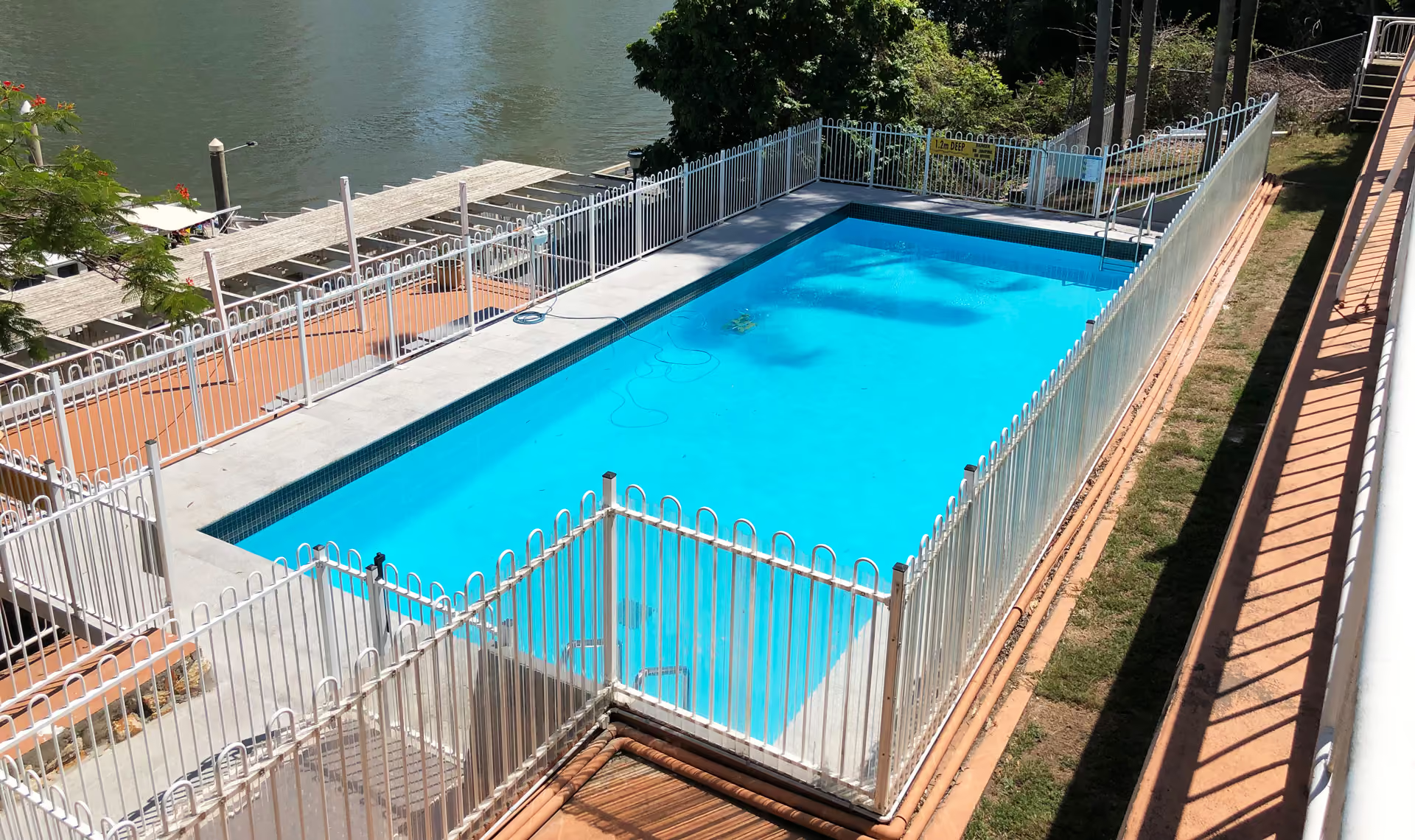
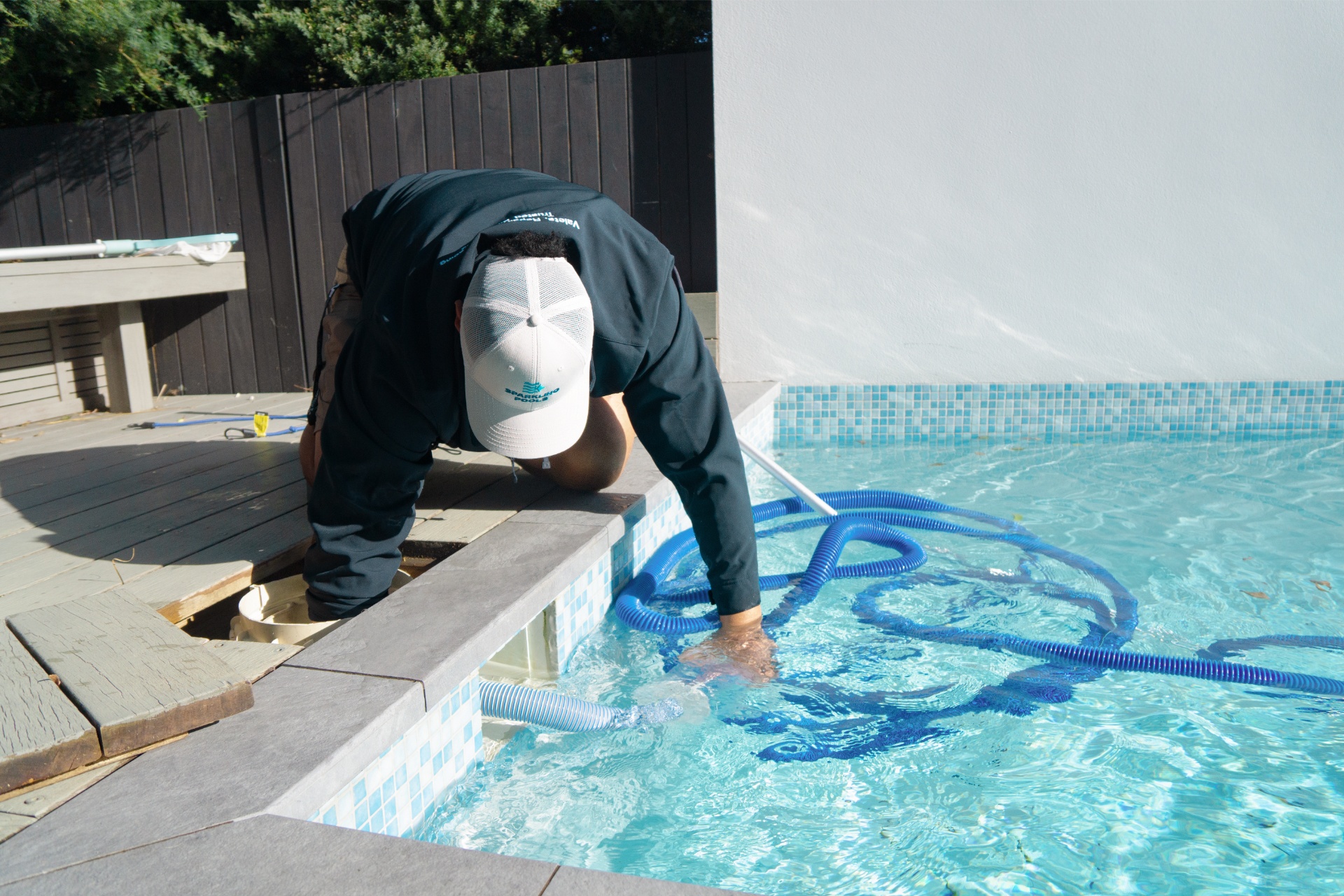
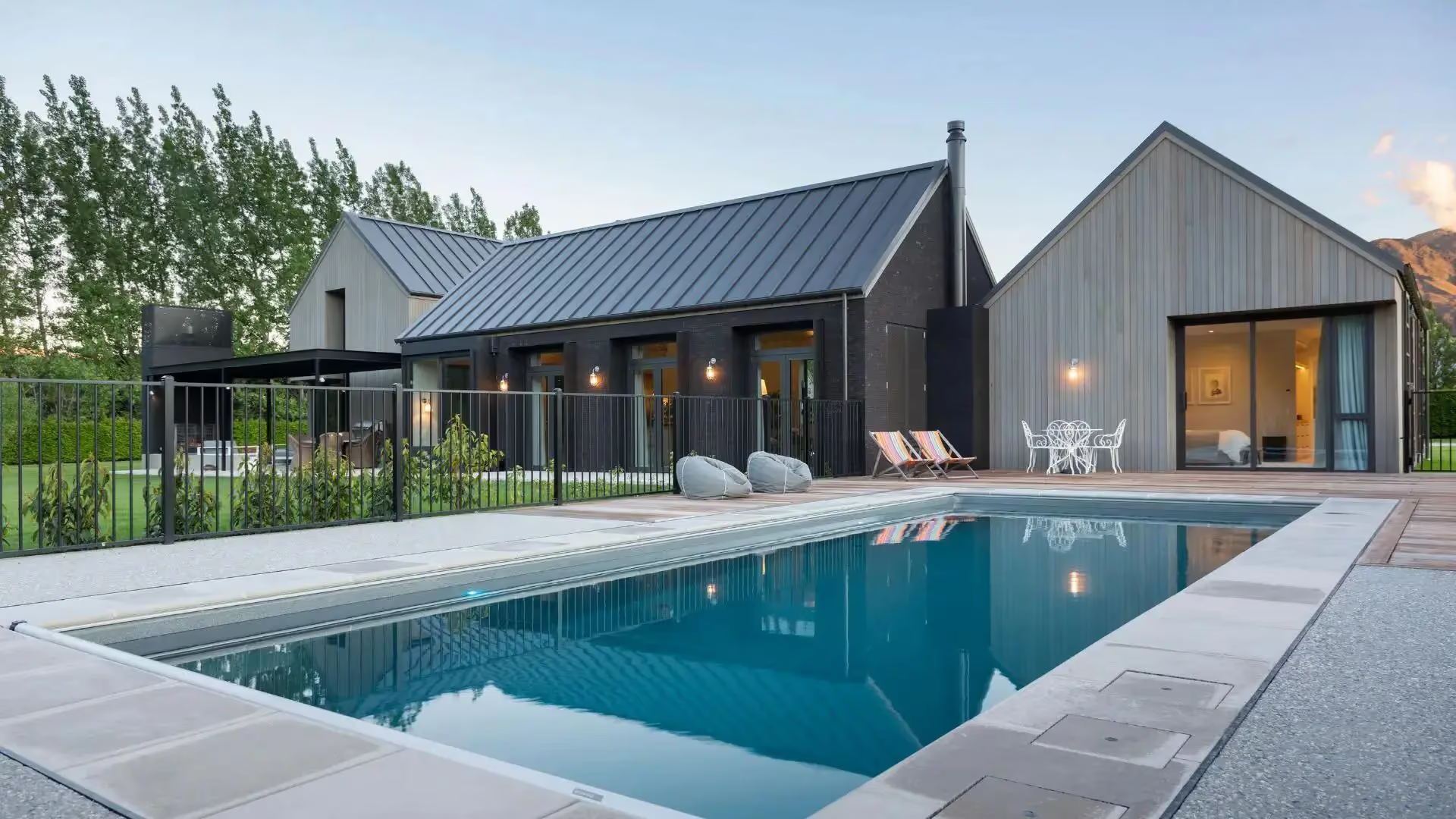
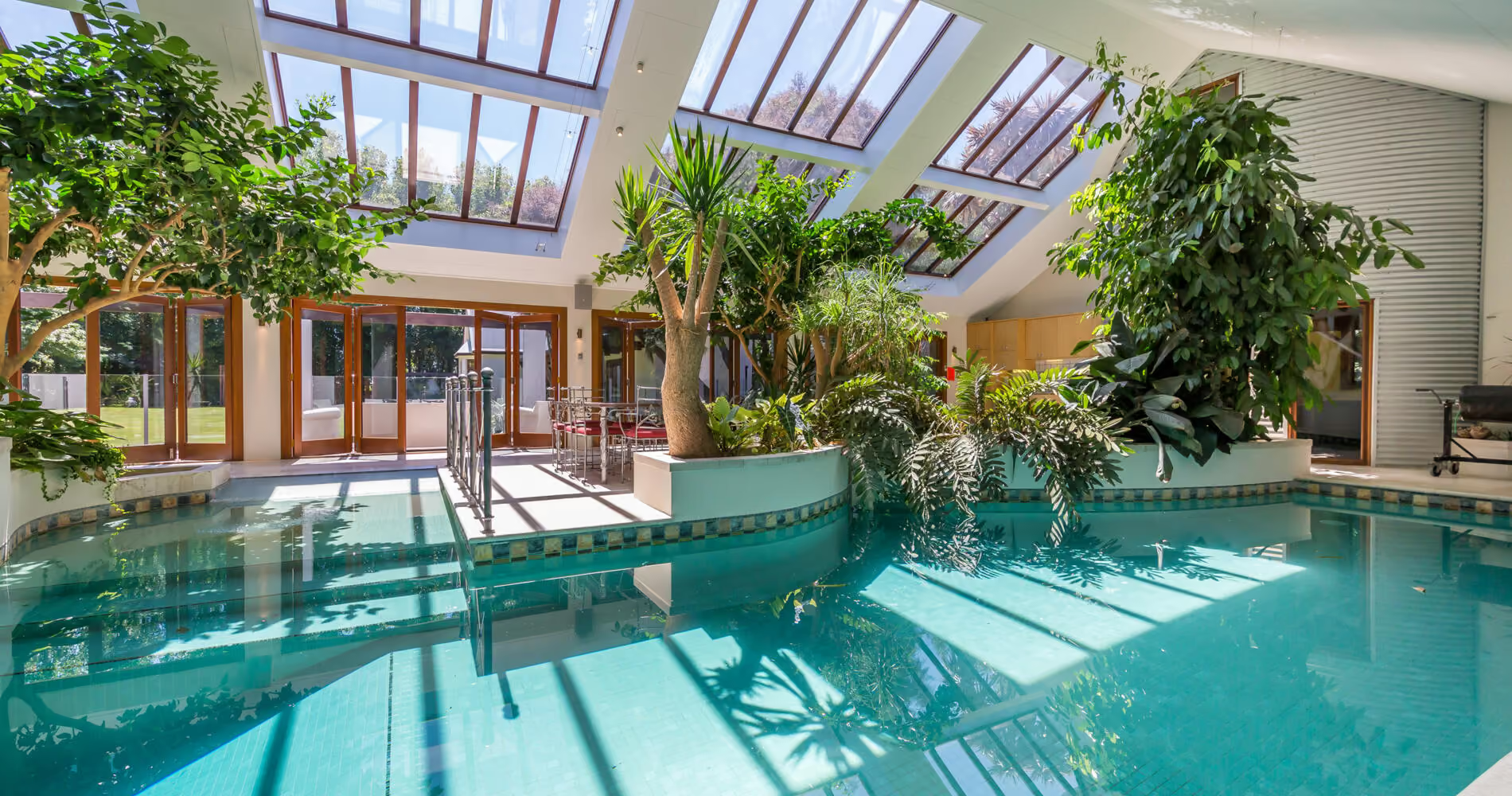
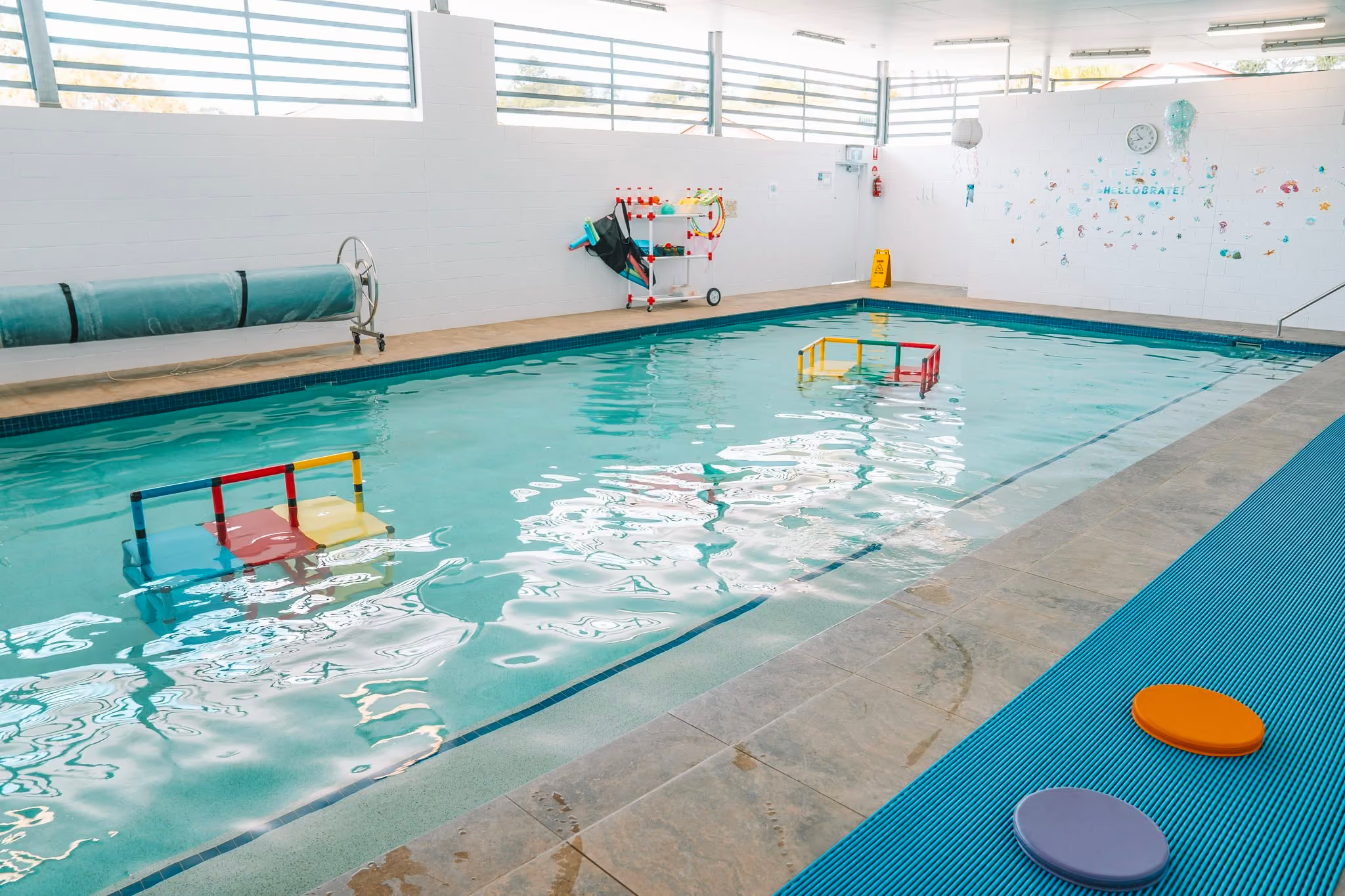
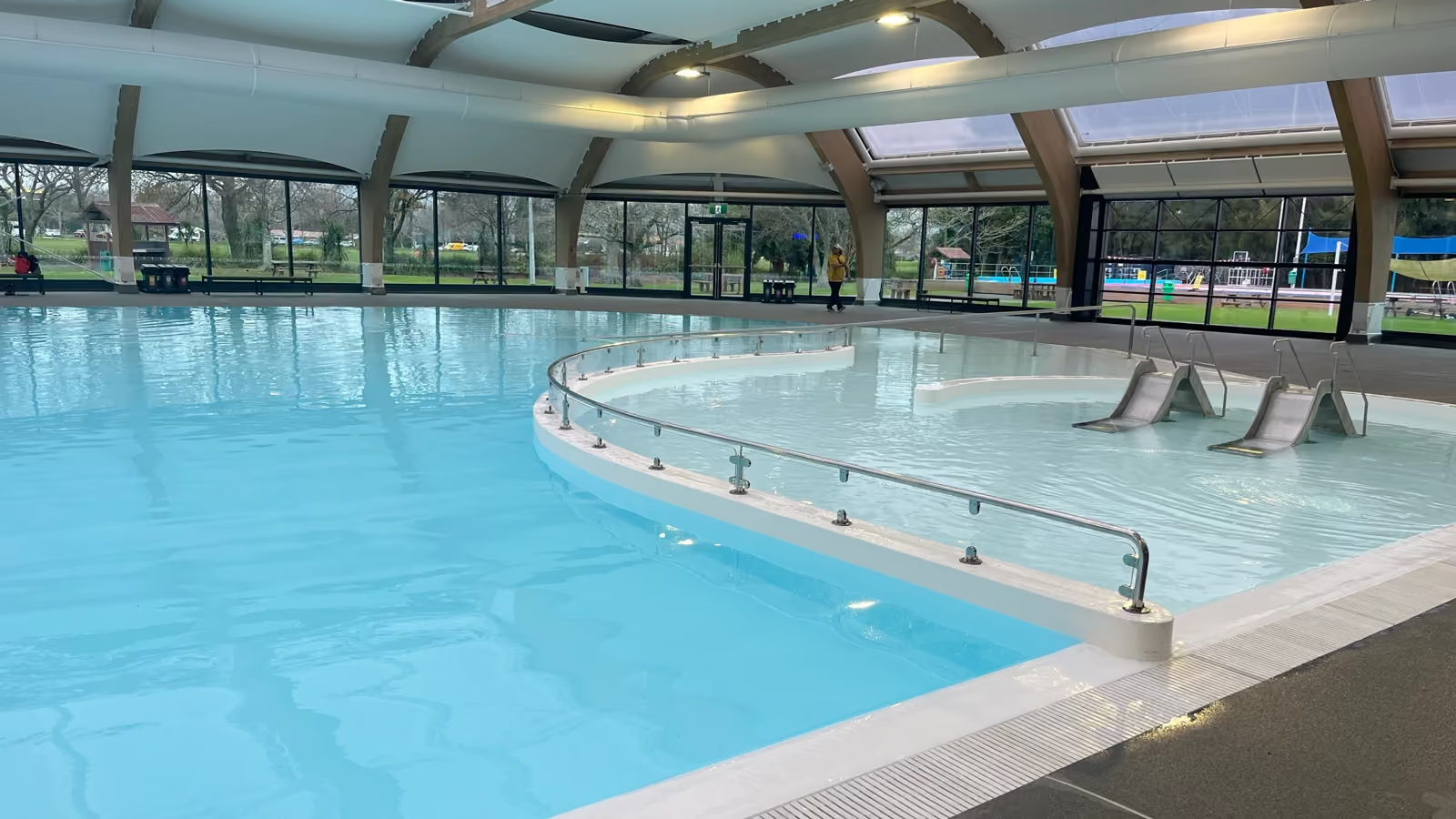
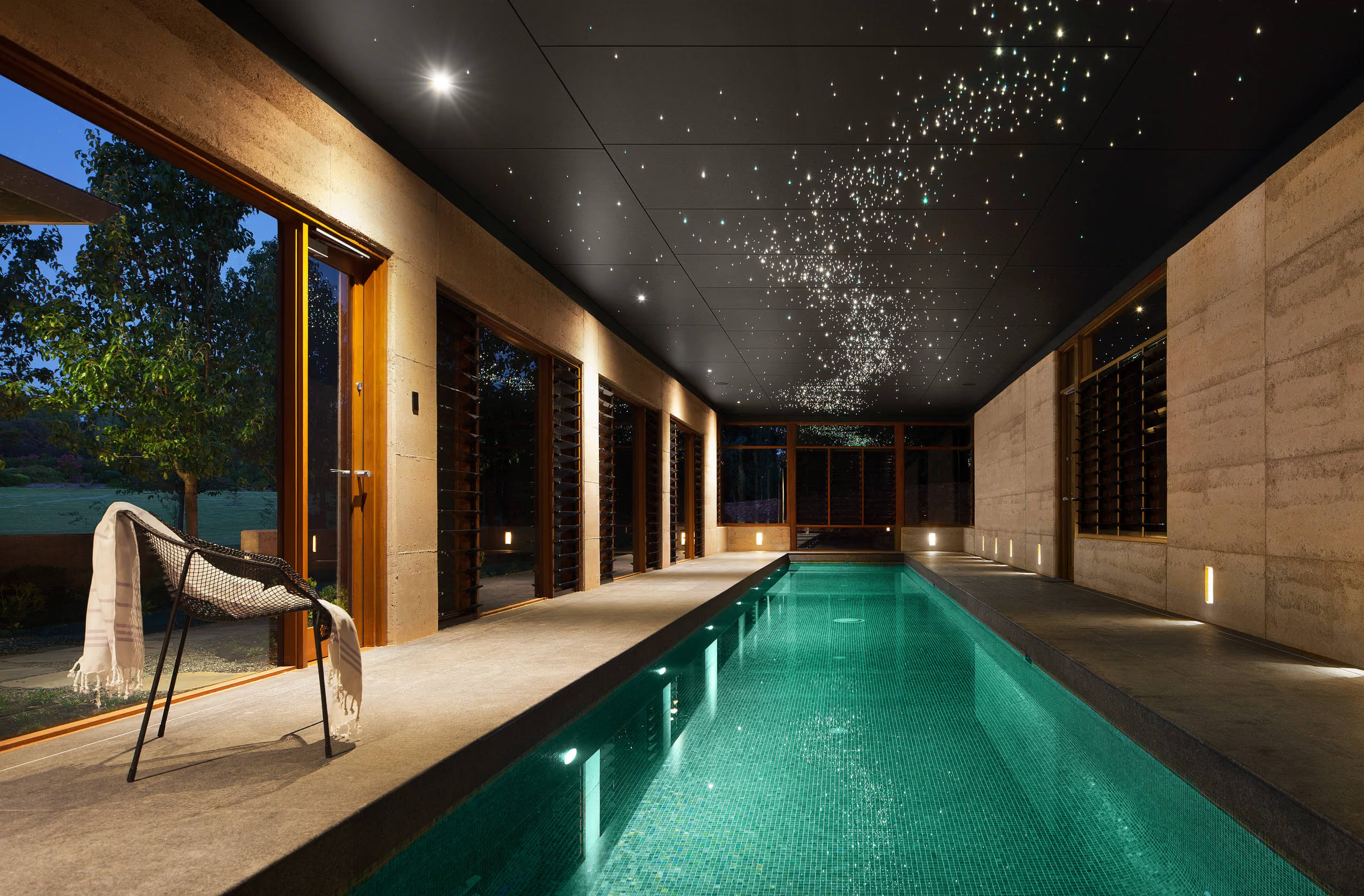
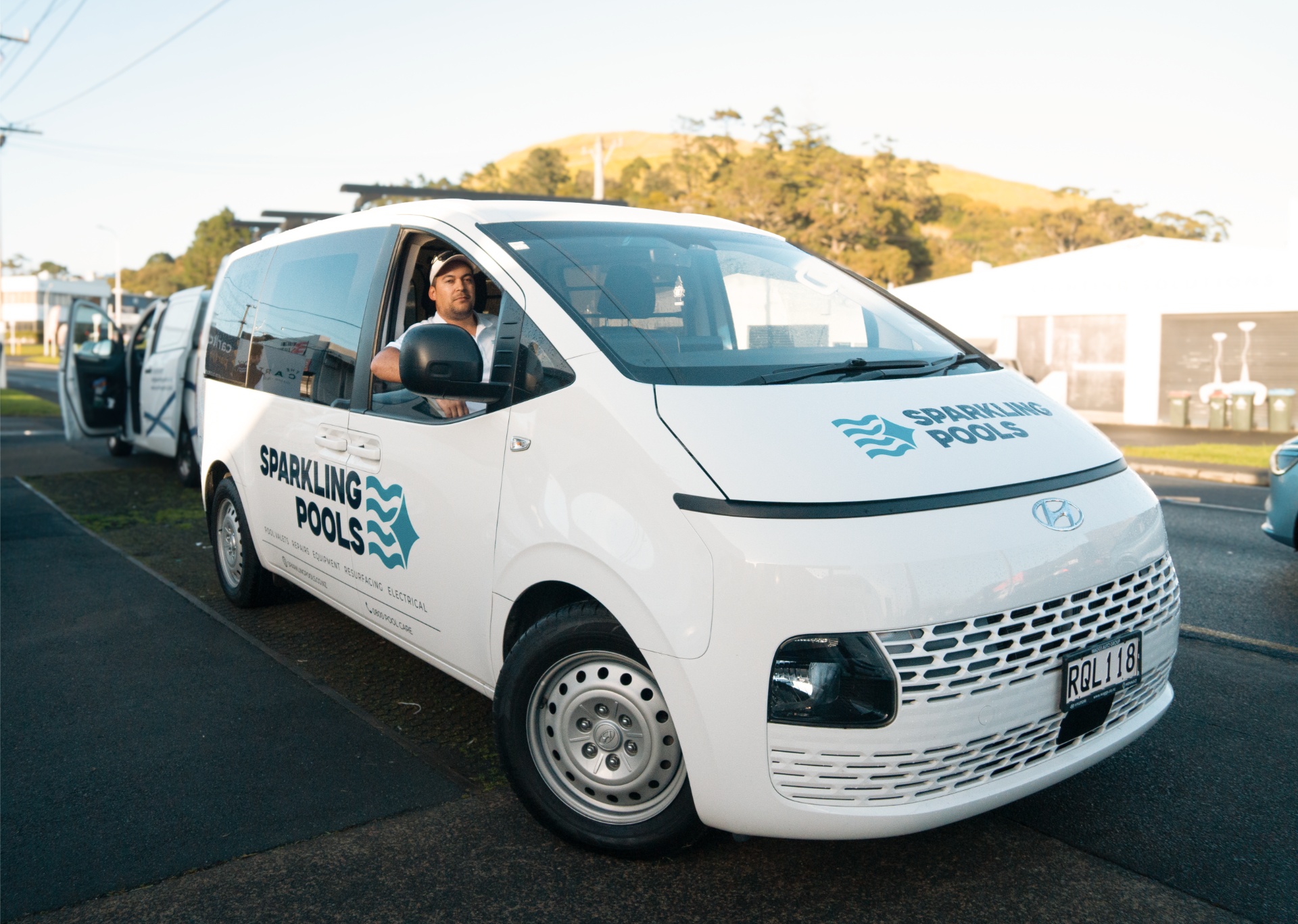
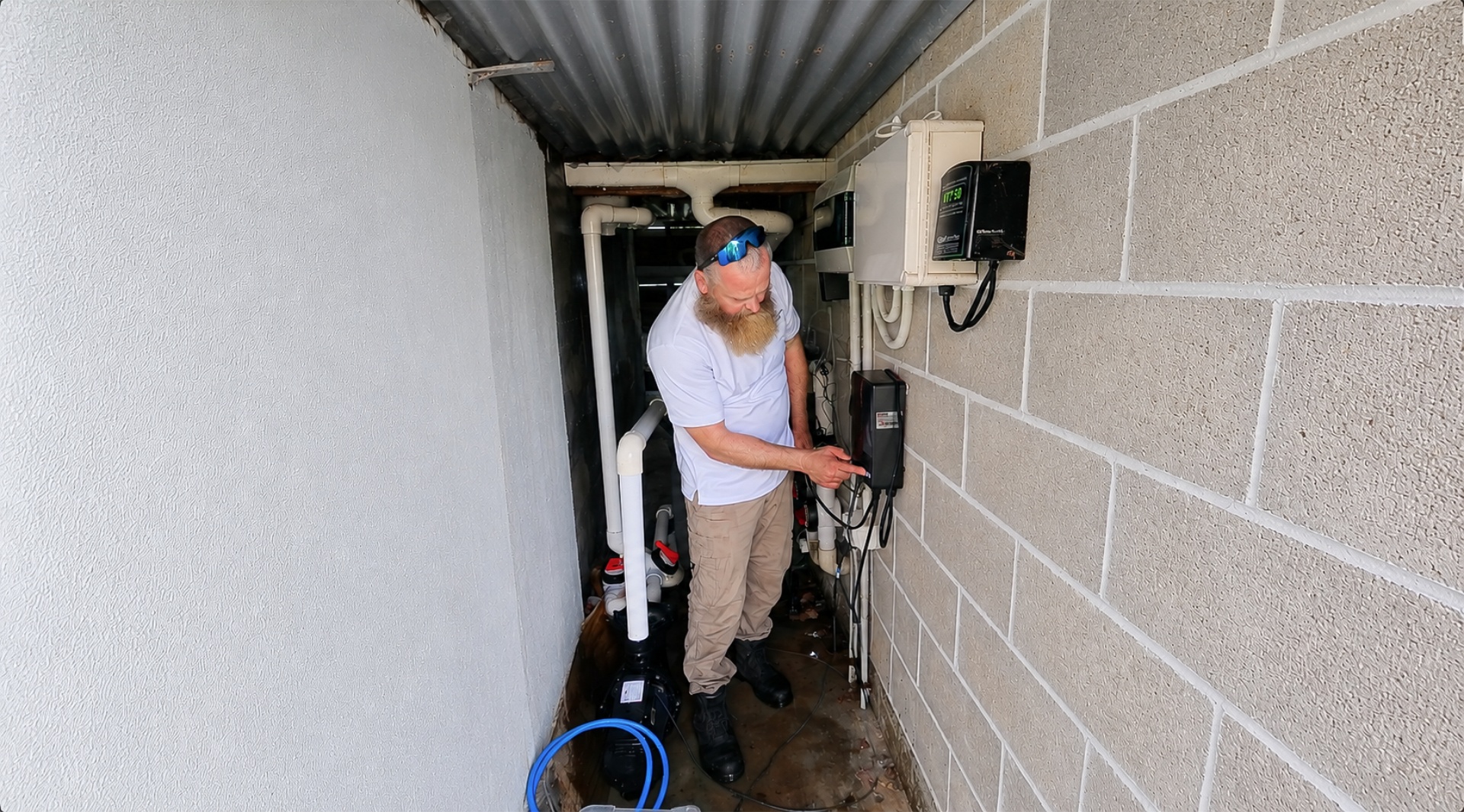
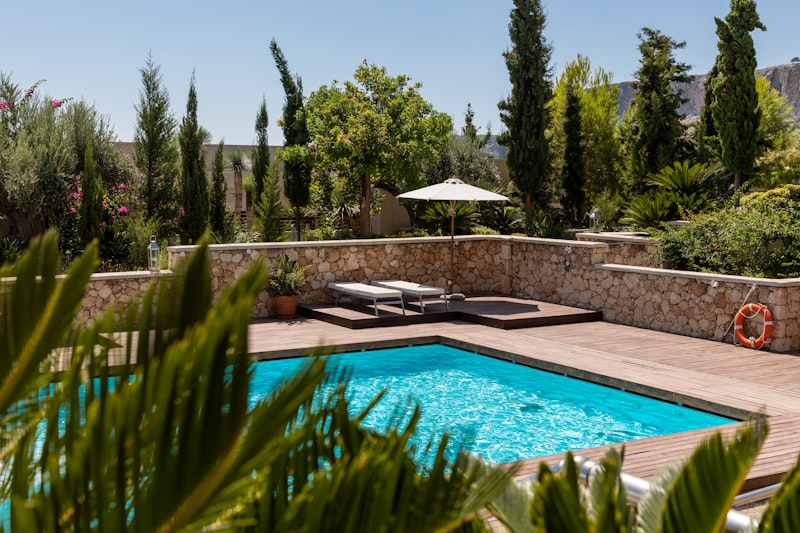
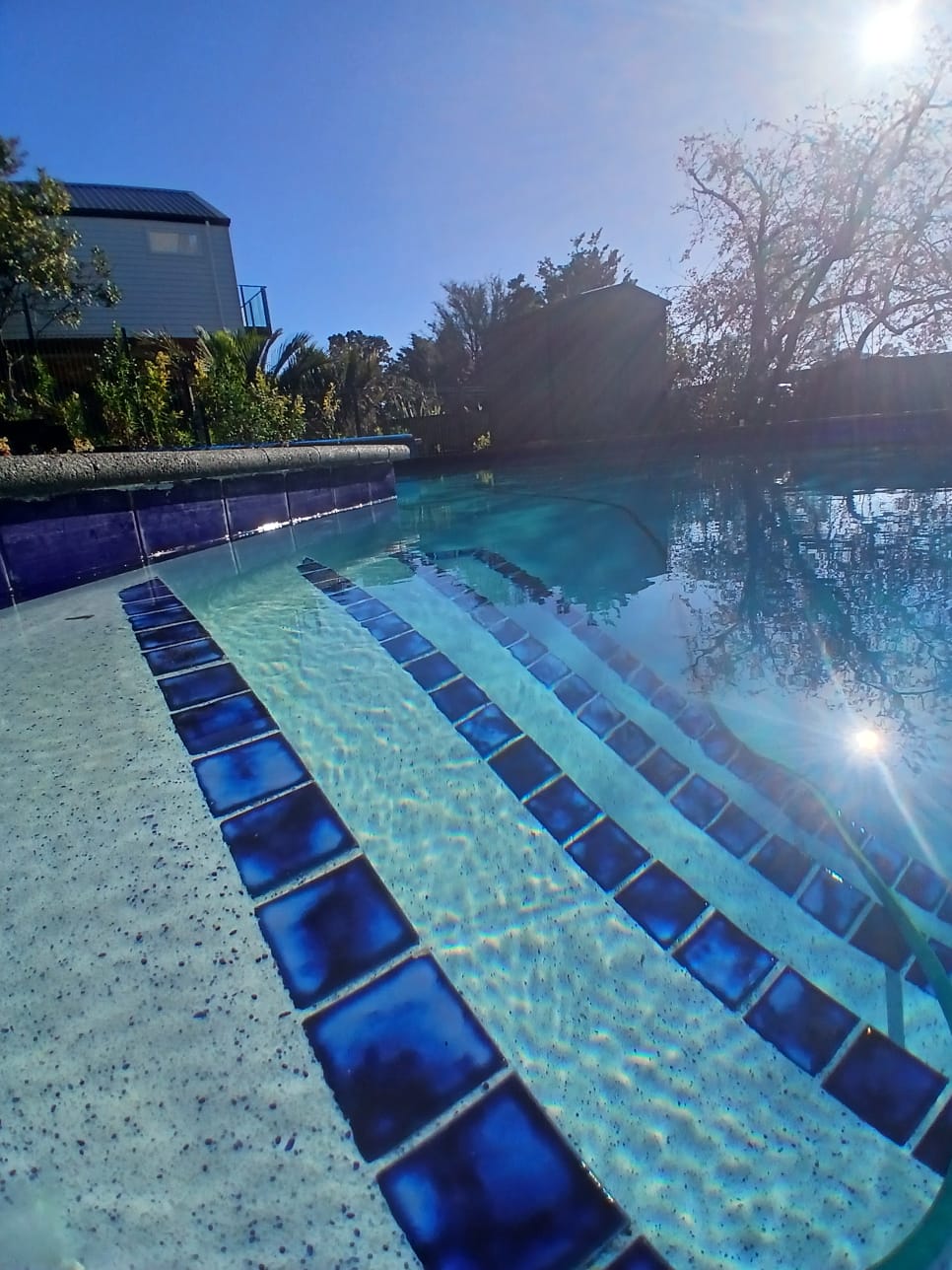
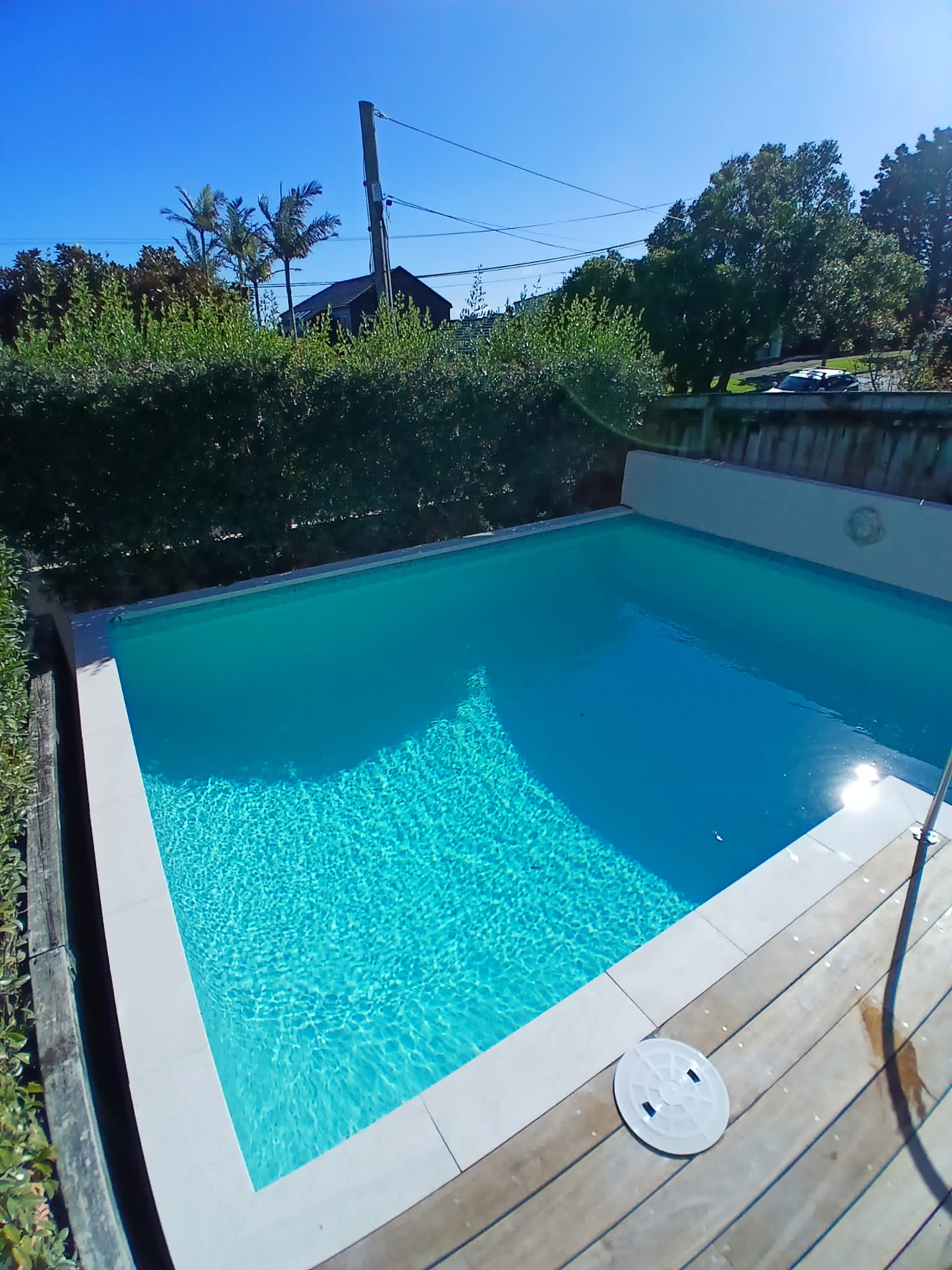
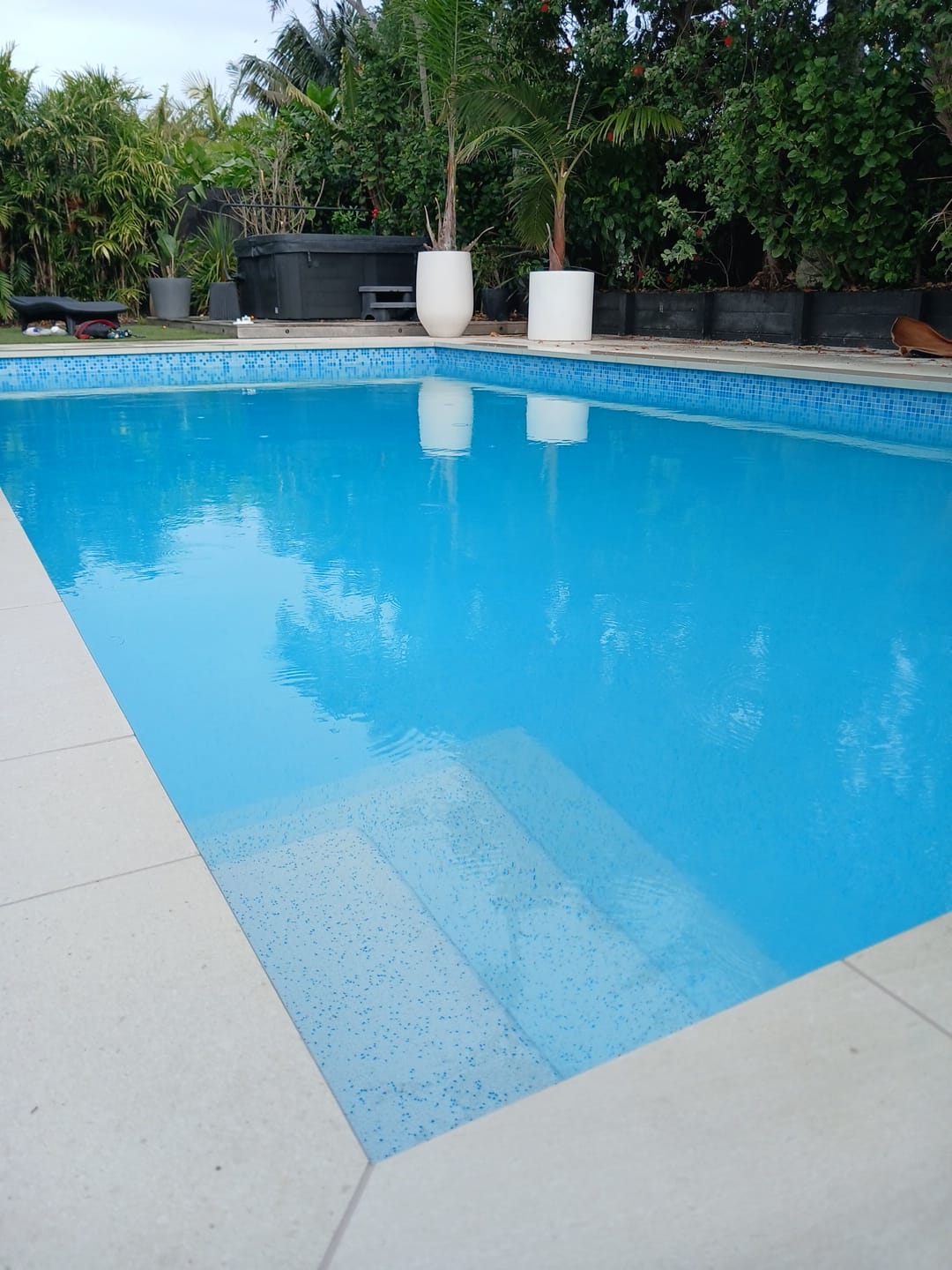
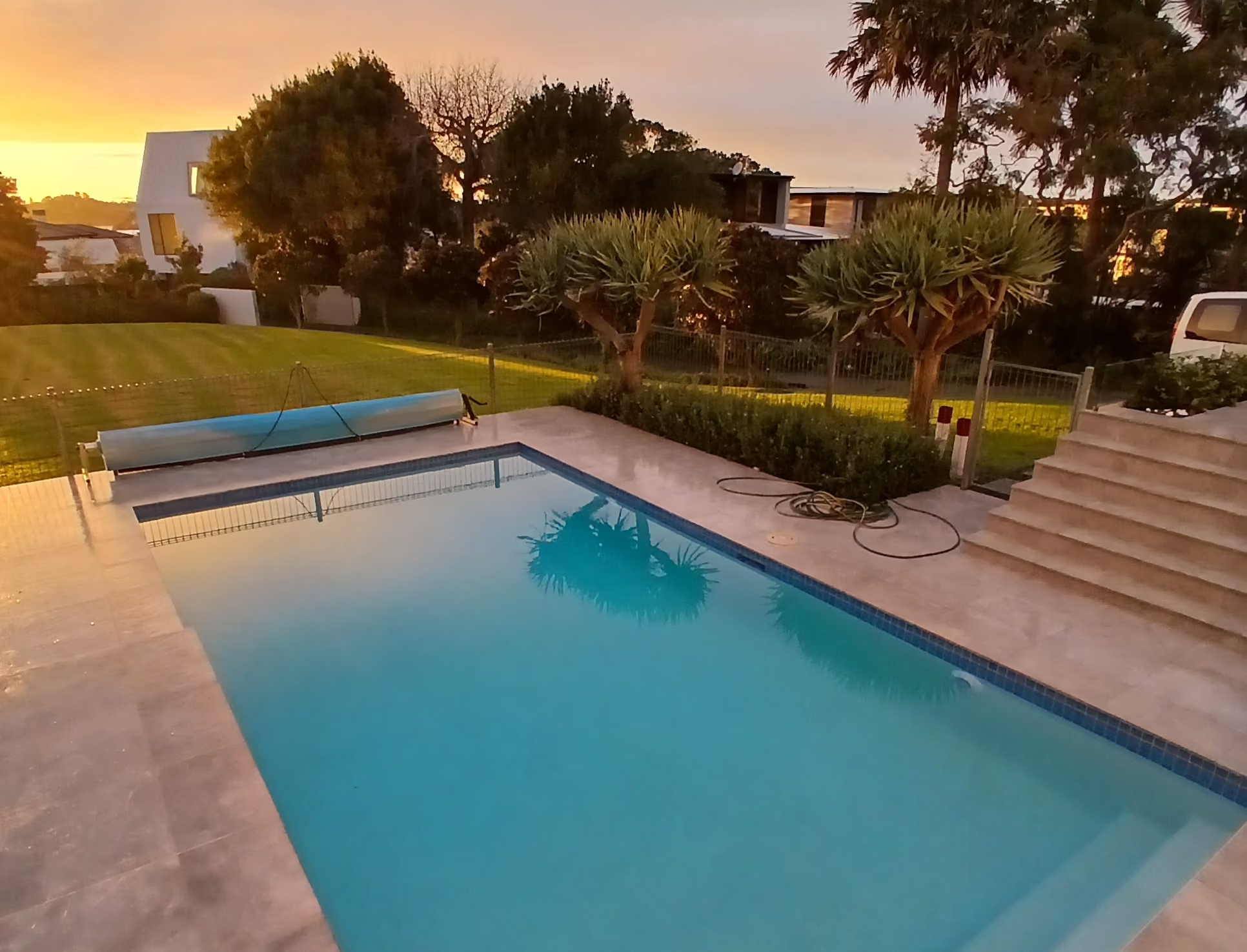
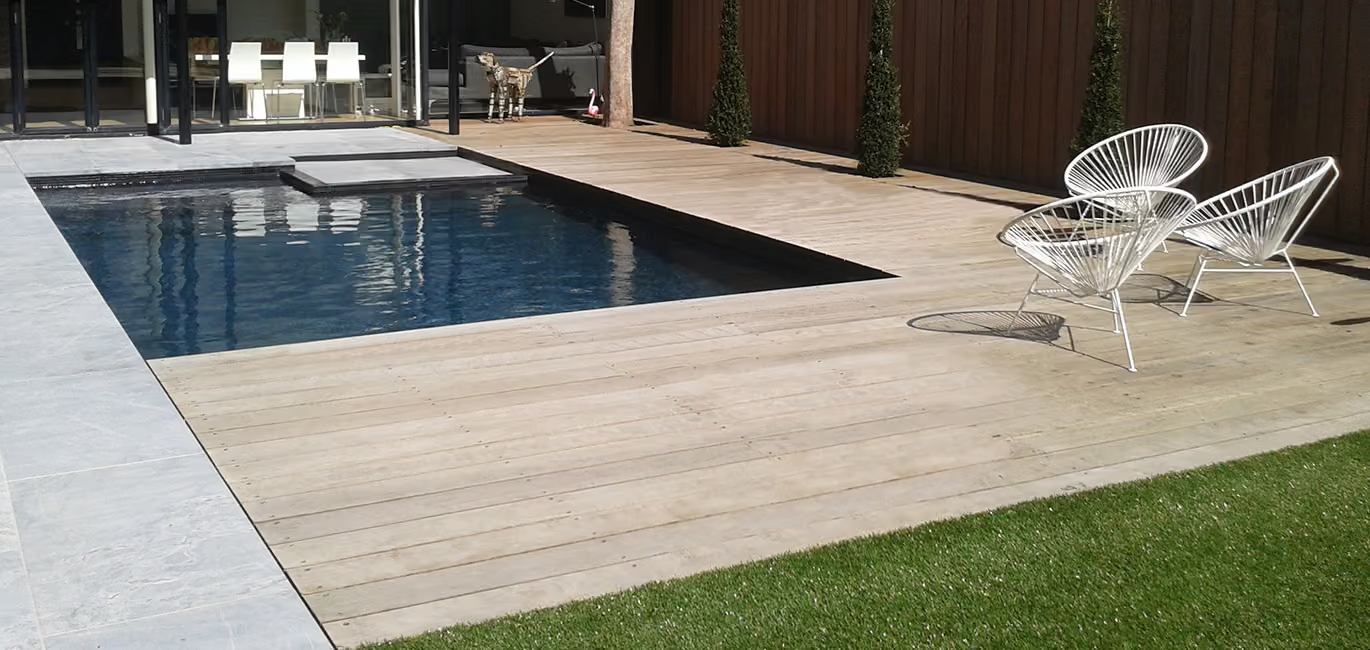
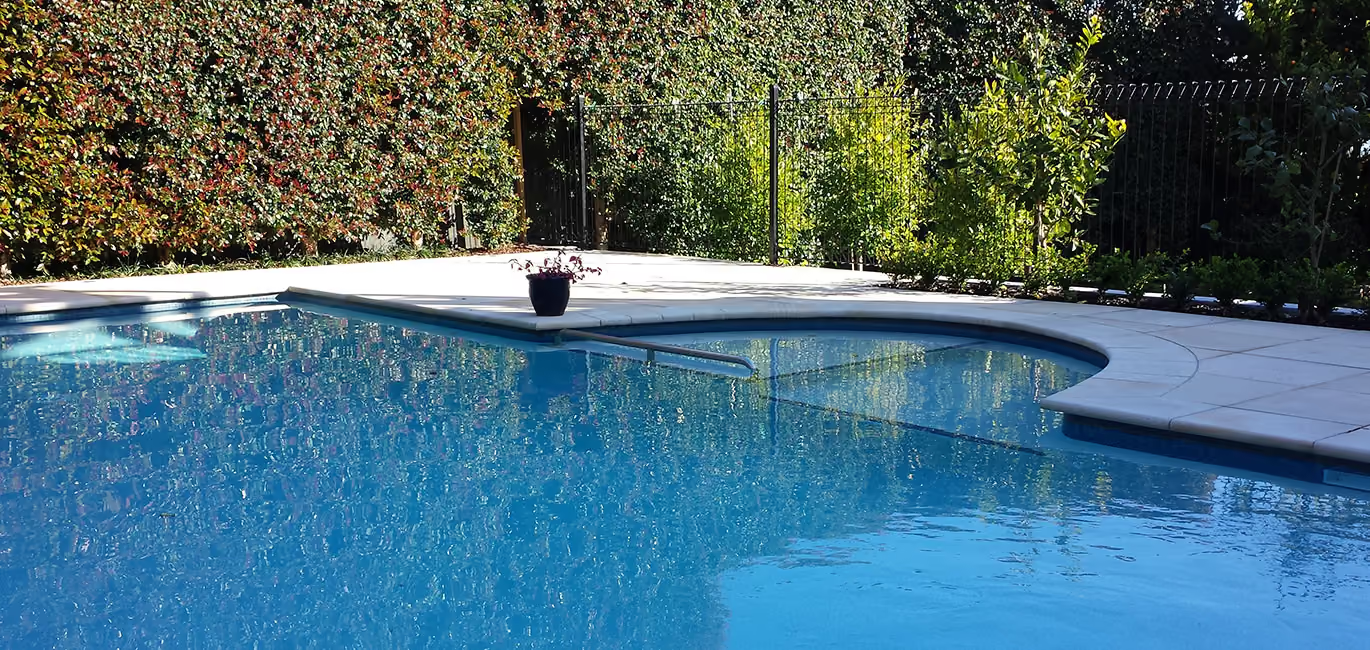
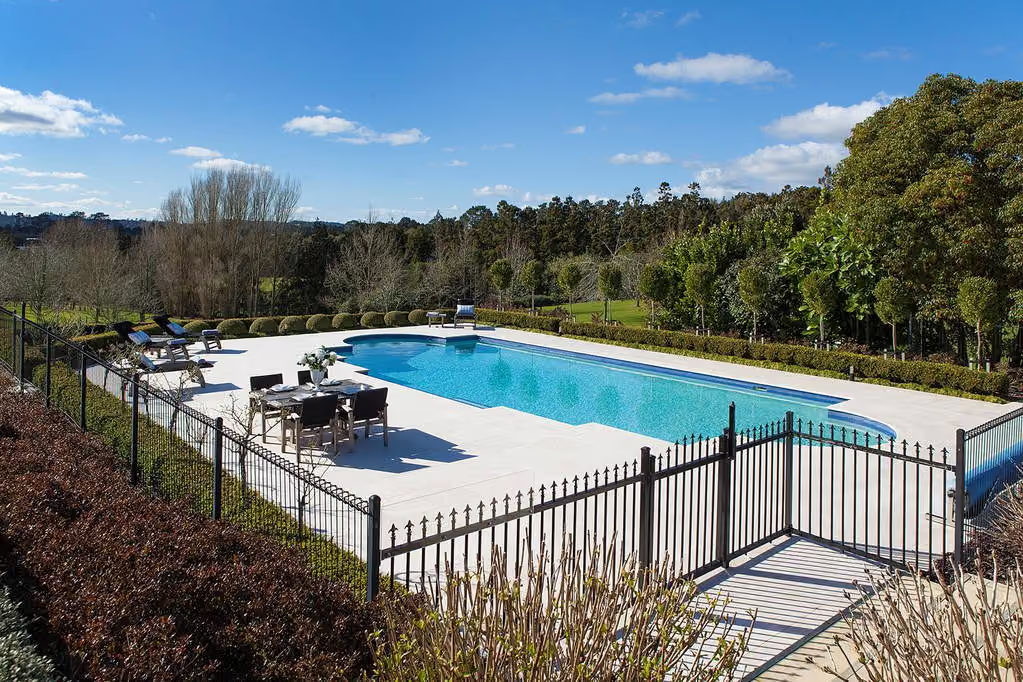
Sparkling Pools has worked on pools across Auckland, including residential renovation projects, equipment upgrades, ongoing maintenance and pool care for managed properties. Past projects show how the right approach can improve presentation, water quality and day-to-day usability. A well-maintained pool is easier to manage, more pleasant to use and better prepared for seasonal changes.
Trusted by Homeowners Across Auckland
Don't just take our word for it. Read what our clients have to say about our transparent communication, reliable service, and stunning pool transformations.
Related Blog Posts
Stay informed on pool care and renovations
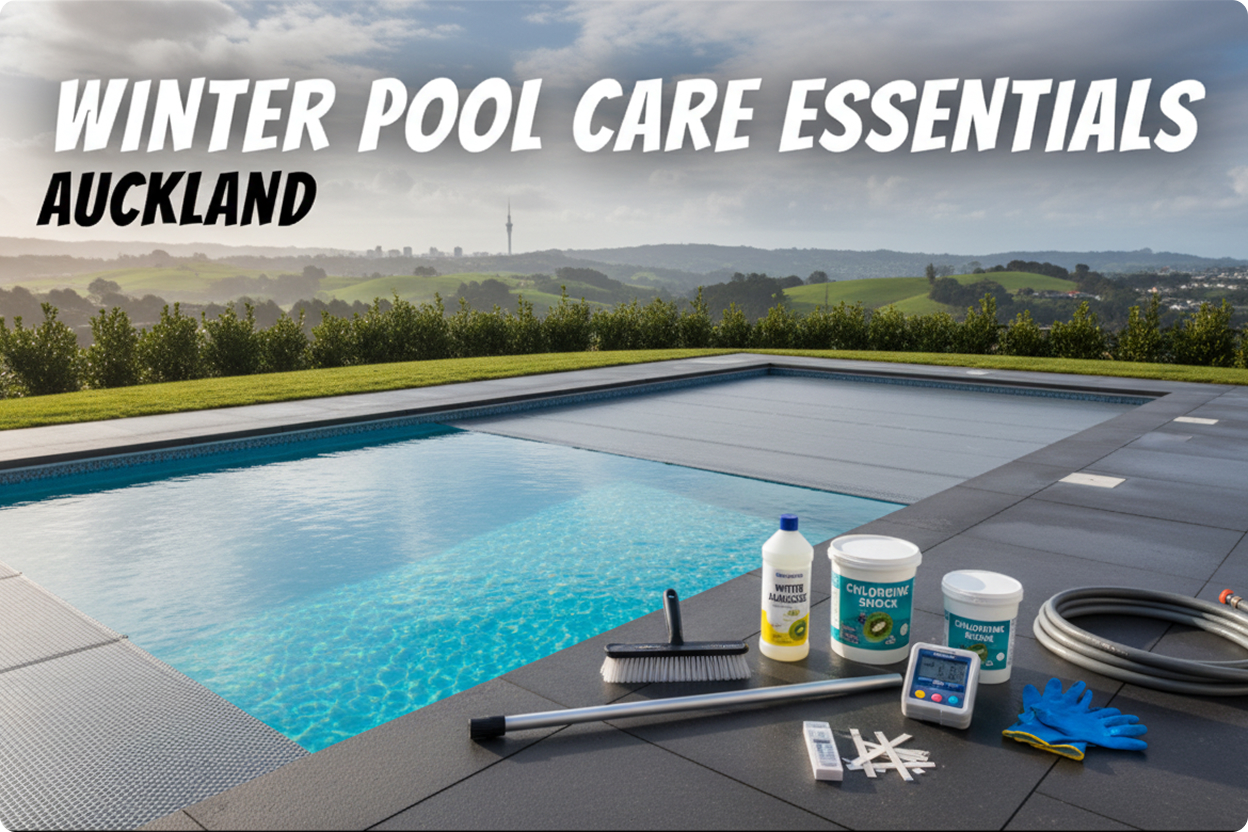
Winter pool care essentials for Auckland
Pool Renovation Mistakes
Auckland Climate Pool Maintenance
Choosing Renovation Contractor
Pool Care Auckland Summer
Permits & Consents
Pool Renovation ROI
How Often to Test Pool Water
Pool Renovation Costs
Cost of Pool Service Auckland
Pool Renovation Planning Guide
Pool Lighting Buying Guide
Pool Cleaner Buying Guide
Pool Automation Buying Guide
Pool Heater Buying Guide
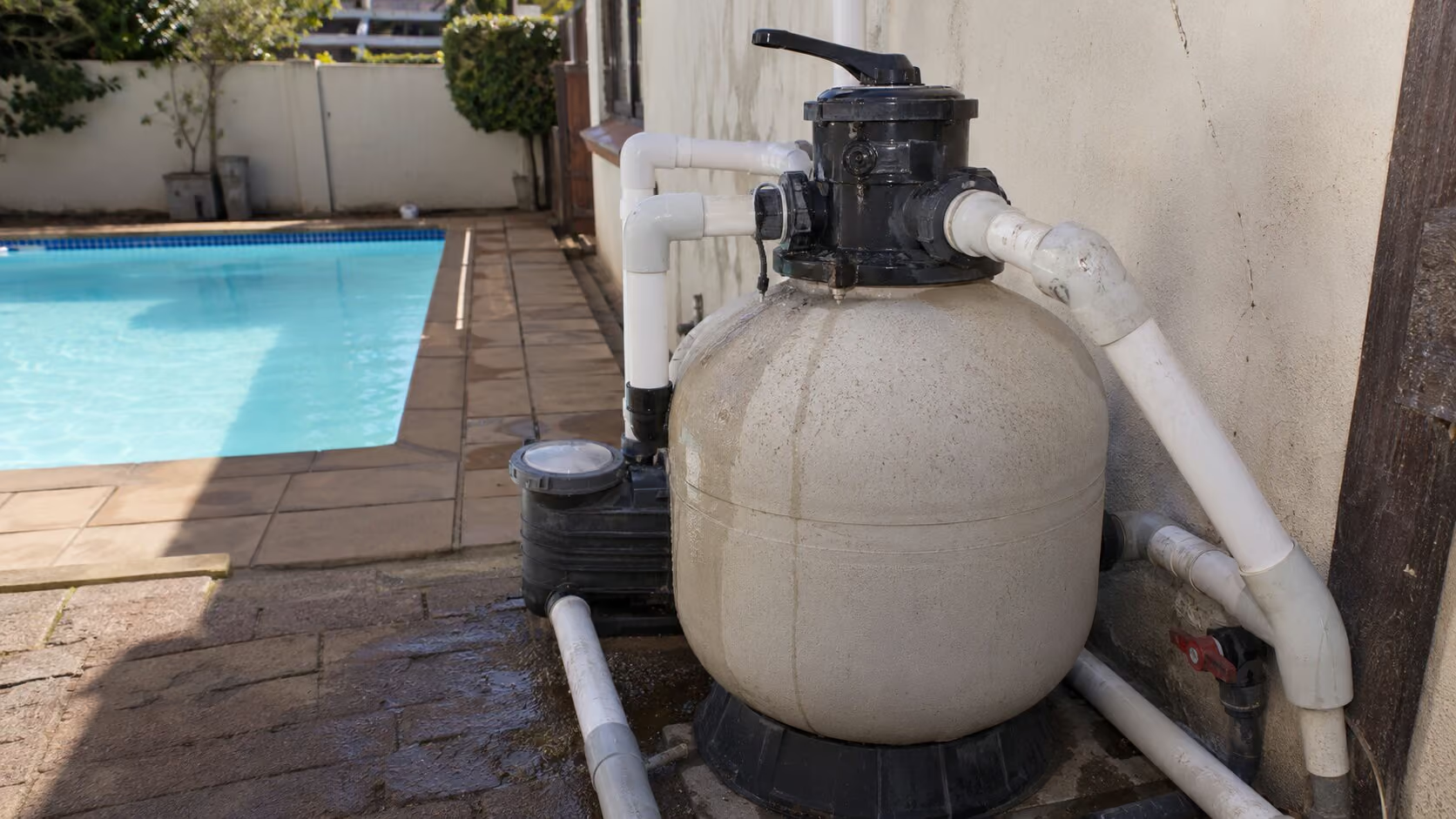
Pool Filter Buying Guide
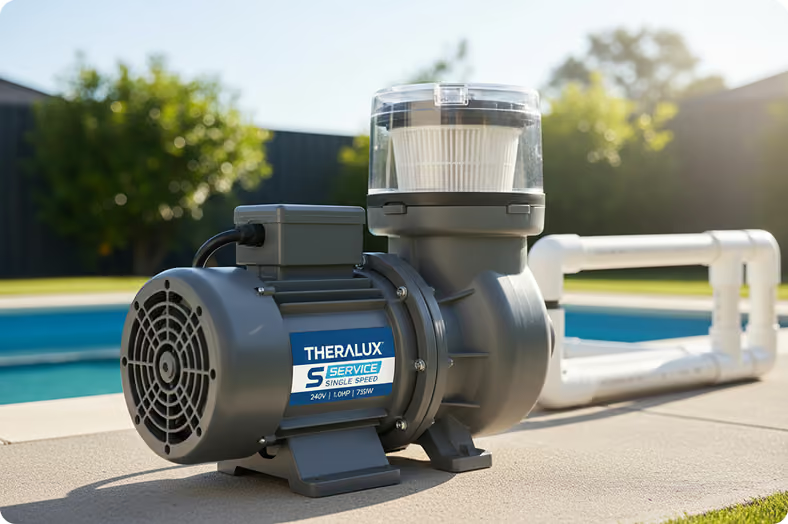
Pool Pump Buying Guide
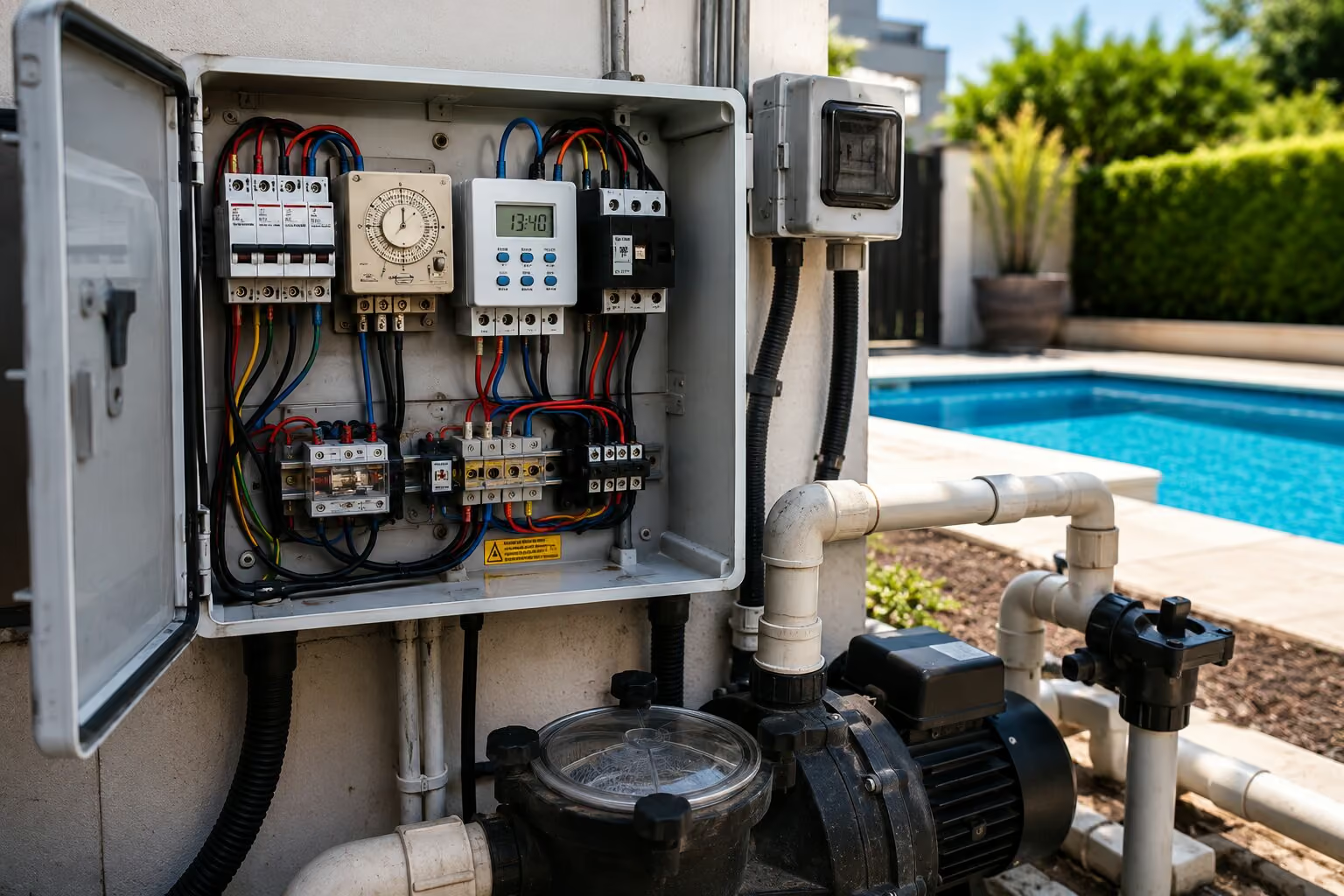
Best Equipment Auckland Climate
Auckland Water Quality
Auckland Pool Season
Pool Ownership Costs
Common Pool Mistakes
Pool Safety Laws
Pool Inspection Requirements
Pool Fence Compliance
.avif)
Auckland Pool Industry Trends
Auckland Pool Regulations
Pool Equipment Suppliers
Best Pool Service Areas
Pool Service Pricing Analysis
Company vs Independent
Best Pool Surface Materials
Pool Resurfacing Options
Pebble vs Plaster Surfaces
One-Time vs Ongoing Service
Full Service vs Chemicals Only
Pool Cover Types
Robotic vs Suction Cleaners
Mineral vs Saltwater
Gas vs Heat Pump
Pool Heater Types
Pool Winterizing Guide Auckland
Pool Opening Guide Summer
Pool Maintenance After Heavy Rain
Pool Maintenance Schedule
How Often to Run Pool Filter
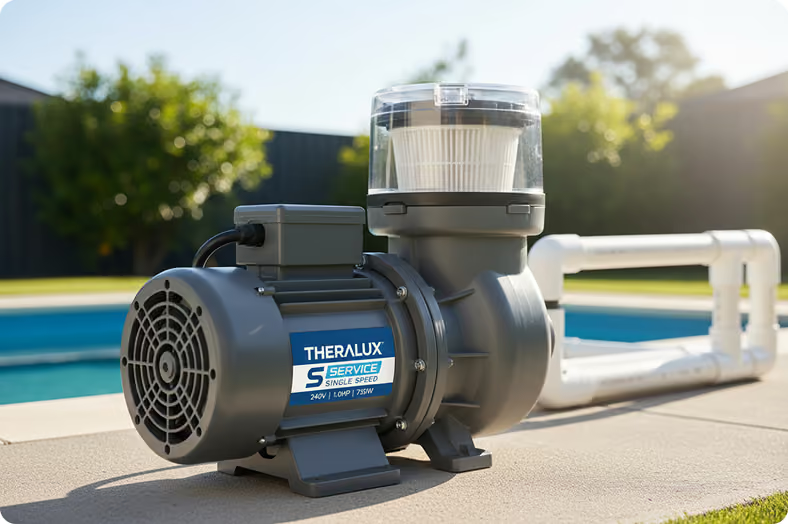
Pool Pump Maintenance Schedule
Pool Filter Cartridge Cleaning
Pool Equipment Maintenance Checklist
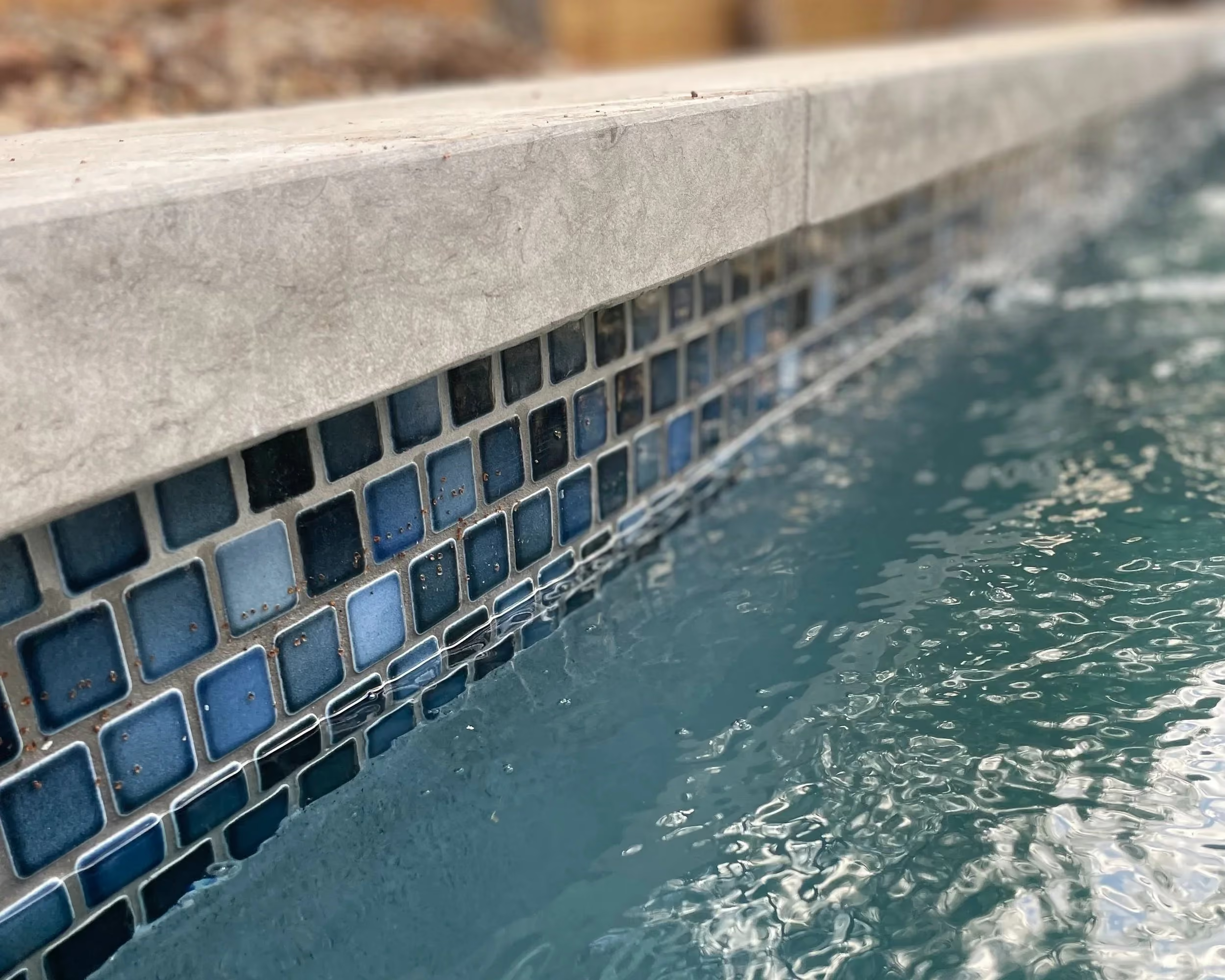
Pool Waterline Cleaning
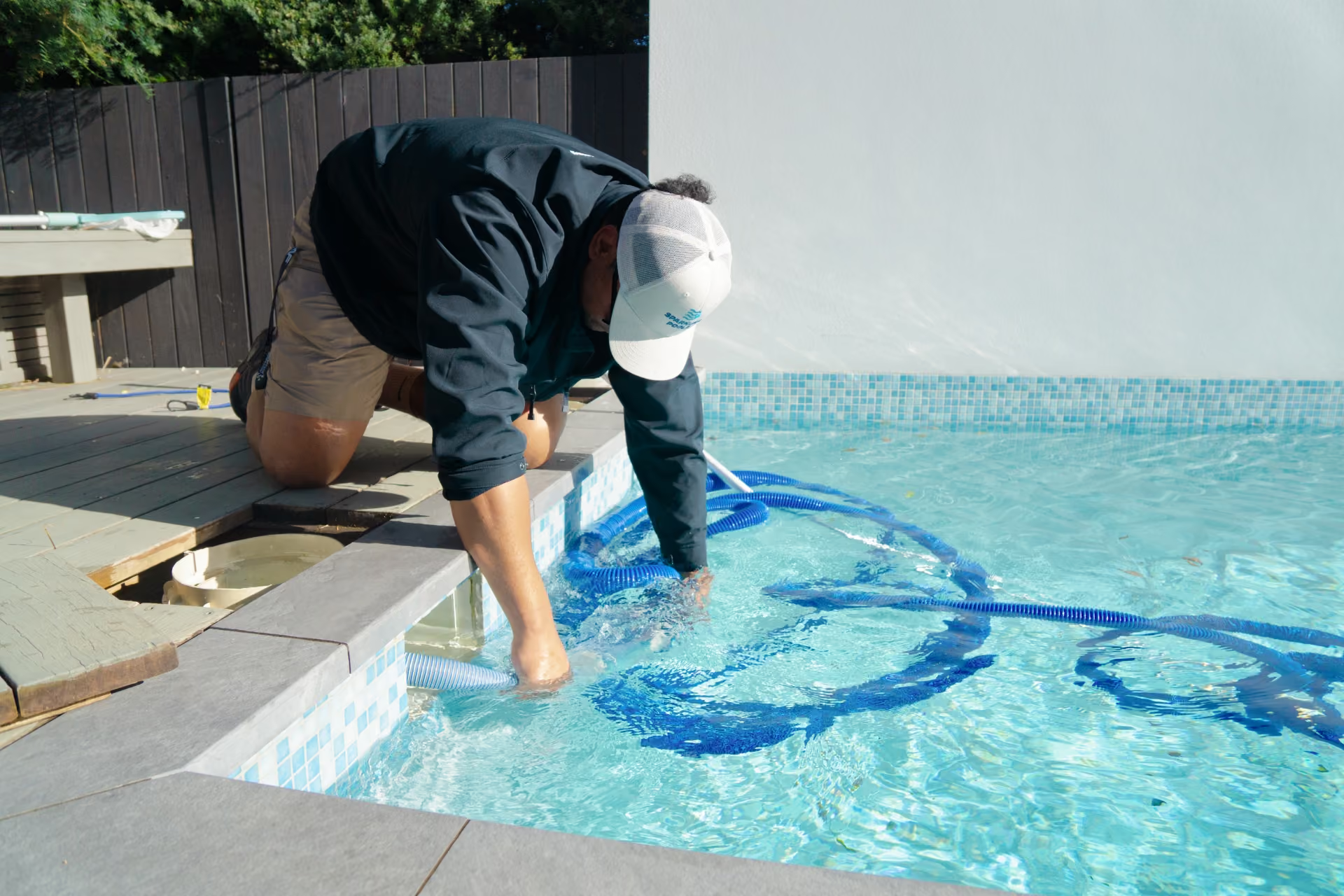
Pool Skimmer Basket Cleaning
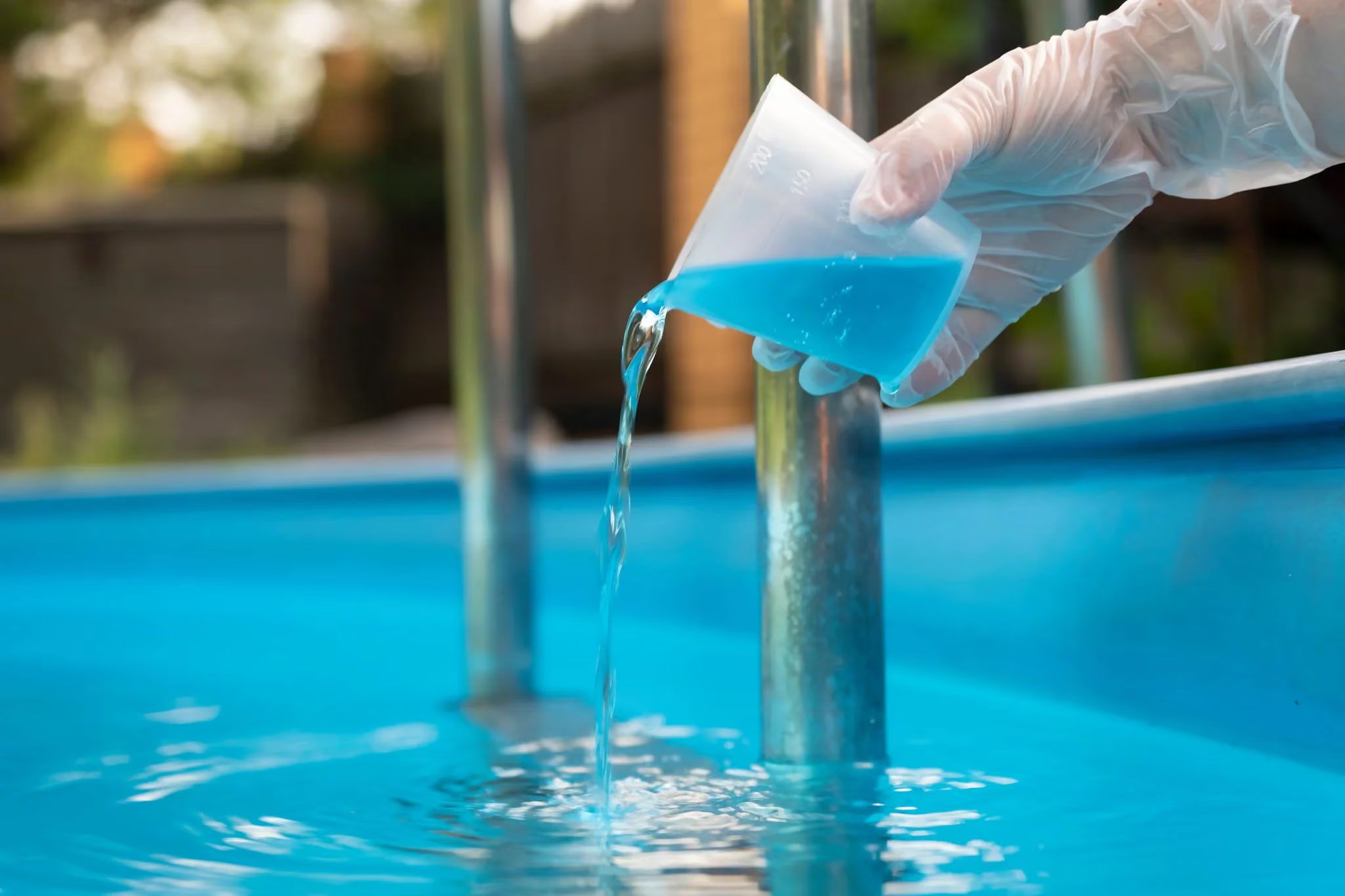
Pool Chlorine Levels
How Often Clean Pool Filter
How to Vacuum Pool
Pool Brushing Technique
Pool Chemical Dosing Chart
Pool Water Chemistry Basics
How to Balance Pool Chemistry
How to Test Pool Water
Pool Maintenance Tips
Complete Pool Maintenance Guide
Pool Service ROI
Pool Equipment Buy or Service
Pool Maintenance Time Requirements
DIY vs Professional
Pool Service Contract
Pool Service vs Pool Valet
Is Pool Service Worth It
Pool Service Guarantees
Pool Service Reviews
Pool Service Red Flags
Questions to Ask Pool Companies
How to Choose Pool Service Company
Hidden Costs DIY Maintenance
Pool Cleaning Prices Auckland
Cost of Pool Resurfacing
Cost of Pool Pump Replacement
Cost to Fix Green Pool
Pool Liner Wrinkles
Pool Cracks When to Worry
Pool Surface Stains
Pool Valve Leaking
Pool Automation Not Working
Pool Light Not Working
Pool Heater Not Heating
Pool Skimmer Not Working
High Pool Filter Pressure
Pool Losing Water
Pool Filter Not Clearing Water
Pool Pump Leaking
Pool Pump Not Pumping
Pool Pump Losing Prime
Pool Pump Noisy
Pool Pump Not Working
Pool Water Foaming
Pool pH Too Low
Pool pH Too High
Green Pool After Rain
Pool Still Green After Shock
Pool Water Cloudy
How to Clear a Green Pool
Pool Care That Protects Your Investment
Good pool care protects more than appearance. Our pool specialists support the long-term condition of your swimming pool while keeping it ready for everyday use.