Common Pool Mistakes

Why Auckland trusts our pool service expertise
Pool maintenance problems usually come down to a small number of repeated oversights. Understanding what they are makes it straightforward to avoid them.
The key takeaways below summarise the most common mistakes Auckland pool owners make and what to do instead.
What you'll learn
Why Small Mistakes Add Up
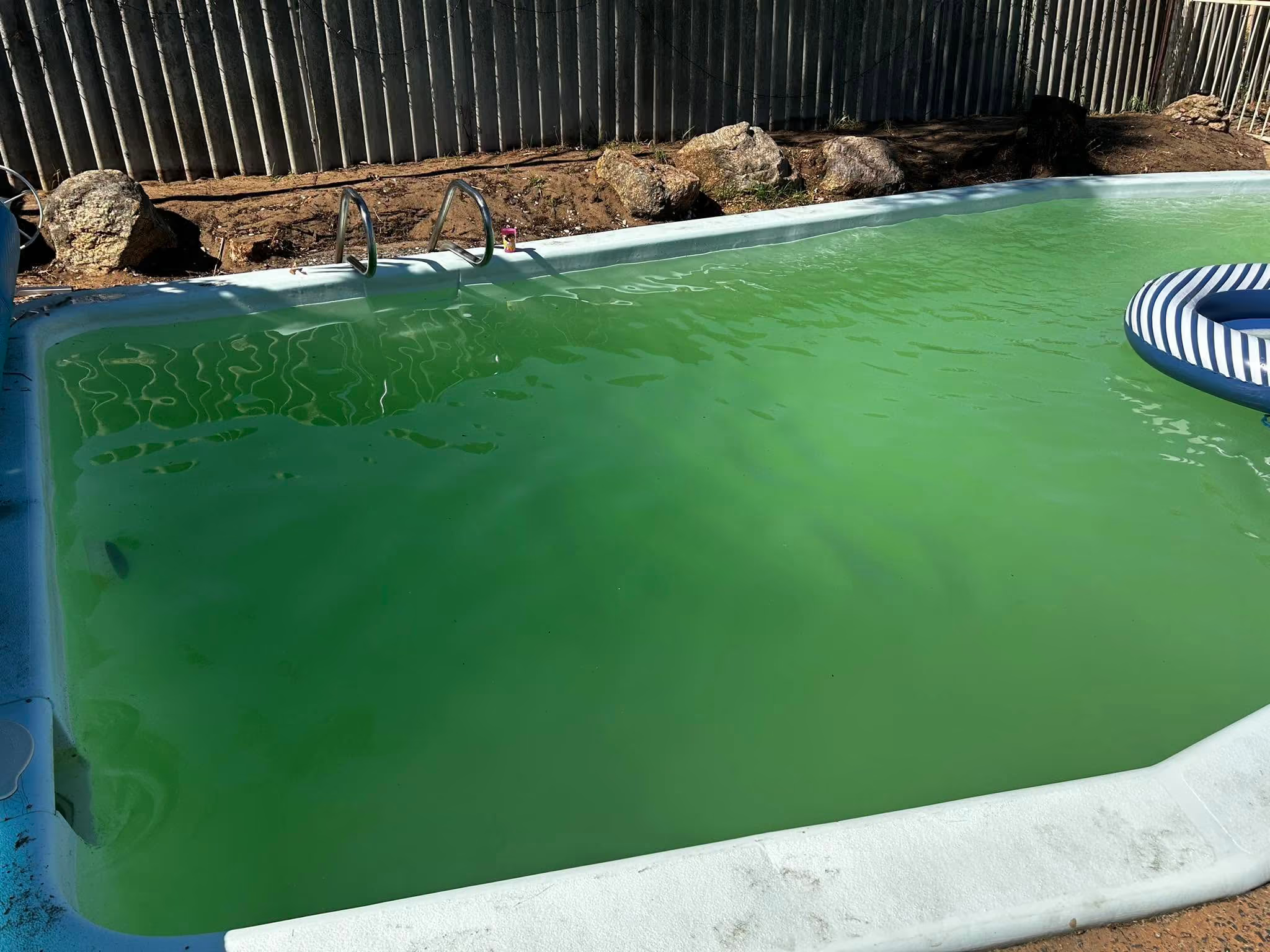
Pool maintenance looks straightforward on the surface. Add some chemicals, run the pump, skim the leaves. But small oversights, done consistently, can quietly push a pool out of balance. What starts as a minor chemistry drift can become a green pool, damaged equipment, or a surface that needs replastering years ahead of schedule.
This guide covers the most common mistakes pool owners make, why they happen, and how to avoid them.
---
Mistake 1: Not Testing the Water Regularly Enough
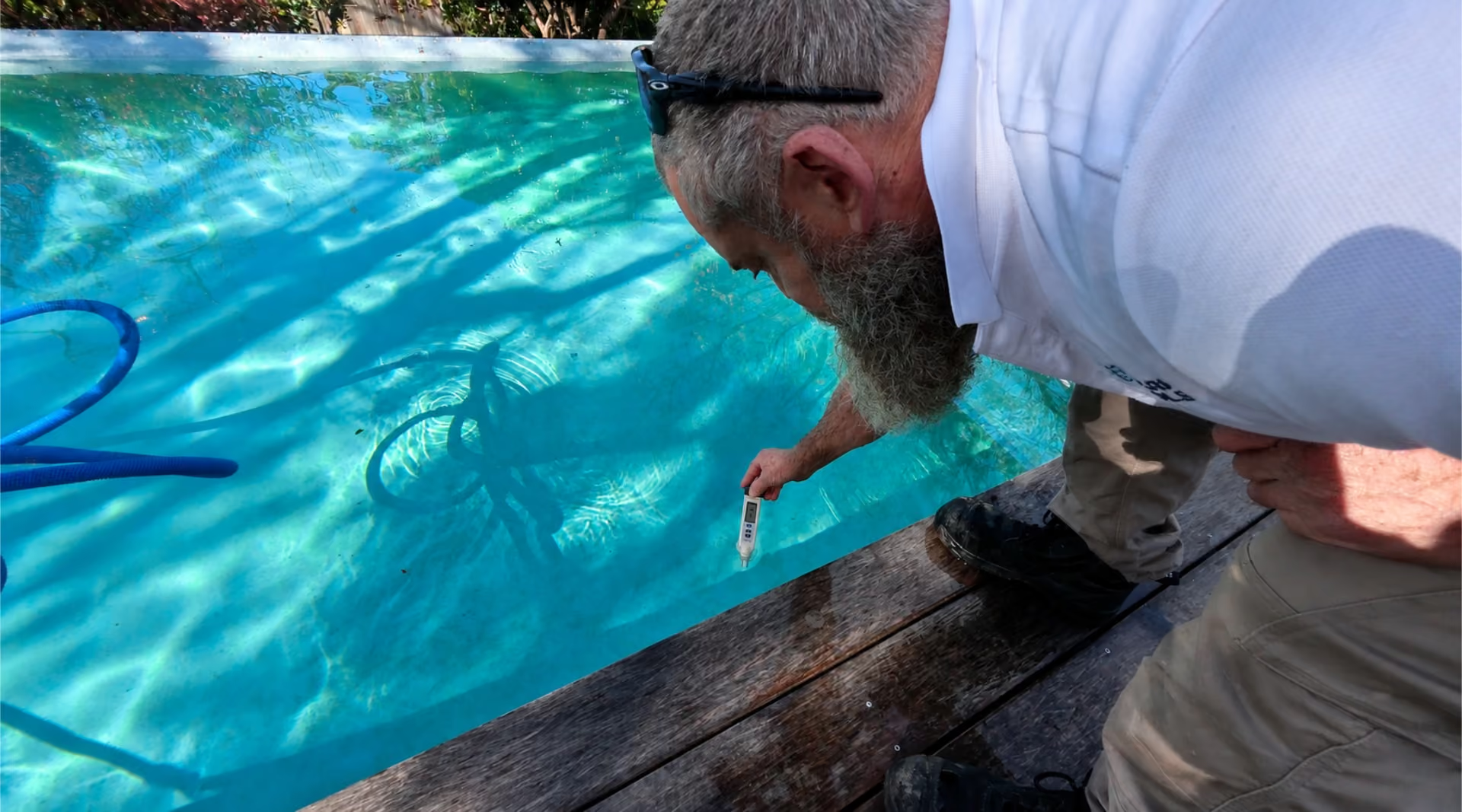
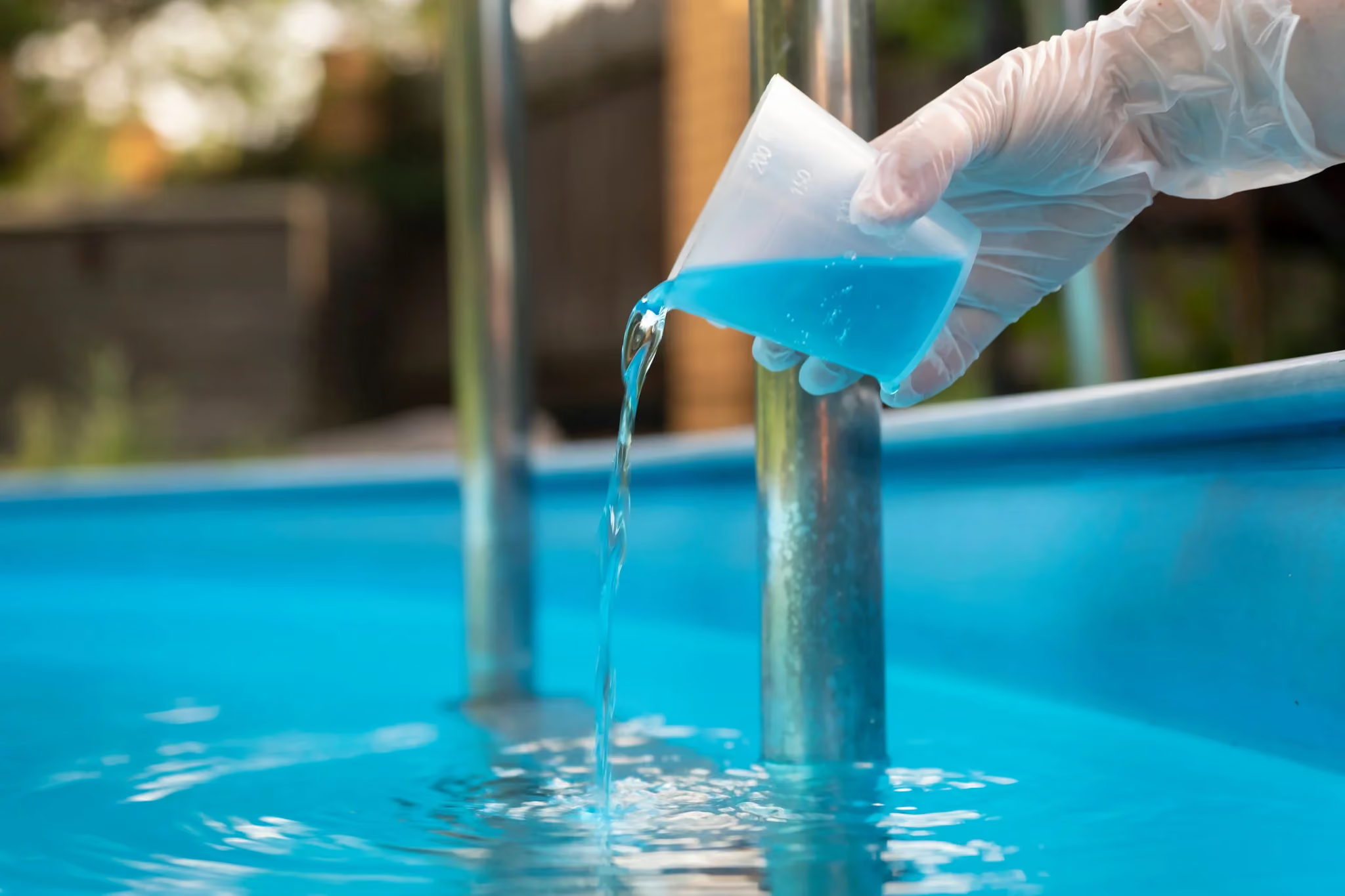
Water chemistry shifts constantly. Rainfall, sunscreen, body oils, temperature changes, and heavy use all affect the balance. Testing once a month, or only when something looks wrong, means problems are already established before you catch them.
How often should you test?
For most residential pools in Auckland, testing at least once a week during the swimming season gives you enough data to stay ahead of problems. During winter or low-use periods, testing every two weeks is generally sufficient.
What to test for
At a minimum, check:
- Free chlorine, the active sanitiser keeping your pool safe
- pH, affects how well chlorine works and how comfortable the water is
- Total alkalinity, stabilises pH and prevents rapid swings
- Calcium hardness, protects the pool surface and equipment
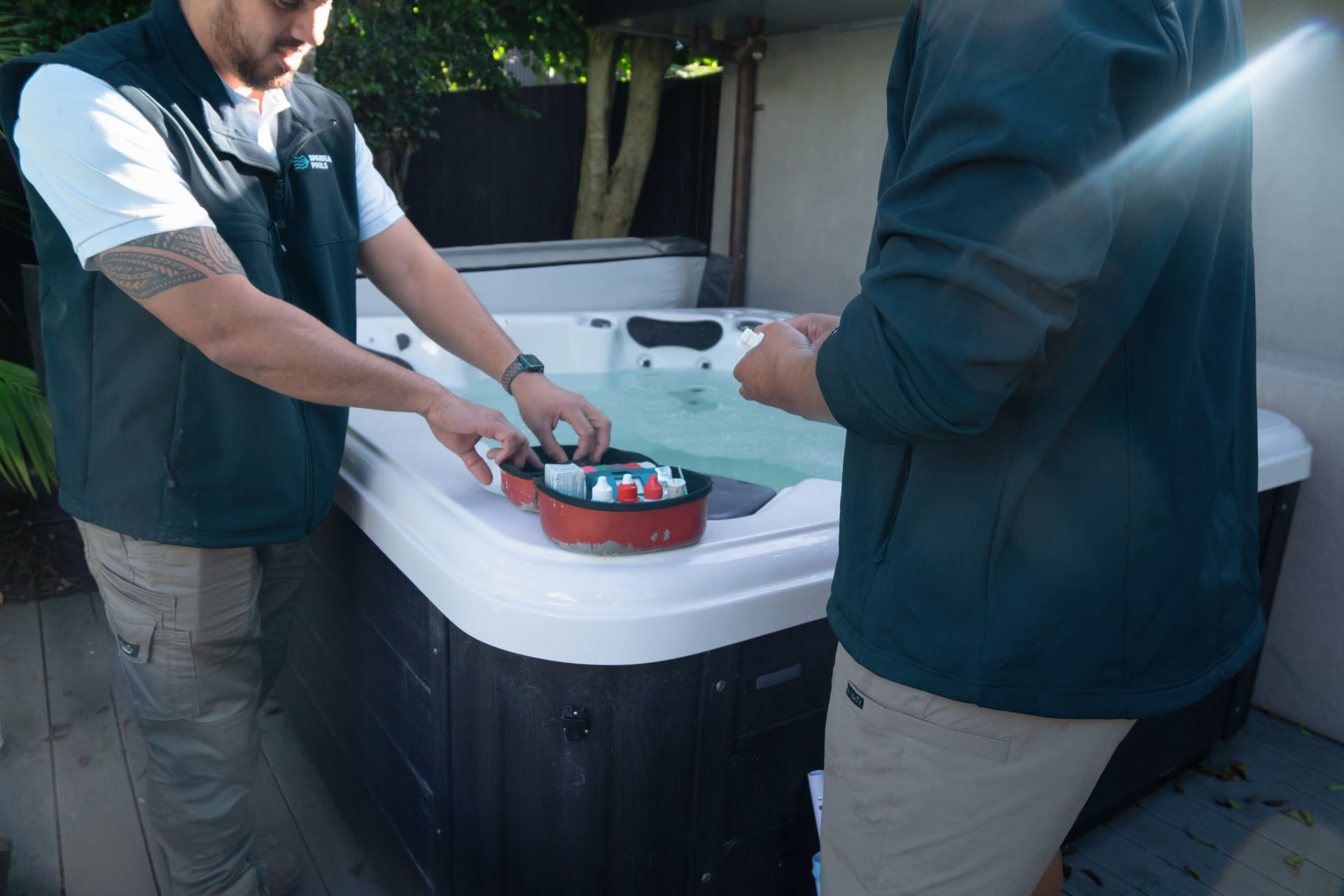
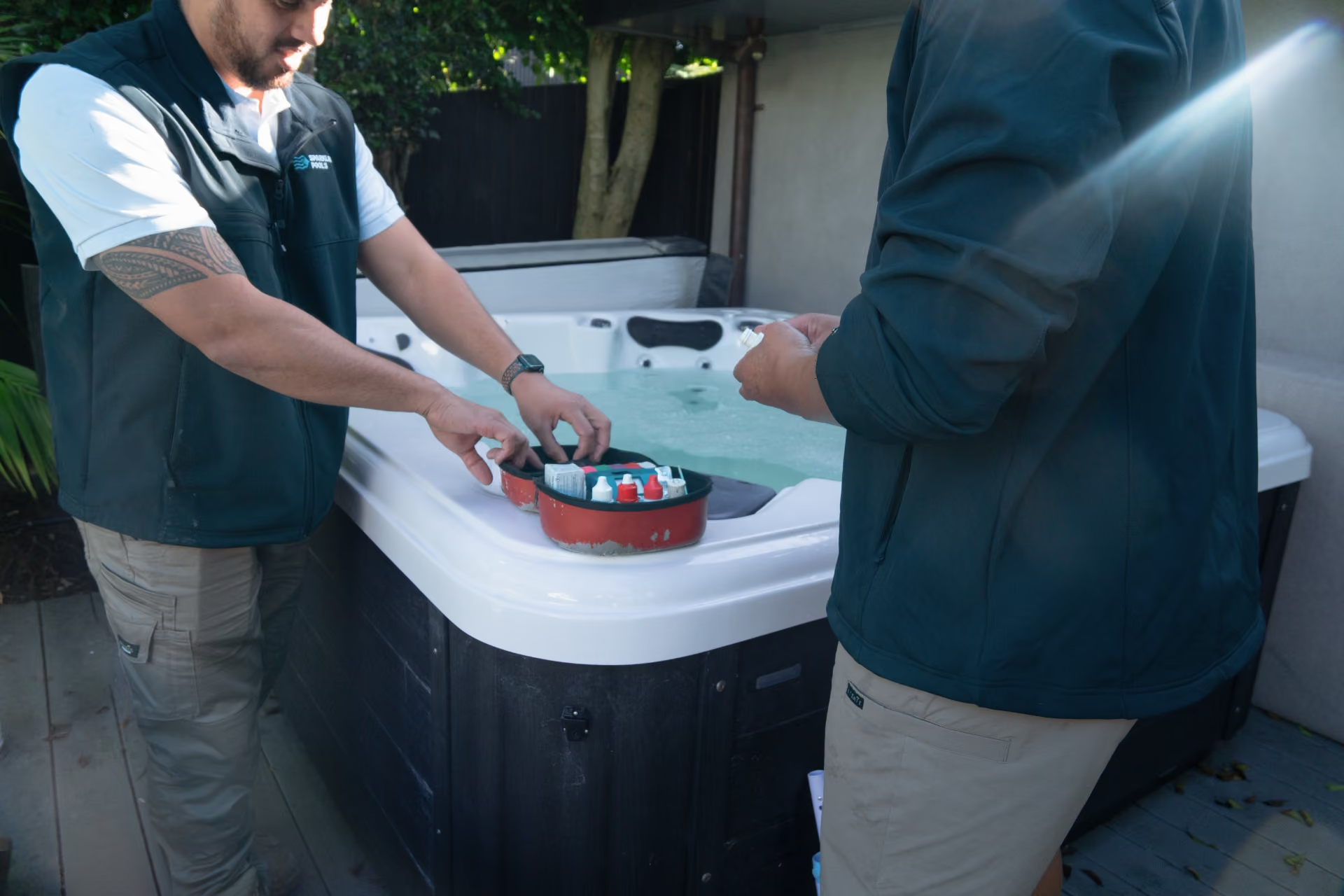
Strip tests give a rough picture. A proper liquid test kit or professional on-site testing gives more accurate results. Sparkling Pools offers on-site water testing across Auckland, a technician comes to your home and tests everything on site.
---
Mistake 2: Adding Chemicals Without Testing First
Guessing at chemical doses is one of the most common, and costly, mistakes. Adding chlorine or pH adjusters without knowing your current levels can overcorrect and create a new problem.
For example, adding acid to lower pH when alkalinity is already low can make the water corrosive. Adding chlorine to water with very high pH means most of it becomes ineffective anyway.
Always test before you dose. Then dose according to what the test actually shows, not what you think the water needs.
---
Mistake 3: Running the Pump for Too Few Hours
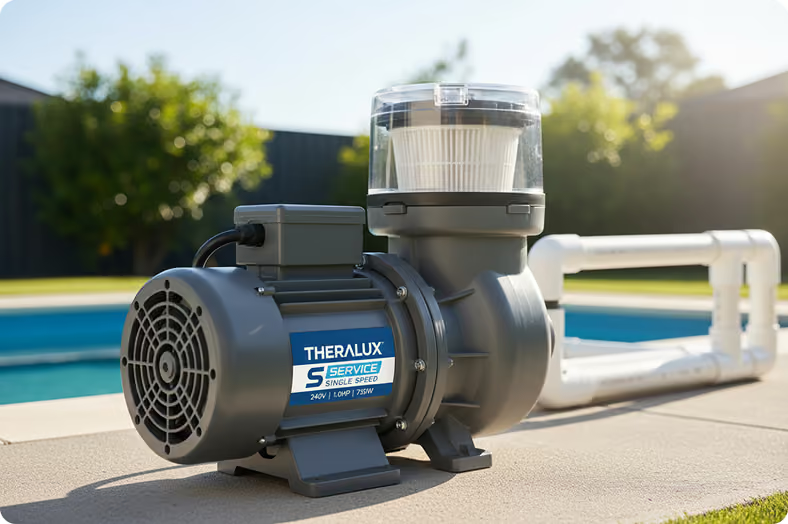
The pump is what keeps your pool water circulating and filtering. If it doesn't run long enough, the water doesn't turn over fully, and you end up with dead spots where algae and debris accumulate.
How long should the pump run?
The right run time depends on your pool volume and pump flow rate. As a general principle, the pump should turn over the full volume of the pool at least once per day. During summer or heavy use, twice per day is better.
Running the pump during the hottest part of the day also helps, heat and UV accelerate chlorine loss, so having the filter active during peak sun hours improves sanitiser distribution.
---
Mistake 4: Ignoring Filter Maintenance
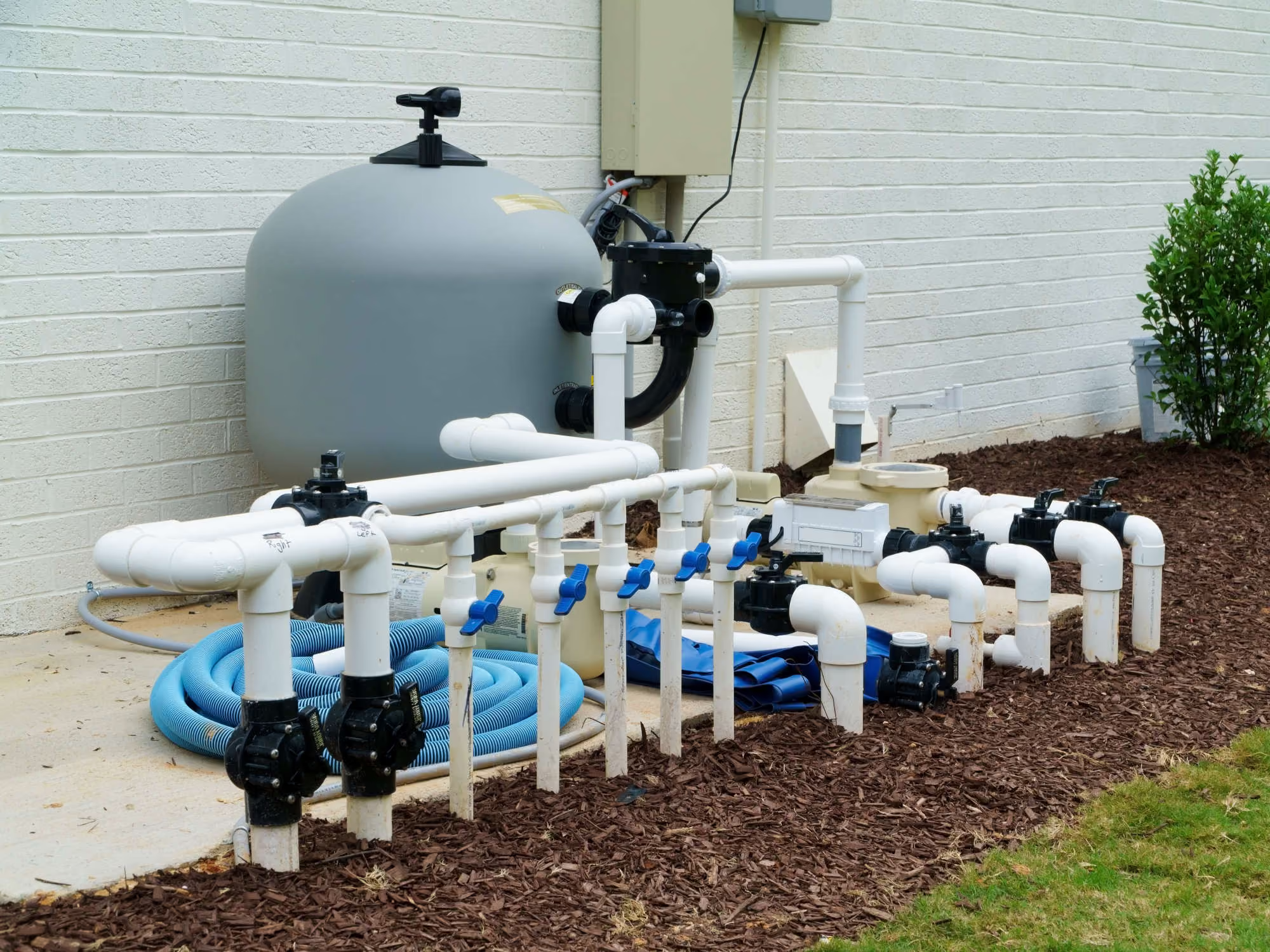
The filter removes particles the pump circulates through it. Over time, it loads up with debris and becomes less effective, and a clogged filter puts extra strain on the pump.
Signs your filter needs attention
- Rising pressure gauge reading on a sand or DE filter
- Reduced return flow into the pool
- Water that stays cloudy despite correct chemistry
- A cartridge filter that hasn't been cleaned in several months
Backwashing a sand filter when the pressure rises, and cleaning or replacing cartridge elements on schedule, keeps the system working properly. Neglecting this is one of the most common reasons pools stay cloudy even after chemical treatment.
---
Mistake 5: Letting pH Drift
pH is the single most important variable in pool chemistry. When it drifts outside the correct range, chlorine becomes far less effective, even if your chlorine level reads fine on a test strip.
High pH is particularly common in Auckland pools after heavy rain or when using certain chlorine products. Low pH can make the water uncomfortable and corrosive to surfaces and fittings.
Keeping pH in the correct range means your sanitiser actually does its job. It also protects the pool surface, equipment seals, and anything metal in the system.
---
Mistake 6: Shocking the Pool at the Wrong Time
Chlorine shock is broken down rapidly by UV light. Adding it during the middle of a sunny day means a significant portion is lost before it has a chance to work.
Shock treatments are best added in the evening or after dark. This gives the chlorine time to work through the water overnight, and by morning the level will have dropped back to a safe swimming range.
---
Mistake 7: Neglecting the Waterline and Surrounds
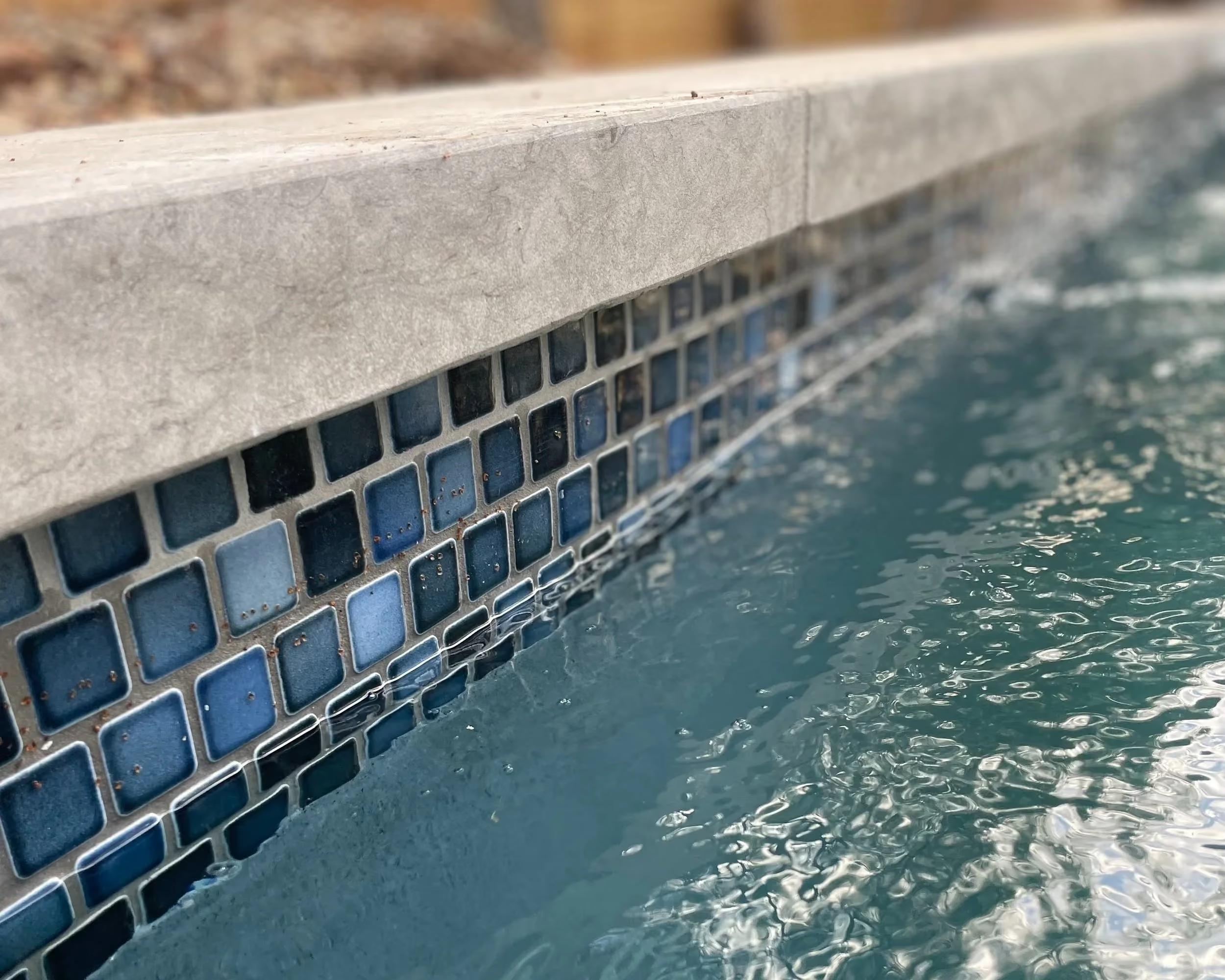
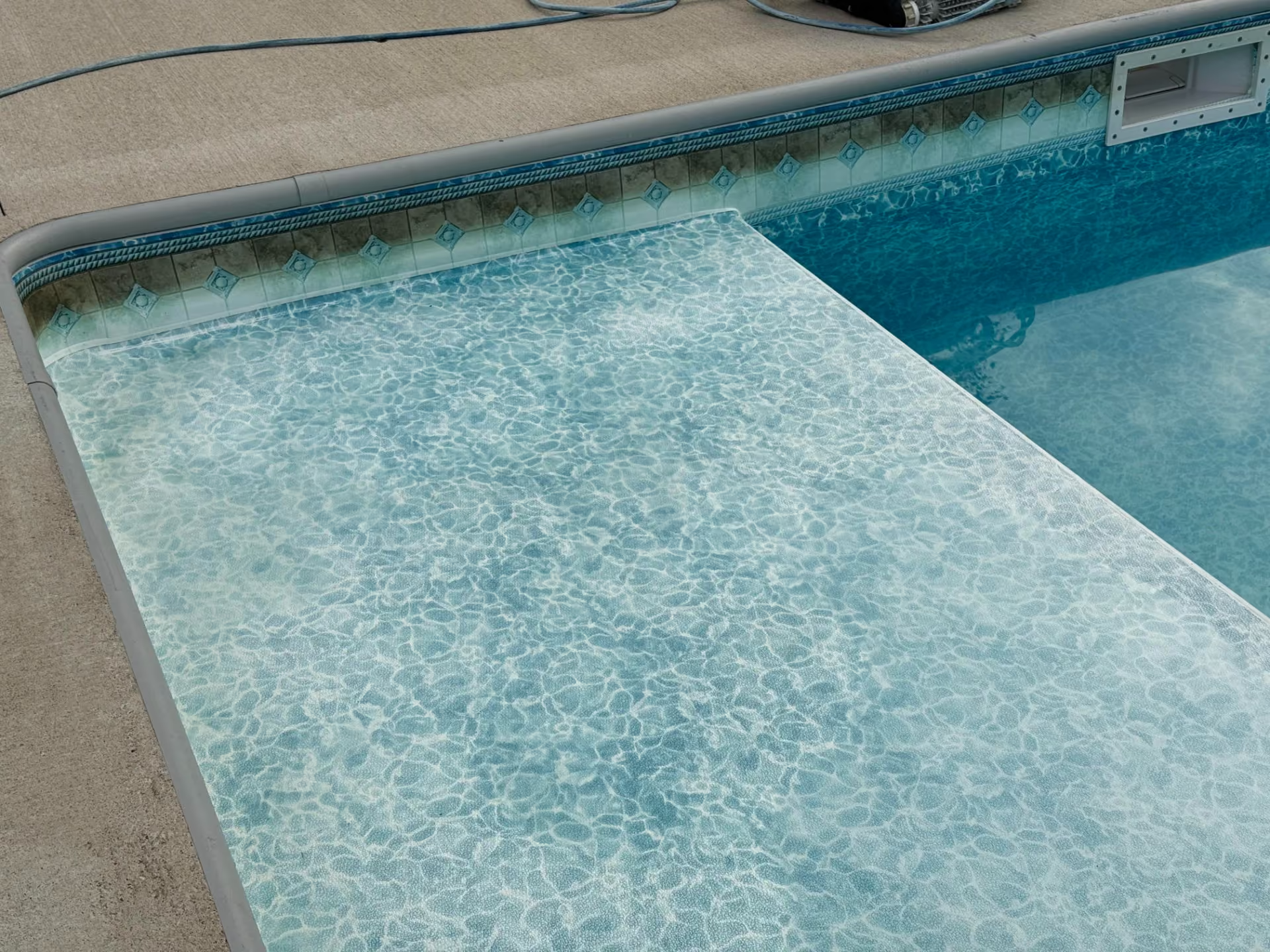
The waterline is where oils, sunscreen, and organic matter accumulate. Left untreated, this builds into a visible scum line and can contribute to water chemistry problems.
Regular brushing of the waterline tile or surface, along with brushing the walls and floor, keeps debris in suspension where the filter can remove it. It also prevents algae from taking hold in corners and on steps.
---
Mistake 8: Skipping Maintenance During Winter
In Auckland's mild climate, pools rarely need to be fully closed for winter. But many pool owners scale back maintenance too aggressively during the cooler months, and return in spring to a green pool that needs significant work to recover.
Even in winter, the pump should still run for a few hours each day, and water chemistry should be checked every couple of weeks. A small amount of consistent effort through winter is far easier than a full green pool recovery in October.
---
Mistake 9: Overlooking Equipment Checks
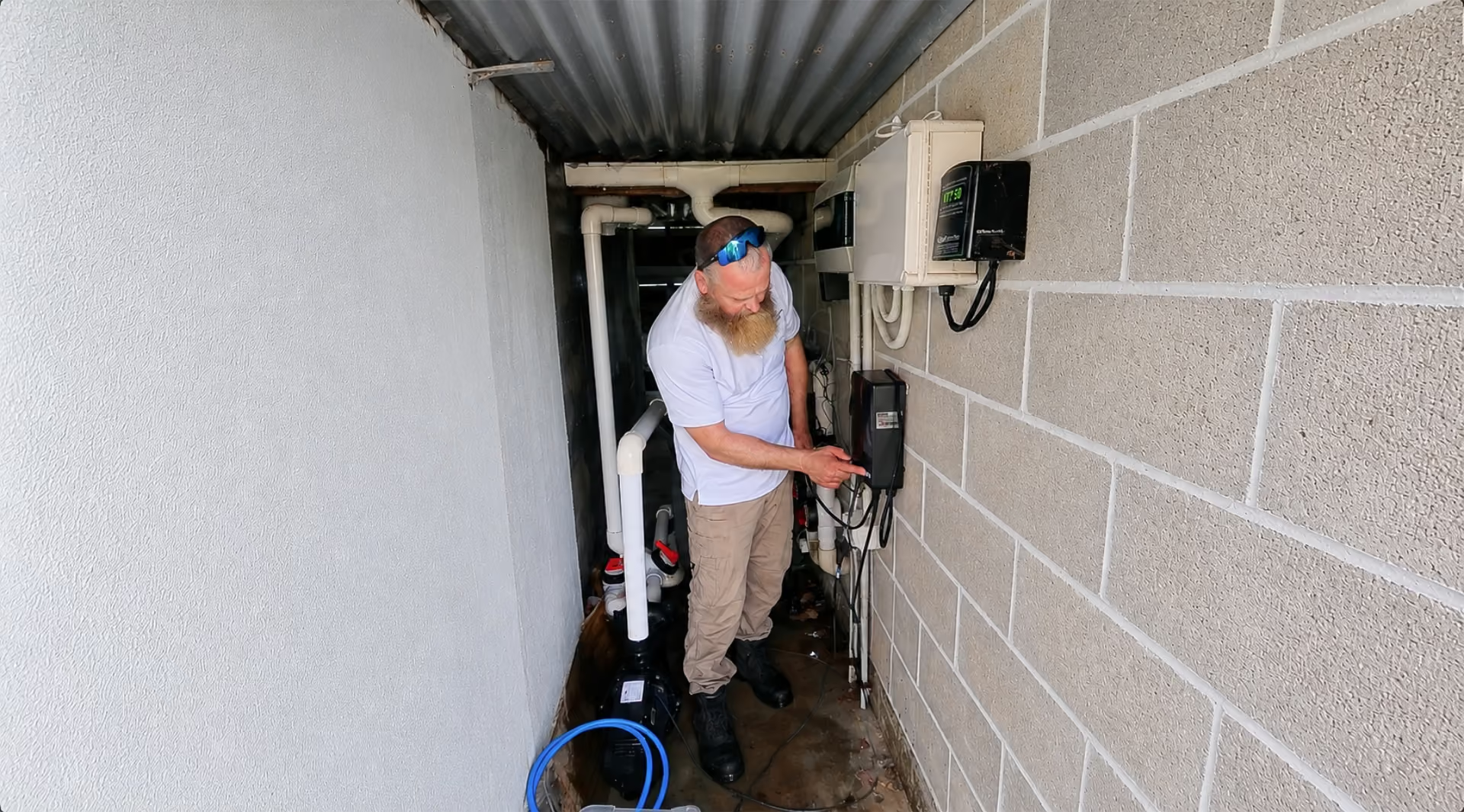
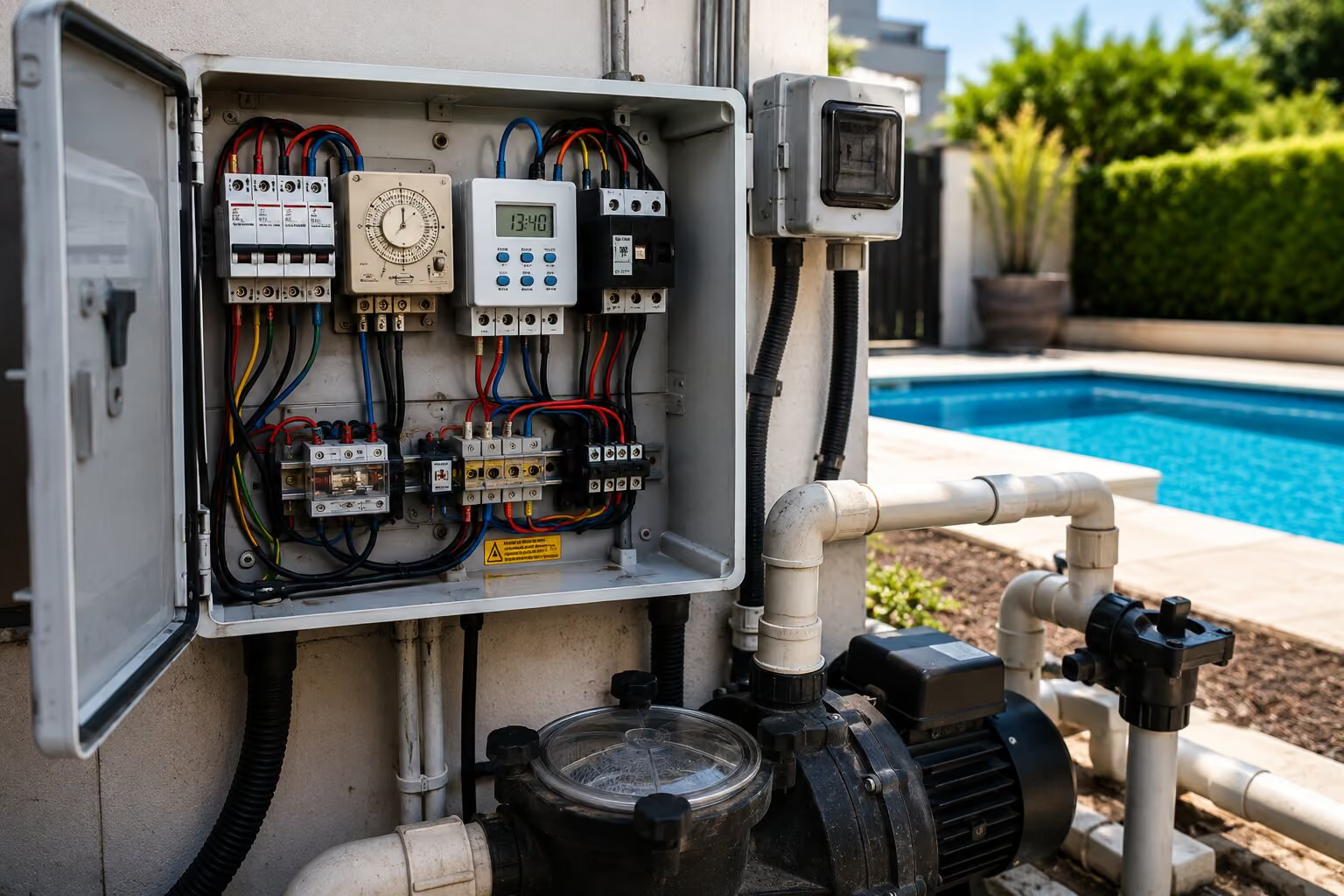
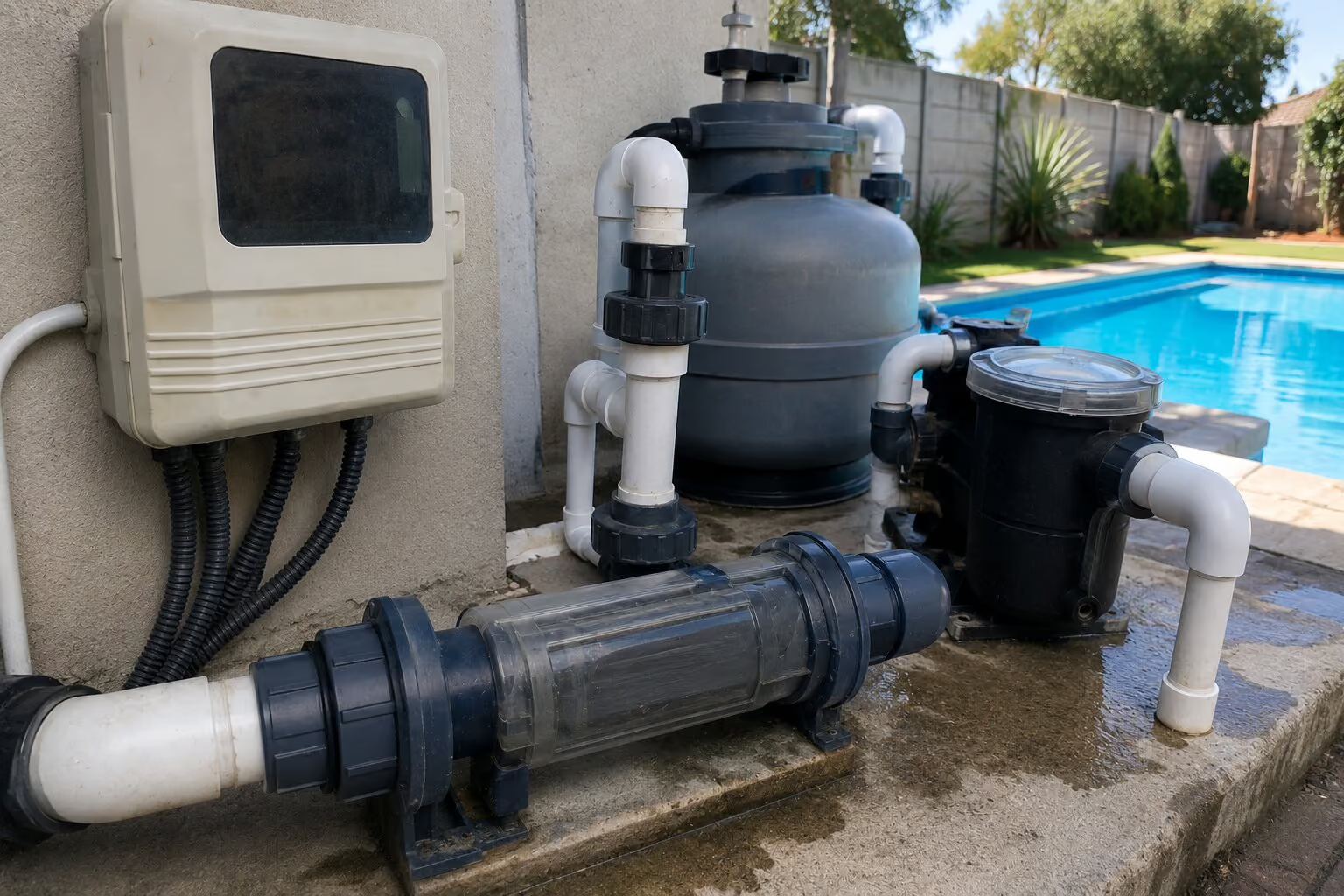
Pumps, chlorinators, and filters give warning signs before they fail. Unusual noises from the pump, a chlorinator that isn't producing, or a pressure gauge that reads higher than normal are all worth investigating early.
Ignoring these signs usually means a more expensive repair later, or a pool that falls out of balance because the equipment isn't doing its job. If something doesn't seem right with your equipment, it's worth having a technician take a look before the problem develops further.
---
Mistake 10: Relying on Appearance Alone
Clear water is not the same as safe or balanced water. A pool can look perfectly clean while having incorrect pH, low sanitiser, or high combined chlorine, none of which are visible to the eye.
Regular testing is the only reliable way to know what's actually in your water. Don't wait for the pool to turn green or cloudy before checking the chemistry.
---
Getting the Basics Right
Most pool problems come down to a handful of consistent habits: test regularly, dose based on what you find, keep the pump and filter running properly, and don't let small issues sit. That's the foundation of good pool care.
If your pool has already developed a problem, or you'd like a professional assessment of where things stand, Sparkling Pools provides on-site water testing and pool servicing across Auckland. Contact the team on 09 570 4797 or at info@sparklingpools.co.nz, Monday to Friday, 8:00am, 4:30pm.
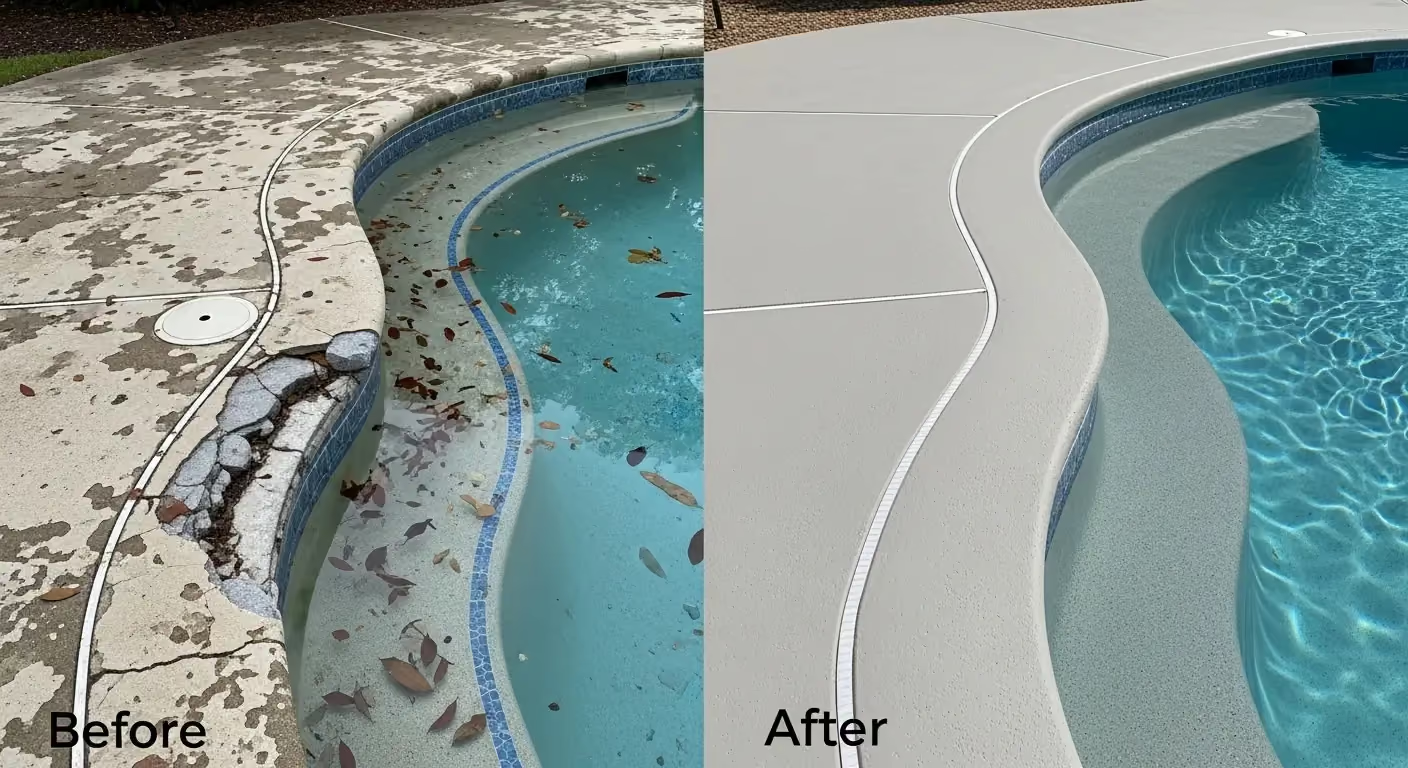
Pool resurfacing solutions
Restore your pool with durable plaster finishes

Work completed
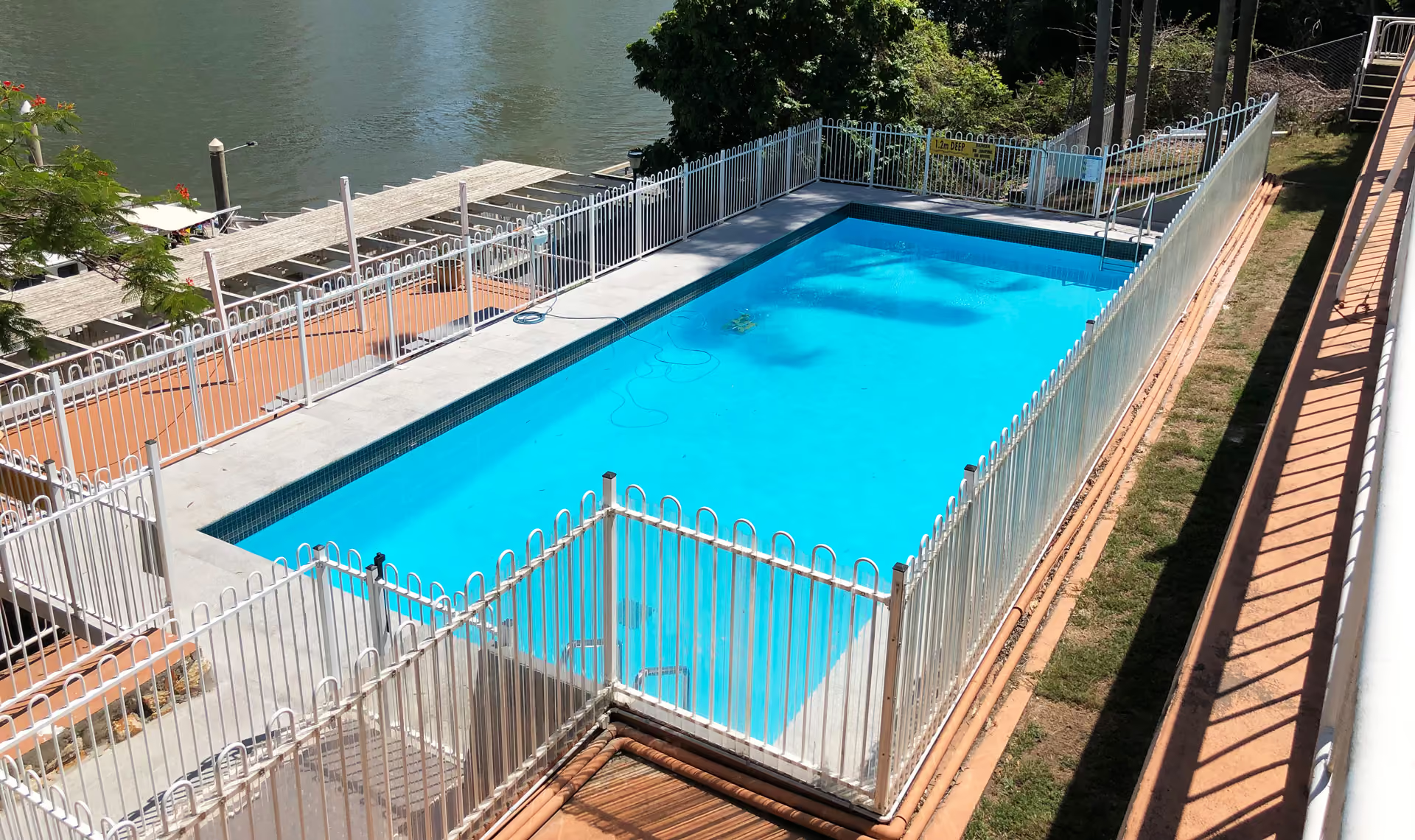
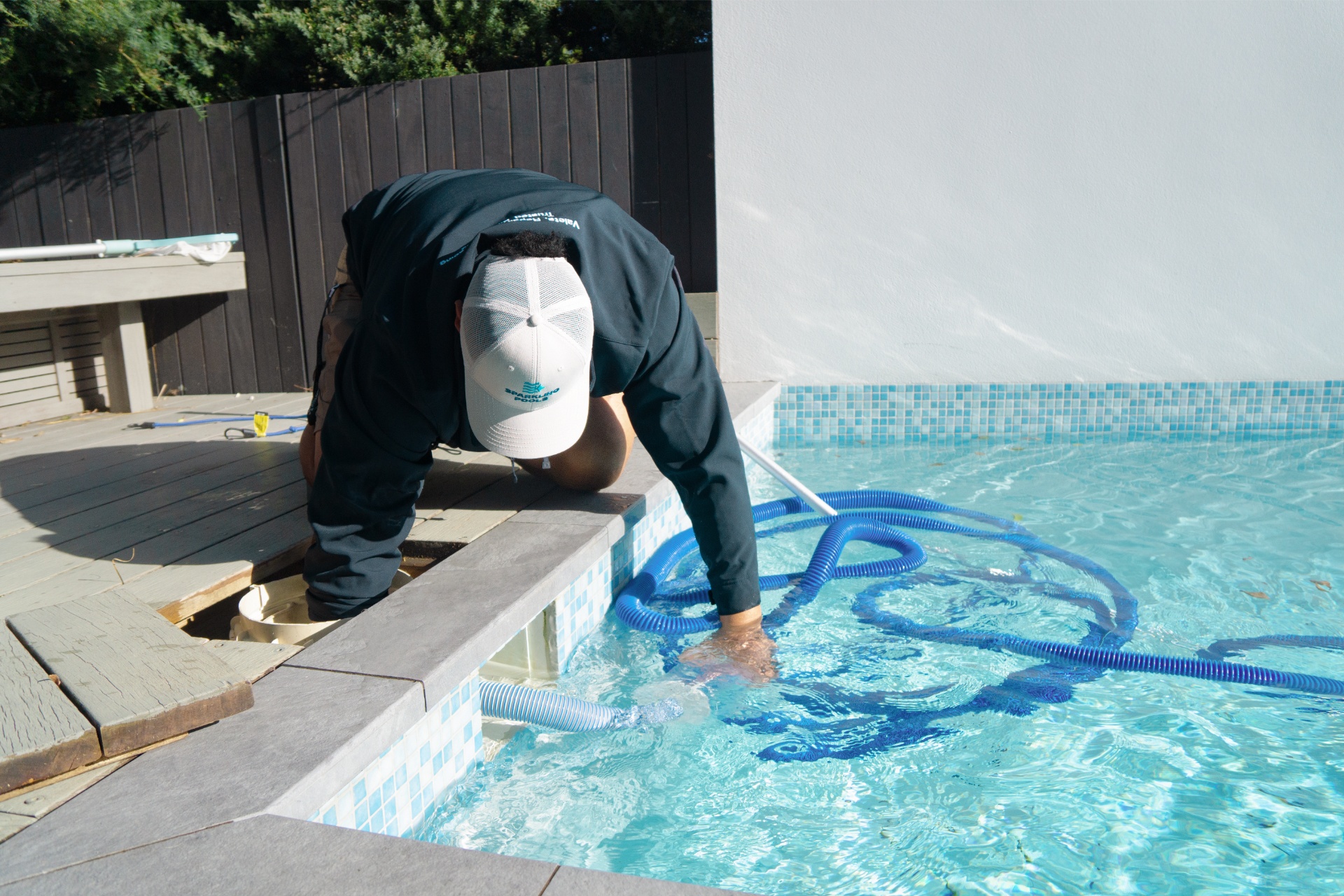
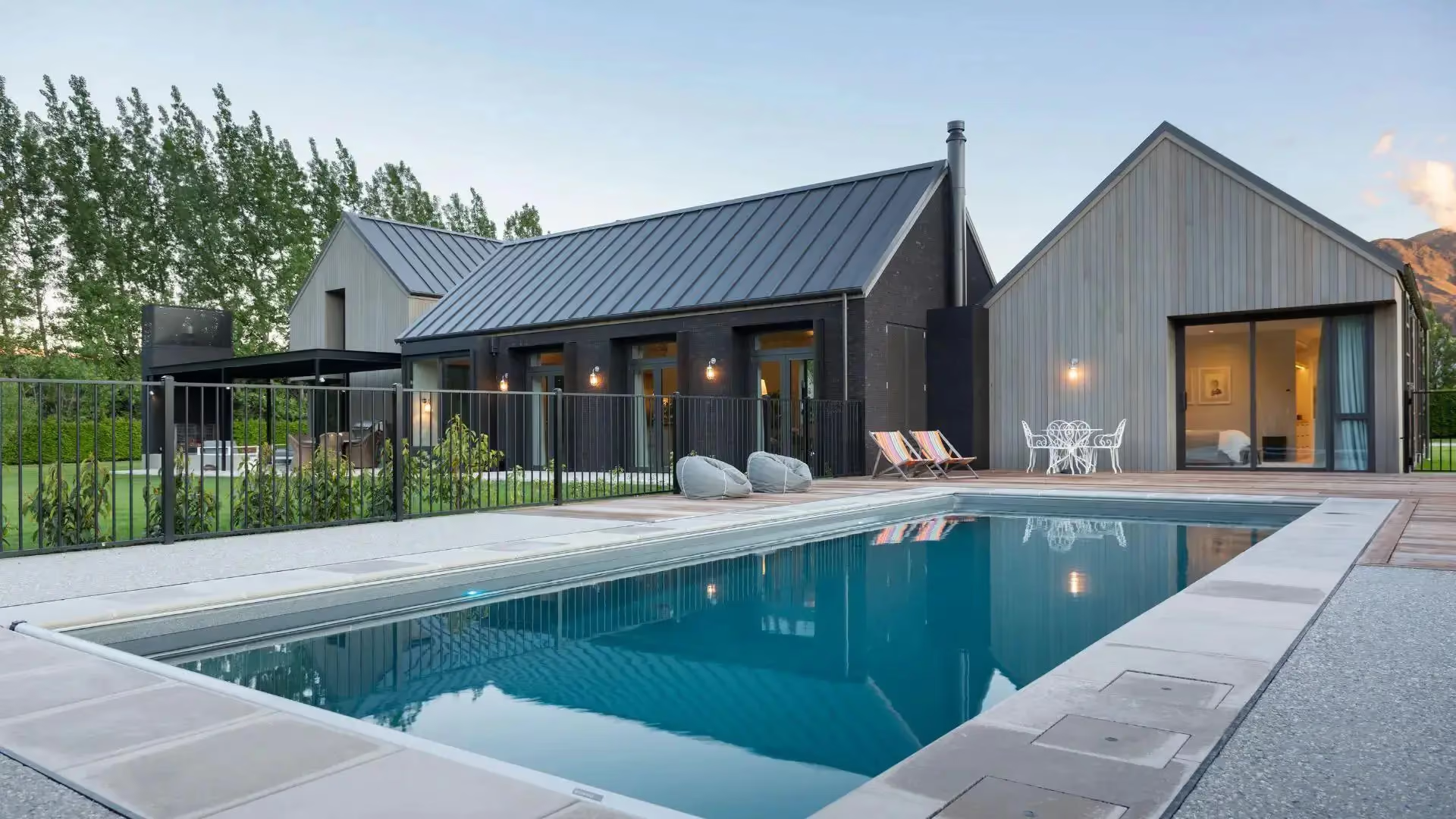
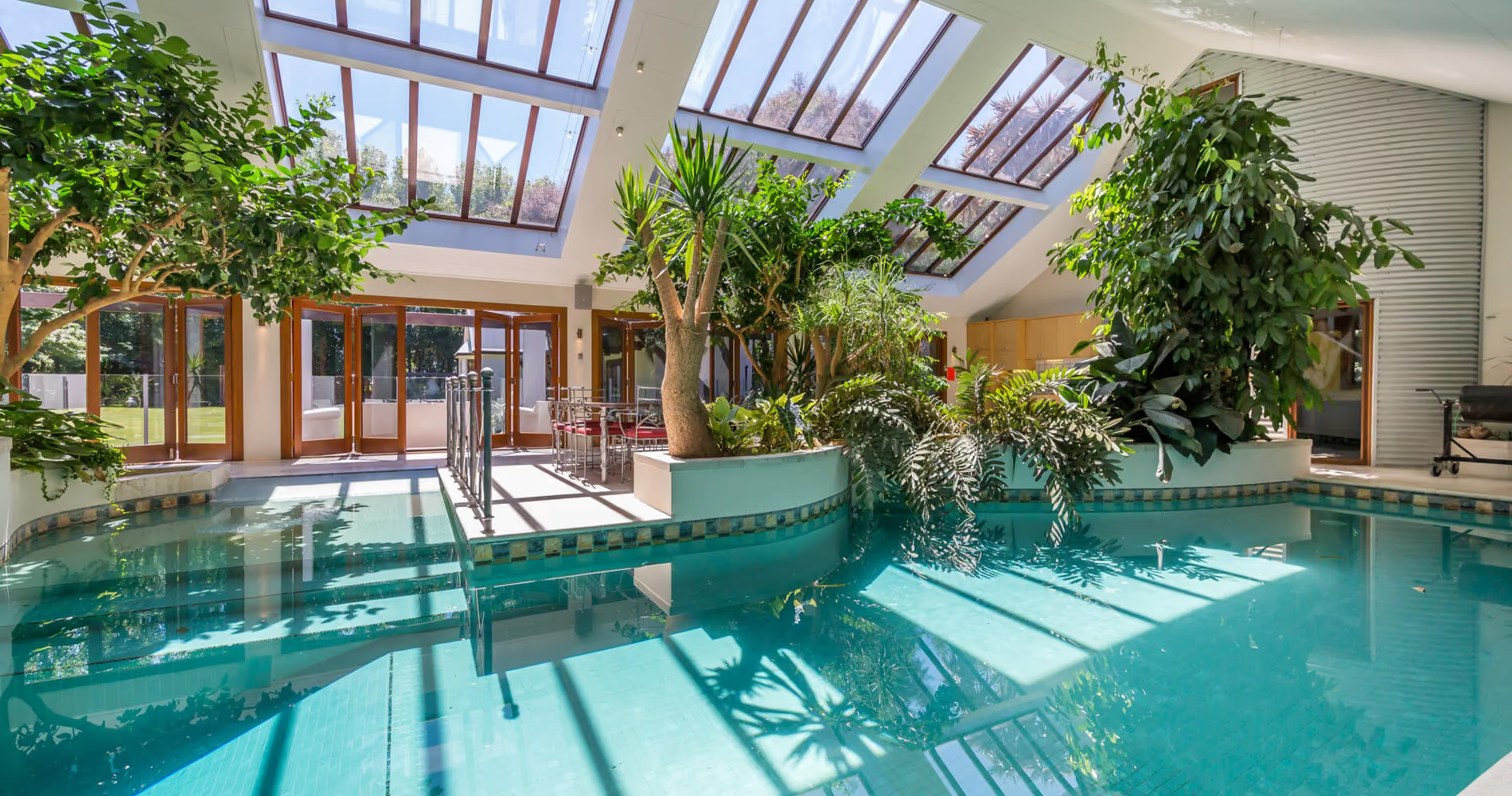
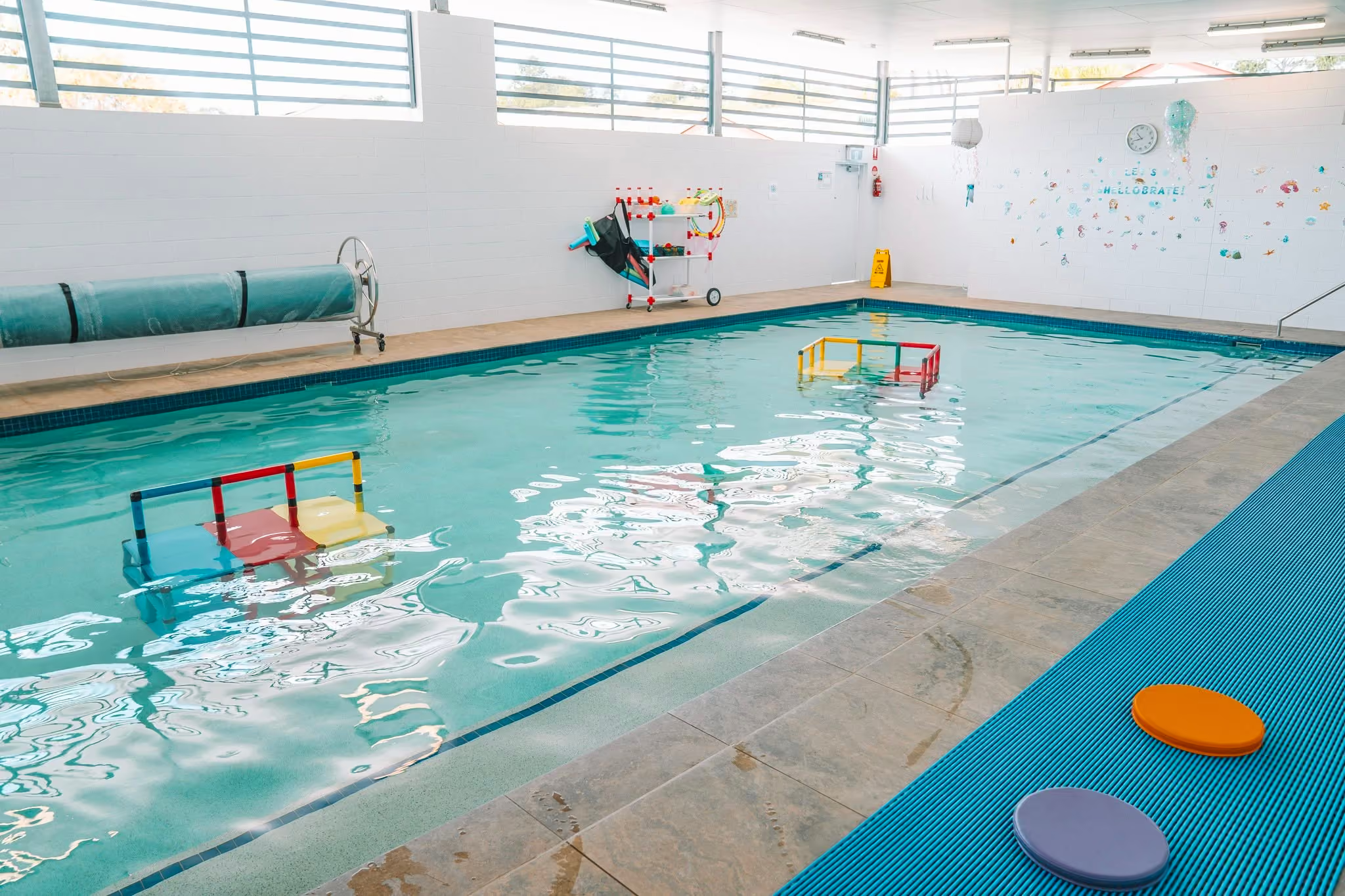
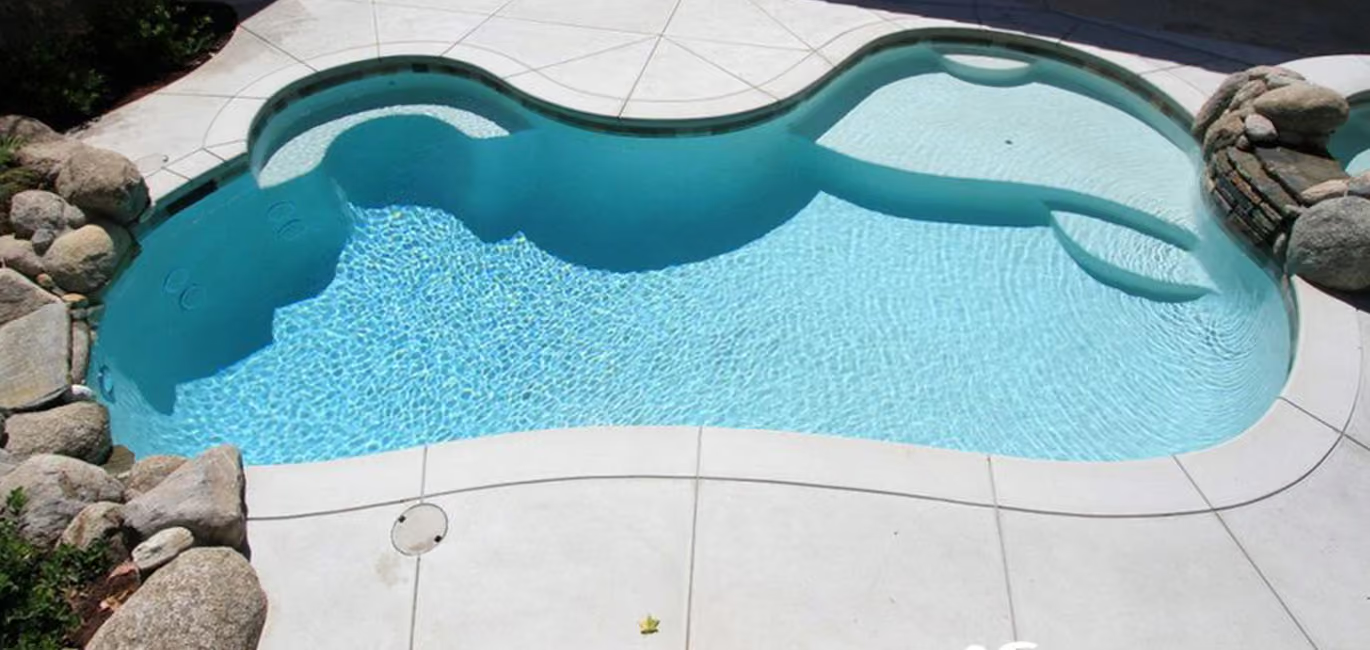
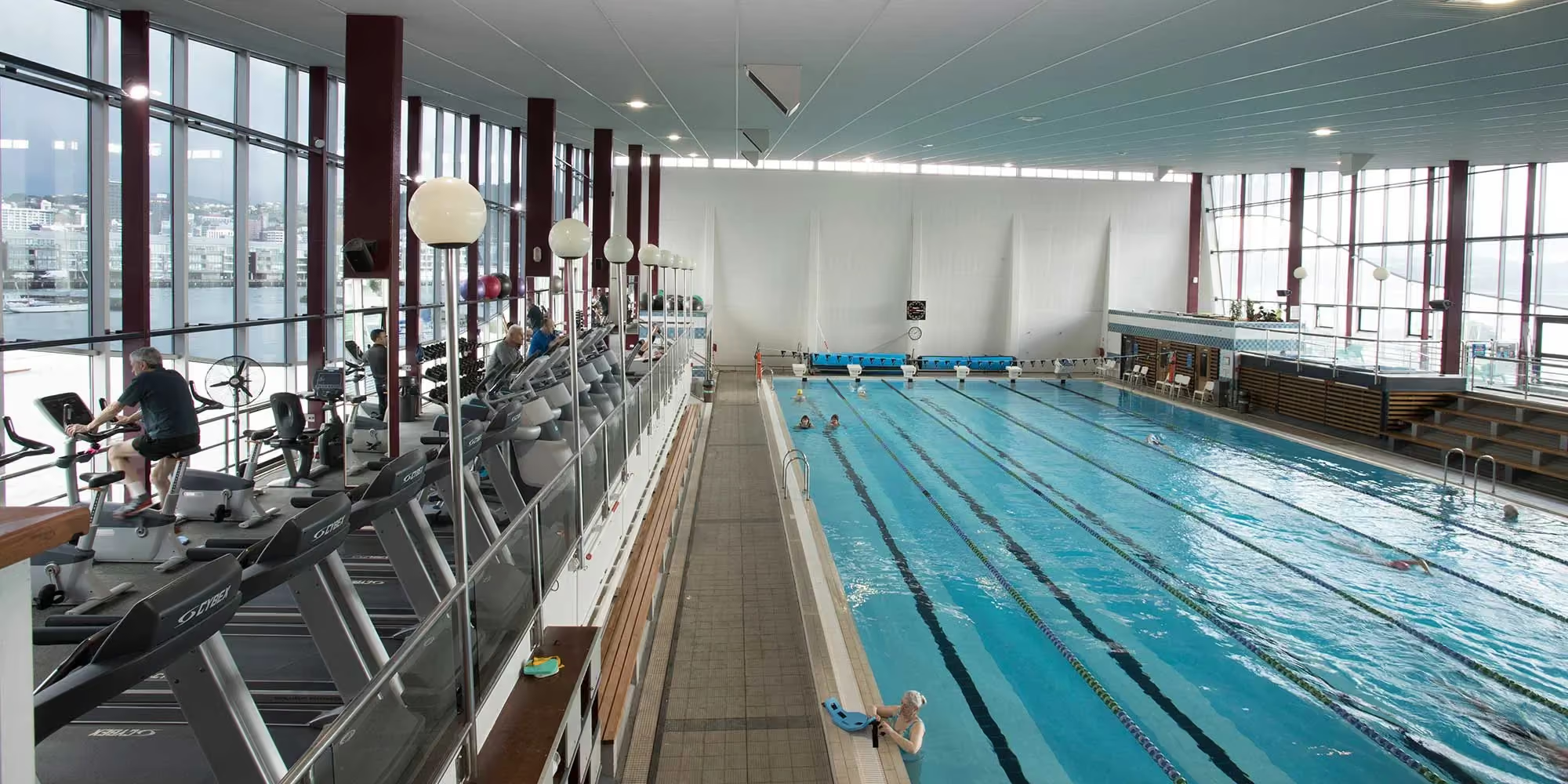
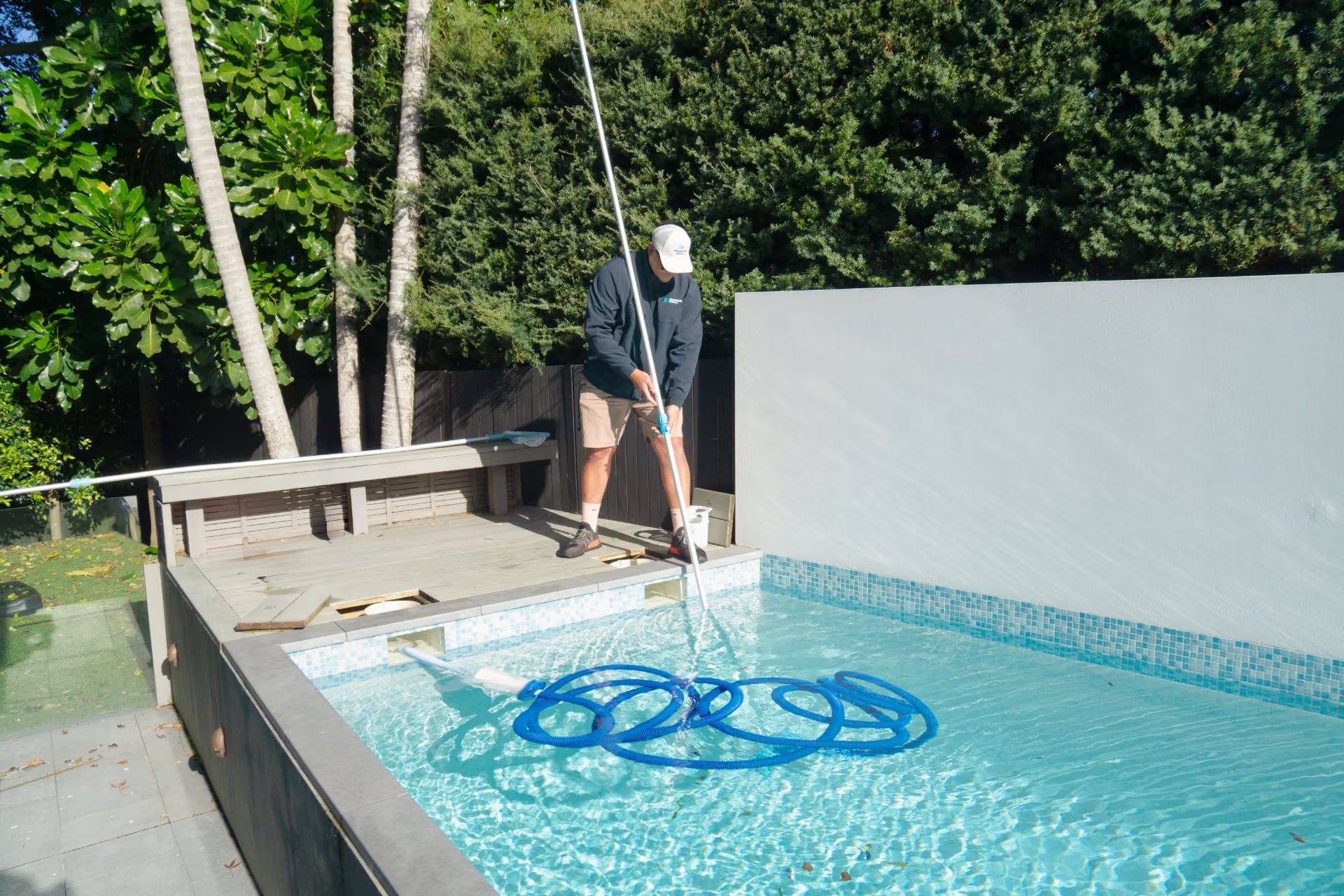
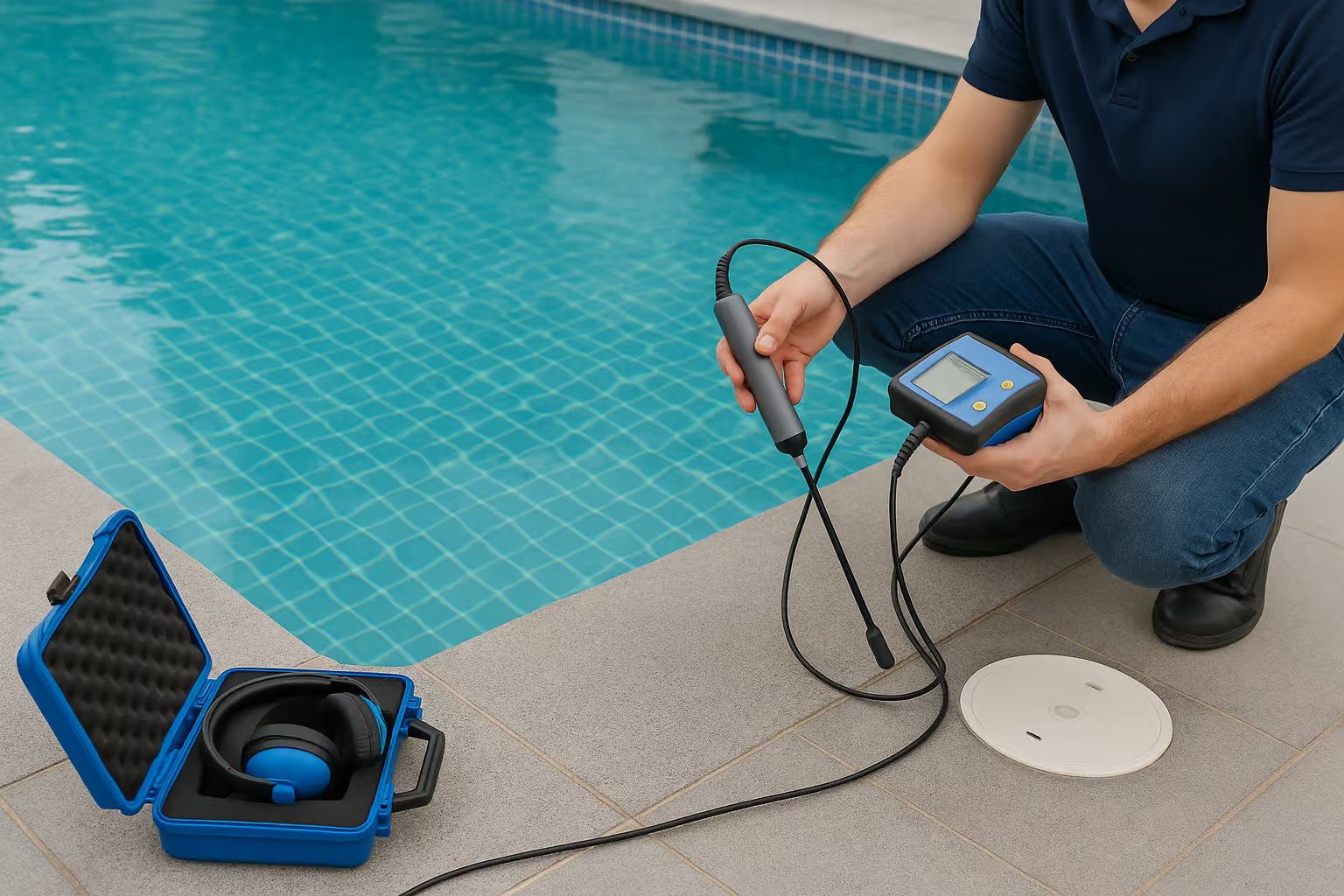
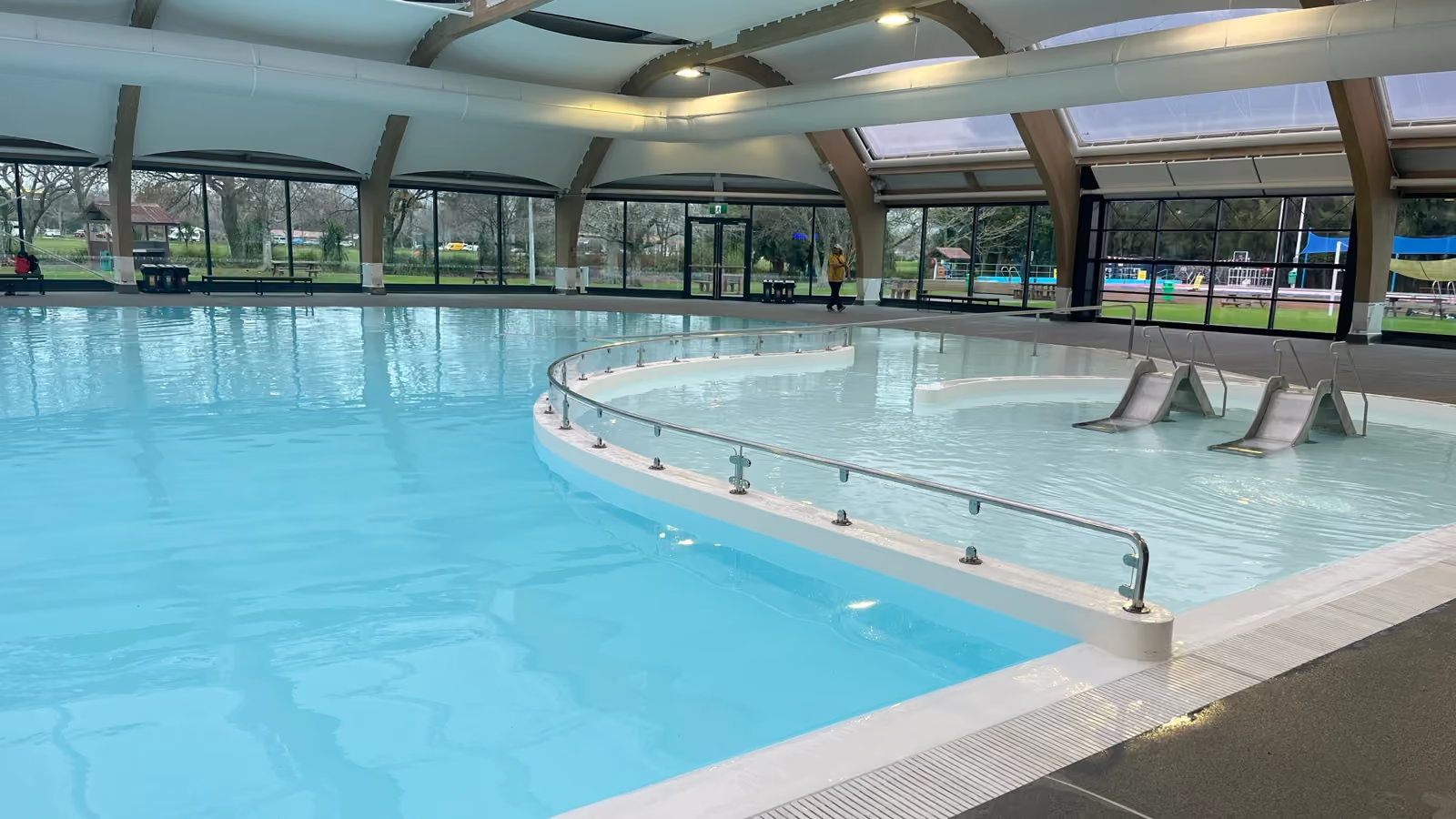
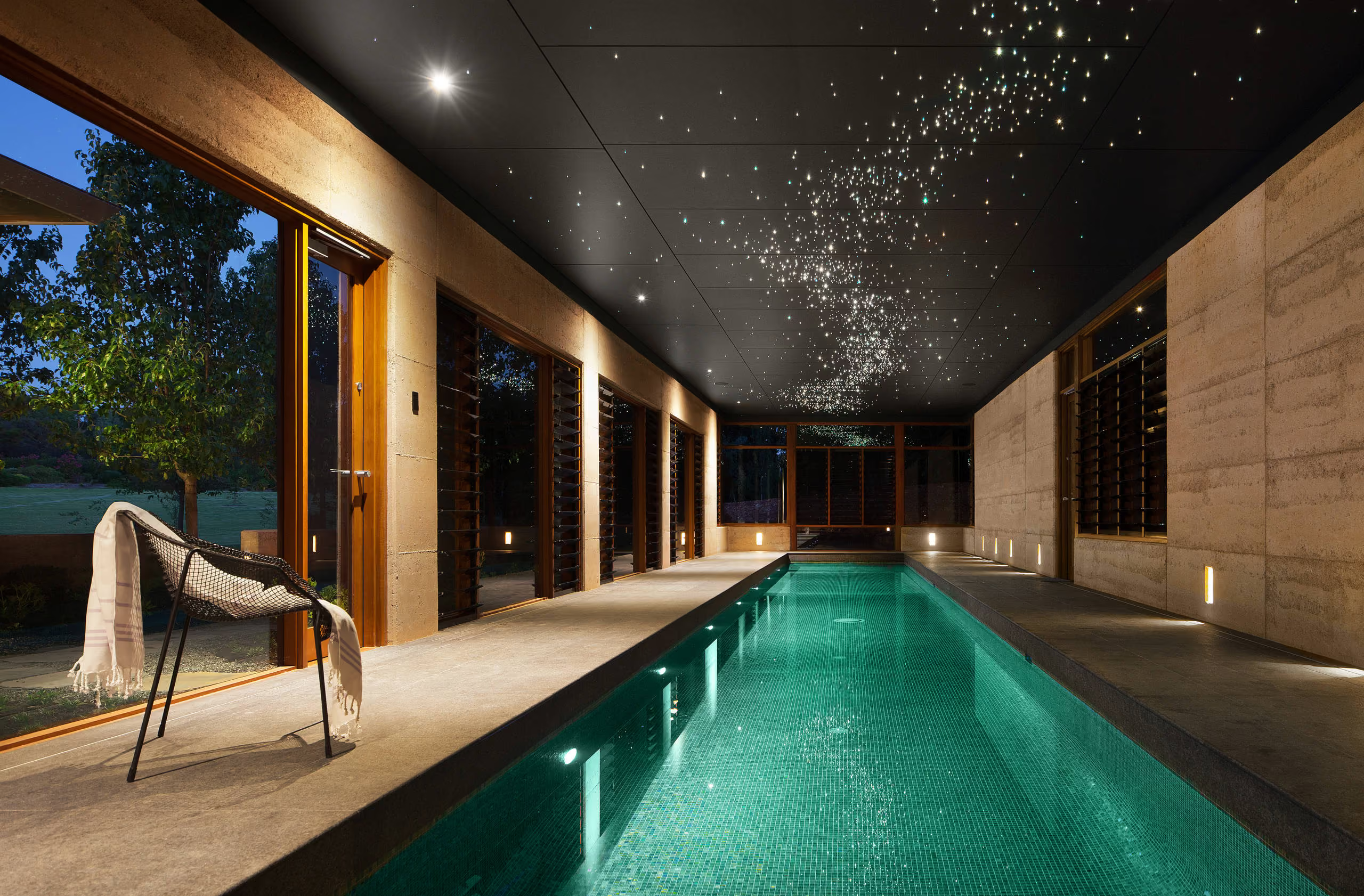
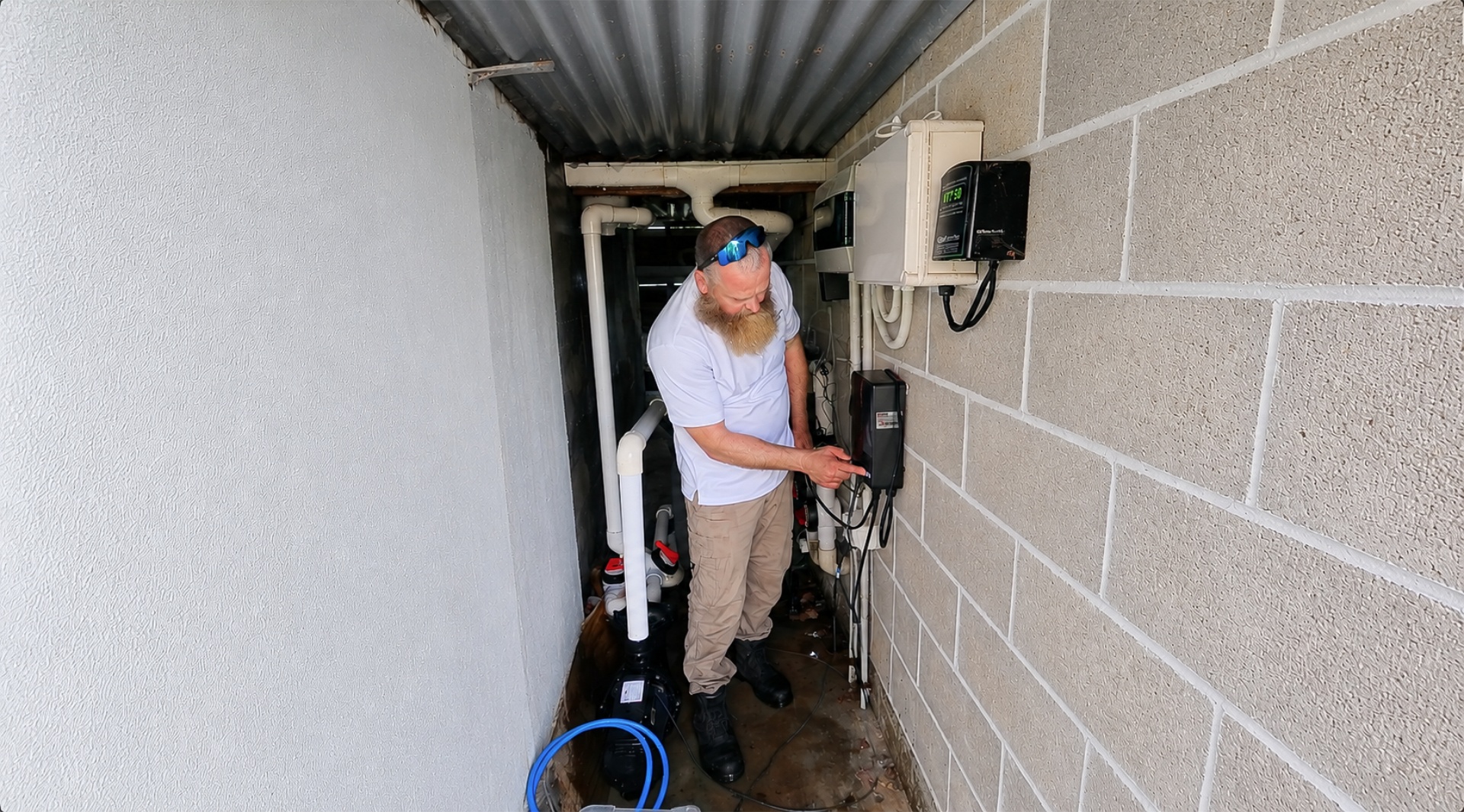
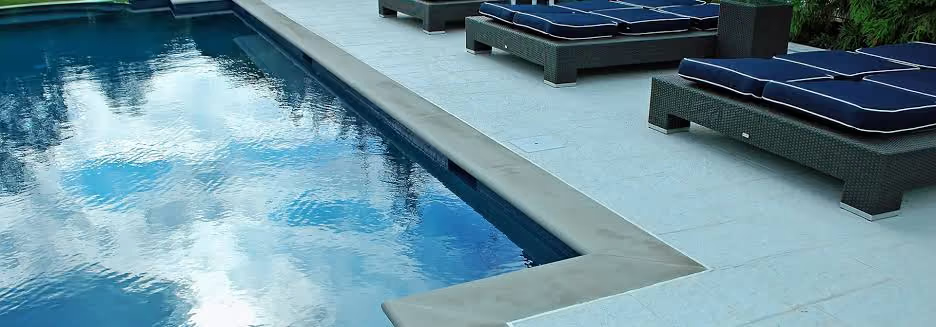
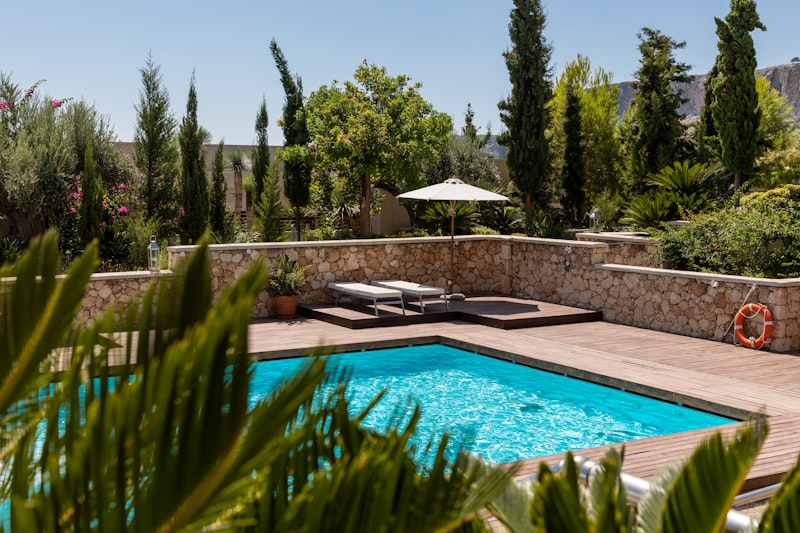
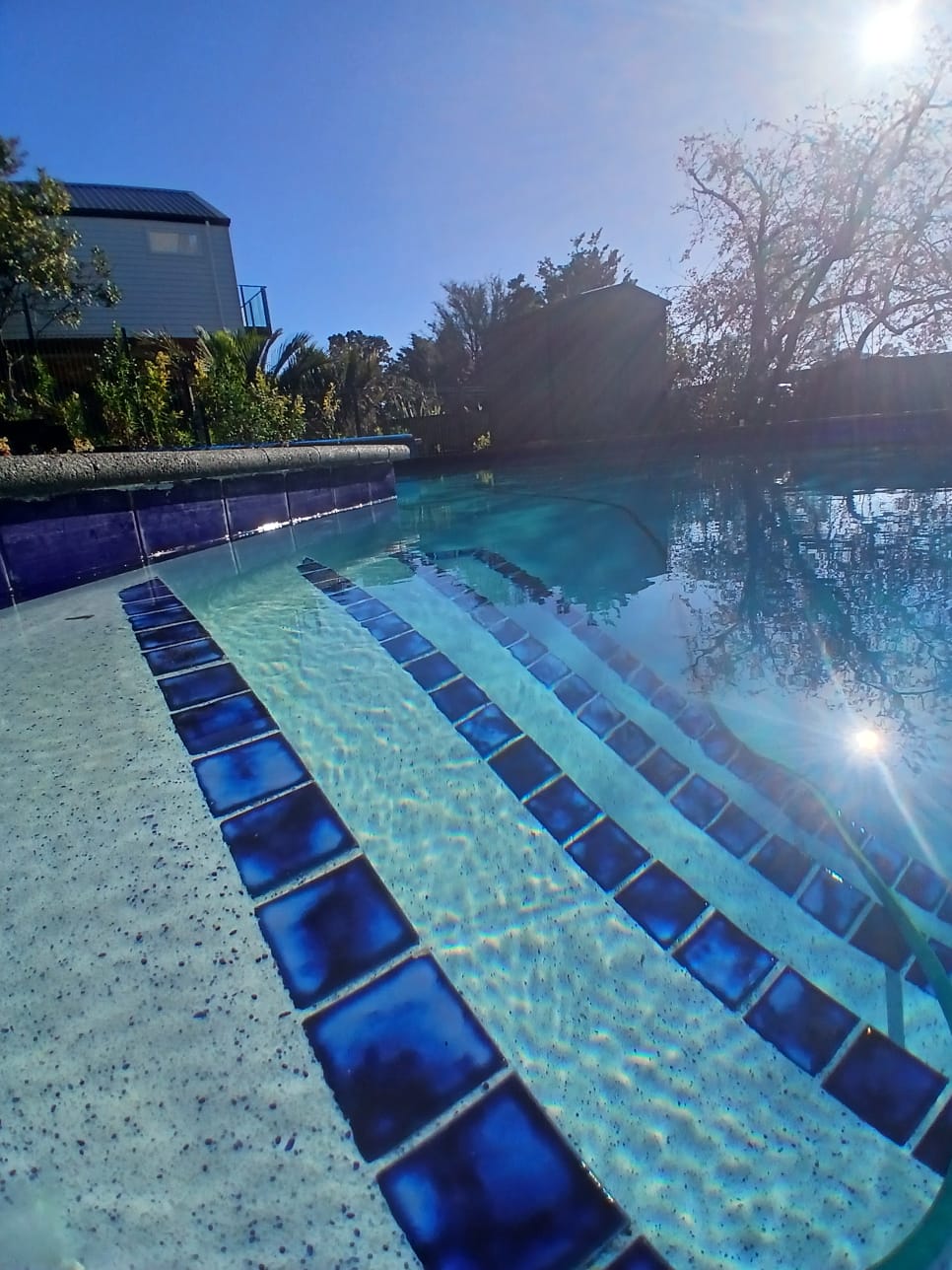
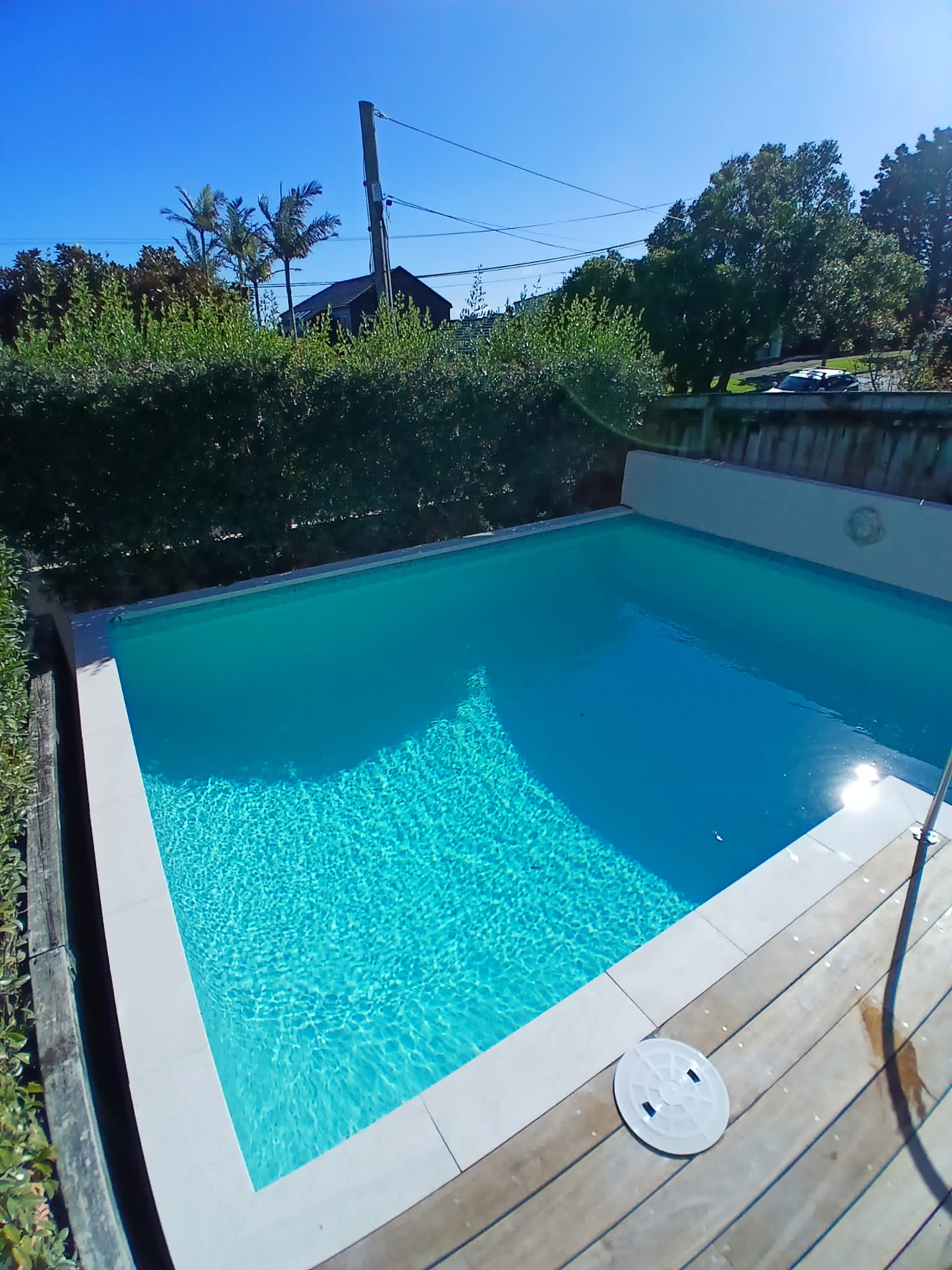
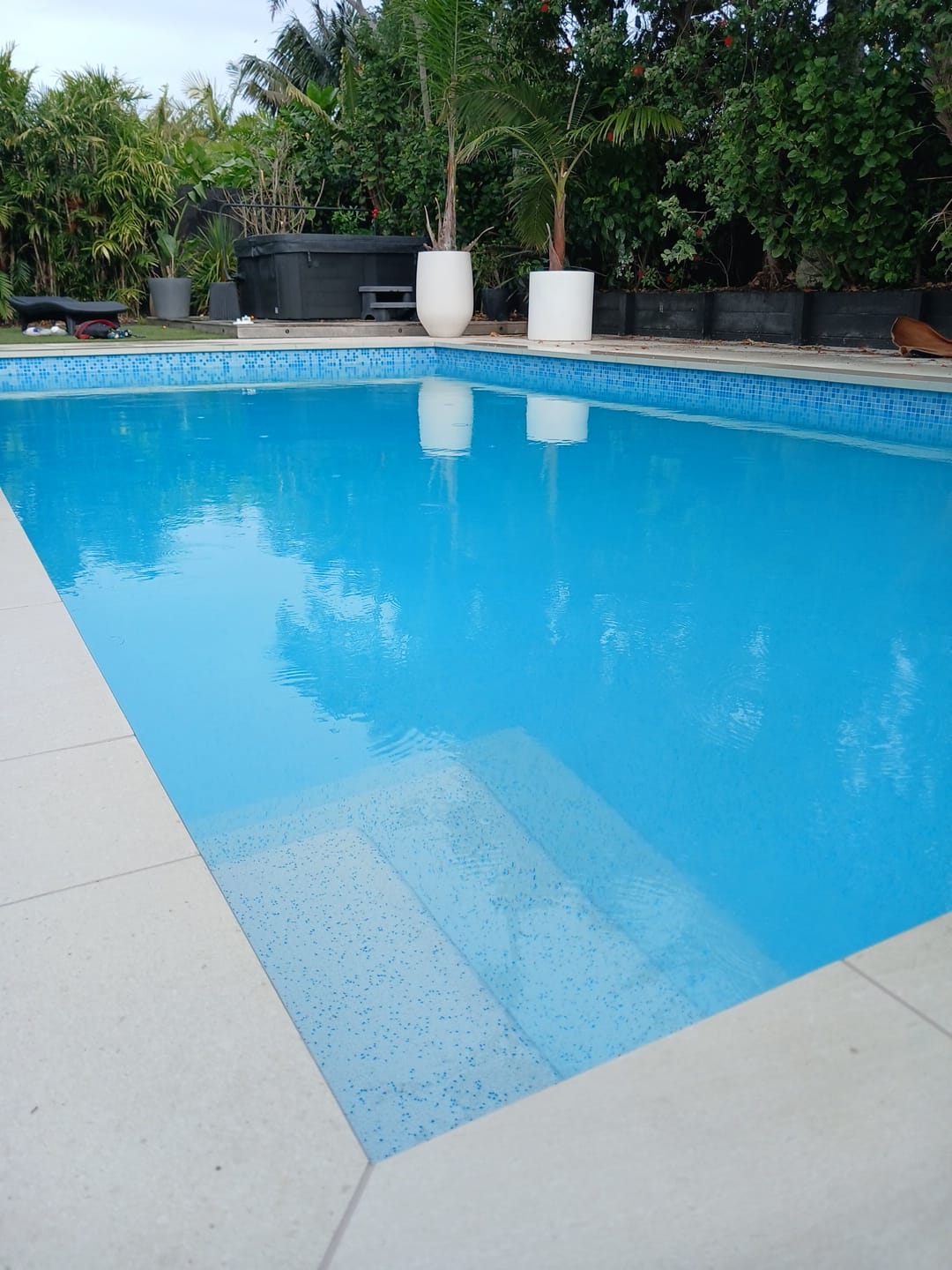
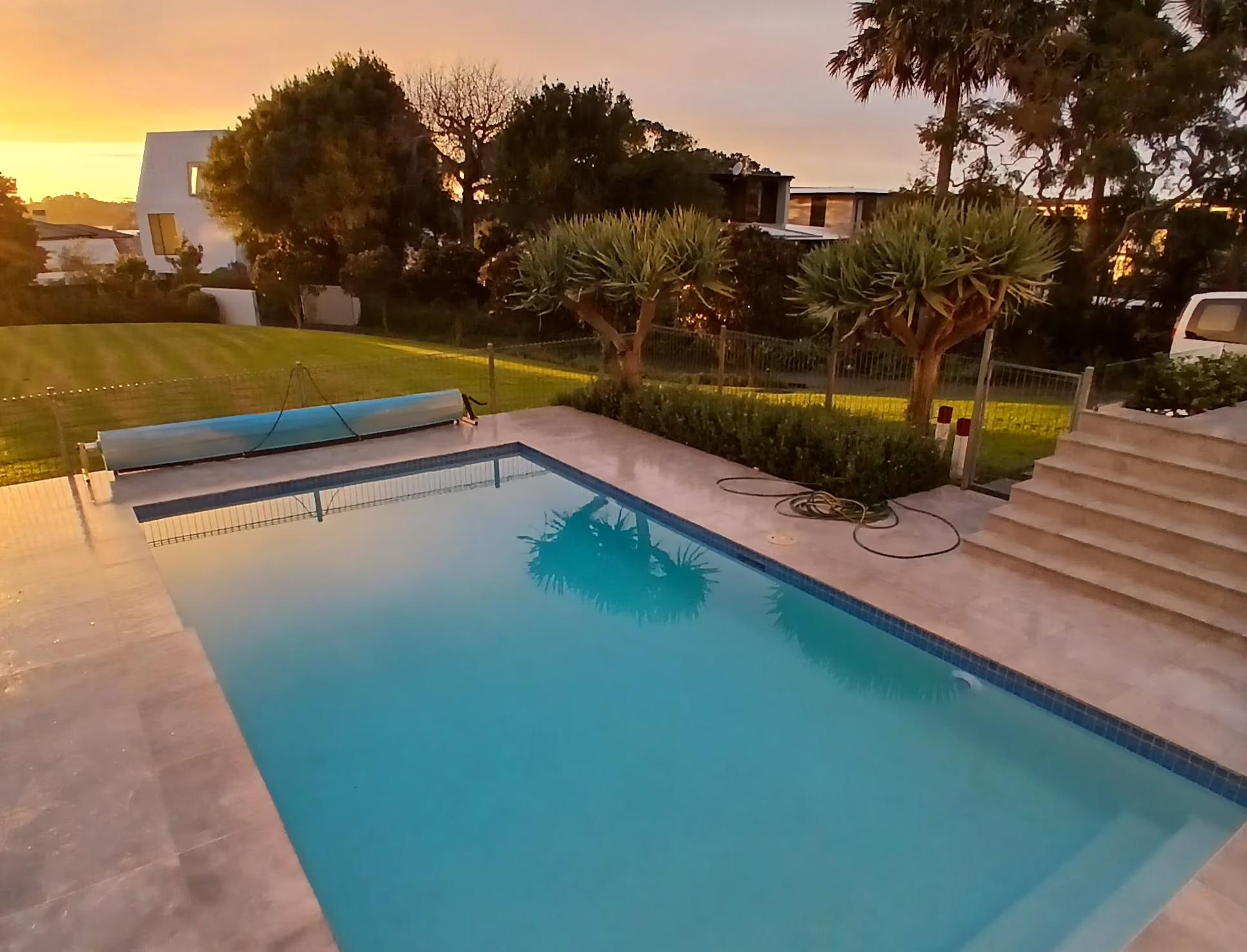
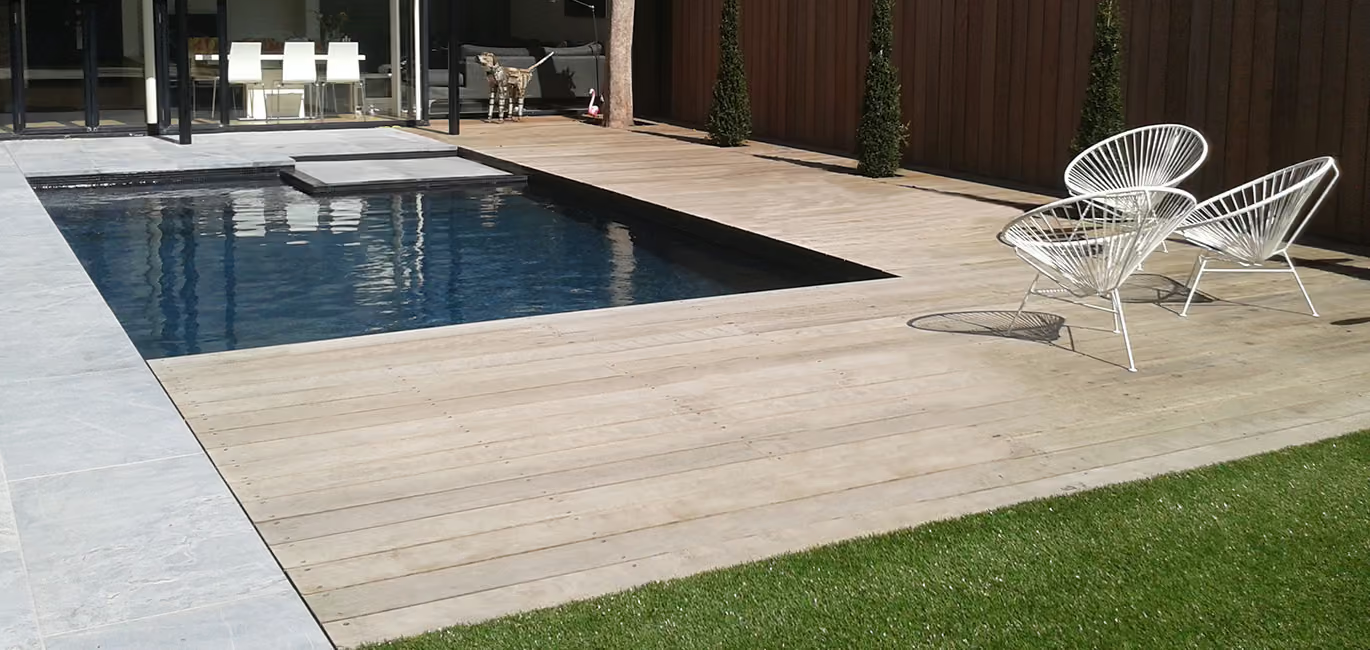
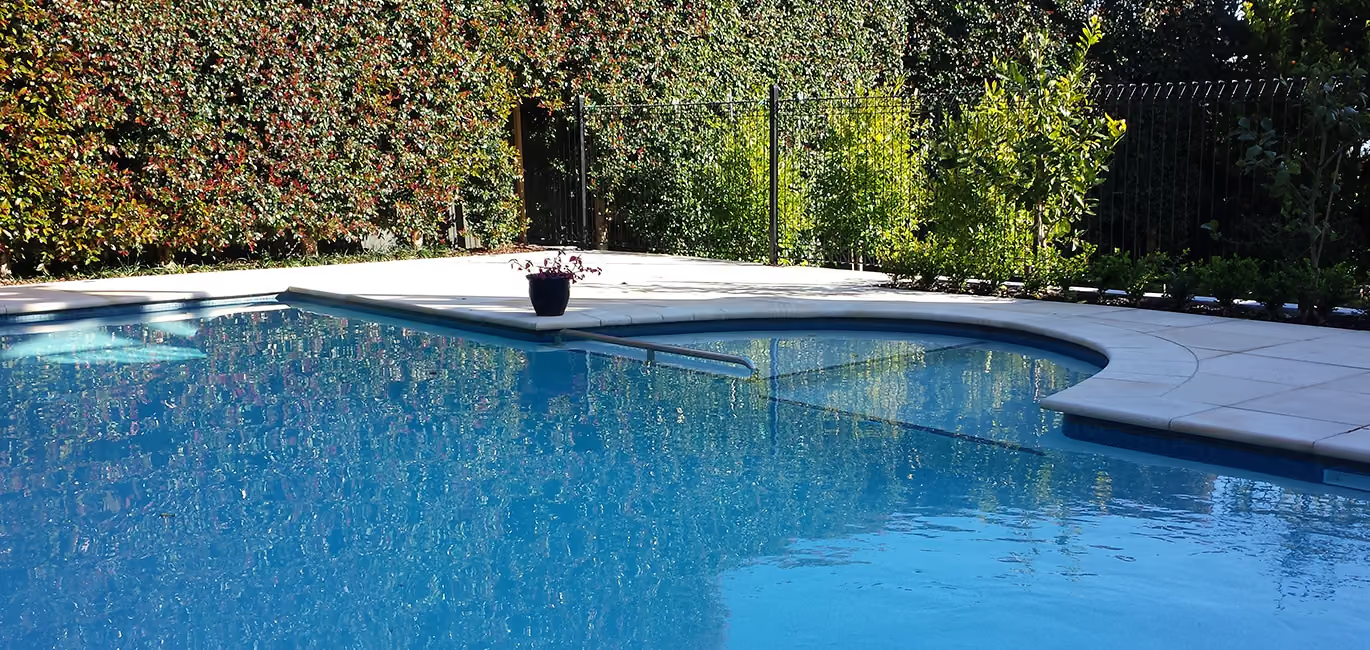
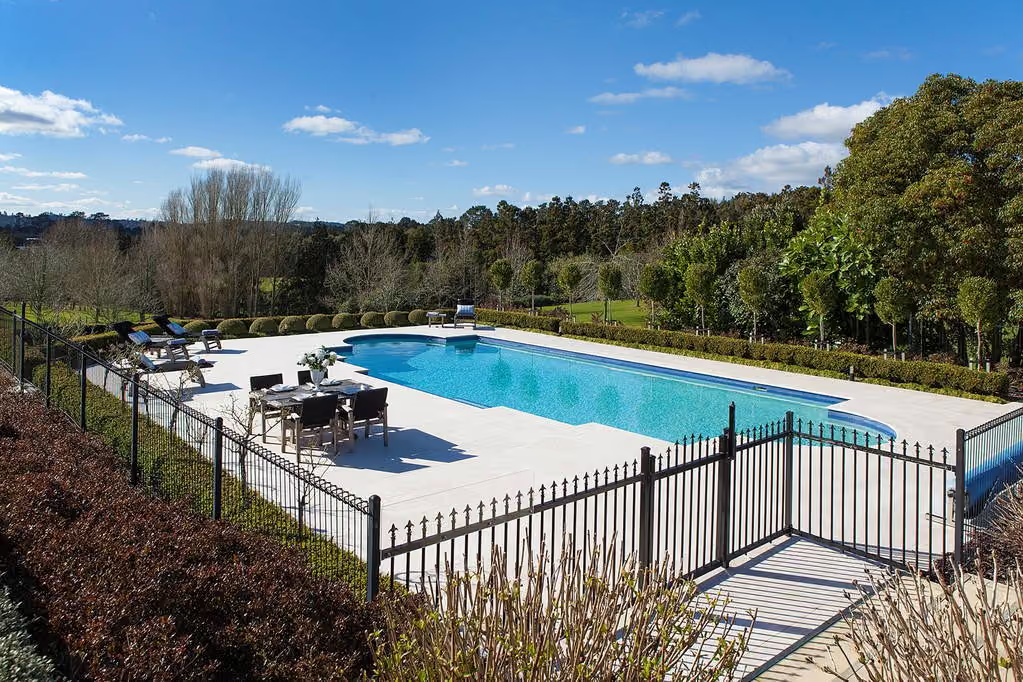
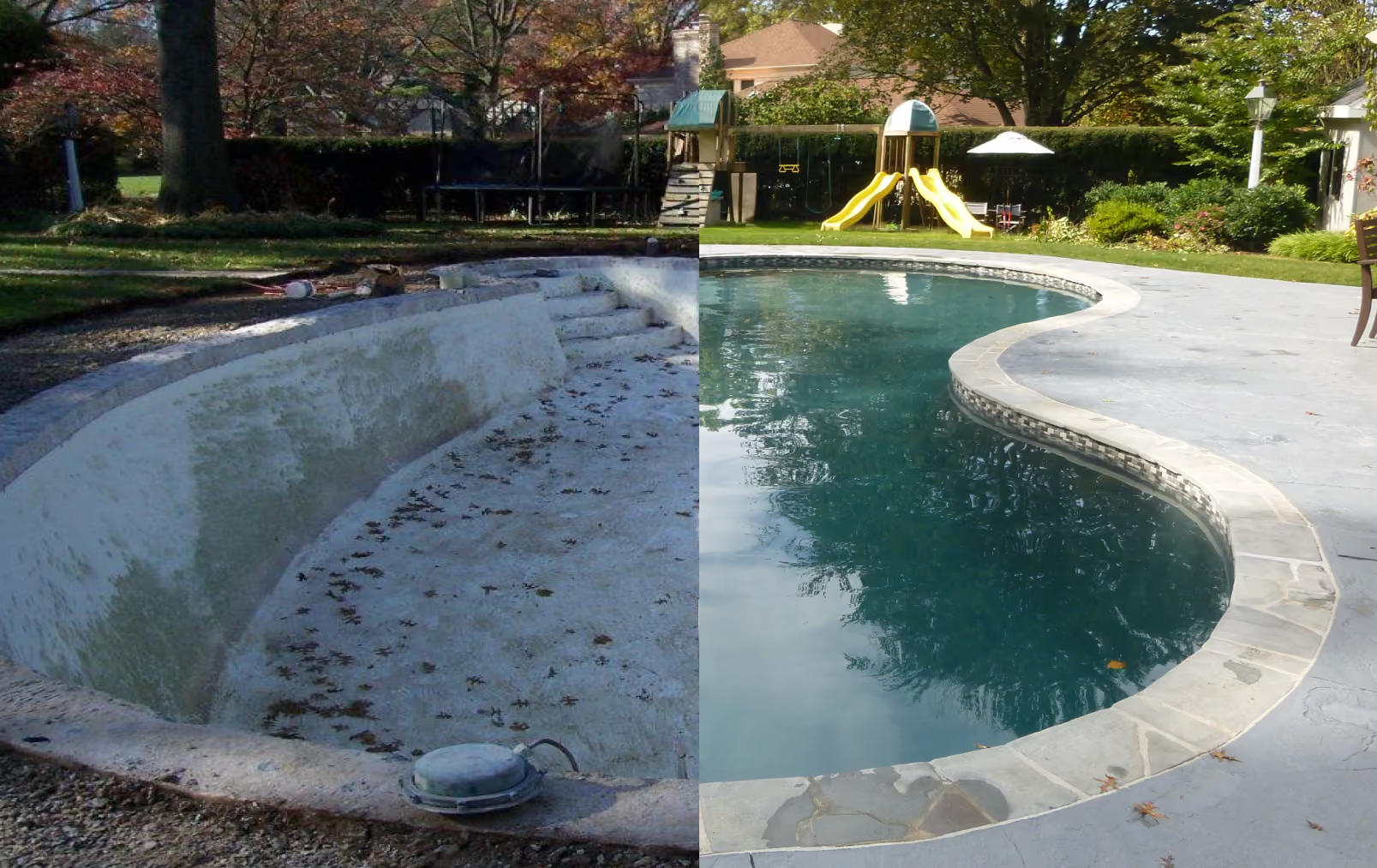
Sparkling Pools has worked on pools across Auckland, including residential renovation projects, equipment upgrades, ongoing maintenance and pool care for managed properties. Past projects show how the right approach can improve presentation, water quality and day-to-day usability. A well-maintained pool is easier to manage, more pleasant to use and better prepared for seasonal changes.
Trusted by Homeowners Across Auckland
Don't just take our word for it. Read what our clients have to say about our transparent communication, reliable service, and stunning pool transformations.
Related Blog Posts
Stay informed on pool care and renovations
Winter pool care essentials for Auckland
Pool Renovation Mistakes

Auckland Climate Pool Maintenance
Choosing Renovation Contractor
Pool Care Auckland Summer
Permits & Consents
Pool Renovation ROI
How Often to Test Pool Water
Pool Renovation Costs
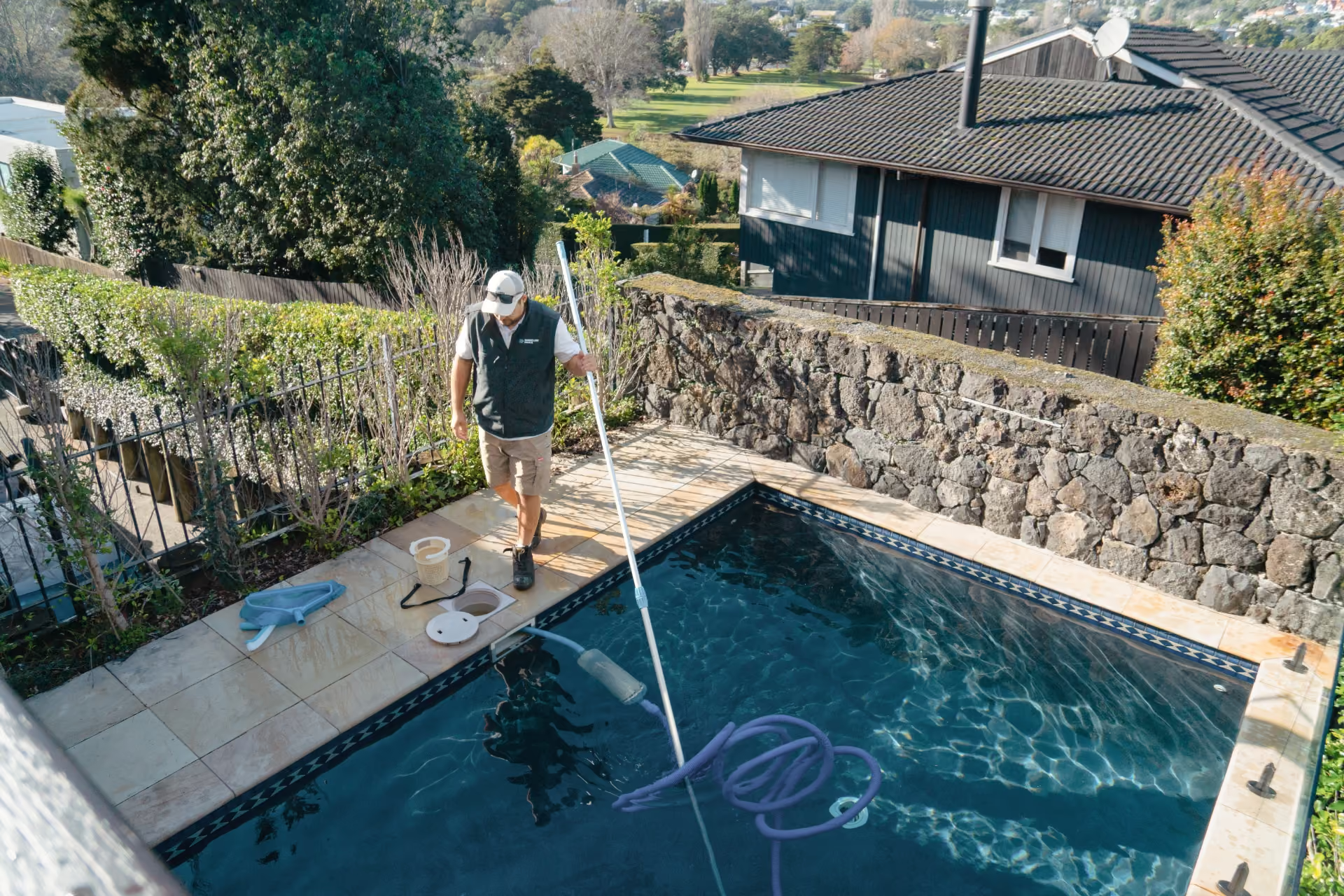
Cost of Pool Service Auckland
Pool Renovation Planning Guide
Pool Lighting Buying Guide
Pool Cleaner Buying Guide
Pool Automation Buying Guide
Pool Heater Buying Guide
Pool Filter Buying Guide
Pool Pump Buying Guide
Best Equipment Auckland Climate
Auckland Water Quality
Auckland Pool Season
Pool Ownership Costs
Common Pool Mistakes
Pool Safety Laws
Pool Inspection Requirements
Pool Fence Compliance
.avif)
Auckland Pool Industry Trends
Auckland Pool Regulations
Pool Equipment Suppliers
Best Pool Service Areas
Pool Service Pricing Analysis
Company vs Independent
Best Pool Surface Materials
Pool Resurfacing Options
Pebble vs Plaster Surfaces
One-Time vs Ongoing Service
Full Service vs Chemicals Only
Pool Cover Types
Robotic vs Suction Cleaners
Mineral vs Saltwater
Gas vs Heat Pump
Pool Heater Types
Pool Winterizing Guide Auckland
Pool Opening Guide Summer
Pool Maintenance After Heavy Rain
Pool Maintenance Schedule
How Often to Run Pool Filter
Pool Pump Maintenance Schedule
Pool Filter Cartridge Cleaning
Pool Equipment Maintenance Checklist
Pool Waterline Cleaning
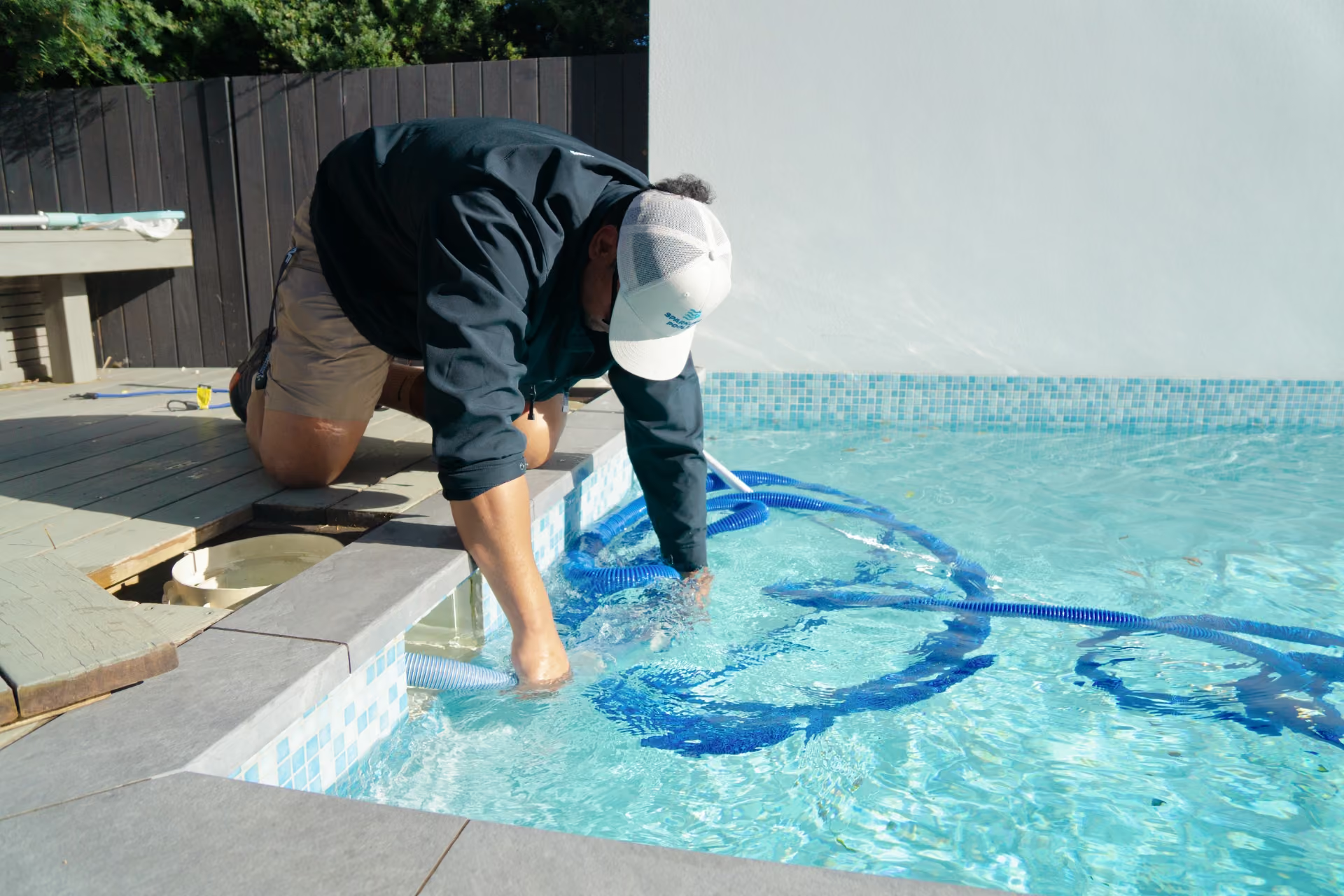
Pool Skimmer Basket Cleaning
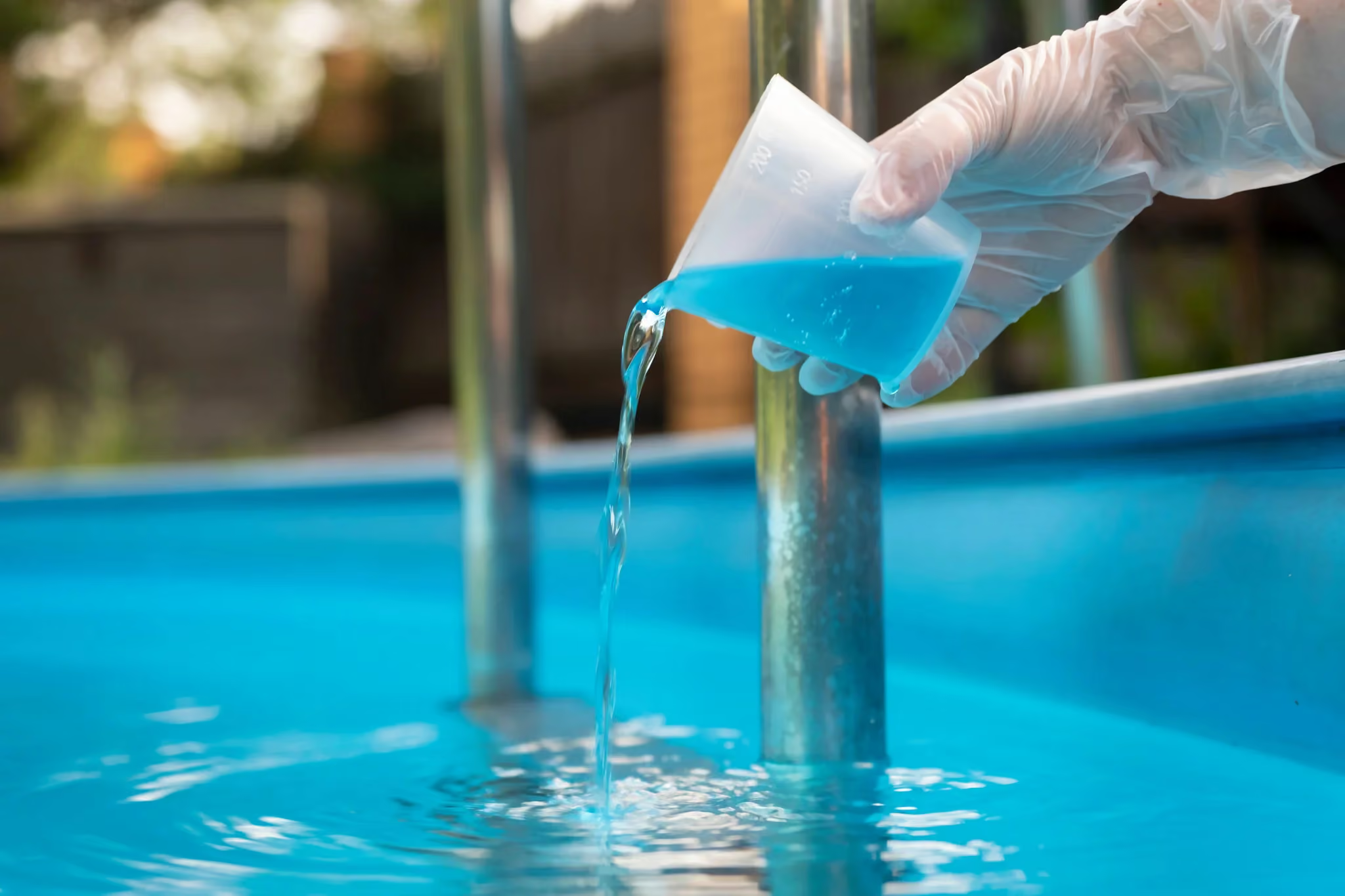
Pool Chlorine Levels
How Often Clean Pool Filter
How to Vacuum Pool
Pool Brushing Technique
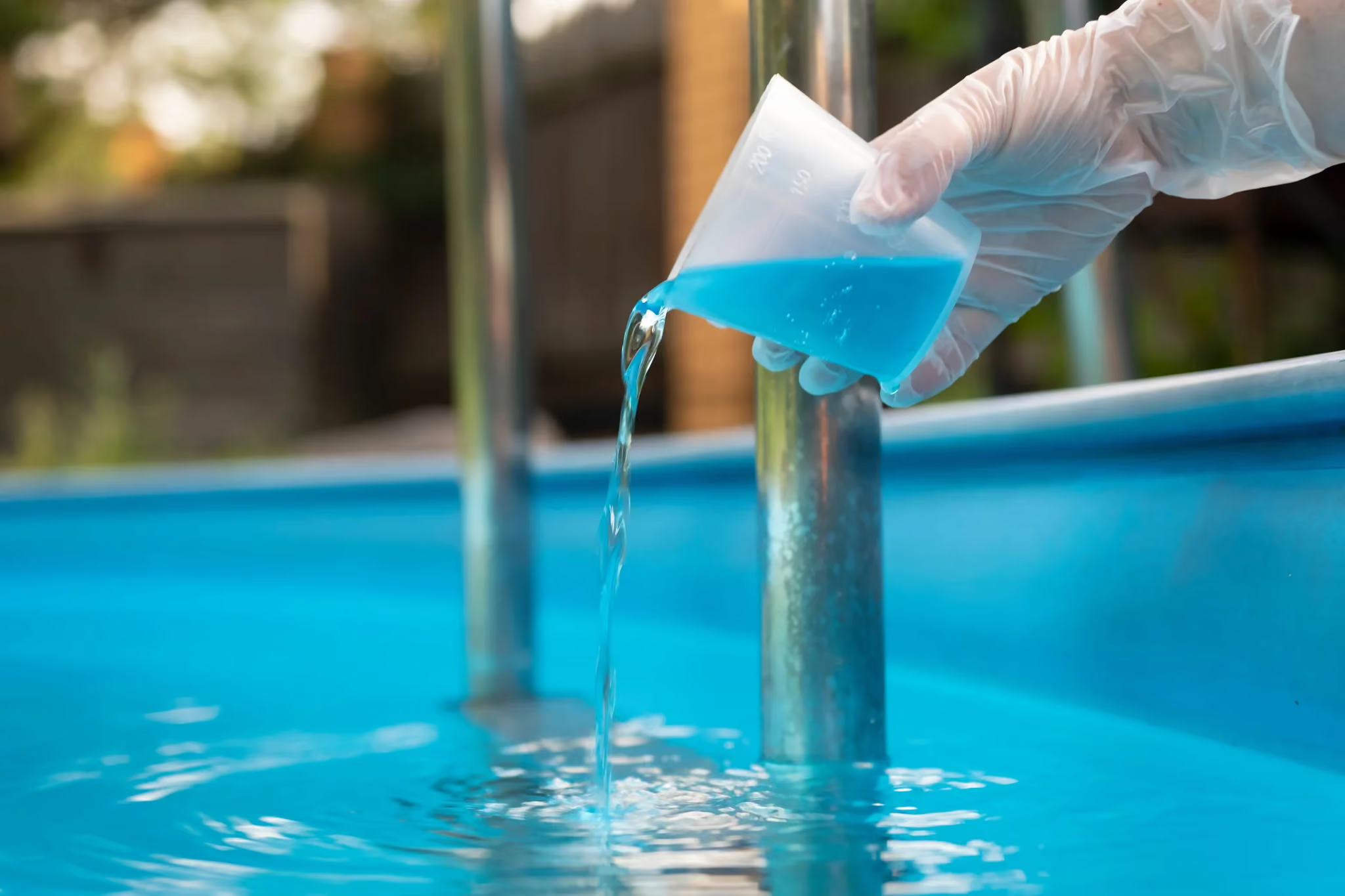
Pool Chemical Dosing Chart
Pool Water Chemistry Basics
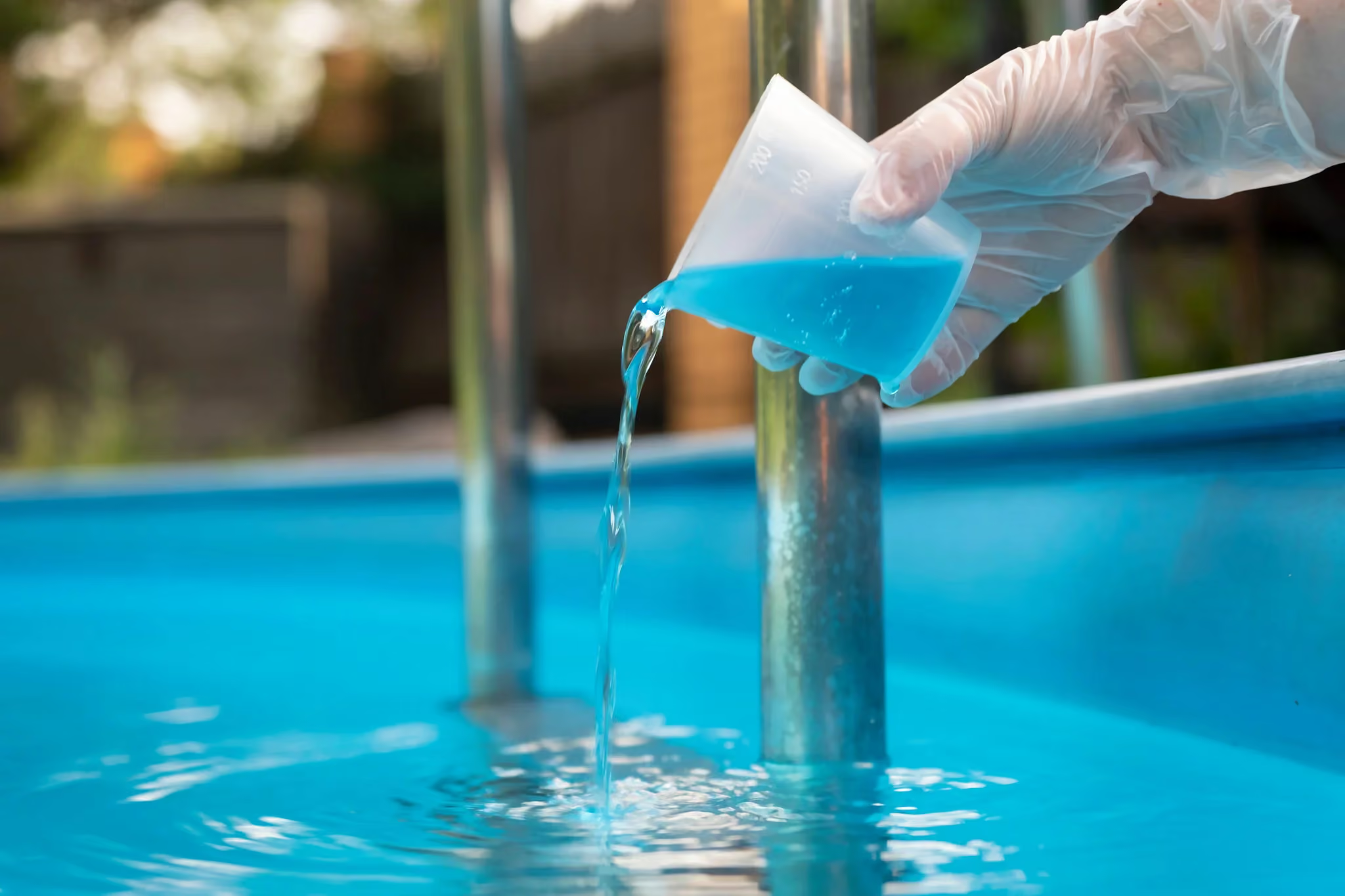
How to Balance Pool Chemistry
How to Test Pool Water
Pool Maintenance Tips
Complete Pool Maintenance Guide
Pool Service ROI
Pool Equipment Buy or Service
Pool Maintenance Time Requirements
DIY vs Professional
Pool Service Contract
Pool Service vs Pool Valet
Is Pool Service Worth It
Pool Service Guarantees
Pool Service Reviews
Pool Service Red Flags
Questions to Ask Pool Companies
How to Choose Pool Service Company
Hidden Costs DIY Maintenance
Pool Cleaning Prices Auckland
Cost of Pool Resurfacing
Cost of Pool Pump Replacement
Cost to Fix Green Pool
Pool Liner Wrinkles
Pool Cracks When to Worry
Pool Surface Stains
Pool Valve Leaking
Pool Automation Not Working
Pool Light Not Working
Pool Heater Not Heating
Pool Skimmer Not Working
High Pool Filter Pressure
Pool Losing Water
Pool Filter Not Clearing Water
Pool Pump Leaking
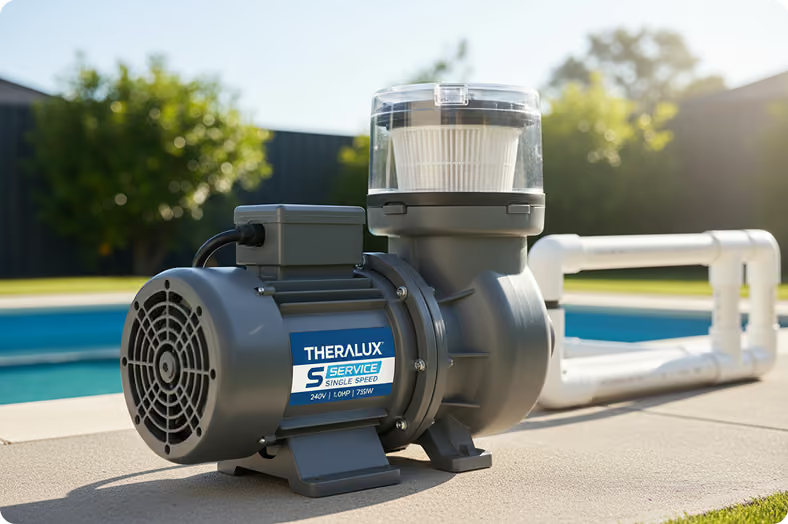
Pool Pump Not Pumping
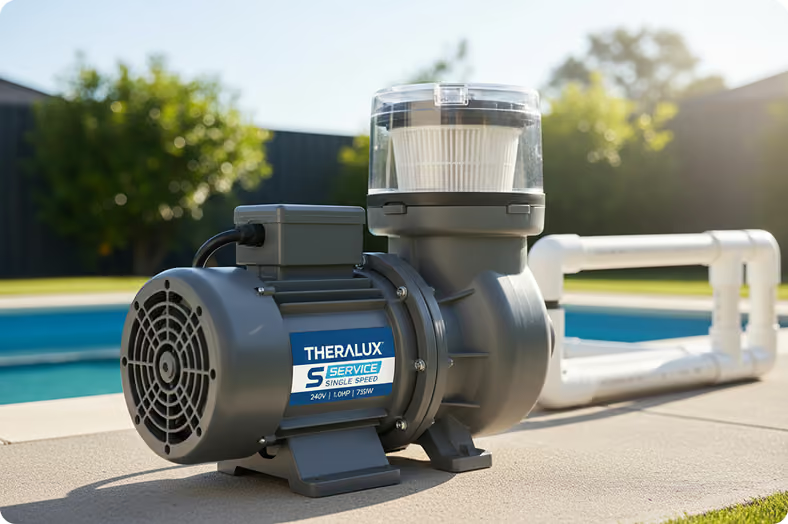
Pool Pump Losing Prime
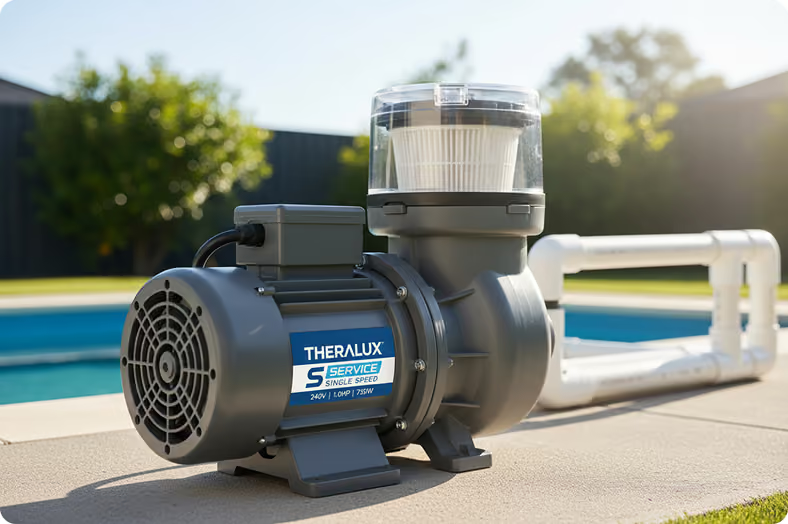
Pool Pump Noisy
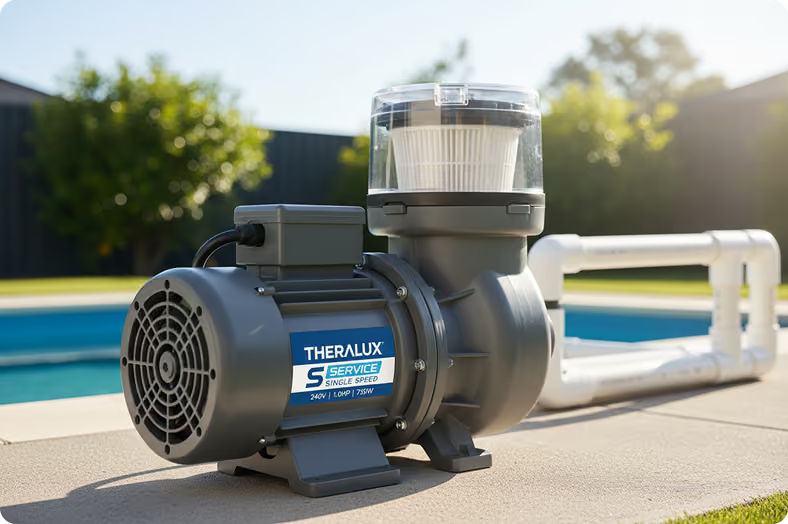
Pool Pump Not Working
Pool Water Foaming
Pool pH Too Low
Pool pH Too High
Green Pool After Rain
Pool Still Green After Shock
Pool Water Cloudy
How to Clear a Green Pool
Pool Care That Protects Your Investment
Good pool care protects more than appearance. Our pool specialists support the long-term condition of your swimming pool while keeping it ready for everyday use.