Pool Maintenance Time Requirements

Why Auckland trusts our pool service expertise
Keeping a residential pool in good condition takes a consistent time commitment each week. Understanding where that time goes helps you plan realistically, whether you're doing it yourself or deciding when to bring in a professional.
The figures below reflect typical time requirements for a standard residential pool in Auckland. Your actual time may vary depending on pool size, surroundings, and how regularly you keep up with the routine.
What you'll learn
The Short Answer
For most residential pools in Auckland, routine maintenance takes around 2 to 4 hours per week when you factor in all the tasks, skimming, vacuuming, chemical checks, and equipment monitoring. That figure can rise or fall depending on your pool type, surroundings, and how on top of things you stay.
This guide breaks down where that time actually goes, what you can streamline, and when it makes more sense to hand the work over to a pool specialist.
---
Why Time Estimates Vary So Much
You'll find wildly different estimates online, anywhere from 30 minutes to several hours a week. The truth is, the time commitment depends on several factors specific to your pool and property.
Pool size and type
A larger pool has more surface area to skim, more water to balance, and more filter media to maintain. Fibreglass pools generally require less chemical intervention than concrete pools. Salt water pools reduce some chemical handling but still need regular cell cleaning and water testing.
Your surroundings
Auckland pools near trees, gardens, or open ground collect more debris. Leaf litter, pollen, and organic matter all accelerate algae growth and clog filters faster. A pool in a sheltered, paved courtyard will need noticeably less skimming time than one surrounded by pohutukawa or palms.
How consistent you are
This is the biggest variable. A pool that gets checked twice a week takes less total time than one that's ignored for a fortnight and then needs a full recovery. Staying consistent keeps each session short. Letting things slip means longer, harder sessions to get back on track.
---
The Weekly Maintenance Routine
Here's a realistic breakdown of what regular pool maintenance involves and how long each task takes.
Skimming the surface, 10 to 20 minutes
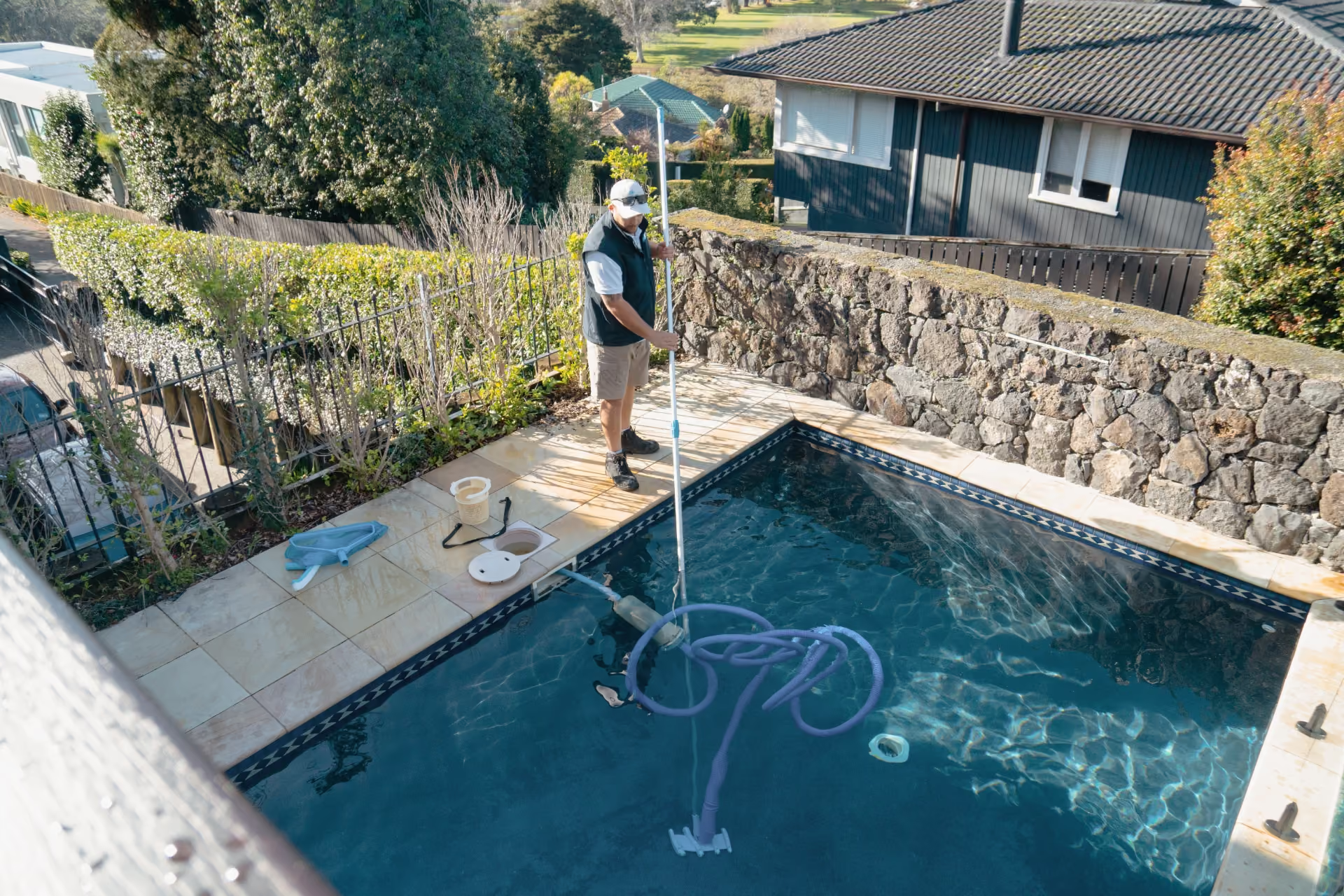
Remove leaves, insects, and floating debris with a hand skimmer. Do this at least twice a week, or daily if your pool is in a leafy spot. It's the simplest task but one of the most important, organic matter left in the water breaks down and consumes chlorine.
Brushing walls and floor, 10 to 15 minutes
Brush pool walls, steps, and the floor once a week to prevent algae from taking hold. Pay attention to corners, behind ladders, and any shaded areas where circulation is weaker.
Vacuuming, 20 to 45 minutes
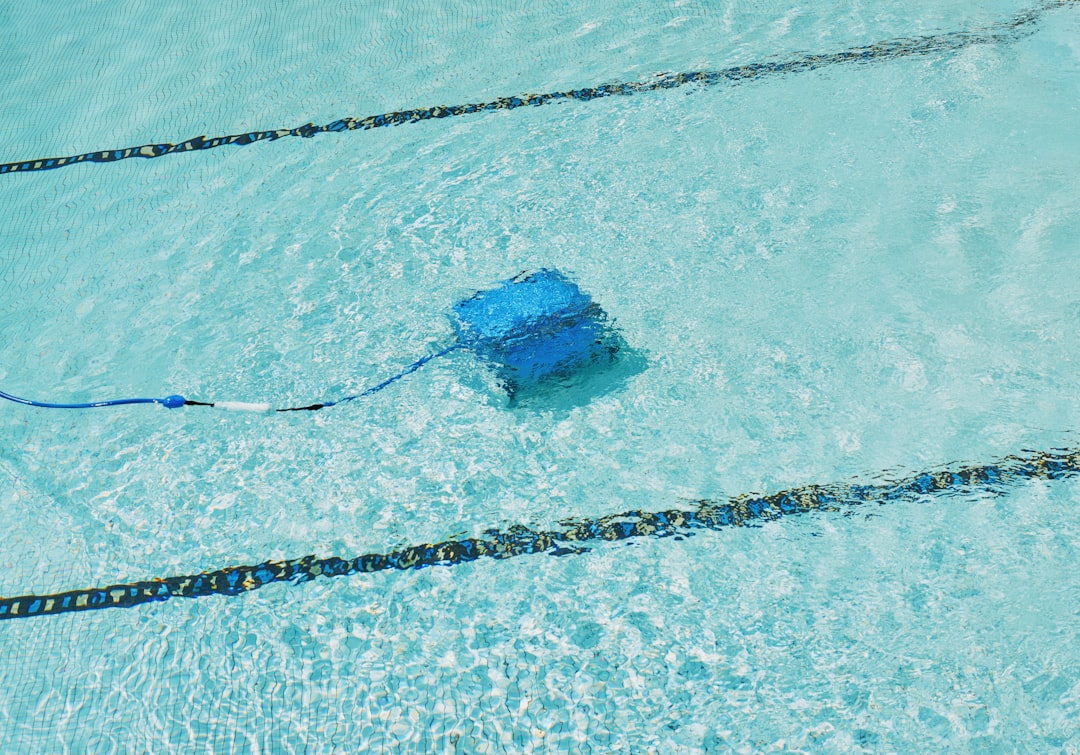
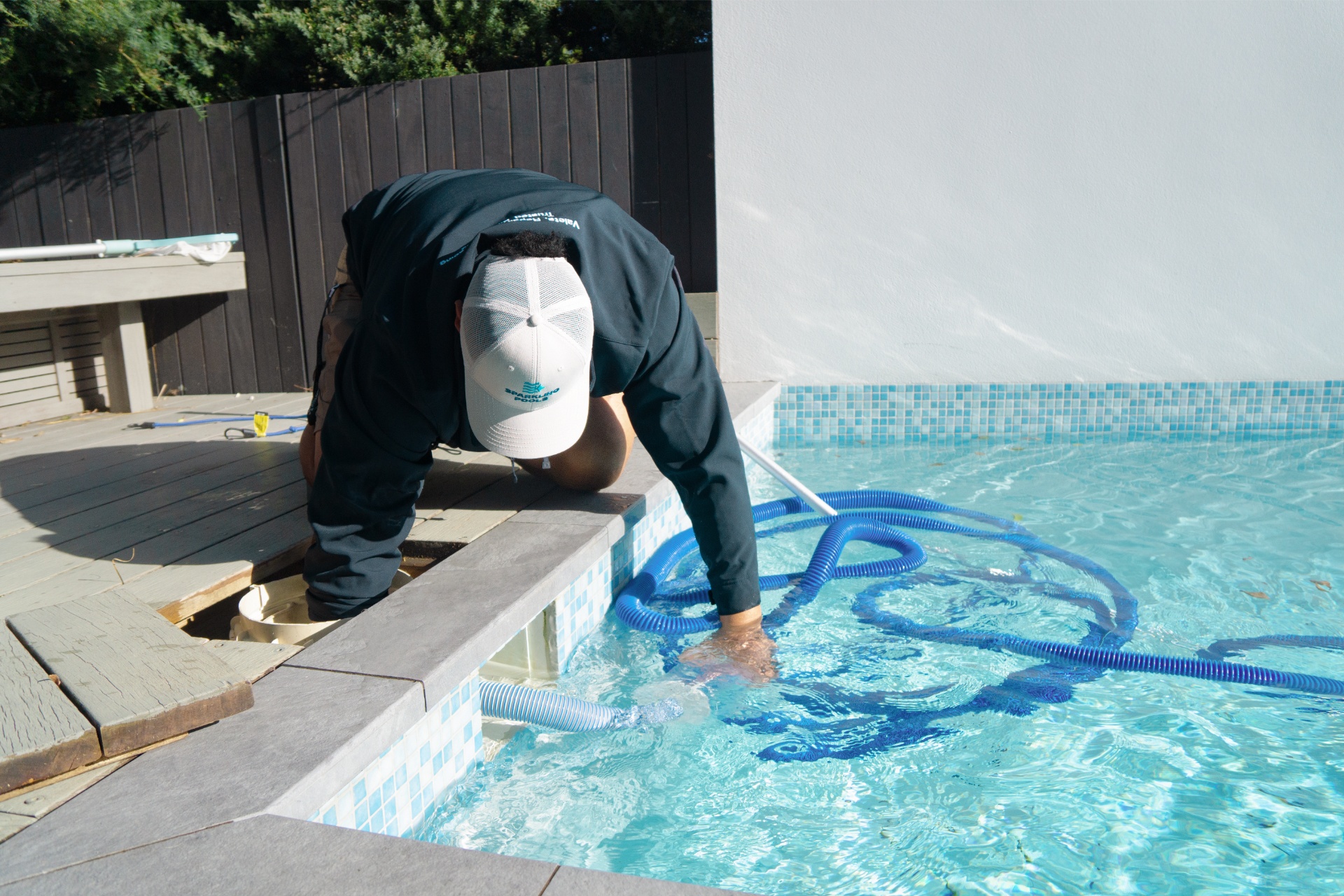
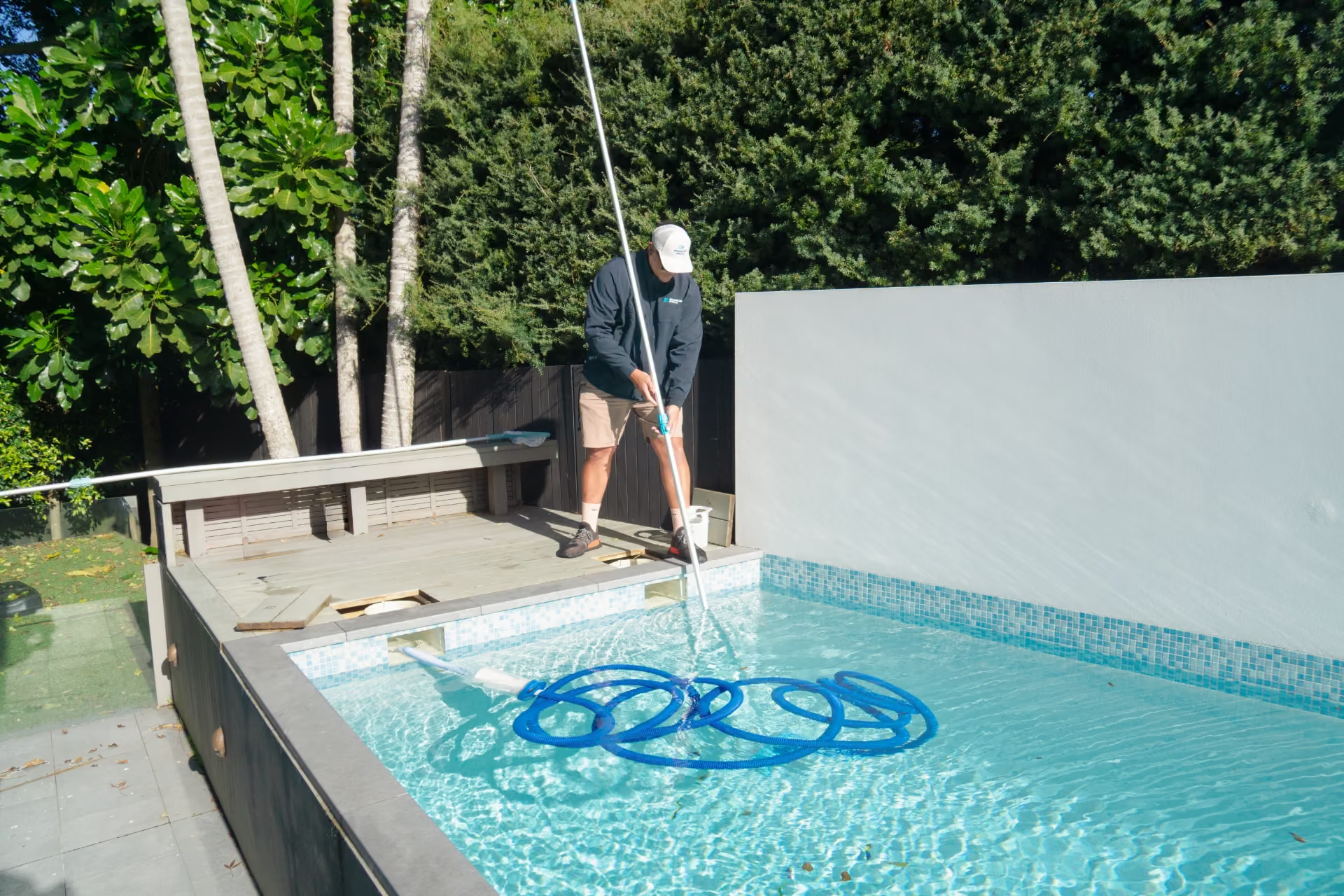
Manual vacuuming once a week is standard for most pools. If you have a robotic or suction cleaner, this time drops significantly, you're mainly just setting it up and retrieving it. Without an automatic cleaner, expect to spend the most time here.
Checking and emptying skimmer baskets, 5 to 10 minutes
Full baskets reduce water flow and put strain on your pump. Check them at least twice a week.
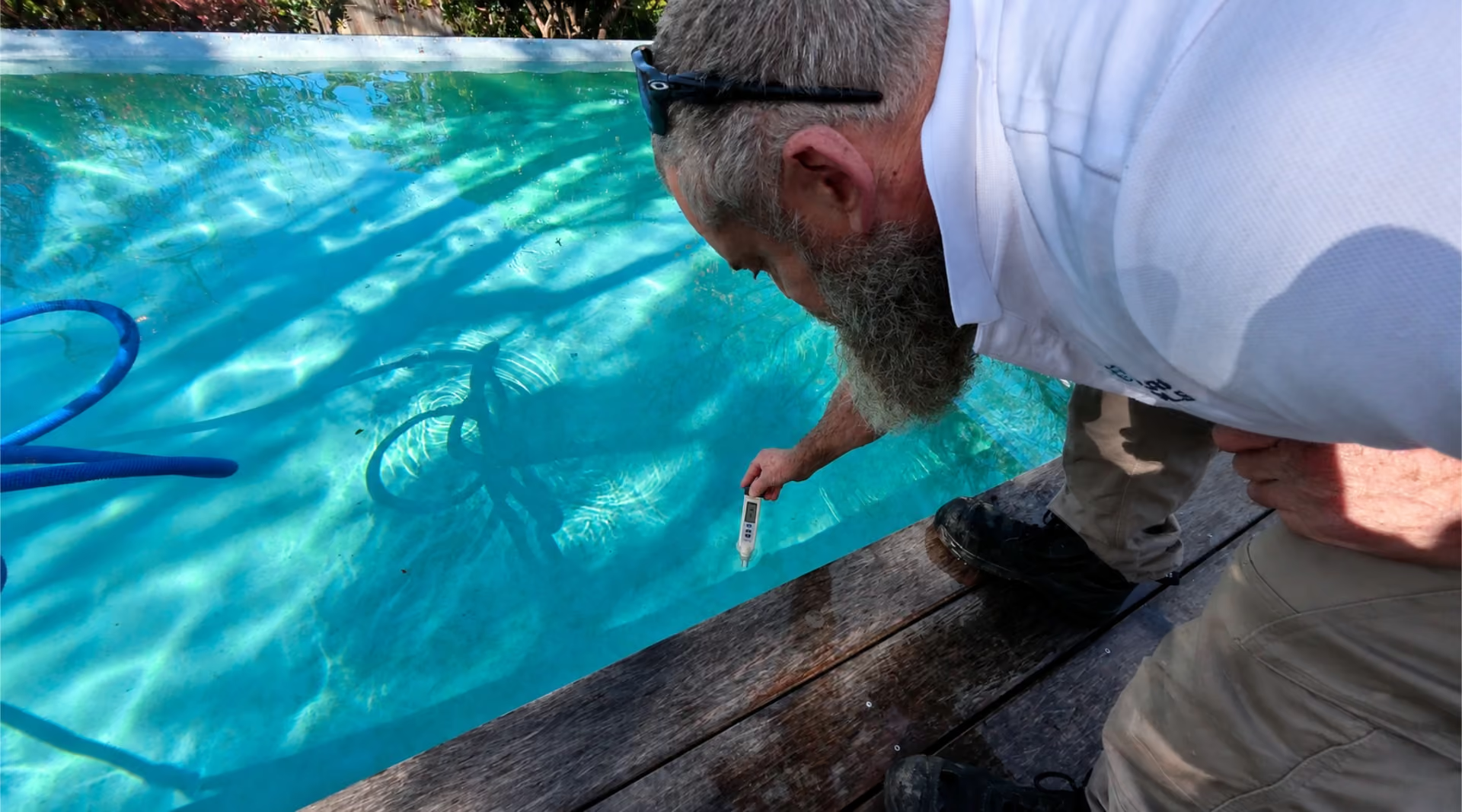
Testing water chemistry, 10 to 15 minutes
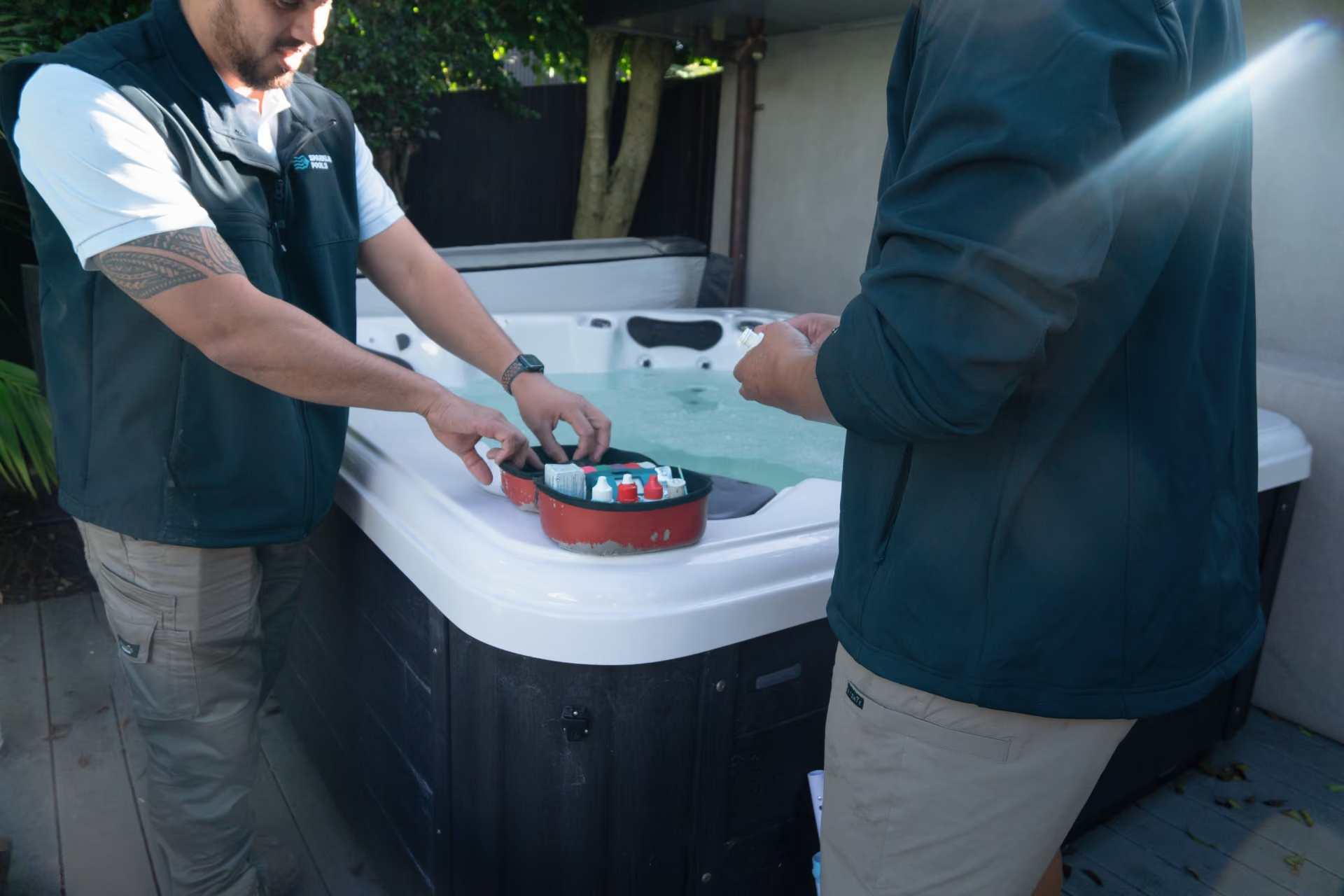
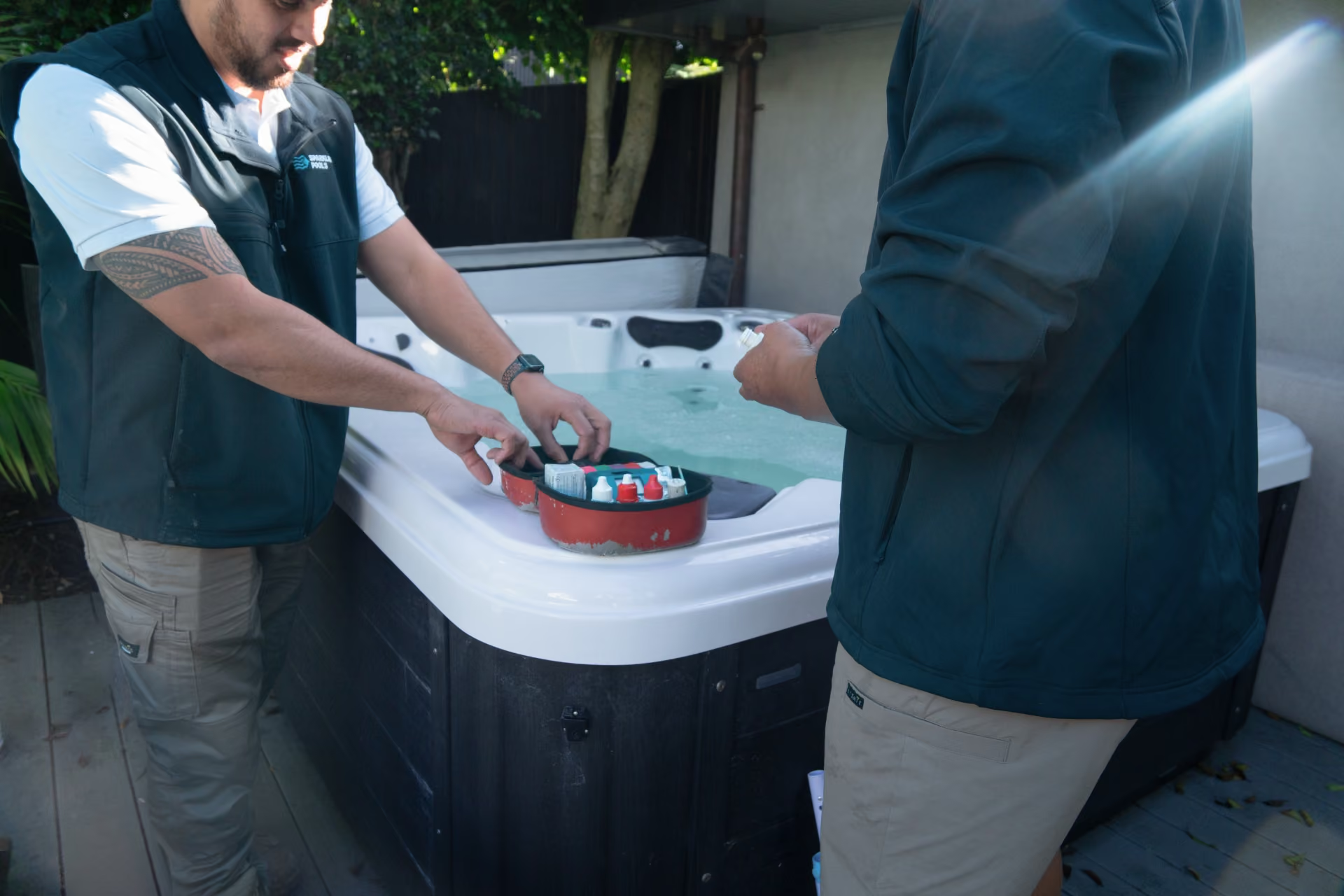
Test chlorine, pH, and alkalinity at least once a week. If you're using a basic test kit, this takes around 10 minutes. If you're taking a water sample to a shop or waiting for a professional to visit, factor in that time separately.
Adjusting chemicals, 10 to 30 minutes
If your water is in balance, this step is quick, maybe just adding a chlorine dose. If something is off, you may need to add pH adjuster, alkalinity increaser, or stabiliser, then wait and retest. Budget more time when the pool has been heavily used or after rain.
Checking equipment, 5 minutes
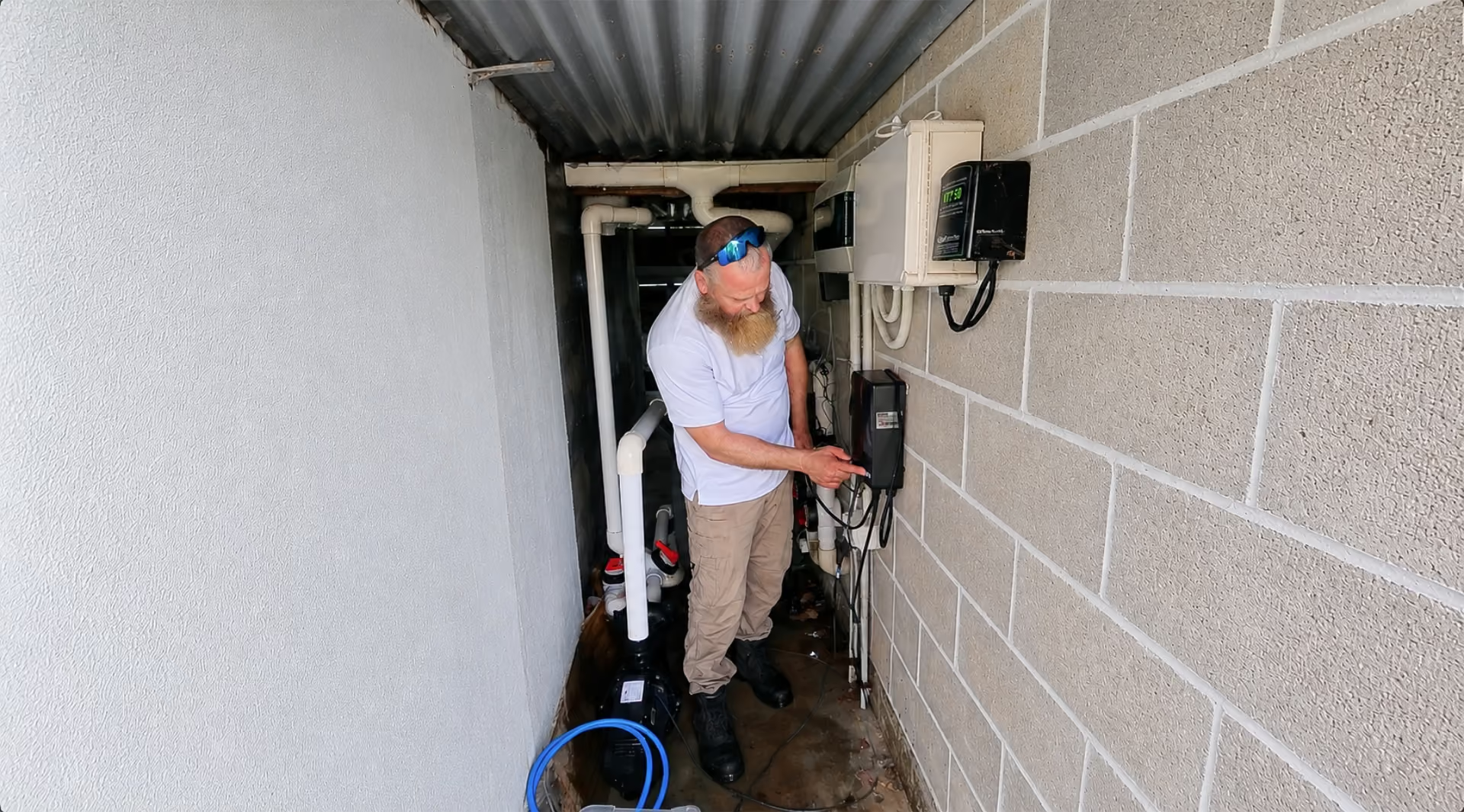
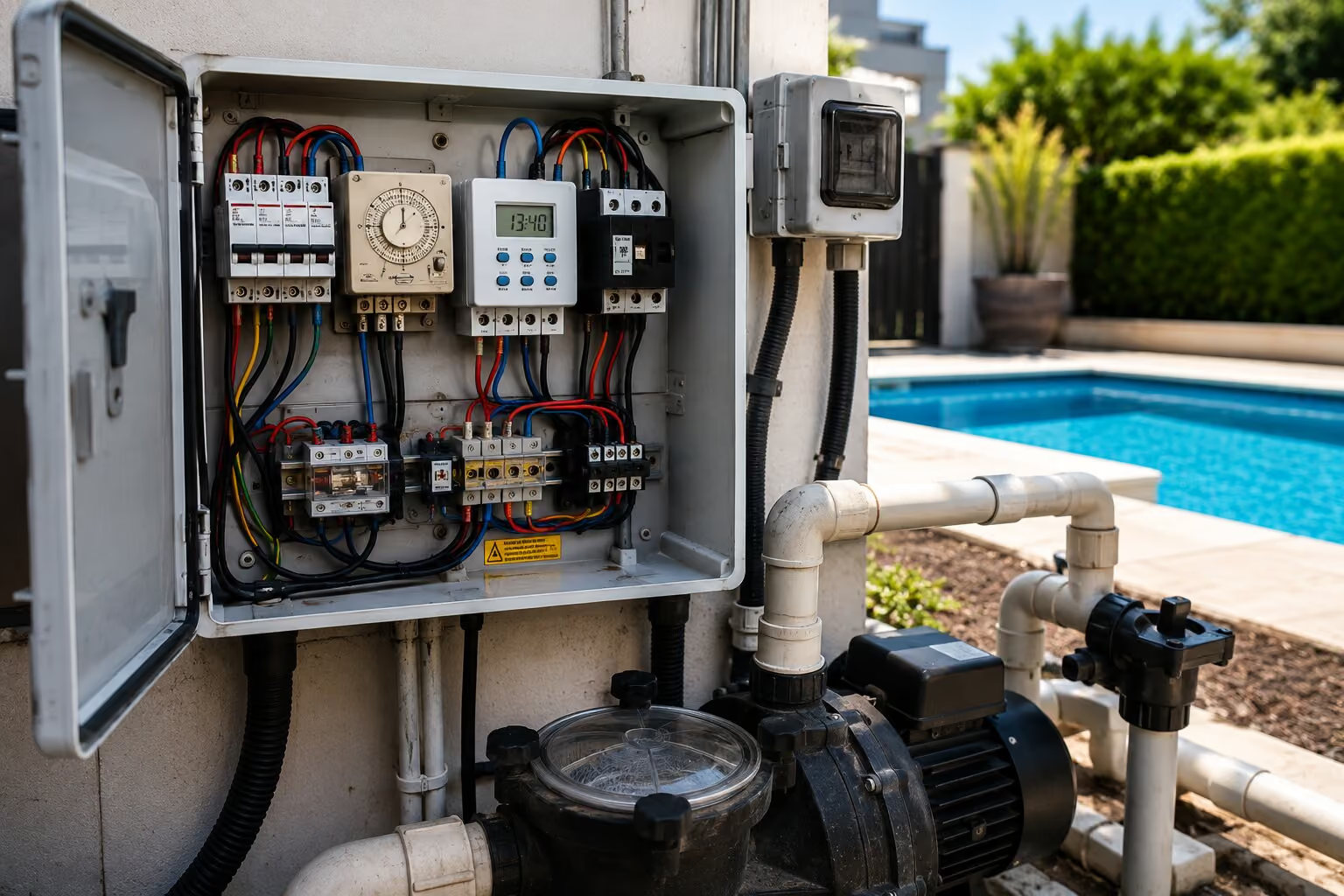
A quick look at pump pressure, filter readings, and chlorinator output once a week catches problems early. This doesn't take long but it's easy to skip, and skipping it is how small faults become expensive repairs.
Weekly total: roughly 1 to 2 hours
For a well-maintained pool with an automatic cleaner, you can get this down to around an hour. Without an automatic cleaner, or with a pool that collects a lot of debris, expect closer to 2 hours.
---
Monthly and Seasonal Tasks
Beyond the weekly routine, there are tasks that come up less frequently but take more time when they do.
Backwashing the filter, 10 to 15 minutes
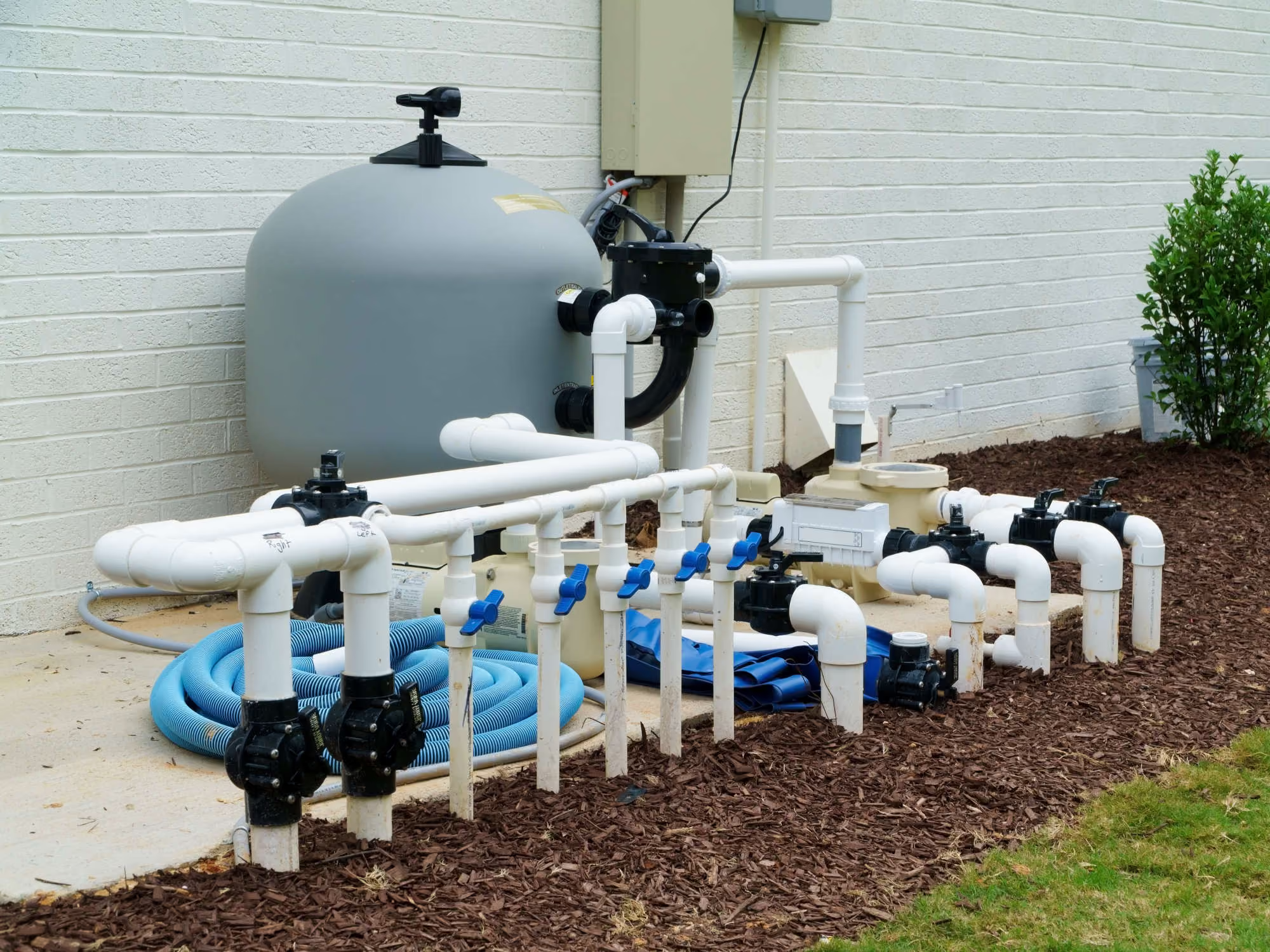
Sand and DE filters need backwashing when pressure rises above normal. For most pools, this is every 2 to 4 weeks depending on use and debris load. Cartridge filters need to be removed and hosed down, allow 20 to 30 minutes.
Cleaning the chlorinator cell, 20 to 30 minutes
Salt chlorinator cells build up calcium scale over time. Most manufacturers recommend inspecting the cell monthly and cleaning it when needed. The process involves soaking the cell in a diluted acid solution, straightforward but not something to rush.
Checking and topping up water level, 5 minutes
Evaporation, splashing, and backwashing all lower water levels. Check monthly and top up as needed. Auckland's summer heat can drop levels faster than you'd expect.
Comprehensive water test, 30 to 60 minutes (including travel or wait time)
Once a month, it's worth doing a full water test that covers calcium hardness, cyanuric acid (stabiliser), and total dissolved solids, not just the basic three. Sparkling Pools offers on-site water testing across Auckland, which removes the need to travel to a shop.
Seasonal total: 1 to 3 additional hours per month
Spread across four weeks, this adds roughly 15 to 45 minutes per week on top of the regular routine.
---
Seasonal Peaks: When Time Requirements Go Up
Opening for summer
If your pool has been on reduced maintenance over winter, getting it ready for summer takes a concentrated block of time, typically 2 to 4 hours. This includes a full clean, filter service, water balance correction, and equipment check. Some pools need a shock treatment and a day or two to stabilise before they're safe to swim in.
After heavy rain or storms
Auckland's weather can be unpredictable. After significant rainfall, runoff carries dirt, debris, and organic matter into the pool. pH and alkalinity often drop. Expect to spend an extra hour or two on cleaning and chemical correction after a major storm.
High summer use
A pool used daily by multiple people needs more frequent chemical checks, ideally every 2 to 3 days rather than weekly. Sunscreen, body oils, and bather load all consume chlorine faster. During peak summer, your weekly time commitment can increase by 30 to 60 minutes.
---
What People Commonly Underestimate
Travel and supply runs
Driving to pick up chemicals, test strips, or replacement parts adds time that doesn't get counted in most estimates. Having a reliable local supplier with delivery, including for dangerous goods items like pool chemicals, removes this from your schedule.
Troubleshooting time
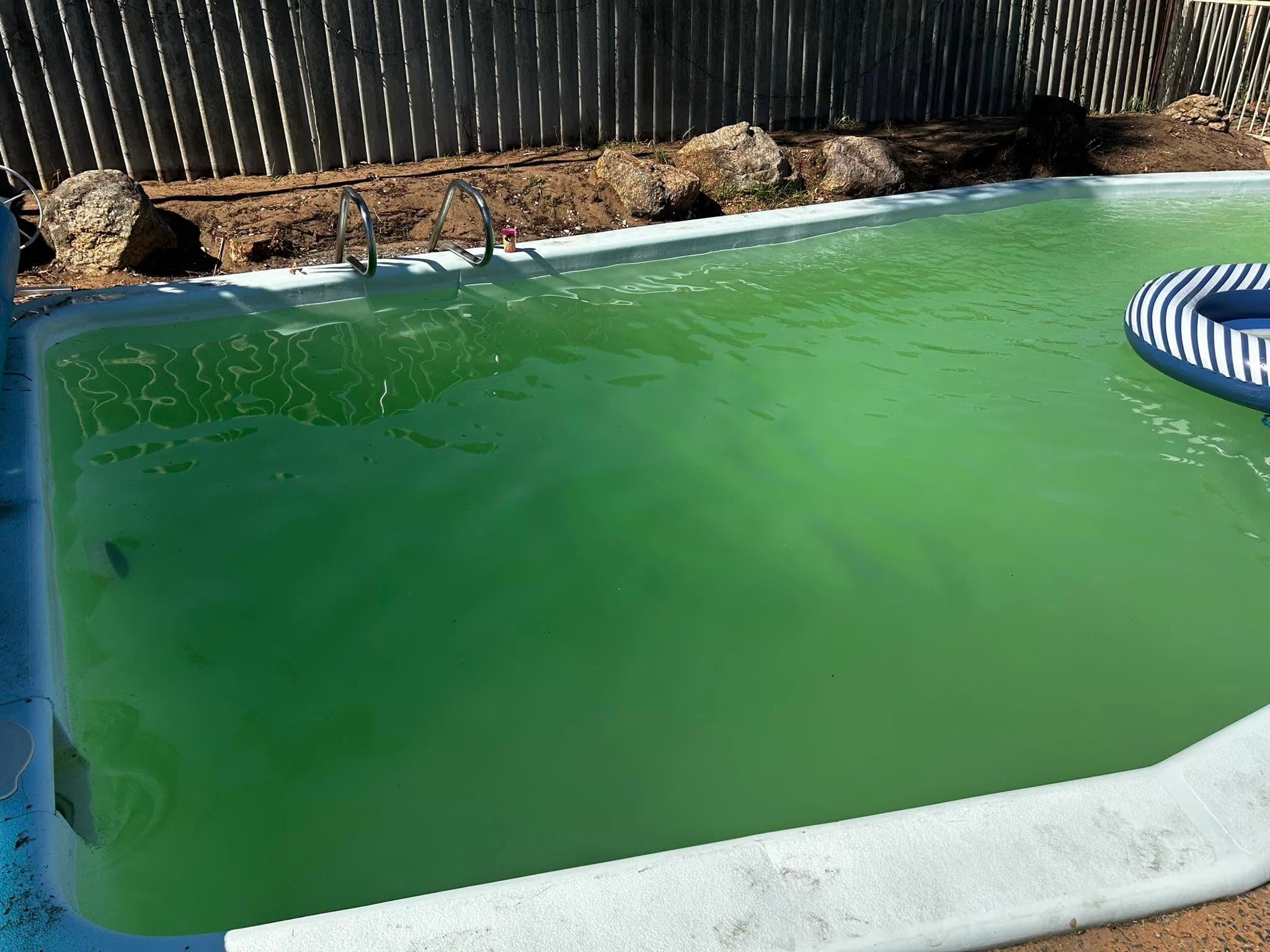
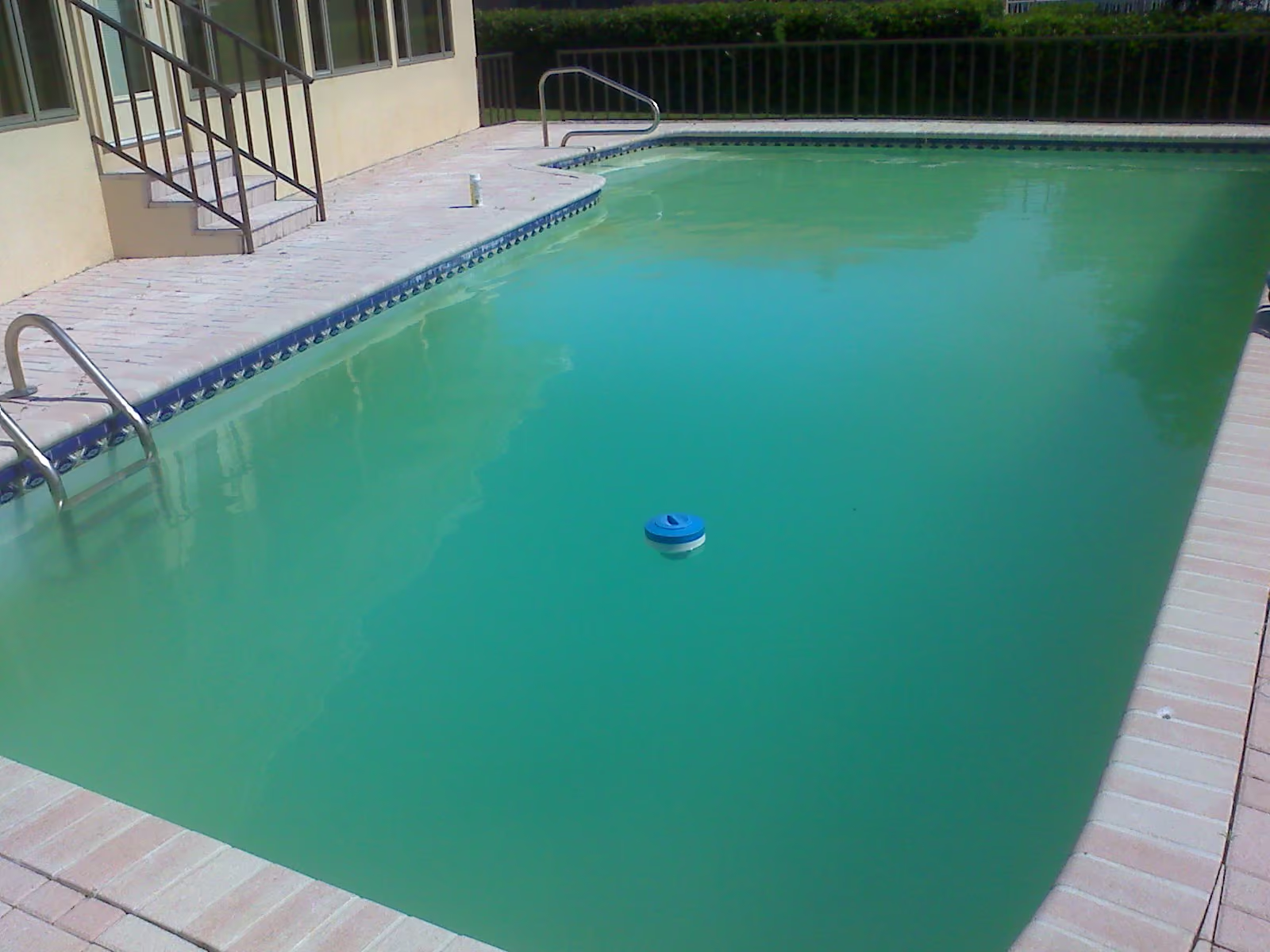
When something goes wrong, green water, a pump that won't prime, a chlorinator showing a fault code, the time to diagnose and fix it isn't part of the regular routine. A single green pool recovery can take 4 to 8 hours of active work spread over several days.
Waiting for chemicals to work
Adding chemicals and retesting isn't instant. You often need to wait several hours between dosing and retesting, which means multiple short sessions rather than one continuous block. This doesn't add total hours, but it does add interruptions to your week.
---
DIY vs. Professional Maintenance: A Time Trade-off
Handling all pool maintenance yourself is entirely achievable for most homeowners. The weekly routine is straightforward once you know what you're doing. The trade-off is time, roughly 1 to 2 hours per week, plus occasional longer sessions.
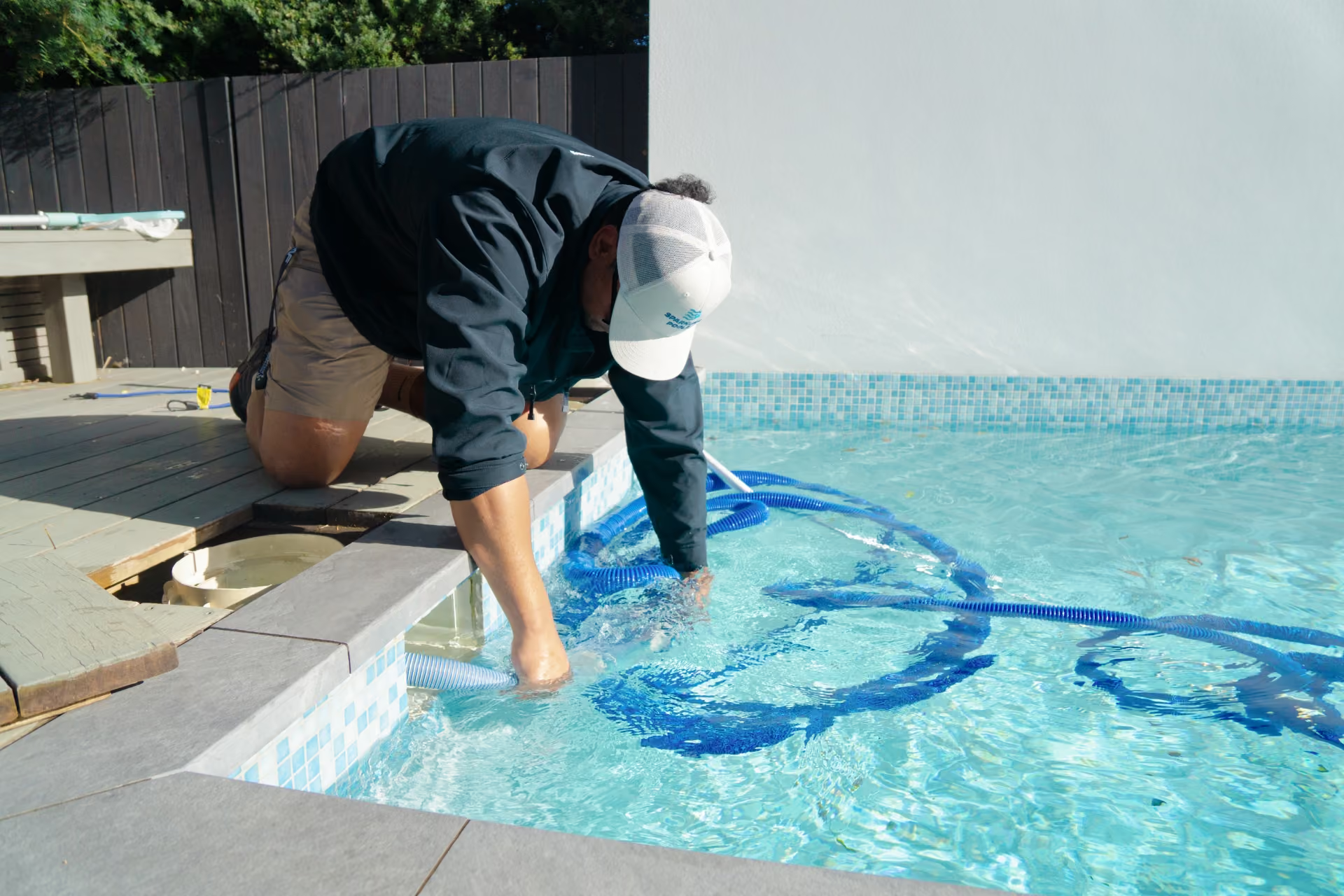
Professional pool servicing removes most of that time from your schedule. A pool technician handles the cleaning, chemical balancing, equipment checks, and any adjustments. You're left with minimal oversight, checking the pool looks right and topping up chemicals between visits if needed.
Many Auckland pool owners use a hybrid approach: handling basic skimming and top-up dosing themselves, with a professional service visit every 2 to 4 weeks for a thorough clean and water test.
---
When to Call a Professional
Some situations are worth handing over regardless of how much time you have:
- Persistent water quality problems that don't resolve after correct chemical treatment
- Equipment faults, pump, filter, heater, or chlorinator issues that go beyond a basic reset
- Green or black algae that returns after treatment
- Pre-season opening if the pool has been neglected over winter
- Busy periods where you simply don't have the time to stay on top of it
Sparkling Pools provides pool servicing and maintenance across Auckland, including on-site water testing at your home. Getting a professional assessment once or twice a season is a practical way to catch problems before they become costly.
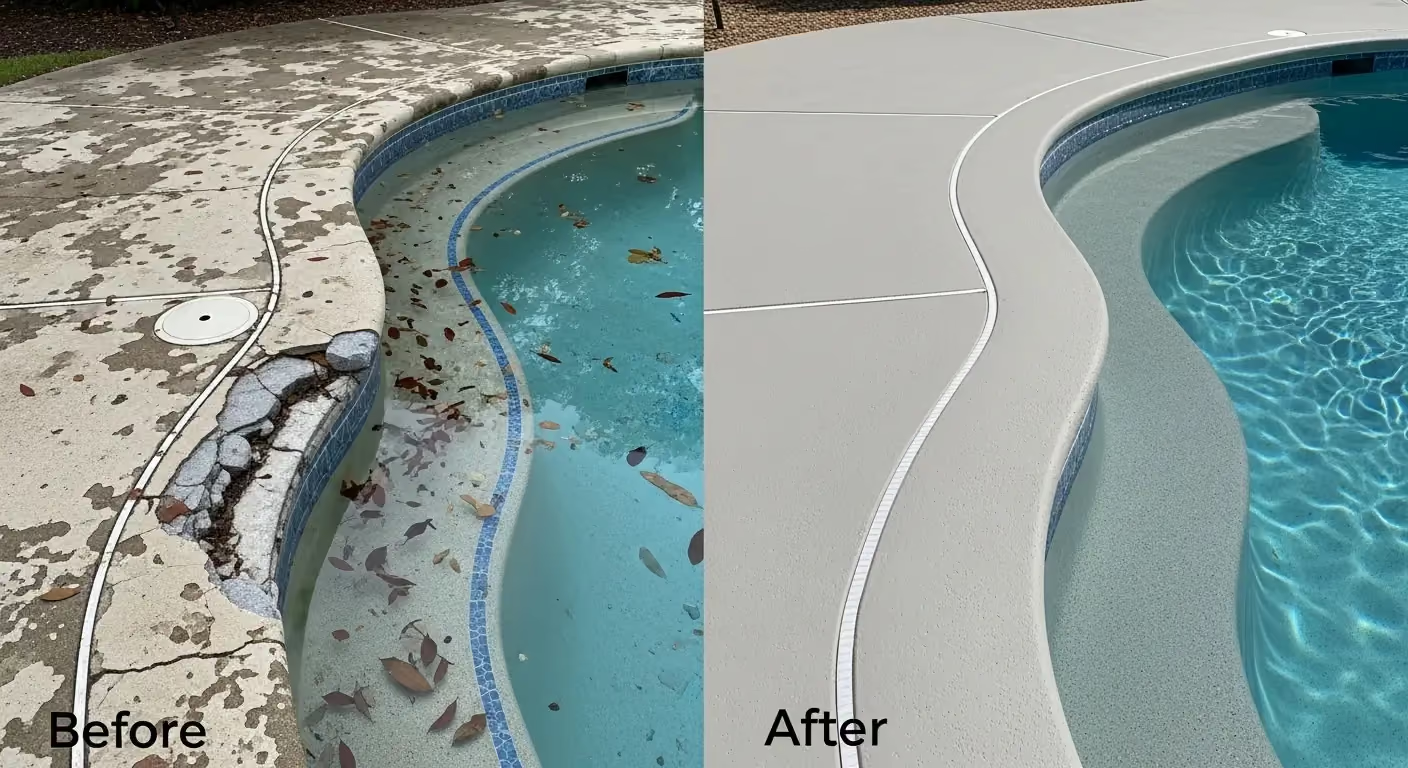
Pool resurfacing solutions
Restore your pool with durable plaster finishes

Work completed
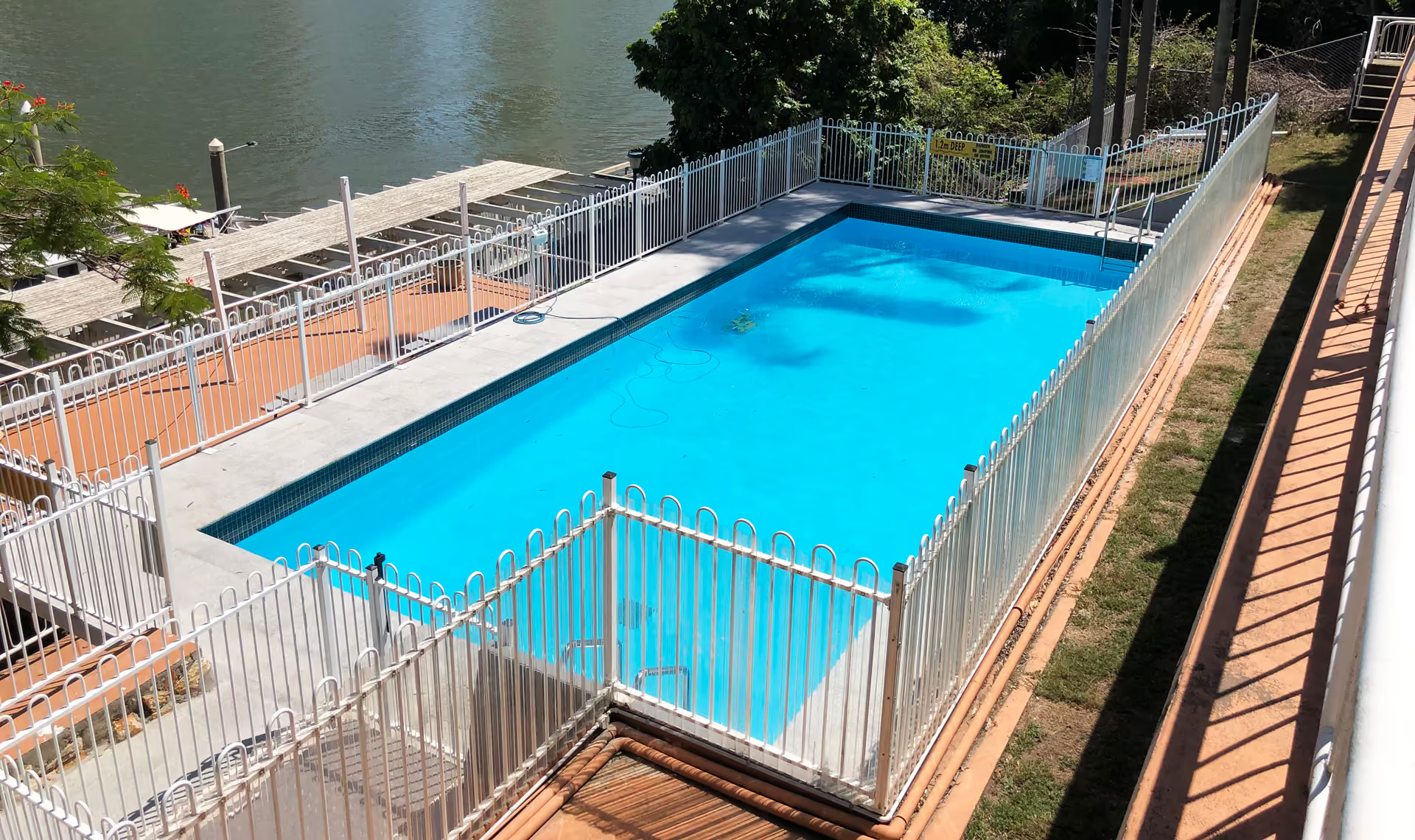
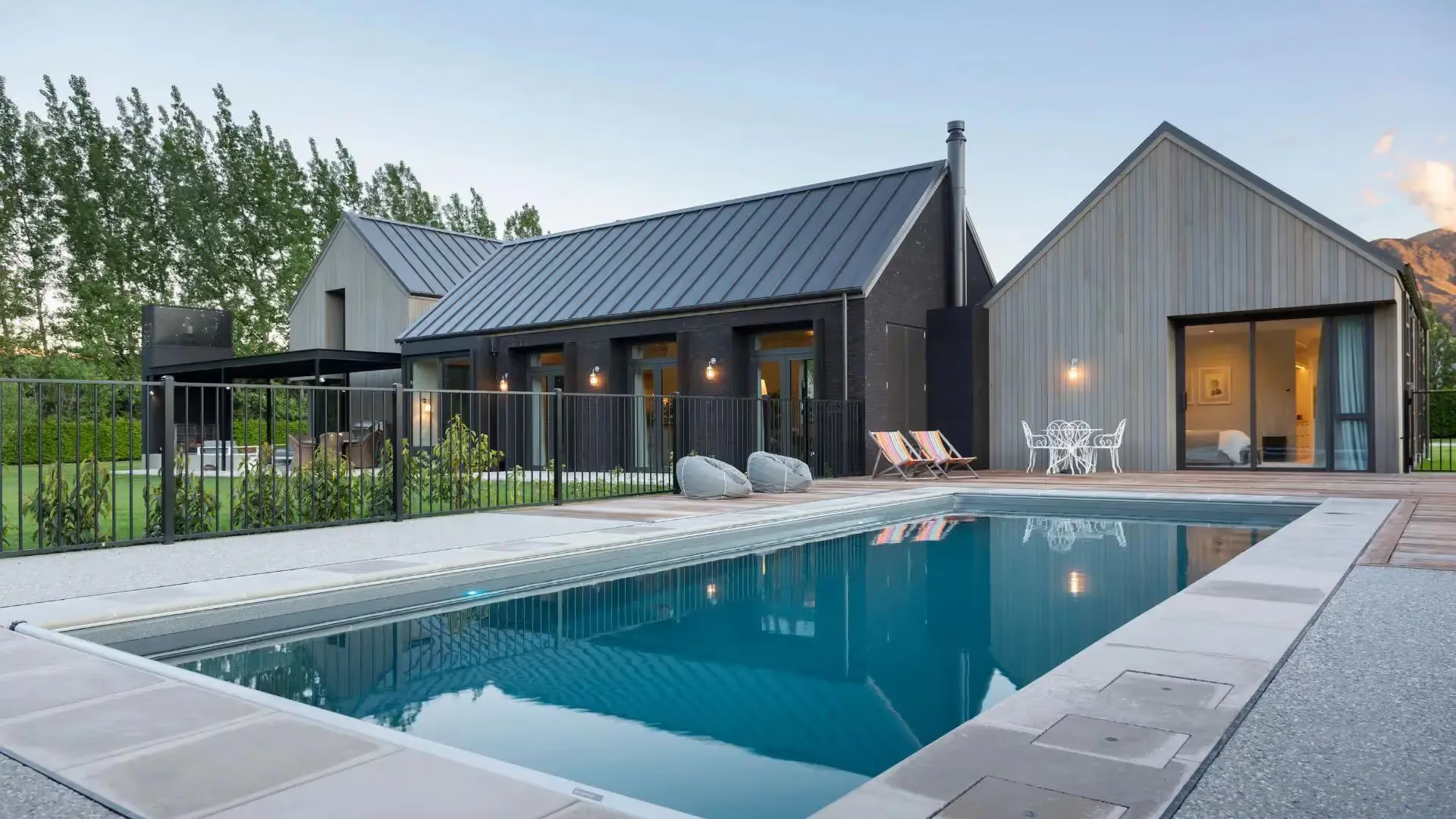
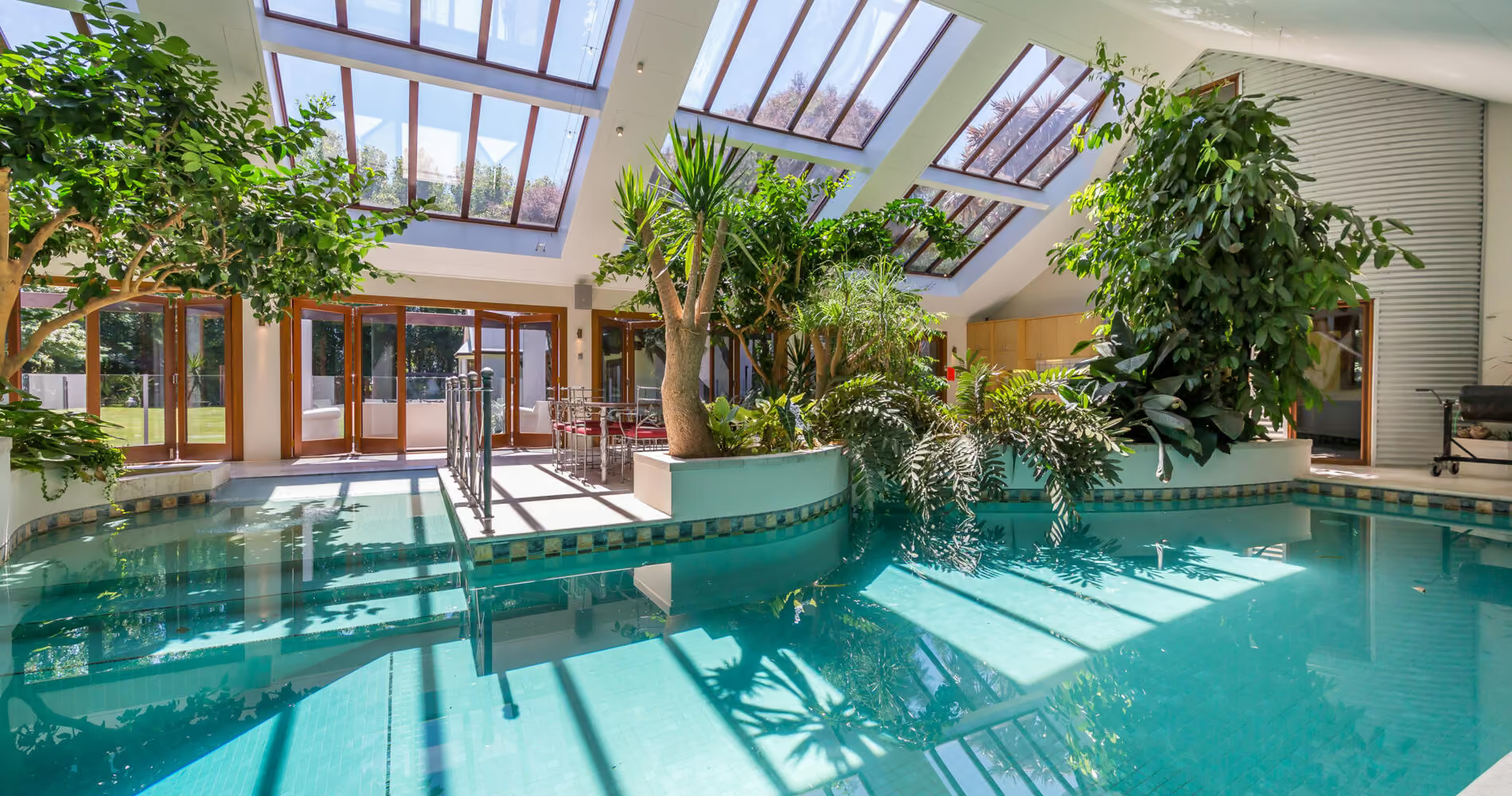
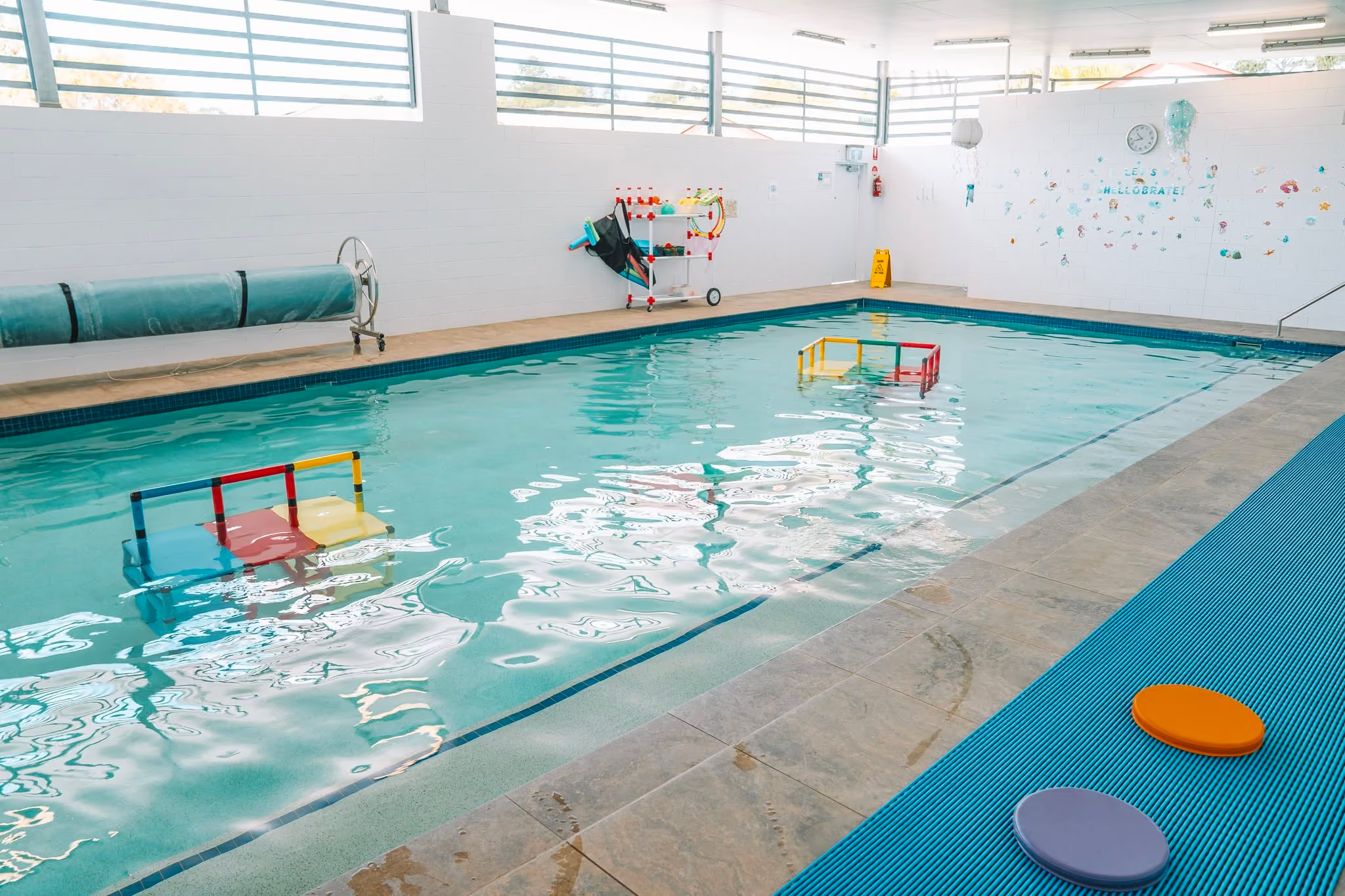
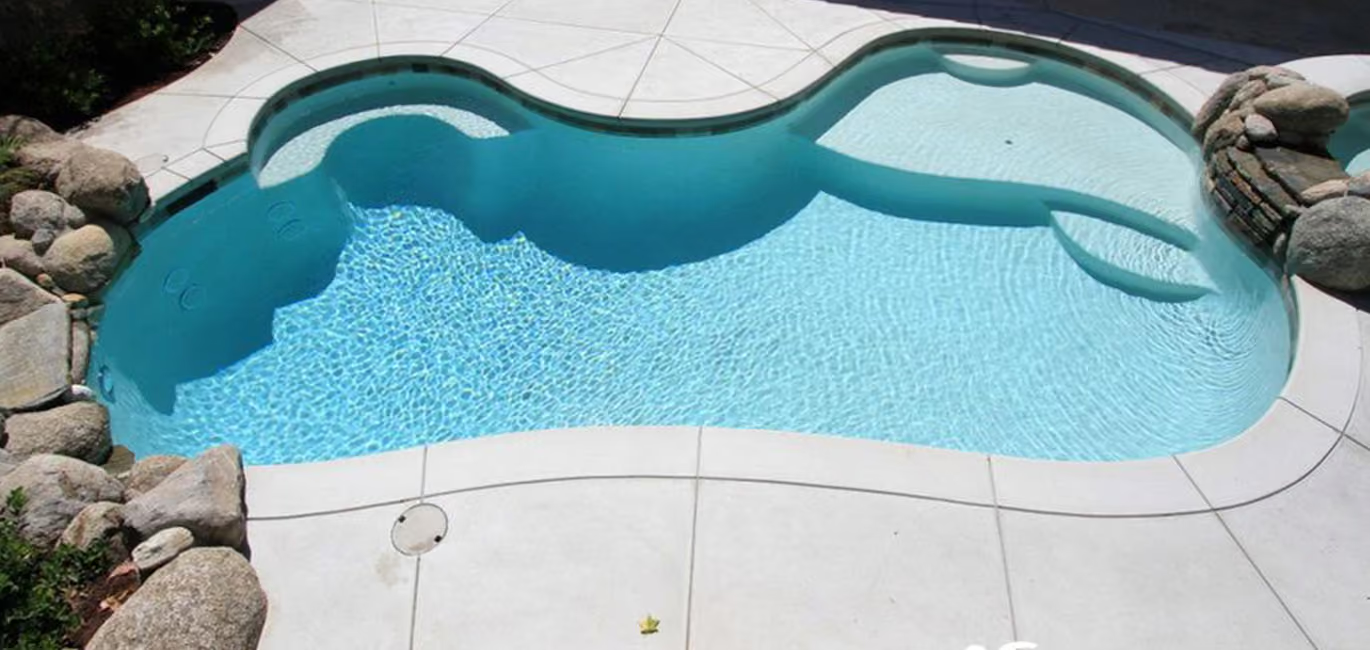
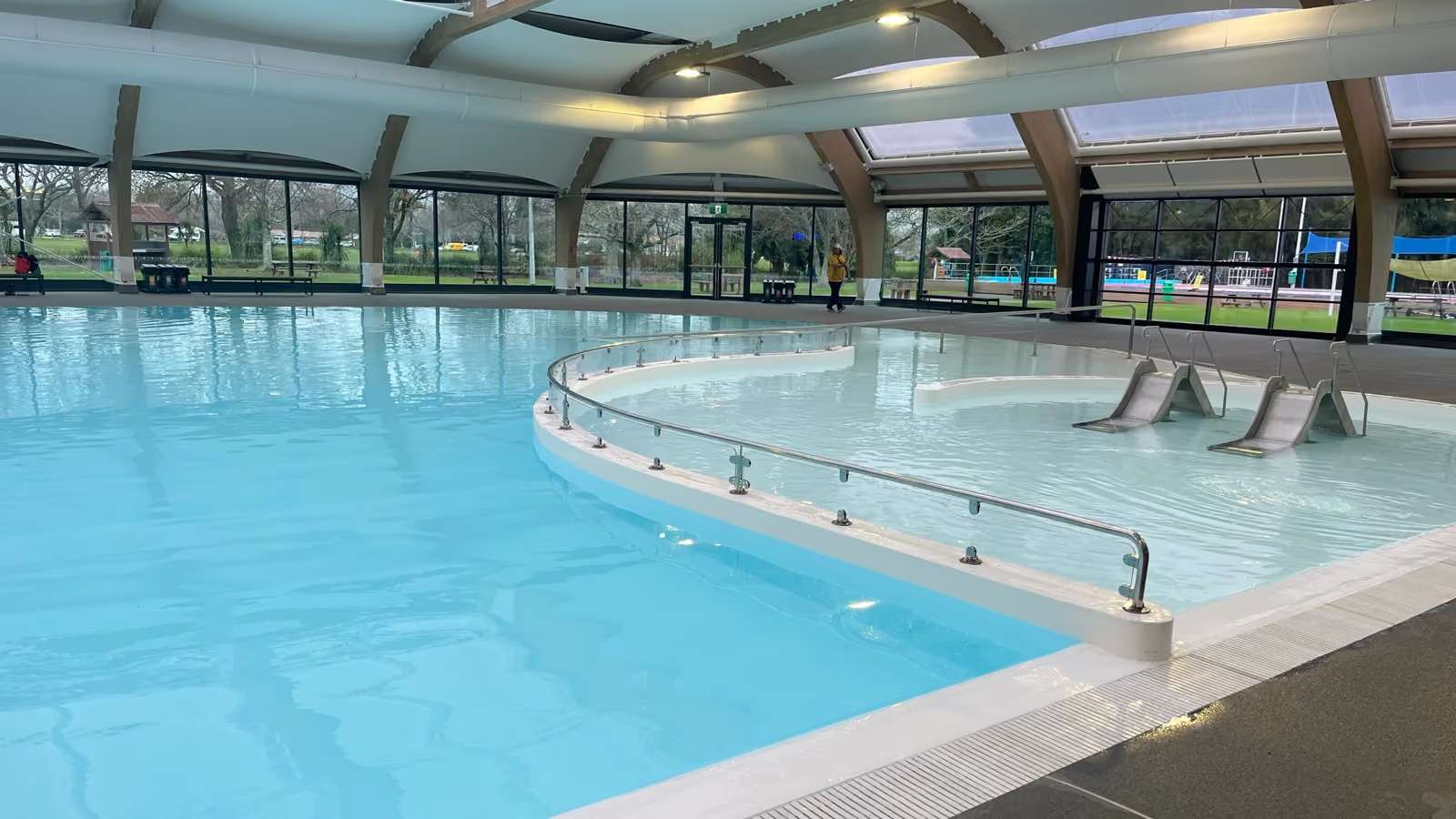
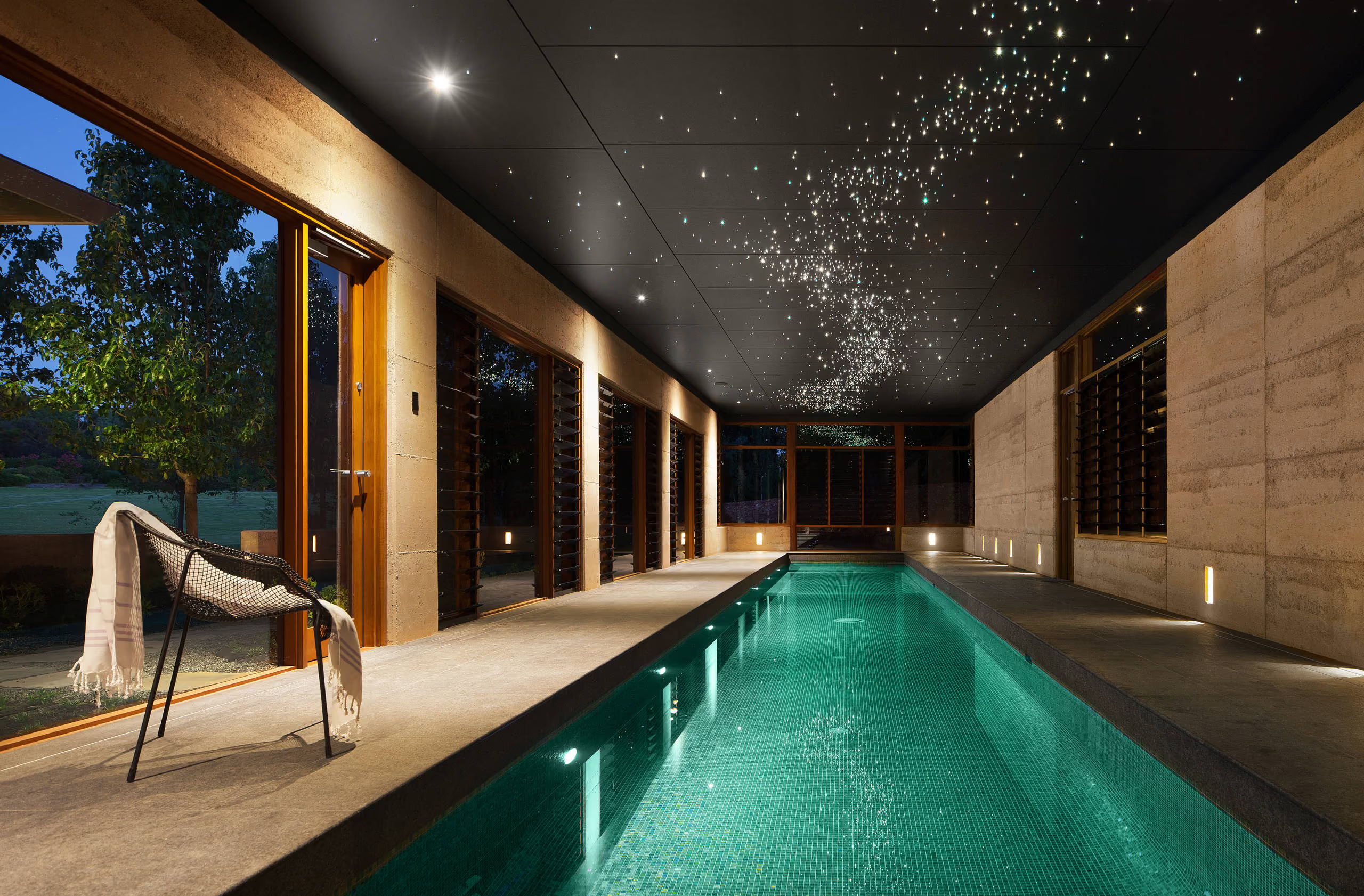
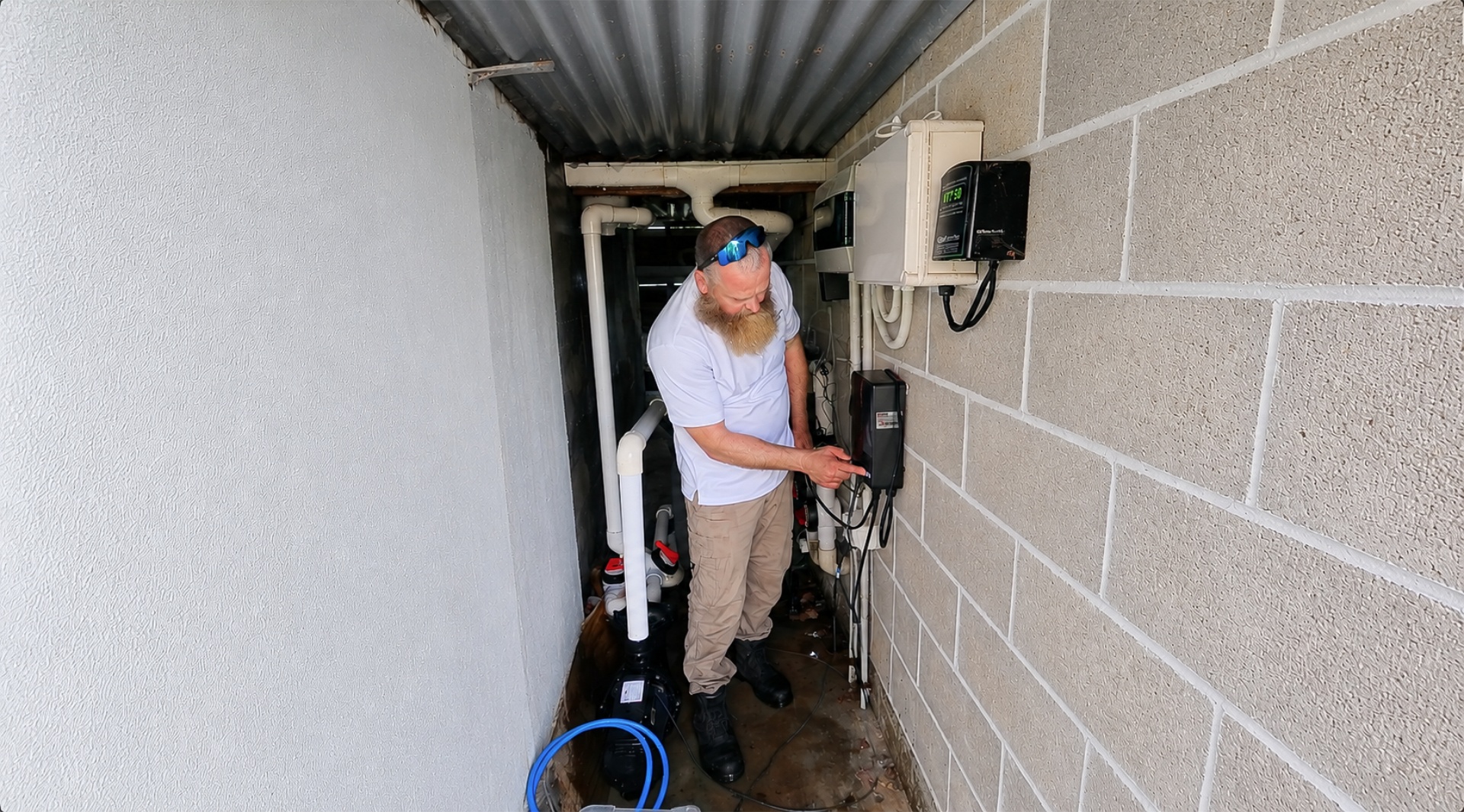
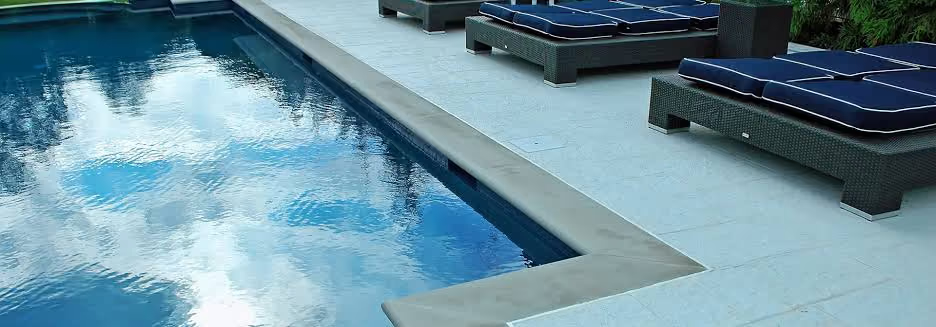
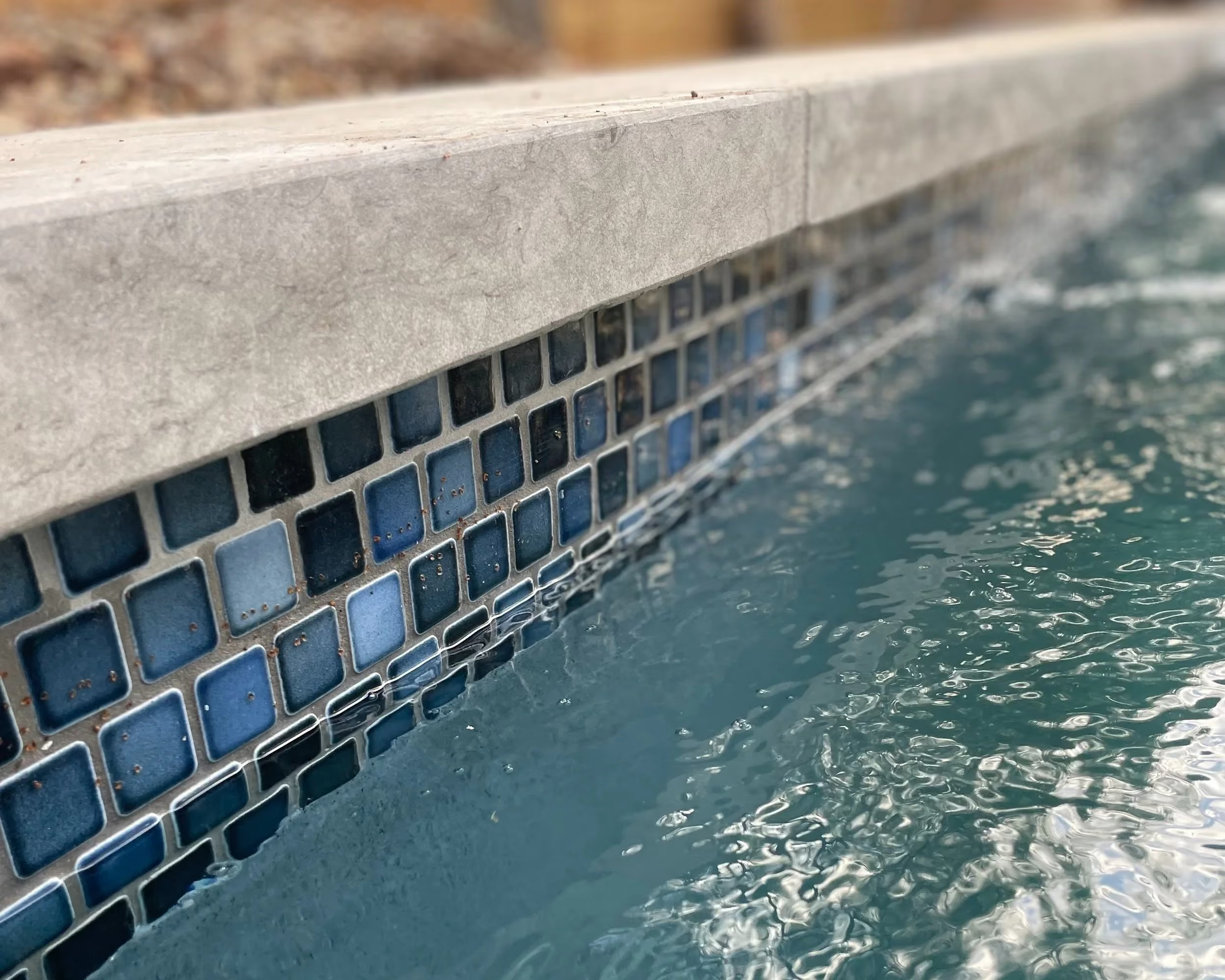
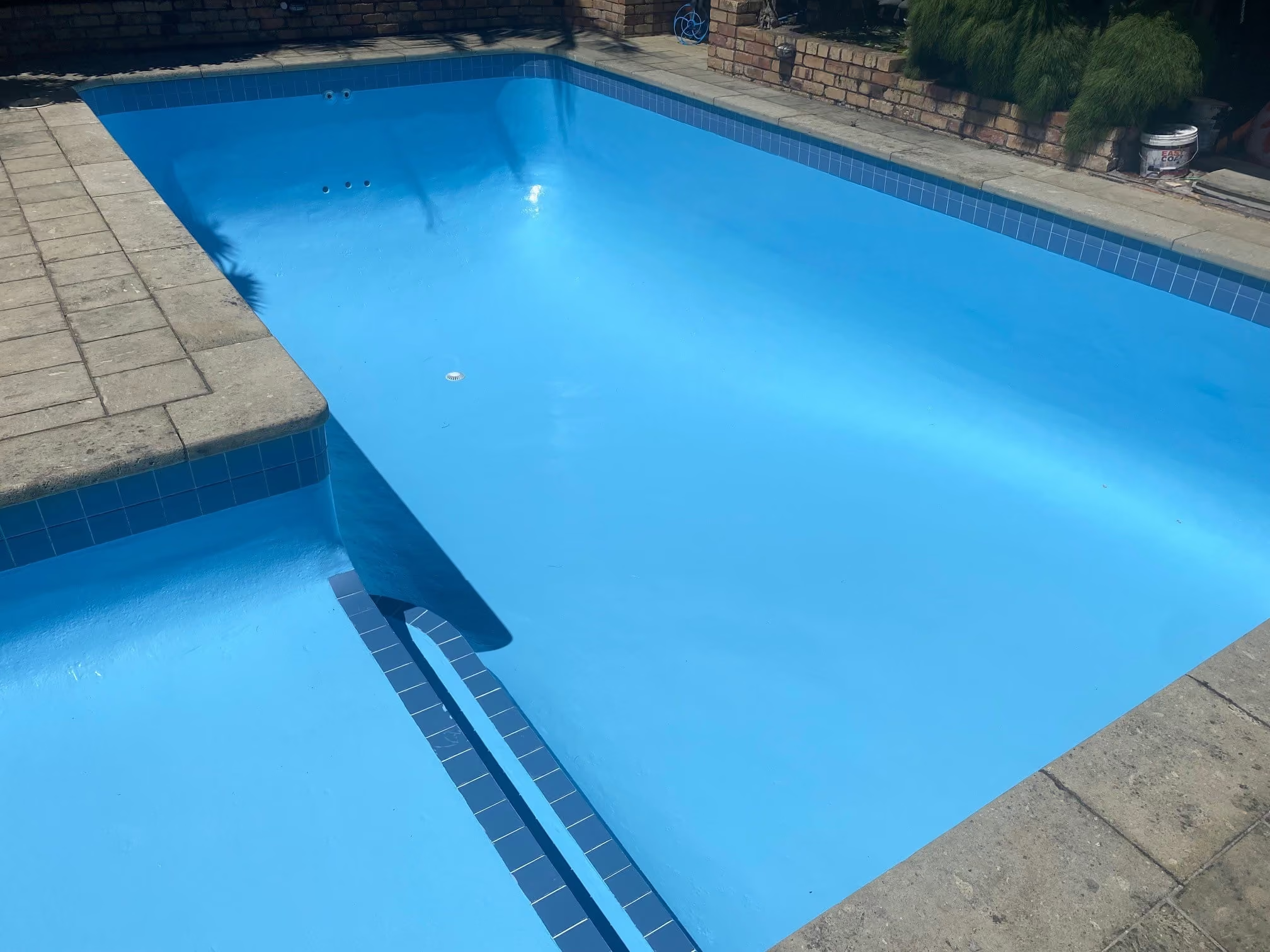
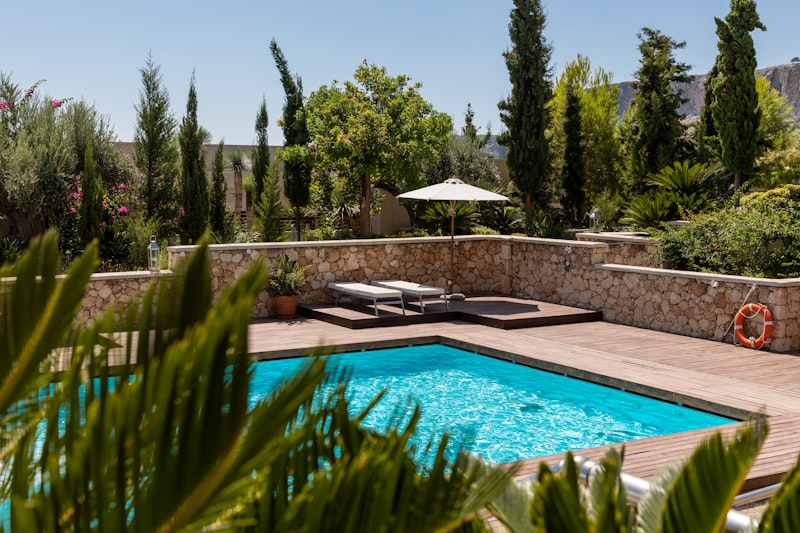
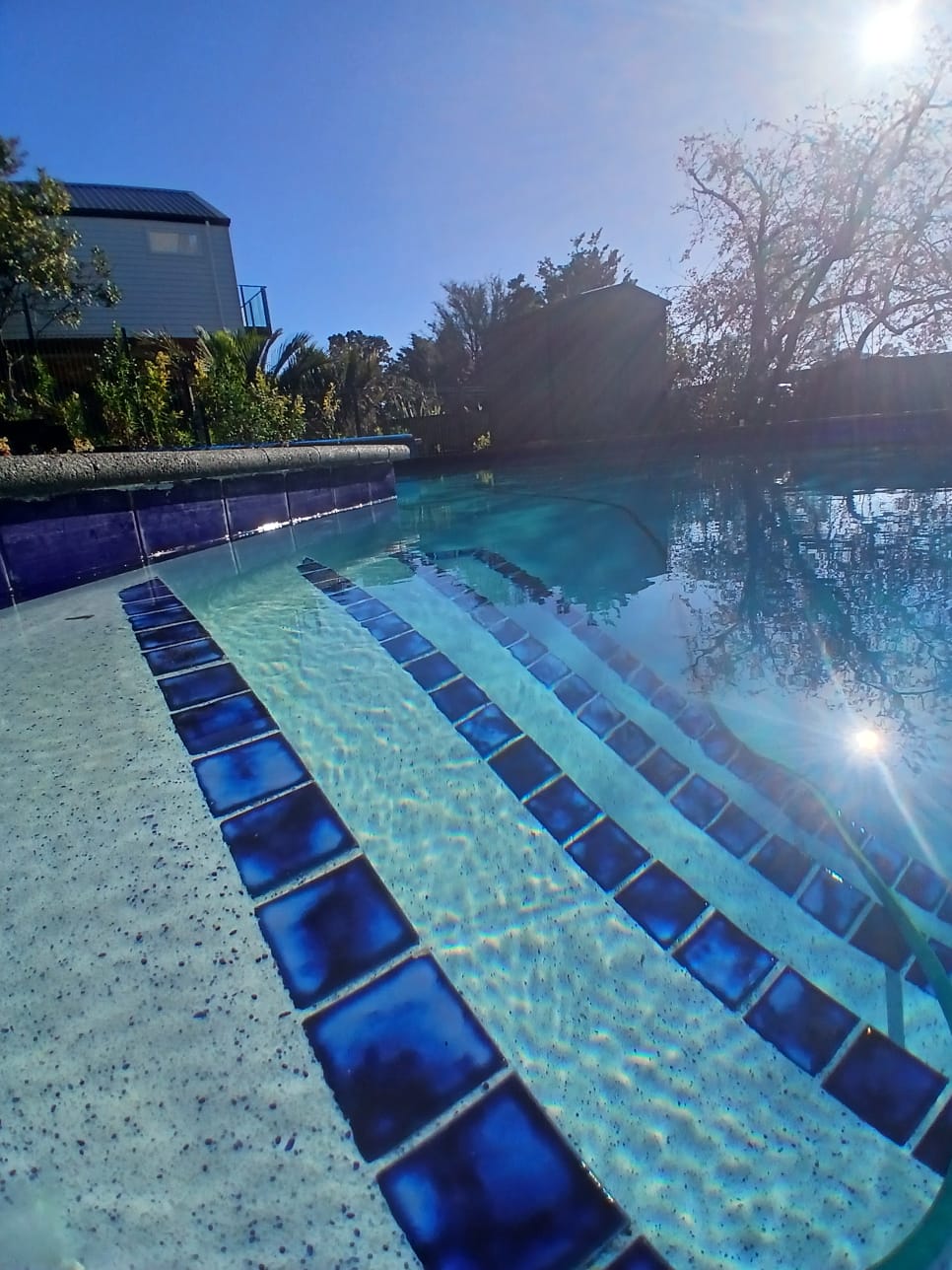
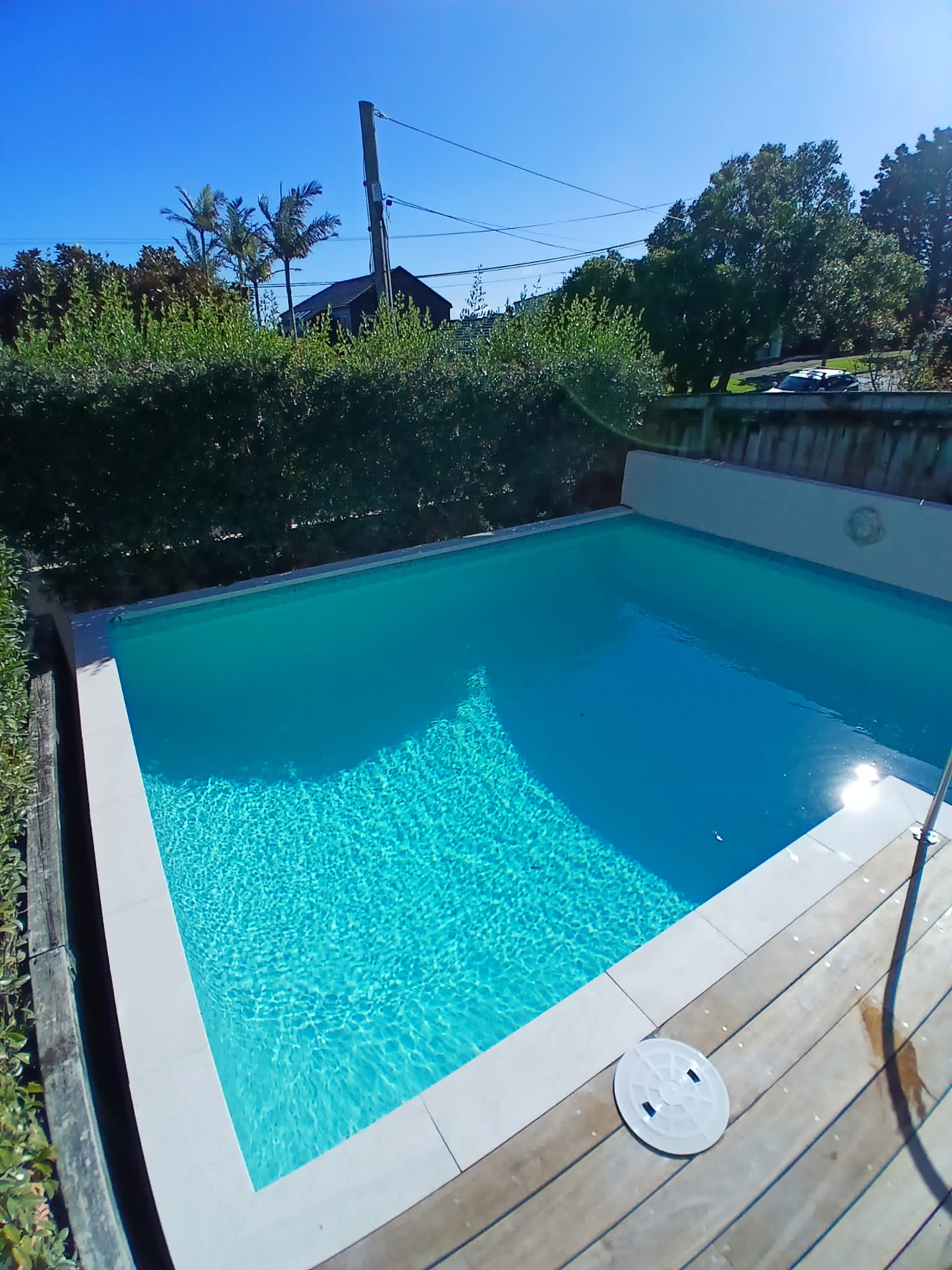
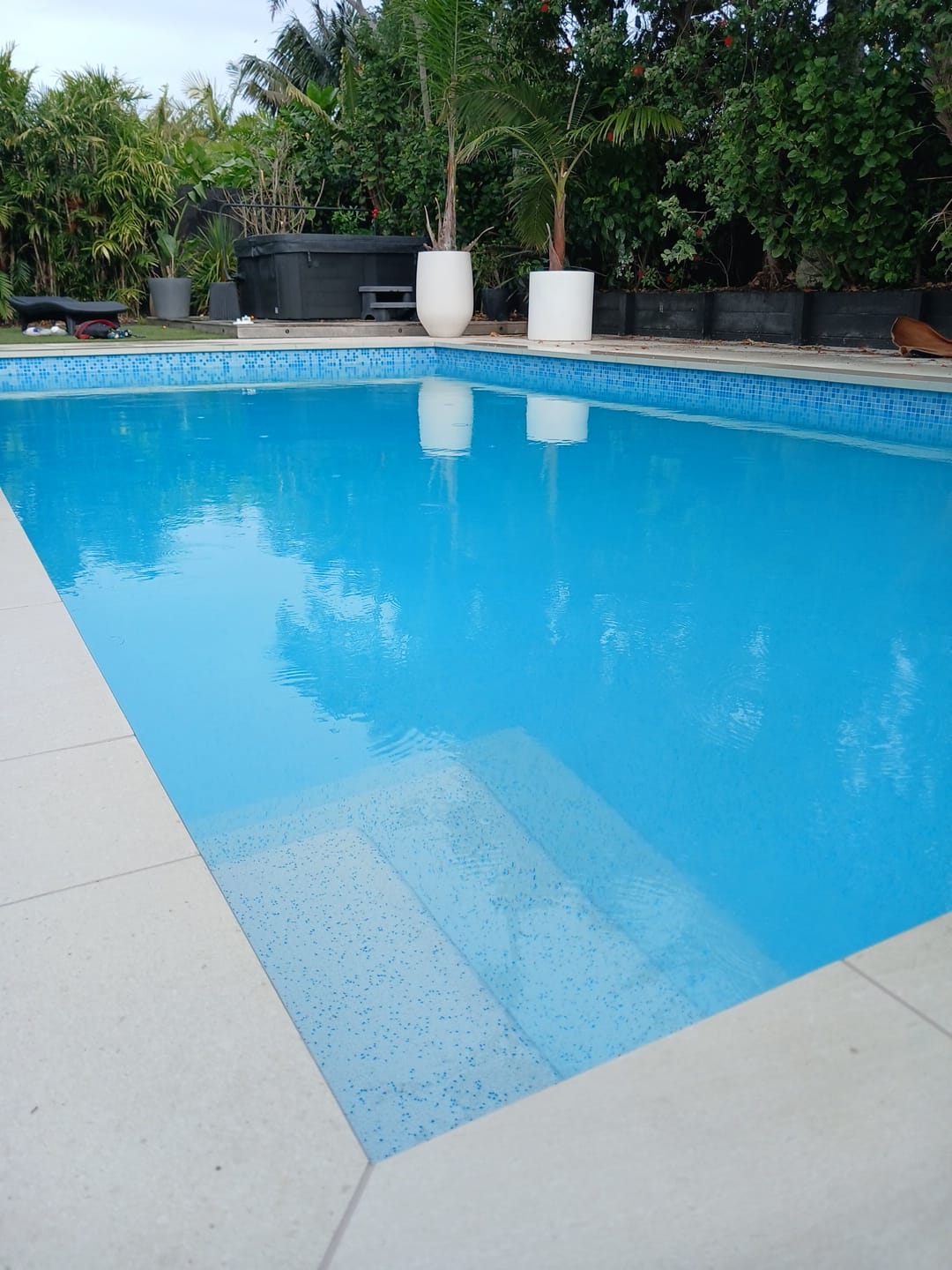
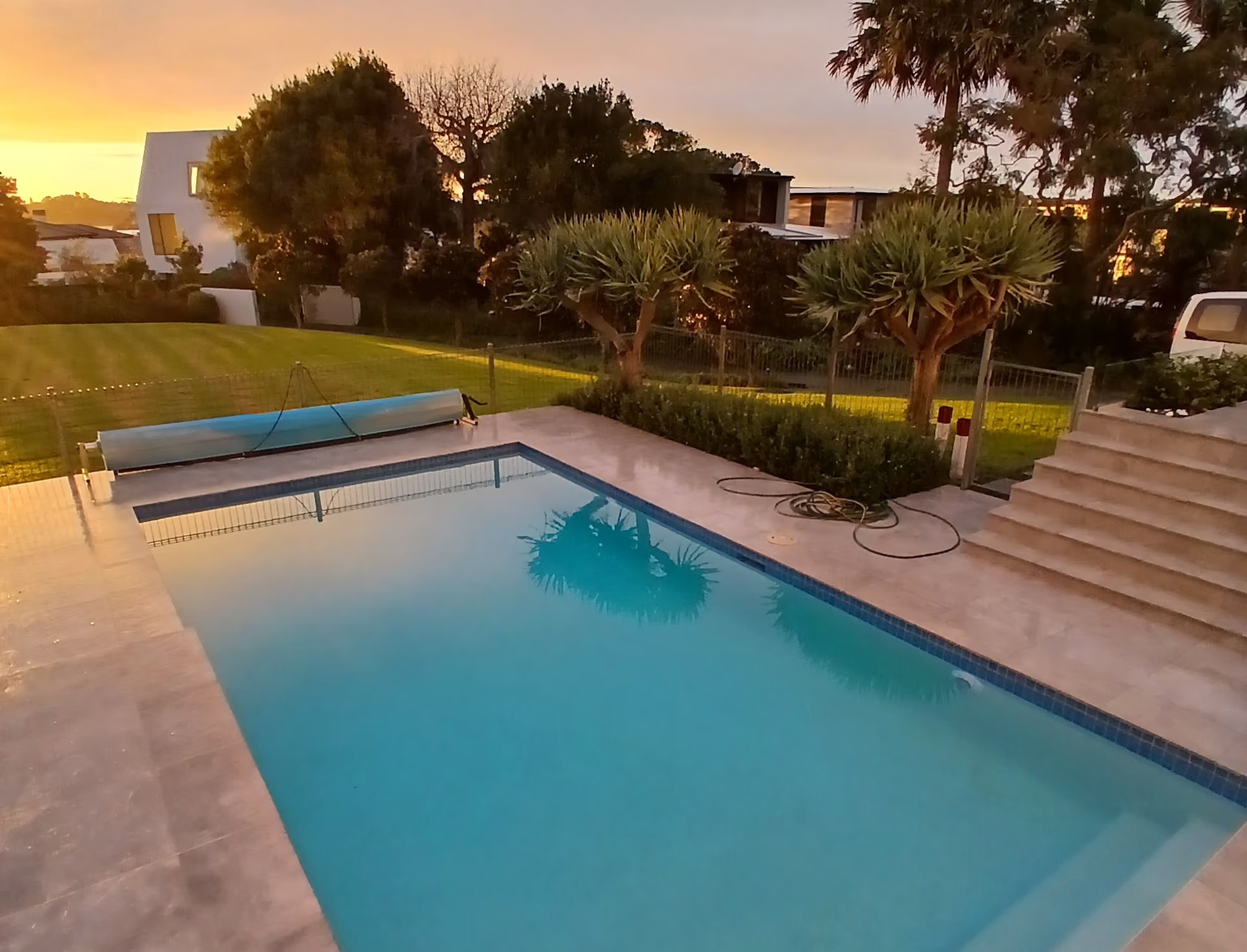
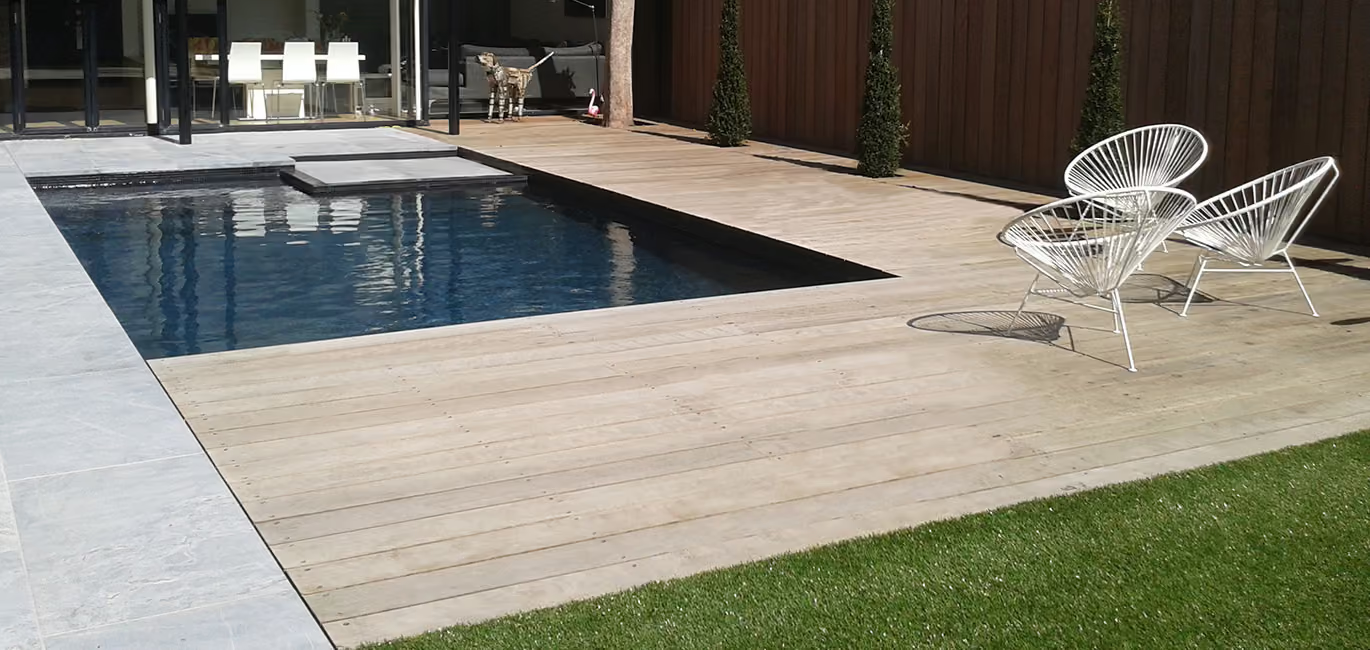
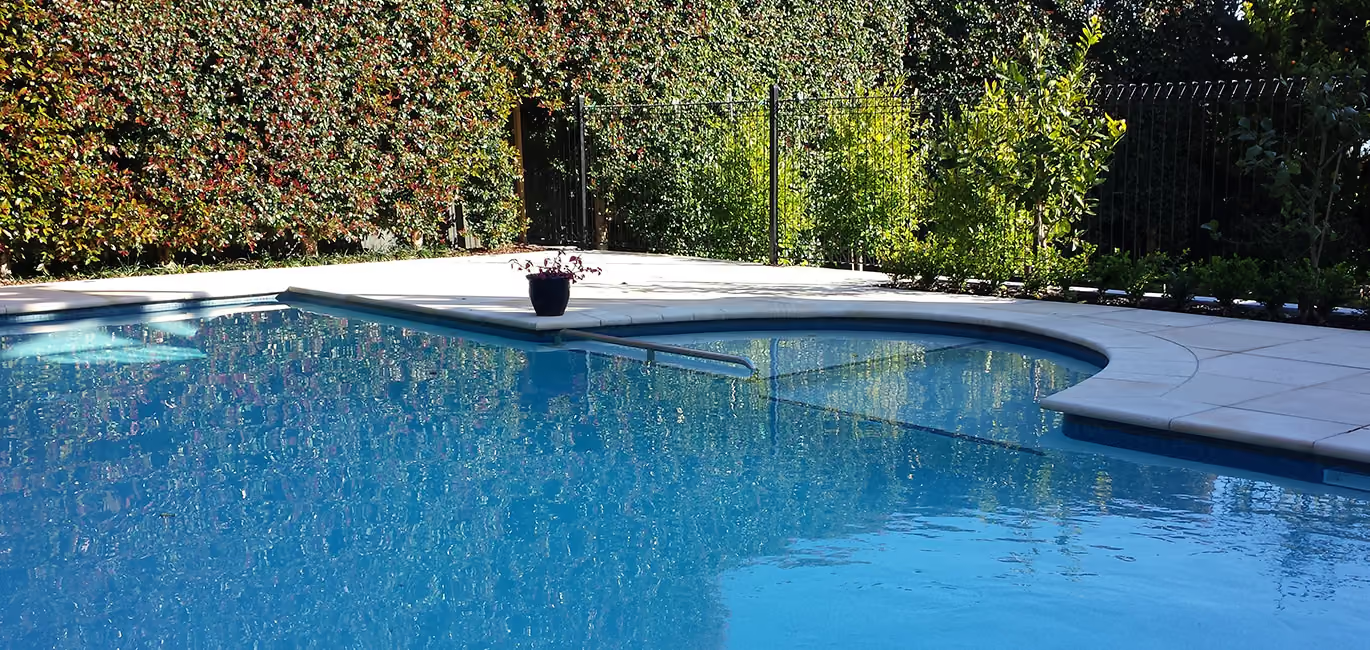
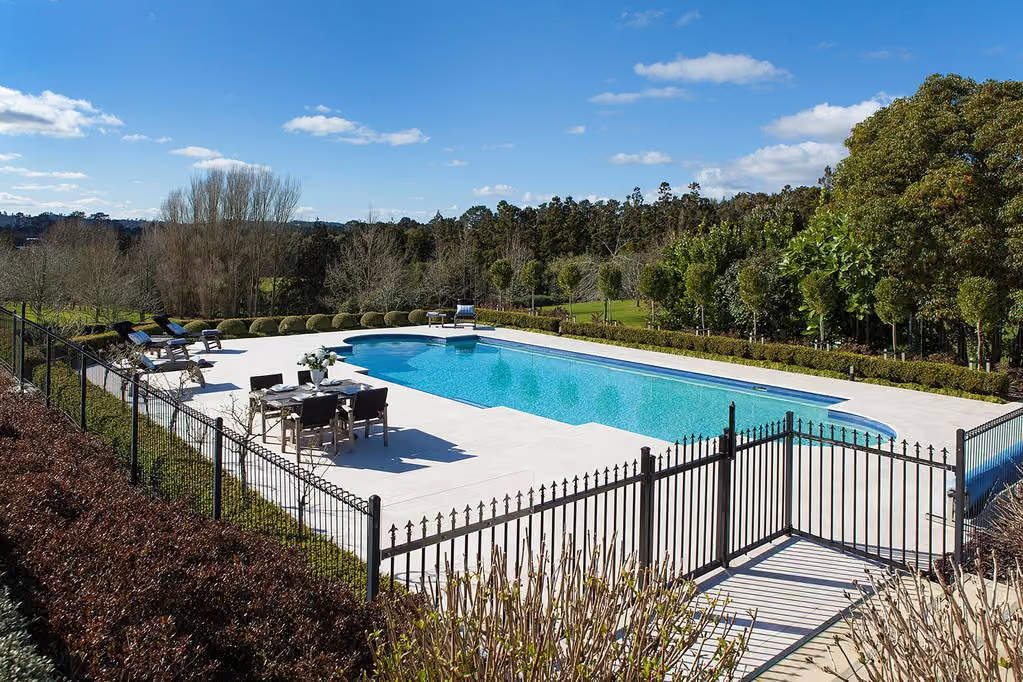
Sparkling Pools has worked on pools across Auckland, including residential renovation projects, equipment upgrades, ongoing maintenance and pool care for managed properties. Past projects show how the right approach can improve presentation, water quality and day-to-day usability. A well-maintained pool is easier to manage, more pleasant to use and better prepared for seasonal changes.
Trusted by Homeowners Across Auckland
Don't just take our word for it. Read what our clients have to say about our transparent communication, reliable service, and stunning pool transformations.
Related Blog Posts
Stay informed on pool care and renovations
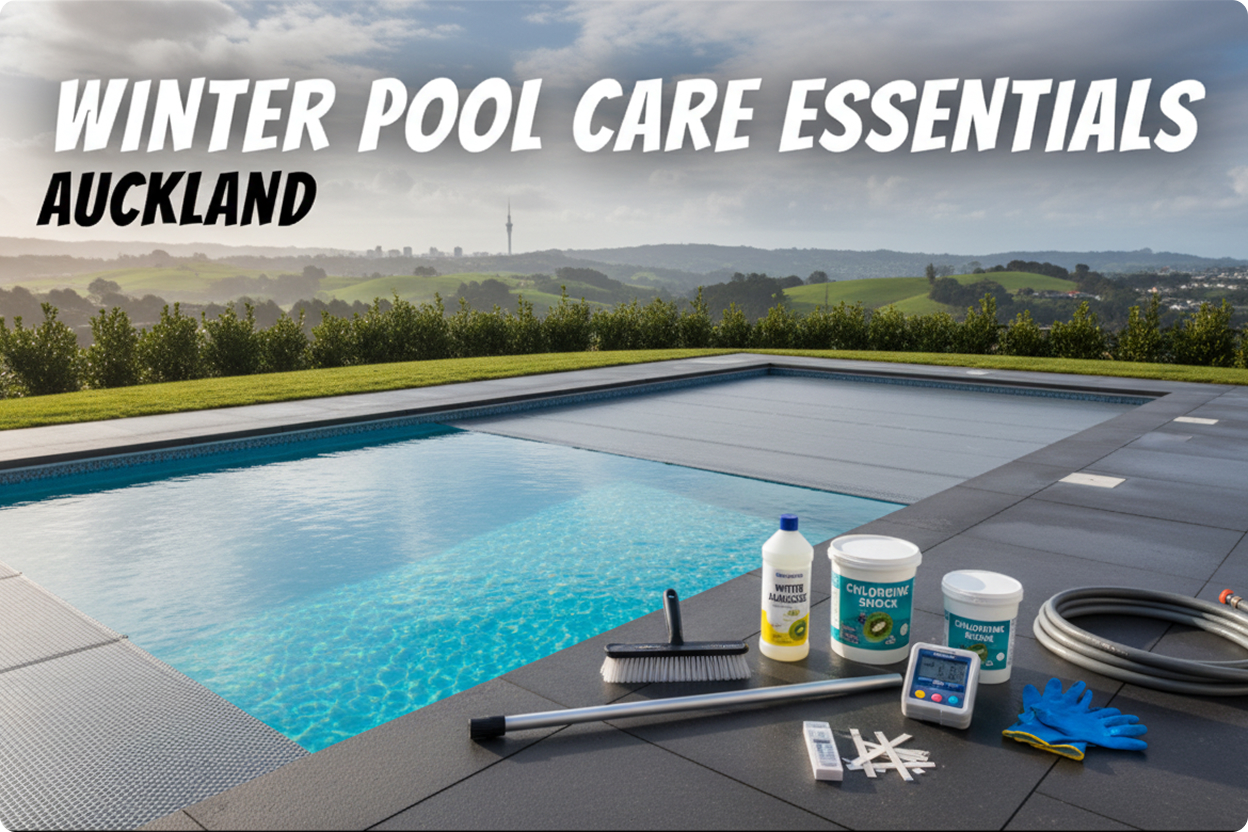
Winter pool care essentials for Auckland
Pool Renovation Mistakes

Auckland Climate Pool Maintenance
Choosing Renovation Contractor
Pool Care Auckland Summer
Permits & Consents
Pool Renovation ROI
How Often to Test Pool Water
Pool Renovation Costs
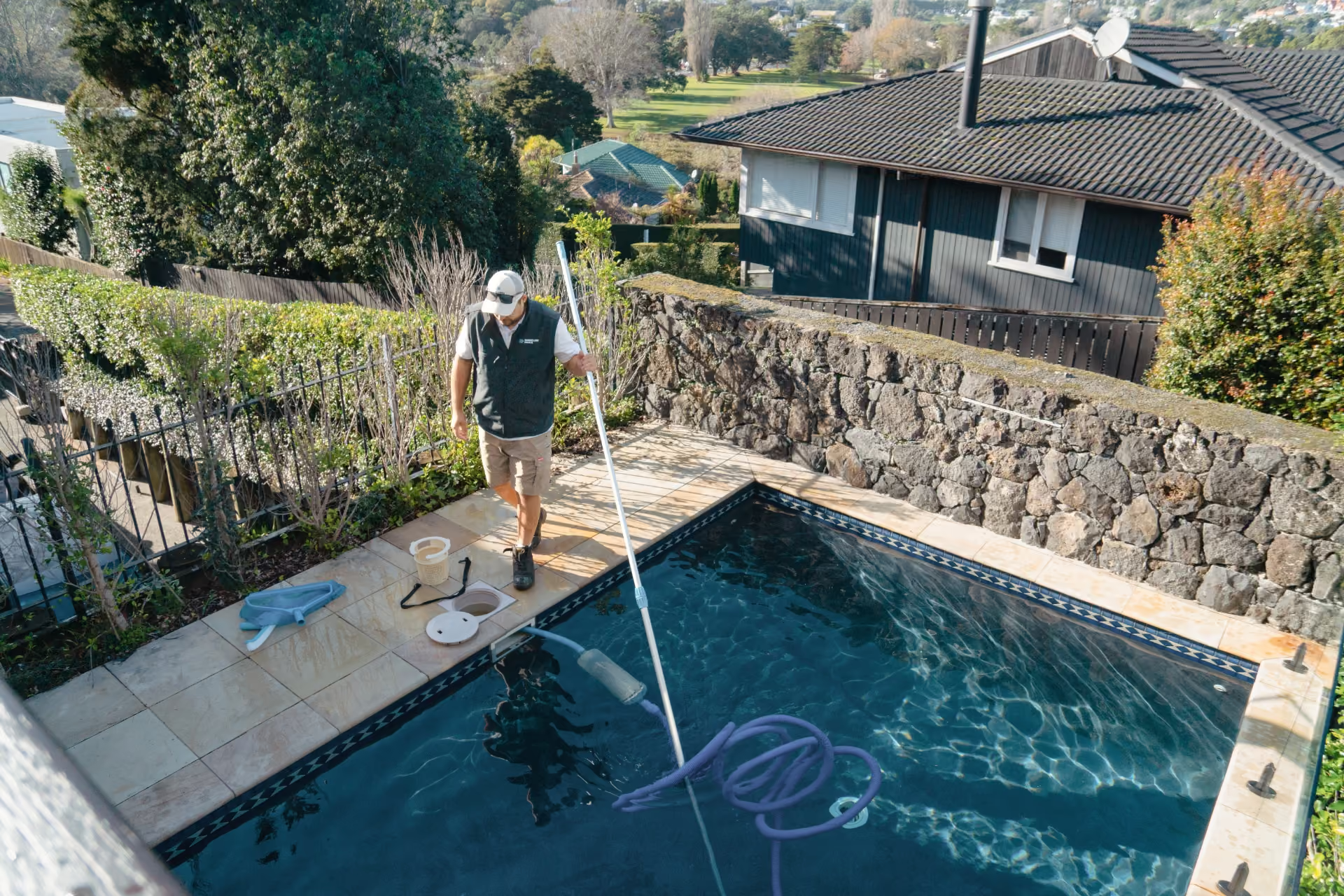
Cost of Pool Service Auckland
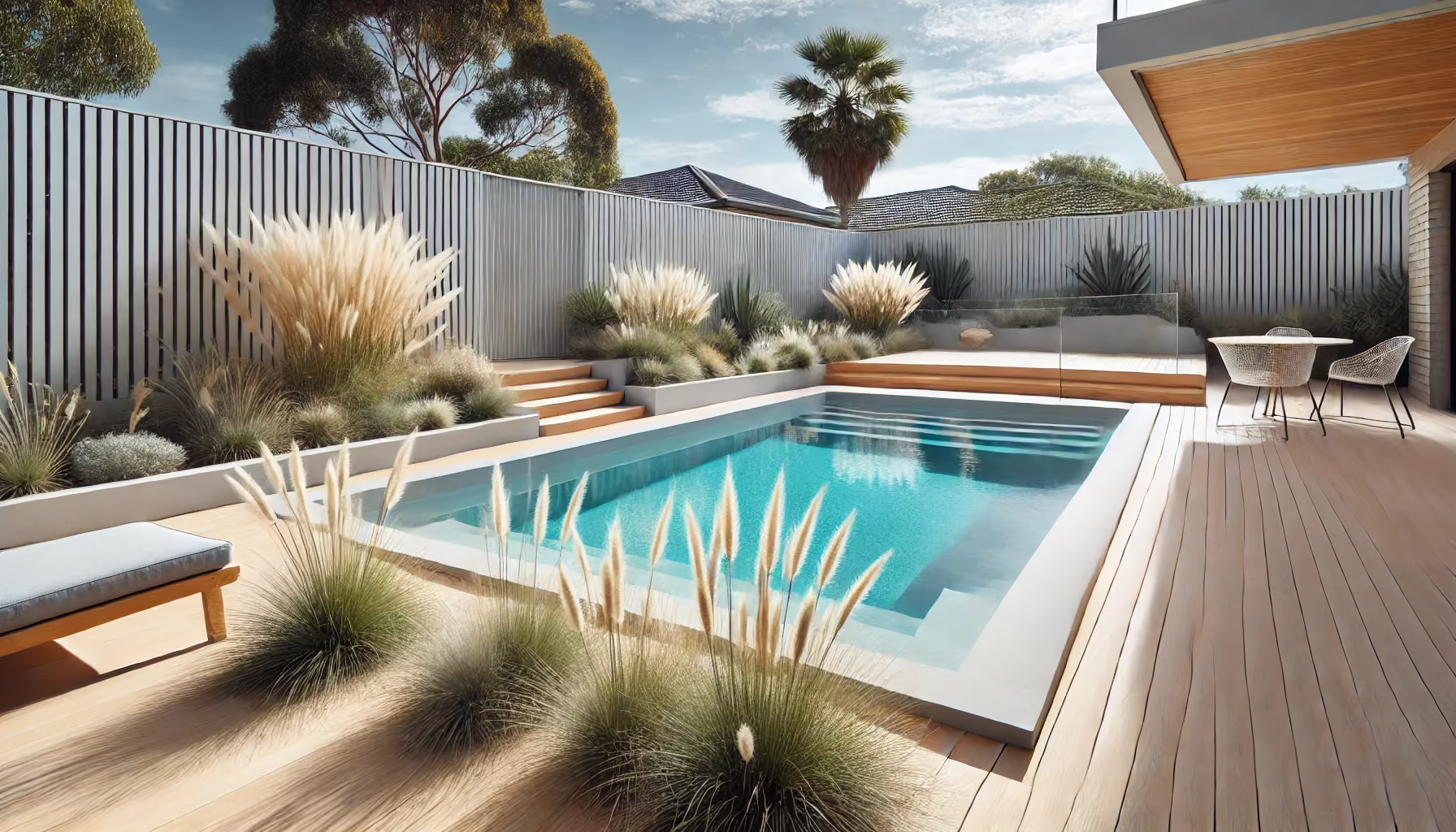
Pool Renovation Planning Guide
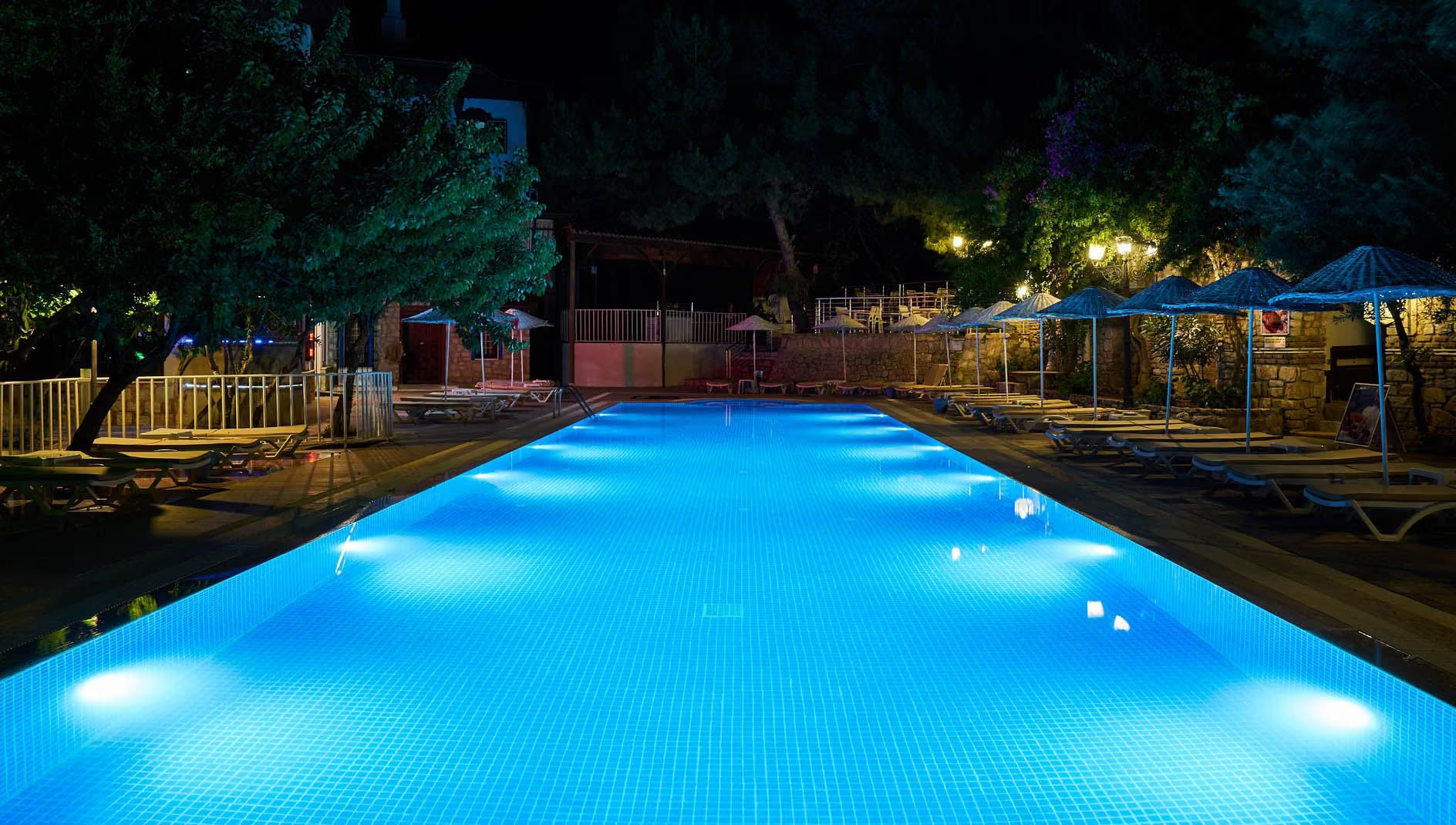
Pool Lighting Buying Guide
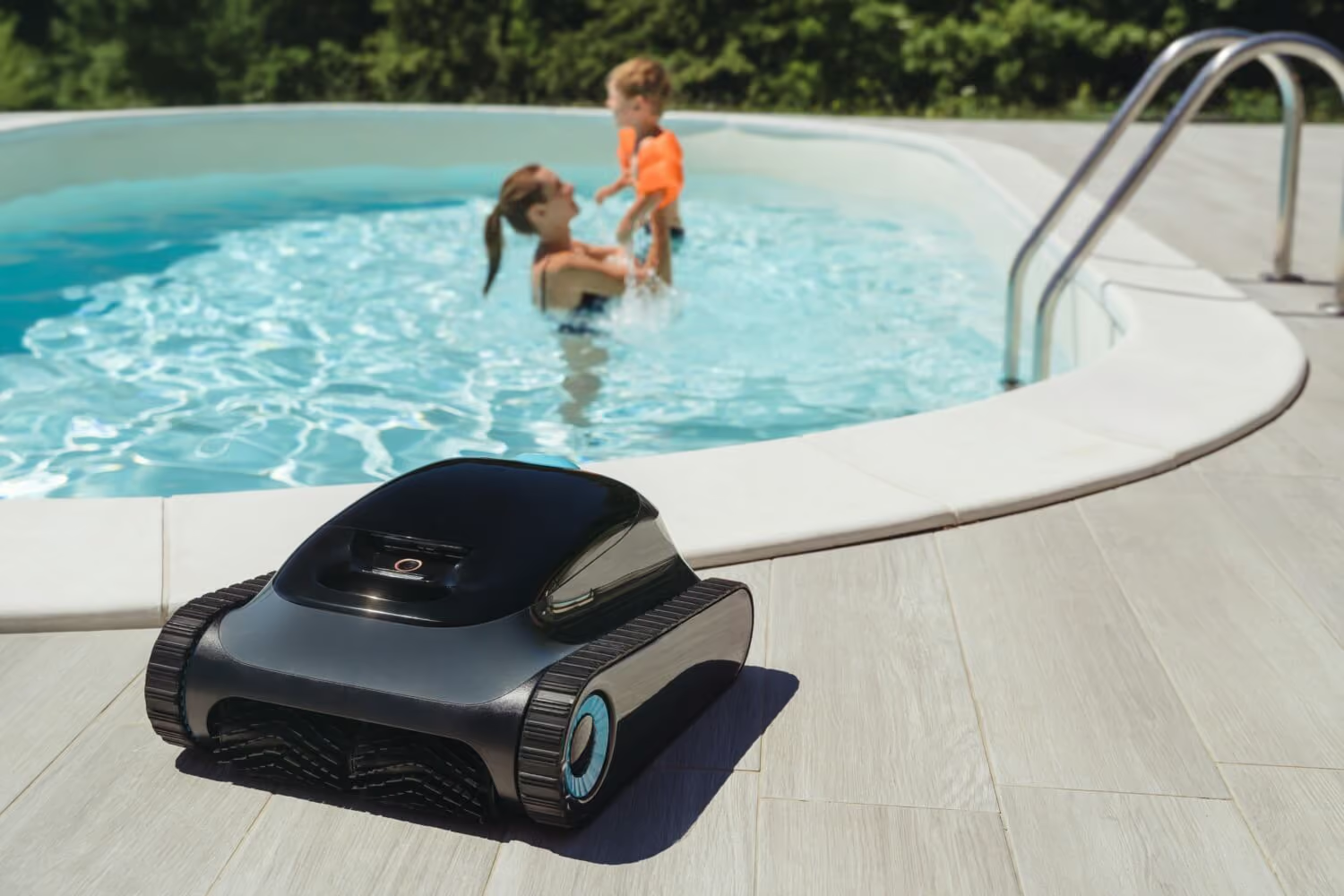
Pool Cleaner Buying Guide
Pool Automation Buying Guide
Pool Heater Buying Guide
Pool Filter Buying Guide
Pool Pump Buying Guide
Best Equipment Auckland Climate
Auckland Water Quality
Auckland Pool Season
Pool Ownership Costs
Common Pool Mistakes
Pool Safety Laws
Pool Inspection Requirements
Pool Fence Compliance
.avif)
Auckland Pool Industry Trends
Auckland Pool Regulations
Pool Equipment Suppliers
Best Pool Service Areas
Pool Service Pricing Analysis
Company vs Independent
Best Pool Surface Materials
Pool Resurfacing Options
Pebble vs Plaster Surfaces
One-Time vs Ongoing Service
Full Service vs Chemicals Only

Pool Cover Types
Robotic vs Suction Cleaners
Mineral vs Saltwater
Gas vs Heat Pump
Pool Heater Types
Pool Winterizing Guide Auckland
Pool Opening Guide Summer
Pool Maintenance After Heavy Rain
Pool Maintenance Schedule
How Often to Run Pool Filter
Pool Pump Maintenance Schedule
Pool Filter Cartridge Cleaning
Pool Equipment Maintenance Checklist
Pool Waterline Cleaning
Pool Skimmer Basket Cleaning
Pool Chlorine Levels
How Often Clean Pool Filter
How to Vacuum Pool
Pool Brushing Technique
Pool Chemical Dosing Chart
Pool Water Chemistry Basics
How to Balance Pool Chemistry
How to Test Pool Water
Pool Maintenance Tips
Complete Pool Maintenance Guide
Pool Service ROI
Pool Equipment Buy or Service
Pool Maintenance Time Requirements
DIY vs Professional
Pool Service Contract
Pool Service vs Pool Valet
Is Pool Service Worth It
Pool Service Guarantees
Pool Service Reviews
Pool Service Red Flags
Questions to Ask Pool Companies
How to Choose Pool Service Company
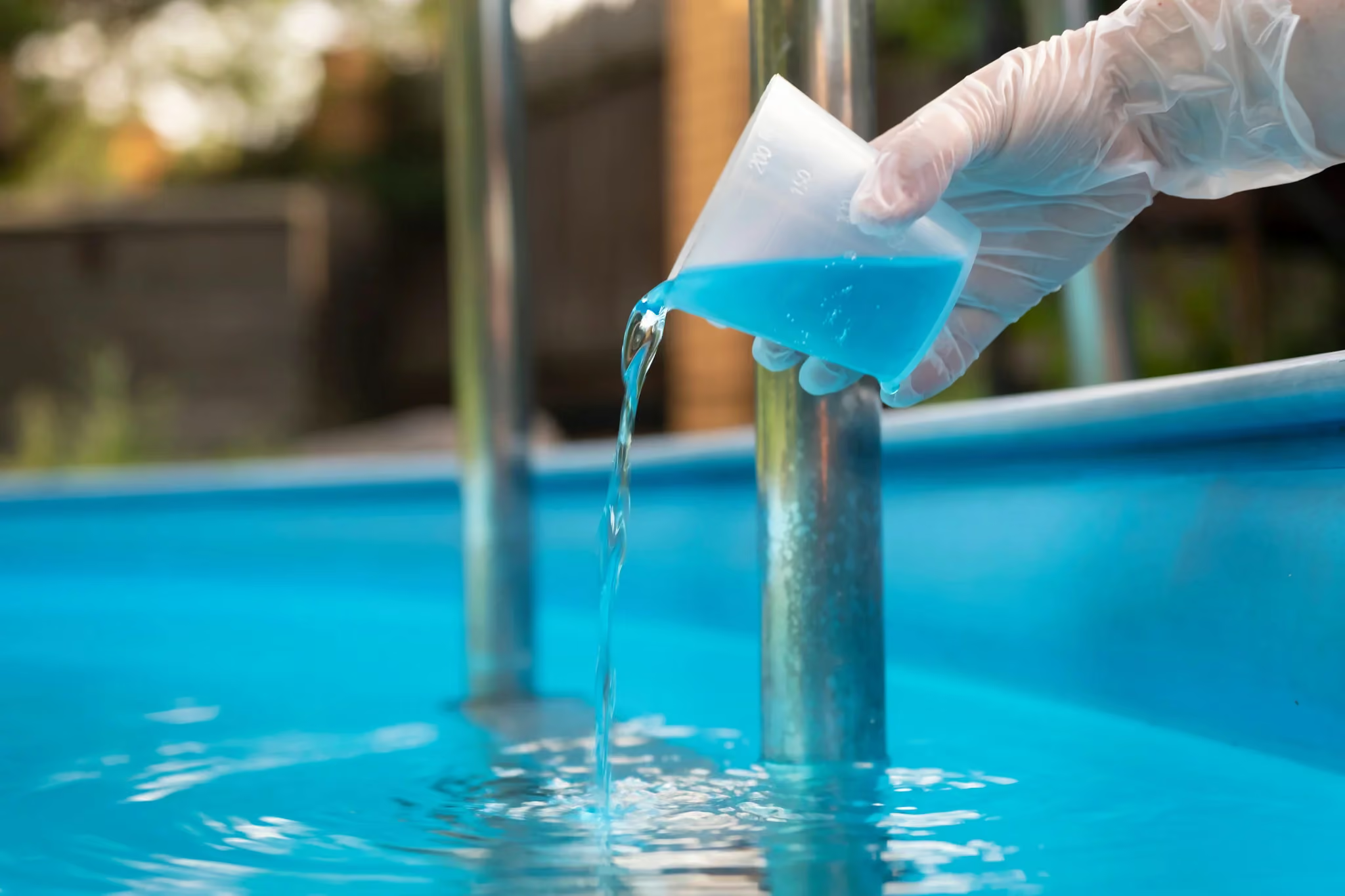
Hidden Costs DIY Maintenance
Pool Cleaning Prices Auckland
Cost of Pool Resurfacing
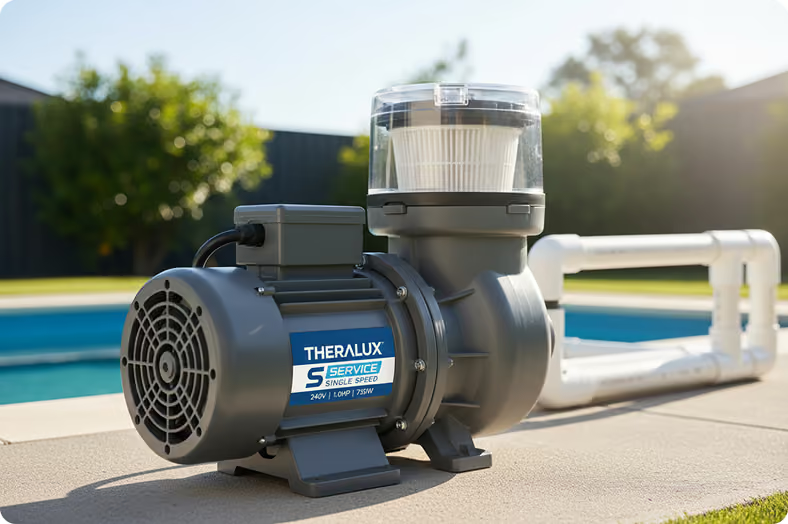
Cost of Pool Pump Replacement
Cost to Fix Green Pool
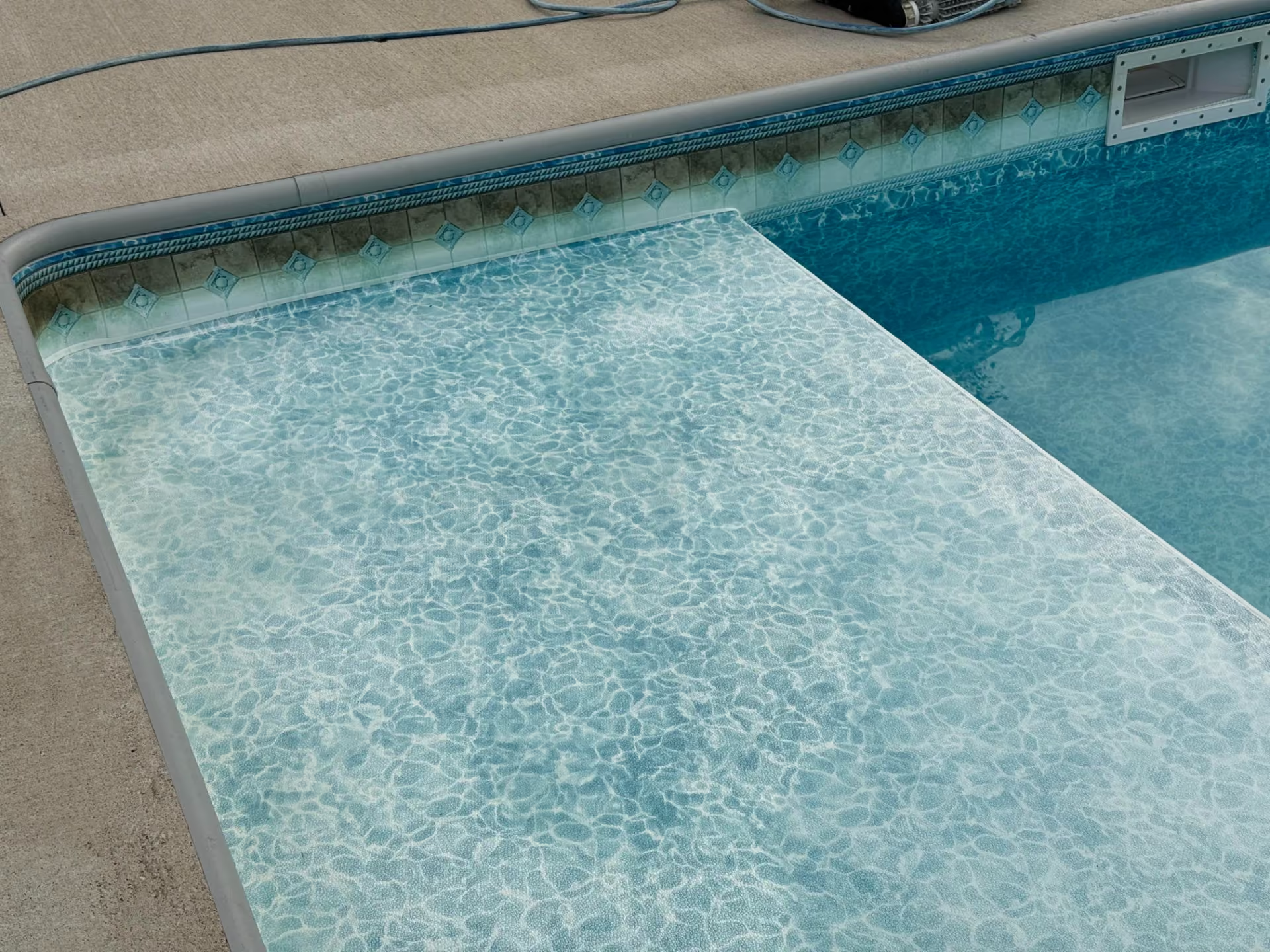
Pool Liner Wrinkles
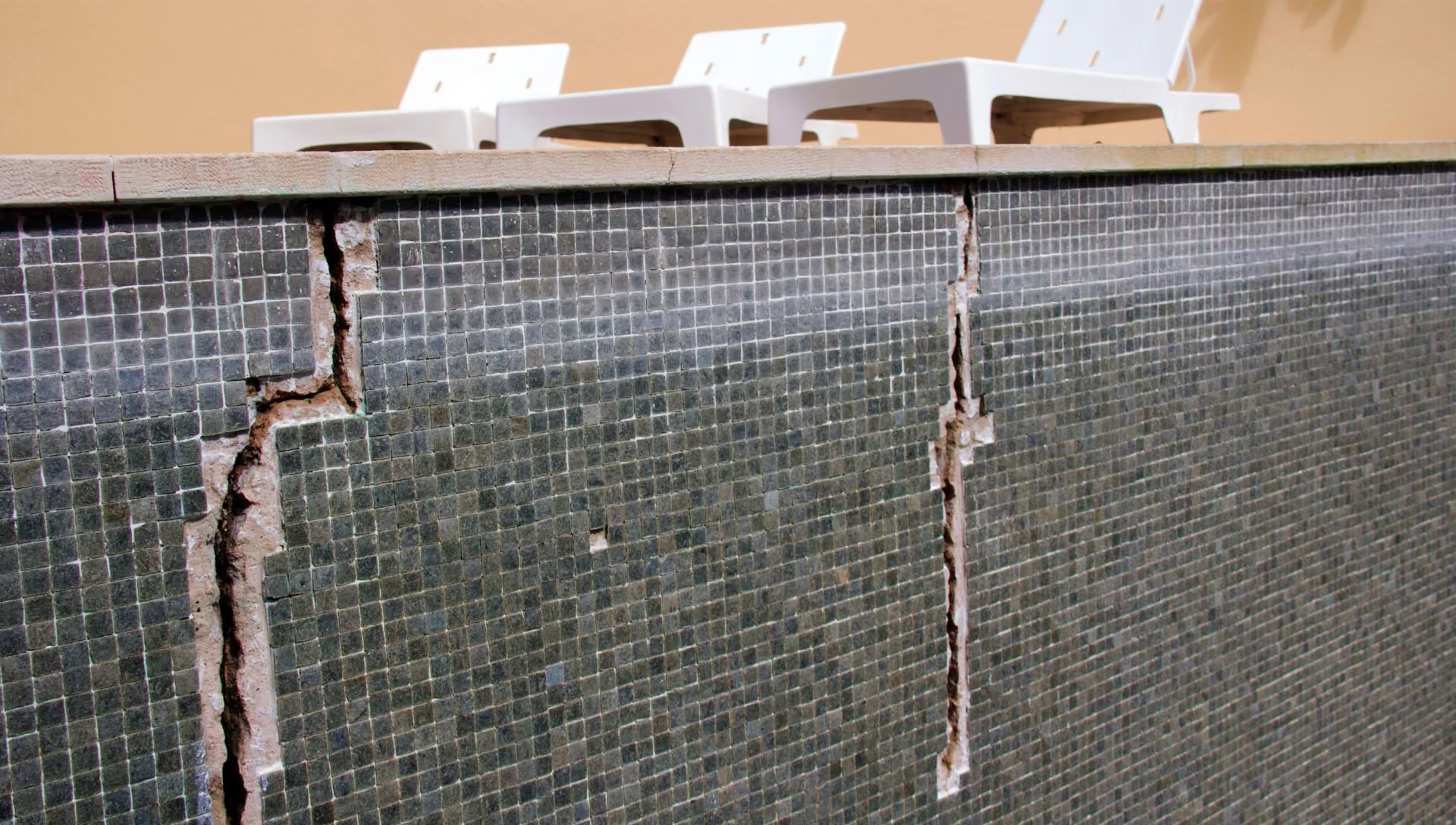
Pool Cracks When to Worry
Pool Surface Stains
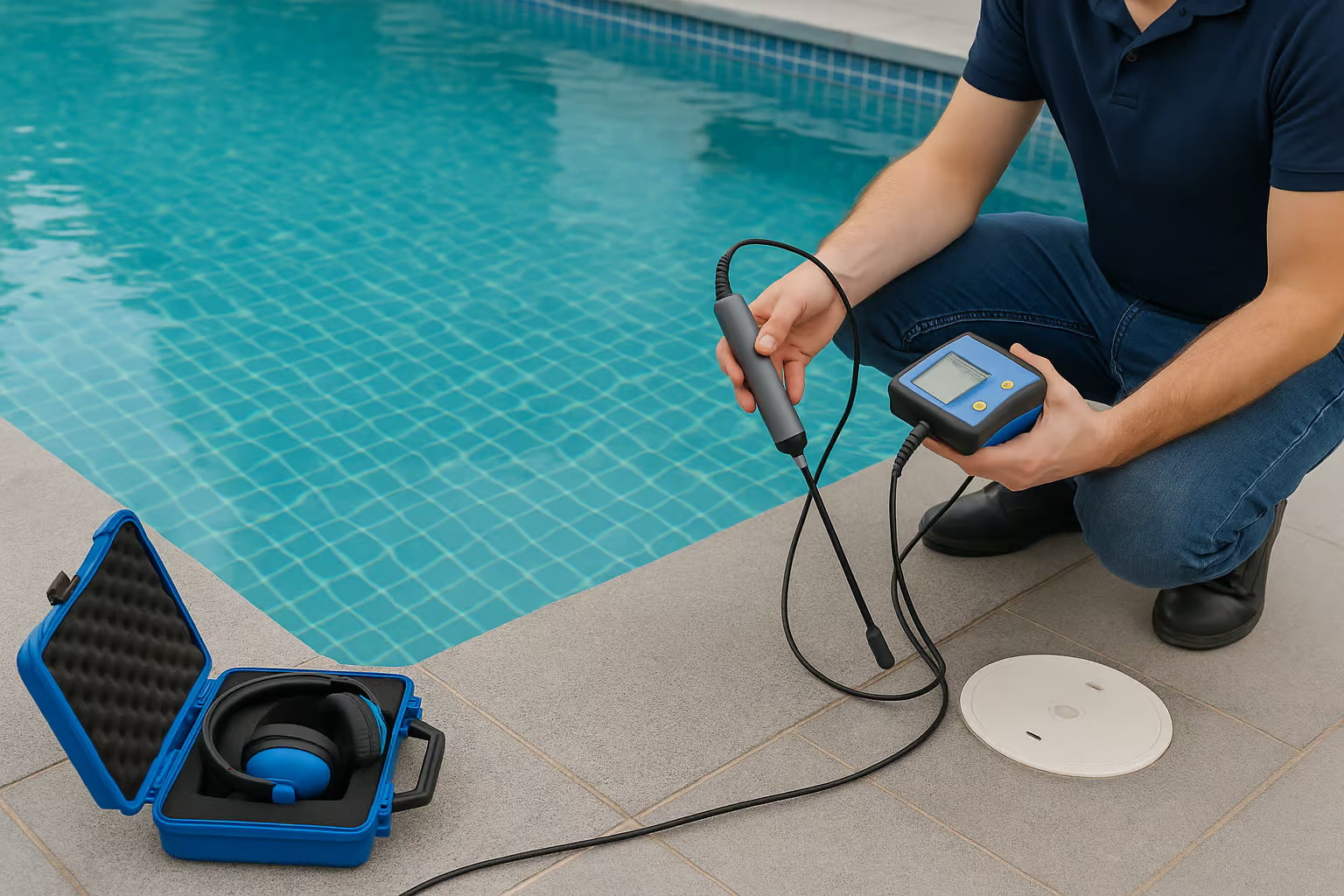
Pool Valve Leaking
Pool Automation Not Working
Pool Light Not Working
Pool Heater Not Heating
Pool Skimmer Not Working
High Pool Filter Pressure
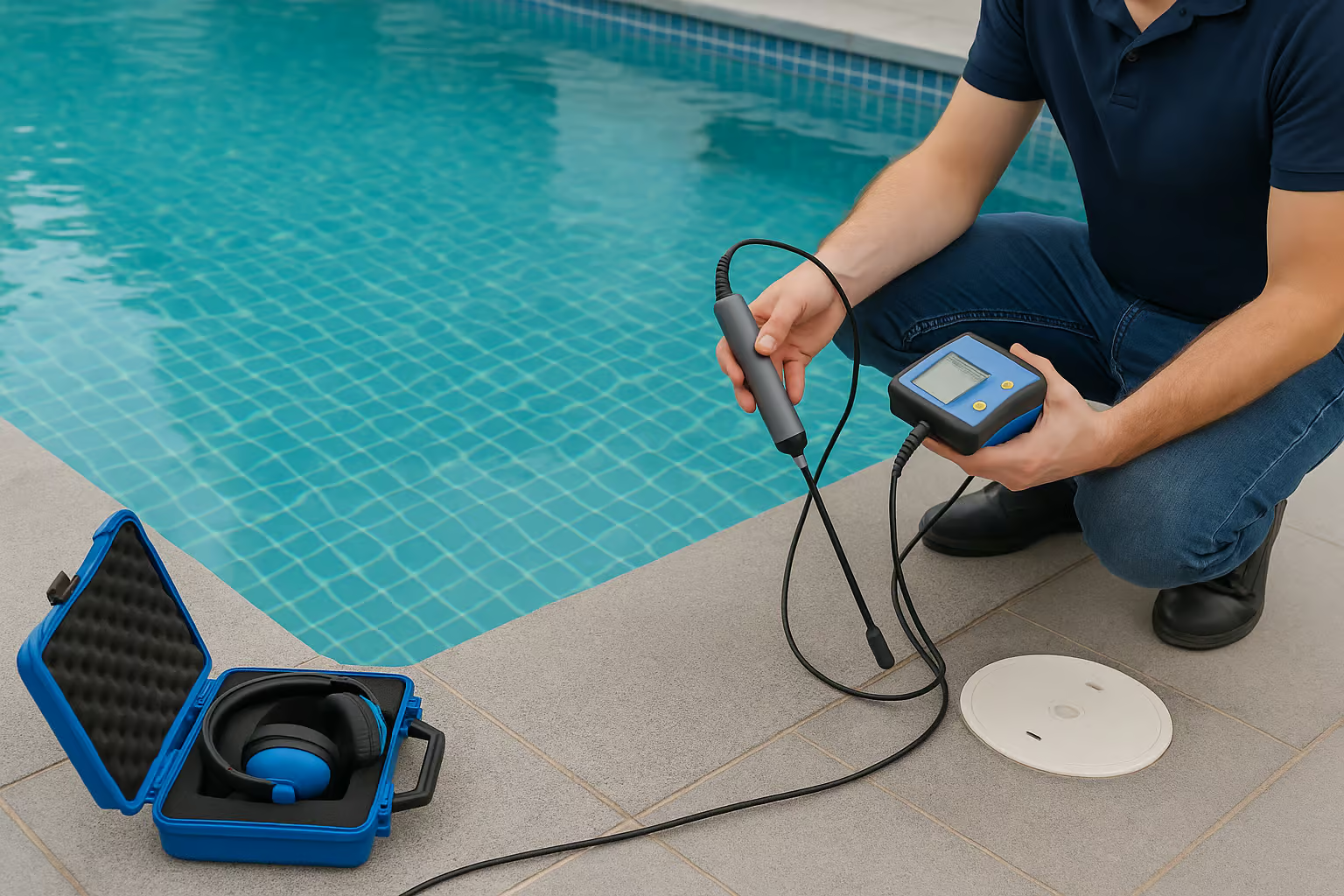
Pool Losing Water
Pool Filter Not Clearing Water
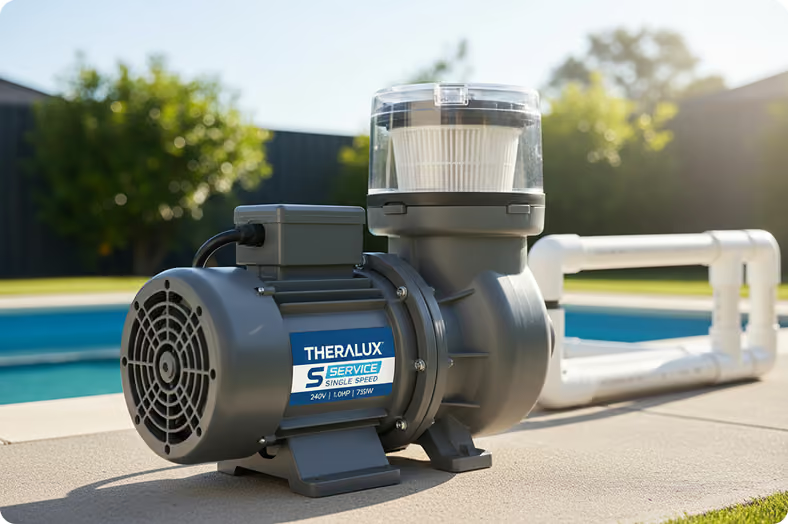
Pool Pump Leaking
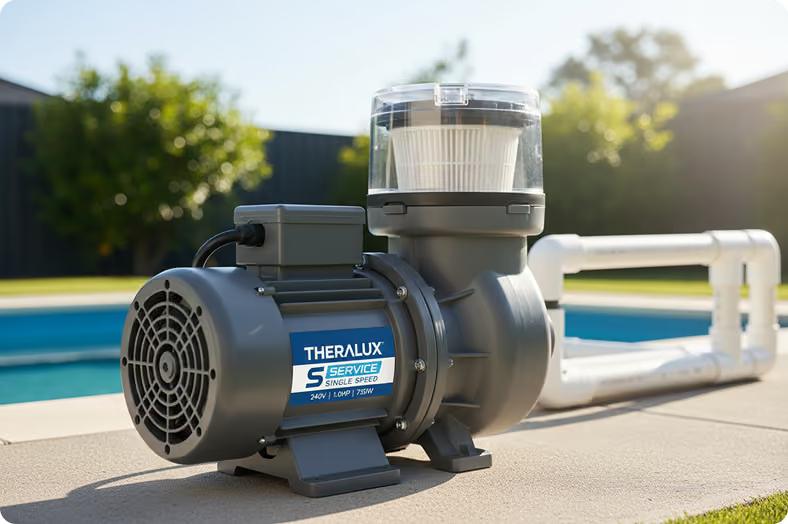
Pool Pump Not Pumping
Pool Pump Losing Prime
Pool Pump Noisy
Pool Pump Not Working
Pool Water Foaming
Pool pH Too Low
Pool pH Too High
Green Pool After Rain
Pool Still Green After Shock
Pool Water Cloudy
How to Clear a Green Pool
Pool Care That Protects Your Investment
Good pool care protects more than appearance. Our pool specialists support the long-term condition of your swimming pool while keeping it ready for everyday use.